Author: admin

  • The “Sacred Truce” made possible the continuity of the Olympics for 1.170 years

    The ancient Olympic events have an obvious connection with several war and military activities, but the Olympics were only possible because the various Greek states, in permanent confrontation, agreed to a temporary truce of peace.

    In the year 864 BC three Greek cities-states signed an agreement establishing a Sacred Truce to celebrate the Olympic Games in honor of Zeus peacefully. No doubt this truce enabled the hosting of the Olympics for over a thousand years. Even today, because of the modern Olympics, it is still asked for a similar truce, though without much success.

    The origin of the athletic games in honor of Zeus at Olympia is very ancient. Mythical tradition attributes its creation to Heracles or Hercules.

    Although the first Olympiad that was officially registered and resulted in the beginning of an era or way of dating events occurred in 776 BC, a key moment took place in 864 BC, when a treaty was signed between Iphitus for Elis, Lycurgus for Sparta, and Cleostenes for Pisa, to approve the famous Sacred Truce for three months that prevented war and declared inviolable the territory of Olympia and guaranteed the safety of pilgrims and athletes who came there to compete two months before the games begin.

    During this period nobody could violate the territory of Elis by entering armed in it. The Sacred Truce, which proclaimed heralds throughout Greece, made possible the continuity of the games quite regularly every four years.

    The text of the agreement agreeing to the truce, saying: "Olympia is a sacred place; anyone who dares to step this ground with armed soldiers, will be considered sacrilegious", was recorded on an ironed disc, which Pausanias, the ancient author of a famous guide to visit Greece who lived in the second century of Christ, claims to have seen in Olympia.

    The truce was almost always respected, although the great historian Thucydides tells us how at one point the participation of the Spartans was banned for having attacked a fortress of Elis during the truce; although the Spartans argued that, when they attacked, the truce hadn´t been proclaimed yet, they were fined two mines per soldier, in total two thousand mines. A mine was 100 drachmas; a drachma was the average daily wage of a skilled worker. This violation of the truce happened in the year 420 BC. Elis forbade Sparta to make sacrifices and to participate in the Olympic Games claiming they had penetrated in the territory of Elis during the sacred truce the city-states had to respect. Probably the prohibition lasted until the year 400 BC.

    As seen, nor the ancient Olympic Games, sacred then and in honor of Zeus, nor the current or modern ones purely sporty in appearance, were never apart from the politics of the moment, but the "sacred truce" was generally respected in the Antiquity. Now also, in modern times, it was intended since the beginning that the countries would ensure peace during the celebration and appeals for world peace are often made with the occasion of the Olympic Games celebration by the UNO General Secretary; evidently without much success. Recall how Olympic Games were held in Berlin in 1936, on the eve of the terrible World War II, which produced about 60 million of dead persons according to the most admitted estimations. It can also serve us as an illustration the impressive deployment of the British Army to ensure the peaceful celebration of the Olympic Games in London in the year 2012. Now the terrible threat is terrorism.

  • A modern Zeuxis

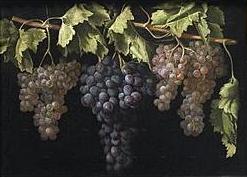
    Recently the Prado Museum has celebrated a painting exhibition titled “Juan Fernandez Labrador. Still Lifes “. Juan Fernandez is a painter of the Spanish Golden Age, little known, who painted mostly “still lifes”. His representative works are paintings of “bunches of grapes”.

    This specialization in painting of grapes has allowed that  fans of painting remember the famous story of the “artistic” confrontation  between  two of the most famous painters of the ancient world, the Greeks Zeuxis and Parrhasius.

    It is best to read directly  Pliny the Elder, who is who tells us in Natural History, 35, 29 (or 35.36 in other editions):

    The contemporaries and rivals of Zeuxis were Timanthes, Androcydes, Eupompus, and Parrhasius.  This last, it is said, entered into a pictorial contest with Zeuxis, who represented some grapes, painted so naturally that the birds flew towards the spot where the picture was exhibited. Parrhasius, on the other hand, exhibited a curtain, drawn with such singular truthfulness, that Zeuxis, elated with the judgment which had been passed upon his work by the birds, haughtily demanded that the curtain should be drawn aside to let the picture be seen. Upon finding his mistake, with a great degree of ingenuous candour he admitted that he had been surpassed, for that whereas he himself had only deceived the birds, Parrhasius had deceived him, an artist.

    There is a story, too, that at a later period, Zeuxis having painted a child carrying grapes, the birds came to peck at them; upon which, with a similar degree of candour, he expressed himself vexed with his work, and exclaimed: " I have surely painted the grapes better than the child, for if I had fully succeeded in the last, the birds would have been in fear of it."

    Aequales eius et aemuli fuere Timanthes, Androcydes, Eupompus, Parrhasius. Descendisse hic in certamen cum Zeuxide traditur et, cum ille detulisset uvas pictas tanto successu, ut in scaenam aves advolarent, ipse detulisse linteum pictum ita veritate repraesentata, ut Zeuxis alitum iudicio tumens flagitaret tandem remoto linteo ostendi picturam atque intellecto errore concederet palmam ingenuo pudore, quoniam ipse volucres fefellisset, Parrhasius autem se artificem.
    Fertur et postea Zeuxis pinxisse  puerum uvas ferentem, ad quas cum advolassent aves, eadem ingenuitate processit iratus operi et dixit: “uvas melius pinxi quam puerum, nam  si et hoc consummassem, aves timere debuerant.”

    The story at first seems less credible and the second part supports the doubts, but that does not mean we can not draw any lessons from it.

    At First we reported the artistic tastes of the Greeks in the transition between V and IV century BC.
    The essence of classical art is to imitate, emulate nature hiding the art itself; ars est celare artem , the art is to hide the art, till the point  that it does not seem art but truth;  as Ovid says in his Metamorphoses X, 252 about perfection of Pygmalion's sculpture: ars adeo latet arte sua, “so much the art hides itself  by  art's own work

    The aim is certainly the most accurate illusion of realism and more perfect imitation of nature, to the point of deceiving the human eye, producing the effect of trompe l'oeil (deceive the eye). It's what you try to paint architectural elements, windows, doors, curtains, stays … Maybe it is due to some influence of the sets of some plays theatre.

    Interestingly, since then until now,  in that kind of painting of still lifes,  the reason of the painting is food or food-related items.

    This story  also reports us on the recognition of the status of the painter and painting, reflected on the importance of the events.

    There is still also a curious food for thought that the paintings of the great ancient artists  Zeuxis, Parraxius, Polygnotus were appreciated and valued but none of them survives  physically;  We know the story of rivalry between Zeuxis and Parrhasius and their quality as artist by a text written by Pliny the Elder. What would our knowledge of history without the word? This is the reason because  in these articles I  use  few images, relying mostly on the evocative power of the word, in this case written.

    But maybe it is justified to offer once one of the works of “Juan Fernández el Labrador” existing in  Prado Museum and visually check why it was called the Modern Zeuxis.

    Still life with four bunches of grapes.
    Madrid, Museo Nacional del Prado.

  • Importance of music in the ancient Greek world

    Most of the linguistic terms used in “music” are of Greek origin.

    In Greece music isn´t one of the issues more fully studied in the ancient world history, but a simple relation of the terms of Greek origin, referring to this world of sounds pleasing to the ear, should be enough to put us in the track of the real importance that an art, always present in the religious ceremonies and life of citizens, actually had.

    Next I relate some terms to the definition that the "Dictionary of the Royal Academy of the Spanish Language” gives us of them and that have been translated into English:

    Music, (from the Latin “musĭca”, and this one from the Greek “μουσική”, derived from μοῦσαι mousai = nymphs or goddesses that inspire the music and the rest of other arts), is precisely the first term to be considered.

    Melody: (from the Latin melodĭa, and this one from the Greek μελῳδία; μέλος = singing). Composition where a musical idea, simple or compound, is developed, regardless of its support…

    Harmony: (from the Latin harmonĭa, and this one from the Greek ἁρμονία = proportion, from ἁρμός, adjustment, combination). Union and combination of simultaneous and different sounds, but all consistent or coherent with each other. / Art of form and link the chords.  

    Symphony: (from the Latin symphonĭa, and this one from the Greek συμφωνία = conformity, from σύμφωνος, which link their voices, consistent, coherent, unanimous). Set, assembly of voices, instruments, or both, sounding coherent at once. / Instrumental composition for orchestra.

    Polyphony: (from the Greek πολυφωνία, many voices). Assembly of simultaneous sounds in which each one expresses its musical idea, but forming a harmonious whole with the others.

    Orchestra: (from the Latin Orquestra and this one from the Greek oρχήστρα, place to dance). Group of musicians who play musical pieces with different instruments/. Place between the scene and the seats, destined for the musicians.

    Organ (from the Latin orgănum, and this one from the Greek ὄργανον = instrument). Musical wind instrument, consisting of many tubes where the sound is produced, some bellows to force the air and a keyboard and several records in order to modify the timbre of the voices.

    Chorus: (from the Latin chorus, and this one from the Greek xορός = dance, dancing, choir). Set of persons who simultaneously sing a concerted piece in an opera or other musical function. / Group of people gathered or met to sing, rejoice, praise or celebrate something. / In the Greco-Roman drama, set of actors who recite the lyrical part intended to comment on the action.

    Tone: (from the Latin tonus, and this one from the Greek τόνος, accent, stress). Quality of sounds, dependent on their frequency, that allows us to order them from severe to acute. From this word also derives "tonic" which in music means the first note of a musical scale.

    Baritone: (from the Latin barytŏnus, and this one from the Greek βαρύτονος, of severe voice, from βαρύς = severe, heavy, low, deep,). Middle voice placed between the voices of tenors and basses and, as a result, man with this voice.

    Diatonic: (from the Latin diatonĭcusus, and this one from the Greek διατονικός). It is said of one of the three genres of the musical system: which proceeds by two tones and a semitone.

    Diapason: (from the Latin diapāson, and this one from the Greek διαπασῶν). Regulator of voices and instruments consisting of a folded steel blade with the shape of a fork with a foot or pillar, and when it sounds it gives a "la" set at 435 vibrations per second.

    Rhythm: (from the Latin “rhythmus”, and this one from the Greek ῥυθμός from ῥεῖν, flow). Portion saved or kept between the time of a movement and the time of another different movement. From this derives rhythmic or rhythmical.

    Syncopation: (from the Latin syncŏpa, and this one from the Greek συγκοπή, from συγκόπτειν, cut, reduce). Link of two equal sounds, of which, the first is at the weak part or time of the measure, and the second at the fort or strong part.

    Chromatic: (from the Latin chromatĭcus, and this one from the Greek χρωματικός; χρῶμα – actually means color). It is said of one of the three genres of the musical system, the one which proceeds by semitones.

    Chord: (This term is Latin; it derives from accordāre, from cor, cordis, heart,  and means agreement or to agree). Assembly of three or more different sounds harmoniously combined.

    Melody, harmony, symphony, polyphony: these too. Orchestra, organ, chorus, chord, baritone, tonic, diatonic, diapason, chromatic, rhythm, syncopation: all of them come from the Greek. Ancient Greek culture was permeated with music. It is obvious the Greek citizen liked music.

    References to music are very usual in literature (especially poets), in art, in archeology, in works whose central issue is precisely the music, and even in any document similar to our current scores. Yet ignorance is huge and little the attention from historians. Naturally, the ancient people could not record their sounds and the written word is not sufficient testimony.

    Note: The word "opera" means manifestation or more inclusive art show consisting of theater, music, dance, visual arts. The word derives from the Italian "opera" and this from the Latin "opera", plural of "opus,-eris," which means work. So the "opera" means the musical work par excellence. Its origin is in the Renaissance theater and tries to recover the music of the ancients. Monteverdi calls his famous  L'Orfeo, published in Venice in 1609,  "Fabula in musica."

    The Latin singular of "opera" is "opus" which means "work." In music the term is used to sort, index , cite the various musical works of the catalogs of the various authors. The term was first used in the seventeenth century.
     

  • Perseus and Andromeda

    The myth of Perseus and Andromeda is one of the best known and longest survival, in fact, wearing another garment, it continues today.

    Around the hero Perseus articulate several myths and elements, some very old dating back to prehistoric times, to the days of Paleolithic hunters, and more recent Neolithic and early monarchies. If  its origin is very old, its survival up to today, in some myths, such as the famous "St. George and the Dragon" and other Germanic and Saxon (Beowulf, Siegfried …). It will accumulate many elements common in myths and folk tales of monsters, captive princesses and savior heroes.

    First we summarize briefly the myth, then propose a fundamentally remade myth reading on Ovid's version in his Metamorphoses and finally do some annotations, which more than provide a narrative explanation of  the tale, what they do is open  doors to the complexity that all myths contain.

    Summary: it is predicted to a king to be precisely his offspring who end his life;  to stop it, he encloses his daughter in a camera, but she  nevertheless conceives  a son of a god;  mother and son are thrown into the water, but survive and are bred by  their savior in another country; adult once the hero must  to fulfill a job or target  impossible to avoid the king's desire to take his mother; achieves with the help of other gods fulfill the task ;  on the return trip frees  a maiden, daughter of the king of Ethiopia, whom  a sea monster  has chained and thus ends the threat and permanent desolation that the monster causes  to the country of the maiden;  in return receives the hand of the princess; later participates  in athletic games and throws a disk fatally hitting his grandfather, thus fulfilling the unavoidable initial prophecy.

    Story:

    Acrisius, king of the mighty city of Argos, in ancient Greece, longed to have children and asked the oracle, which announces the future, how could have children. But the god of the oracle, the handsome and radiant Apollo, enigmatic answered:

      –Your daughter Danae will give you a grandchild, strong and courageous, to be the cause of your own death.

    Scared Acrisius built a bronze underground chamber in which locked his daughter Danae, trying to prevent the fulfillment of the terrible advertisement.

    But the measures and precautions of men which  oppose the plan of the gods are useless. Danae was impregnated by Zeus, by Jupiter himself, the father of the gods, converted in golden shower,  and gave birth to a beautiful child. The rain of metal that  buys  hearts and opens all doors, also penetrated through the cracks bronze chamber, seemingly inaccessible, and the seductive god almighty, unfaithful again his wife, the goddess Juno, fathered the argive  girl  the hero Perseus, as such are the status of descendants of gods and mortals, they are heroes.

    Born in the secret underground chamber, the child grew up healthy and strong for a few months without his  grandfather could know  of its existence. One day, the playful child screamed and that Acrisius heard aback. But soon, knowing what happened and aware of future danger, refused to admit the divine intervention of seductive Zeus, locked in a wooden chest his daughter Danae and his grandson Perseus and cast them into the sea. The chest, tossed by the waves, went to the island of Seriphos. The fisherman Dictys, Polidectes brother, the king of the island, took  to his house the poor castaways. Dictis raised Perseus like a son, who became a beautiful teenager of extraordinary courage.

    Meanwhile the king Polidectes had fallen passionately the beautiful Danae, but the young Perseus, protector of his mother prevented him from satisfying his mad passion. One day the king held a banquet and invited to the table their own noble friends and Perseus. Asked by King  about what gift the guests thought to offer him, all felt that the most appropriate gift for a king was a horse, but the young Perseus, proud and daring, swashbuckling answered

    Not present either a fast and agile horse, but I would bring my sovereign the head of the Gorgon herself if need be.

    The next day all noble princes brought to the king the promised  horse while the reckless  Perseus came up with empty hands. Irritated Polidectes ordered to march immediately for the Gorgon's head and added

    Otherwise, if you come back without the terrible monster head, I will seize your mother by force.    

    The purpose was very difficult, even impossible to perform, even for a hero like Perseus. But the gods Hermes and Athena, solicitous of the offspring of Zeus and therefore his father's brother, came to his aid and told him how to achieve their purpose.

    On the advice of the gods,  Perseus went in search of the three Graeae (Enyo, Pemphredo and Deino) daughters of sea god  Forcis, who were born  "old" and were never young and living at the evening home where the sun never shines.

    The Phorcydes  had one eye and a tooth for the three that they used in turn  and  Perseus skillfully stole them and refused to return them until they  show him the path that would lead him to the palace of the "Nymphs", possessing magic tools that will be very useful and will  reveal the procedure to end with the terrible Gorgon.

    The hero  Perseus received from the nymphs their  winged sandals and a scrip or wallet, and the helmet of Hades that makes invisible  whom  was wearing  it to protect his head. Hermes also gave him a hard and sharp flint sickle.

    Equipped in this way, Perseus came flying to the mansion of the three Gorgons (Stheno, Euryale, and Medusa) , next to the blue ocean in the Atlantic coast of Spain. These were terrible bright-eyed monsters with snakes around his head, with huge fangs similar to those of wild boar, with a huge tongue coming out of their mouths and hard Dragonscale protecting their  neck. Their hands were of shiny bronze and had gold wings that allowed them to fly from one place to another. Their  glance turned to stone those who dared to look at them from the front. Of the three sisters only Medusa was mortal.

    The work  seemed impossible if Perseus had not had divine help. He stepped always back and stealthy flying with his winged sandals and found them sound asleep and confident. Athena came to the aid of the hero and held in appropriate position her shield of burnished bronze in which Perseus saw the face of Medusa reflected as in a mirror, thus avoiding the direct gaze that would have petrified and with accurate cut severed his head with the sharp flint sickle.

    From  her hurt neck  instantly sprang Pegasus, the winged horse, and the giant Chrysaor, "he of the golden sword", both children  of intercourse with the god Poseidon when Gorgon was beautiful in a temple of Athena. The desecration of sacred temple was punished by her terrible appearance.

    Perseus fast picked head of the Gorgon Medusa and inserted it into the bag, avoiding any cross of his eyes with the eyes of decapitated monster and started back, protected by Hades helmet that made him invisible to the sisters who  furious sought him.

    Perseus quickly undertook the long way back, which led him first to the country where Atlas reigned in the far West, where it was the garden of the golden apples, the apples of the Hesperides, the Western. The giant Atlas faced Perseus fearing that he will carry the golden apples and tried to oust him.

    Perseus extracted from the sac Medusa's head that even after death retained its petrifying power and  back turned shows it to Atlas, who at the time was turned into the Atlas mountain range in northwest Africa. This mountain holds since heaven with its stars.

    On his way back, while he furrowed the thick air, passing through the torrid Ethiopia, warned by piercing cries for help, he saw from the top  a beautiful  blond hair young girl who was tied to a rock off the coast, exposed to the  dangers of deep and violent sea. The  hero, sensible to the charms of beautiful young, turned the course of his journey and came up with decision, impelled by passion that arose in his heart.

    What is your name, beautiful girl with that your parents and neighbors recognize you among all? Who has tied up with such cruelty and hardness your frail arms to that naked rock  and exposes you to the dangers of the monsters that inhabit the deep sea? What reason can exist for such disproportionate punishment, forgetting your beauty and youth?

    Perseus asked anxiously and impatiently heard plaintive and sorrowful voice saying to him:

    I'm Andromeda, daughter of Cepheus and Cassiopeia, kings of this fiery country called Ethiopia. I pray you do not add to my pain and suffering so useless question. I'll just say that I pay, by punishment from the gods, a guilt that is not mine.

    The nearby Cepheus sighed, whom, while retaining his royal handsomeness, his eyes became moist with sadness, hugging his beautiful wife Cassiopeia, whose extraordinary beauty was the cause of these many  misfortunes.

    Indeed, the reckless and vain queen Cassiopeia, proud of her beauty, overcome boasted beauty herself and her daughter all the Nereids, the fifty daughters of Nereus, Ocean granddaughters, all beautiful, who live at the bottom of sea and having fun swimming in the waves with her hair in the wind. He claimed in his madness be more beautiful than Thetis, mother of Achilles, or than Amphitrite Poseidon's wife,  or gentle Galatea. The jealous  Nereids, asked Poseidon, god of the seas, who runs the oceans making waves with his car, that  avenge this insult and so proud claim.

    And God sent a terrible sea monster, a cetacean of enormous dimensions

    Go, Cetacea, to the country of Cassiopeia, devastate its land, flood its coast and kill its people and its  livestock.

      The monster did it again and again. The people, frightened, asked the king to save them. Cepheus consulted the oracle and he told him:

    Miserable king, there is only one possible salvation. You must offer your daughter Andromeda in sacrifice as expiation. She should be chained at the sea and wait for the terrible monster to devour her.

    Knowing Perseus of that is  happened and  inflamed his heart with love, proposed to Cepheus:

    Unfortunate, I will deliver  your daughter Andromeda and will save her from the monster which is already seen in the distance if you give me that she were my wife.

    Cepheus agreed immediately Cepheus and Perseus set out ready to fight. The monster Cetacea appeared in the distance, cocking its head into the waves and swam to shore as fast. Perseus rose swiftly  with his winged sandals  to project on it and nail over and over deadly sword in the scaly back. Blood dyed red water. With an upward,  dodged the fiery dragon attack and fell again to plunge the sword deep in his heart. Mortally wounded, the monster  Cetacean sank forever in deep waters, being free Andromeda and her country from announced destruction.

    Cepheus, in compliance with the agreement, gave his daughter to the hero Perseus. But the sweet Andromeda was destined before to marry  her uncle Phineus, who did not accept the wedding and angrily confronted the hero. Perseus  defended bravely himself and  drew  from his sack the head of the terrible Medusa  in front of  the large number of enemies who attacked him and they were immediately turned to stone those who incautiously looked at.

    Perseus went with his wife Andromeda to Seriphus  to meet his mother Danae. Polidectes, unable to suppress hisr desires, would eventually take over Danae by force, who was forced to take refuge at the inviolable altar. Perseus  took revenge from Polidectes and his friends,  whose the sight of Medusa also made  stone statues.

    He gave the kingdom of Seriphus to his adoptive father  Dictis, returned the winged sandals to Hermes, and the bag and the helmet of Hades which made him invisible to the Nymphs. The goddess Athena, who usually is armed from head to foot, meanwhile placed Medusa's head in the center of her aegis or shield, custom indeed have imitated since then the brave soldiers to petrify those facing in the fight.

    Perseus went  later  with Andromeda to Argos, his homeland, to be reunited with his grandfather Acrisius, who, fearing the fulfillment that oracle which announced his death at the hands of his grandson,  had fled to the neighboring country of the Pelasgians. Their king had organized funeral games in honor of his deceased father.

    The young hero Perseus in turn came to participate in the games looking for the honor of victory. When his turn came tensed his strong and flexible muscles, fast turned on itself and threw  forcefully the discus in the distance, with such bad luck that struck his grandfather Acrisius, sitting among the spectators of the games, causing his death and thus fulfilling the unfailing oracle that no one can escape.

    He paid homage to his grandfather, but not wanting to return to Argos changed its throne by that one of Tiryns, where his cousin Megapenthes reigned. Perseus, who still lived for many years in the company of Andromeda, founded and fortified the city of Mycenae, whose walls were built by the Cyclops with large stones. Their first child, Perse, gave rise to the people of Persia.

    By the uniqueness of his birth and his glorious deeds Perseus was raised to the heavens by the goddess Athena and there is still, holding in his hand the monstrous head of Medusa, which petrifies the beholder, with his eye, the star Algol, blinking, looking intermittently. With him also Athena honored  sweet  Andromeda with  a place among the stars.

    Cetacea, the sea monster, is also there, waiting and eternally chasing Andromeda, whom Perseus protects.

    Poseidon also wanted to honor Cepheus and his reckless wife  Cassiopeia, in view of mortals, who have to take good account of the consequences of inappropriate behavior.

    Some explanatory or merely suggestive notes:

    Some of the items would go back to the days of Paleolithic hunters and totem culture, for examploe, the helmet of Hades which makes  invisible, as befits to the realm of the dead, the realm of shadows; nymphs who show the way, monsters at the entrance of hell, magical instruments, etc..

    Others, like monster ravaging crops and lands of Ethiopia, correspond to the days of agriculture.

    To the heroic age of warring families correspond elements such as the locked princess, the  secretly raised son, the question of succession, etc..

    They are typical elements of these stories the subject of hero who must make a difficult undertaking purpose:  frequently travel to an unfamiliar place (usually the journey to the other world);  the intermediaries who help him with magical instruments to carry out your purpose (the helmet of Hades, god of the underworld, which makes  invisible, the sack, the shield, the ax that the nymphs provide him), the help of someone who shows the way (the Graeae), monstrous looking fierce beings (in this case with one eye and one tooth) protecting and preventing access to the world of the dead.

    To the previous case is added  another mythical story as second part, whose subject is the release of Princess and the fall in love of the  girl or daughter of the king and marry her as a prize upon release the country from the jaws of the monster (sea monster  in this case and thus also connected to the underworld). This issue of the release of the princess is of Eastern origin;  in Greece does not appear until VI century BC.

    Generally the hero occupies the throne  of the father of his wife when he marries (the throne is passed through the maternal line), sometimes as in this myth,  once again taking over the throne of his country with his new wife. In any case so arises and is solved the replace of the old king who has lost his (magic) powers.

    That the king's death is announced with an oracle reflects a later stage to one in which the old king's death was a given preset, but now when power passes from father to son, his death is unnatural …

    The theme of abduction by a monster is initially closely linked to hunting as economic base, from which comes this reason: the kidnapper takes the kidnapped. Here she is given instead. The forms of this delivery correspond to the rite  of presentation of maidens to water demons and gods, in order to influence the country fertilization. (Andromeda).

    The dragon, the sea monster, the fabulous and fantastic animals (dragon or snake, Egyptian sphinx, centaurs, etc..) are a more recent phenomenon;  these fantasy animals are the product of later  culture and even urban culture, when the man had begun to lose their intimate and organic connection to animals, although before it is possible to find embryonic forms of compounds animals.

    The serpent, the dragon, appears more or less together with anthropomorphic gods. The totemic ancestor in animal type is not a god in the sense that it is the anthropomorphic Zeus or amorphous Holy Spirit. The divinity is developed from the animal.

    With the advent of agriculture and cities the home motley totemic animal world begins to lose its reality. It is verified an anthropomorphization process. Things are changing over to regulate agriculture, to the breeding of cattle and to early state formation. The anthropomorphic gods are created in this phase. For the farmer it is important that his gods were governing the waters and so his  gods have human aspect.

    The animals are acquiring body of a man, in some cases the last thing to disappear is the nose of the animal (wolf-headed Anubis, hawk Orus …). Also the souls of the dead are represented as birds with human heads.

    The anthropomorphic process is almost done in the figure of certain heroes like Hermes or Mercury, who keeps a little wings on his feet until the animal finally becomes an attribute of God: and so Zeus is depicted with an eagle.

    Human sacrifice, very old, (subject related to the human flesh tribute) survived even in classical Greek and Roman times, although the slaughtered are now prisoners of war.

    But human sacrifices conflict with the ways of agriculture and social life forms that have developed  and with family relations corresponding to them. Also they collide with the forms of religion that has already begun to create the gods.

    Moreover, with the emergence of the land property comes a new form of family relationships. The love of parents can not handle the sacrifice of a child and to prevent it,  appears the stranger hero who  frees the maiden. (Perseus, Andromeda).

    The most basic allegorical interpretation of  episode of Zeus fertilizing Danae, is to identify Jupiter and rain, and Danae locked in the basement is  the fertilized ground. The anthropologists Frazer and Sternberg  have long demonstrated that sex between a human and a god served to increase the yield of the land.

    Often this myth is symbolized also the omnipotent power of money, which opens the tightly closed doors, making the myth a reading moralizing.

    More complex readings of the myth have been made, as psychological, according to Jung, in which the knight fight with himself to rescue his unconscious feminine side.

    The dragon can also mean space and rugged wilderness versus civilized space of the city. Sometimes the dragon is gone and taken as a domestic animal, an  integrated into the urban order animal, as with St. Martha, who dominated the dragon Tarasque with holy water, and let it to the city,bound with his own belt (James of Voragine tells it  in his Legenda aurea (golden Legend).

    Moreover, Andromeda, also known as The Chained Maiden, was one of the oldest constellations, which probably was named in the Mesopotamian region. It is bordered to the north by Cassiopeia and Perseus, on the east by Perseus, to the south by the Fish and the  Triangle and on west by Lacerta and Pegasus, a sign and a guide for sailors with her white  outstretched in the sky arms.

    The eye of the head of Medusa is Algol, the demon in Arabic, that blinks to be obscured by another nearby star.

    Cetus, Cetacea, is also in ancient Mesopotamia the cosmic dragon Tiamat facing the hero.
    Cepheus, the King, is also one of the oldest constellations. The Chinese see it as the famous coachman about 950 BC.  The nomadic Arabs see it as a shepherd with his dog and cattle.
    Cassiopeia is known as the celestial "W" or "M".

    Another version tells that Cassiopeia was chained to the throne by his vanity and placed towards the polar star, but sometimes it hangs upside down in an undignified position as a warning to all.

    Interestingly the Romans knew her as "the wife of Carro" and Arabs as "woman in the car."

    Pegasus, the winged horse, was raised by Athena as a constellation. Pegasus works in several myths, in it of the Perseus and especially in it of the Bellerophon. In the myth of Perseus, Pegasus  was born from severed neck of Gorgon or from fertilized land fertilized by the blood of Gorgon falling from head that Perseus carried  in his knapsack after killing her.

    Regarding to Bellerophon, Athena led the horse by the bridle to Bellerophon. With this horse Bellerophon could kill  the Chimera (monster part lion and part goat bouncing flames by mouth) and defeat the Amazons ( women descended from Ares, god of war and Harmony; (α-μαζών, a-mazon = which does not have breast).

    After the death of Bellerophon, Pegasus returned to Olympus, the abode of the gods. When the singing contest that pitted the daughters of Piero (Pierides) with the Muses on Mount Helicon, took place, this, glad, was swelling to threaten to get to heaven. By Order of Poseidon, Pegasus  struck the mountain with one of their helmets to order him to return to their ordinary dimensions. The Helicon obeyed, but a spring sprang in the place where Pegasus had given the blow. It is named  Hippocrene  or Fountain of the Horse, which is the source of all poetic inspiration.

    Atlas is the mythical giant, become the Atlas holding the sky. He is often represented with his divine-human figure, holding the sky on his shoulders. So the celestial charts are named  "atlas"  and by extension also the land maps and other graphics.

    The oracle is the answer that  the mediums and priests pronounced as given by the god Apollo to queries put to him. The oracles are inescapable, always met, but often the man tries to prevent its realization in a irrational or absurd human attempt, because, as it is suggested by Ruiz Elvira, or the oracles are true and then not be avoided or are not true and then there must be credible and it is not to do anything to avoid them. But the irrationality of trying to avoid them is very human, and logic distrusting man  submit blindly himself to desire of  not were happened  what is advertised as if the single will could more than the destination, ie the hope which makes actuate. (ie, we have an important irrational component …)

    We will  also cite the Perseids or meteor shower. Every year in August, the meteor shower,  named the Perseids, comes. This time, the show seems assured. The Perseids comes from the comet Swift-Tuttle whose  tail cuts  the Earth's orbit. They are the rest of the tail which, on entering the Earth's atmosphere, produced this interesting phenomenon. Predictions are that will be one or two meteors per minute at maximum. Of course, the fragments are small in size and mass, and pose no danger.

    Many elements of this myth or myths are  certainly originated in Mesopotamia. It is clear the resemblance to the monstrous Tiamat, with whom Marduk fight.

    In Greek mythology there are other beings also monstrous, like Typhon, but this legend of Perseus and Andromeda has had a huge presence in all ages and times in the interest of citizens, in literature and in art.

    So in Roman age, Flavius Josephus, Pliny, Strabo, Jerome located the rescue of Andromeda in Jaffa (Iope) in Palestine.

    Pliny tells us that Marcus Scaurus in 58 BC  brought to Rome the bones of the beast that would devour Andromeda and its size was about 13 meters higher than ribbed elephant tusks and spine thickness of 45 centimeters. It is not difficult to see in these bones fossil  elements of  existing beings, like dinosaurs or ancient elephants, which feed the credulity or imagination of the ancients. Naturally, keep popping giant reptile fossils, like the Pliosaur which measured  fifty feet and weighed 45 tons.

    The  legend has its hagiographic extension in it of the St. George and the Dragon, although many are unaware of the myth of Andromeda and they do not identify their origin and relationship. Jacobus de Voragine in the thirteenth century offers us in his "Legenda Sanctorum" (Lectures on saints) which will become known as "Legenda aurea" (Golden Legend) the exact version, which was a huge success in the knightly environment of the Middle Ages. St. George  is the paradigm of the medieval knight fighting or defending a maiden.

    Its success and popularity explains its importance and presence in all the arts until today, including of course the movies.
  • Democracy is equality

    In ancient Greece, the Athenians had some superiority complex with regard to the rest of Hellenes or Greeks. They were proud of their city, of their Acropolis (from aker and polis = high city, the upper town, the citadel, the fortress) in which it was the great temple of the goddess Athena, their eponymous (from epi and noma), the one who gives the city of Athens its name, the virgin (they call her Athena parthenos); they felt themselves especially proud of their “democracy” (from “demos” people and “cracy” power or government)

    After the ancient monarchical stage, reflected in the Iliad, and the aristocratic stage, also reflected in Homer, they set a system of government in which all citizens (those who were it) are part of the assembly and have access by raffle or election to political charges. By filing the power in the assembly of the people (demos) they called it “democracy”.

    This is a direct democracy, because there are few citizens: only thirty thousand citizens are entitled to vote and they are often involved no more than five or six thousand. Greek democracy was the first in History and the merit for its creation belongs to the Athenians. But Athenian democracy has many limitations to be perfect. On another occasion I will discuss it in more depth.

    Interestingly, the Athenians are proud of their democracy, but the most conservative and critical texts manifest against it and usually keep a more elitist and aristocratic position. For instance thus we find Plato who defends an oligarchic government or constitution. Plato, in current terminology, would actually be an extreme conservative, who not only does not question the slave society, but proposes a constitution for the polis in which there are three different kinds of citizens, almost impermeable to each other.

    One of the problems some former critics usually plead is the insufficient people´s technical and cultural formation to decide on complex issues of governance and the easiness with which "people" are influenced by unscrupulous "demagogues".

    This issue still continues to pose with a similar argument in modern democracies by people who do not accept the radical equality of persons. It would be enough to think on the different opinion that theoretically well-formed intellectually people have about it to say that little should have to do the "higher education" with a particular ideological or political choice.

    Well, the question is clearly posed in Plato's dialogue "Protagoras" where he solves it with the story of a myth, a technique he usually uses to explain important issues. I let me reproduce Plato´s description of the story and solution using the English  translation by W.R.M. Lamb. Cambridge, MA, Harvard University Press; London, William Heinemann Ltd. 1967.

    Maybe then some elitist and aristocratic reader will also understand why all people must be equal with regard to the law (isonomy) and equal to access to political office (isegory).

    The formulation of the question and the story of the myth take Protagoras, 319a-328c. Among other partners, Socrates and Protagoras dialogue. Socrates claims that "policy" or “the virtue of the policy" can´t be taught by a man to another. Socrates says that, when the Athenians meet in their "assembly", they listen to those skilled in the various issues or matters for which it is held, but instead when it comes to political issues:

    But when they have to deliberate on something connected with the administration of the State, [319d] the man who rises to advise them on this may equally well be a smith, a shoemaker, a merchant, a sea-captain, a rich man, a poor man, of good family or of none, and nobody thinks of casting in his teeth, as one would in the former case, that his attempt to give advice is justified by no instruction obtained in any quarter, no guidance of any master; and obviously it is because they hold that here the thing cannot be taught.

    ………………..
    but in private life our best and wisest citizens are unable to transmit this excellence of theirs to others
          ………….
    Protagoras disagrees, of course:

    No, Socrates, I will not grudge it you; but shall I, as an old man speaking to his juniors, put my demonstration in the form of a fable, or of a regular exposition?
    Many of the company sitting by him instantly bade him treat his subject whichever way he pleased.

    Protagoras uses a myth:

    Well then, he said, I fancy the more agreeable way is for me to tell you a fable.

    There was once a time when there were gods, but no mortal creatures.
    [320d] And when to these also came their destined time to be created, the gods moulded their forms within the earth, of a mixture made of earth and fire and all substances that are compounded with fire and earth. When they were about to bring these creatures to light, they charged Prometheus and Epimetheus to deal to each the equipment of his proper faculty. Epimetheus besought Prometheus that he might do the dealing himself; “And when I have dealt,” he said, “you shall examine.”

    [320e] Having thus persuaded him he dealt; and in dealing he attached strength without speed; to some, while the weaker he equipped with speed; and some he armed, while devising for others, along with an unarmed condition, some different faculty for preservation. To those which he invested with smallness he dealt a winged escape or an underground habitation; those which he increased in largeness he preserved [321a] by this very means; and he dealt all the other properties on this plan of compensation. In contriving all this he was taking precaution that no kind should be extinguished;

    And when he had equipped them with avoidances of mutual destruction, he devised a provision against the seasons ordained by Heaven, in clothing them about with thick-set hair and solid hides, sufficient to ward off winter yet able to shield them also from the heats, and so that on going to their lairs they might find in these same things a bedding of their own that was native to each; and some he shod with hoofs, [321b] others with claws and solid, bloodless hides. Then he proceeded to furnish each of them with its proper food, some with pasture of the earth, others with fruits of trees, and others again with roots; and to a certain number for food he gave other creatures to devour: to some he attached a paucity in breeding, and to others, which were being consumed by these, a plenteous brood, and so procured survival of their kind.

    Now Epimetheus, being not so wise as he might be, [321c] heedlessly squandered his stock of properties on the brutes; he still had left unequipped the race of men, and was at a loss what to do with it. As he was casting about, Prometheus arrived to examine his distribution, and saw that whereas the other creatures were fully and suitably provided, man was naked, unshod, unbedded, unarmed; and already the destined day was come, whereon man like the rest should emerge from earth to light.

    Then Prometheus, in his perplexity as to what preservation he could devise for man, stole from Hephaestus and Athena wisdom in the arts [321d] ogether with fire—since by no means without fire could it be acquired or helpfully used by any—and he handed it there and then as a gift to man.

    Now although man acquired in this way the wisdom of daily life, civic wisdom he had not, since this was in the possession of Zeus; Prometheus could not make so free as to enter the citadel which is the dwelling-place of Zeus, and moreover the guards of Zeus were terrible: but he entered unobserved the building shared by Athena and Hephaestus [321e] for the pursuit of their arts, and stealing Hephaestus's fiery art and all Athena's also he gave them to man, and hence it is [322a] that man gets facility for his livelihood, but Prometheus, through Epimetheus' fault, later on (the story goes) stood his trial for theft.

    And now that man was partaker of a divine portion,1 he, in the first place, by his nearness of kin to deity, was the only creature that worshipped gods, and set himself to establish altars and holy images; and secondly, he soon was enabled by his skill to articulate speech and words, and to invent dwellings, clothes, sandals, beds, and the foods that are of the earth. Thus far provided, men dwelt separately in the beginning, and cities there were none; [322b] so that they were being destroyed by the wild beasts, since these were in all ways stronger than they; and although their skill in handiwork was a sufficient aid in respect of food, in their warfare with the beasts it was defective; for as yet they had no civic art, which includes the art of war. So they sought to band themselves together and secure their lives by founding cities. Now as often as they were banded together they did wrong to one another through the lack of civic art, [322c] and thus they began to be scattered again and to perish.

    So Zeus, fearing that our race was in danger of utter destruction, sent Hermes to bring respect and right among men, to the end that there should be regulation of cities and friendly ties to draw them together. Then Hermes asked Zeus in what manner then was he to give men right and respect: “Am I to deal them out as the arts have been dealt? That dealing was done in such wise that one man possessing medical art is able to treat many ordinary men, and so with the other craftsmen. Am I to place among men right and respect in this way also, or deal them out to all?” [322d] “To all,” replied Zeus; “let all have their share: for cities cannot be formed if only a few have a share of these as of other arts. And make thereto a law of my ordaining, that he who cannot partake of respect and right shall die the death as a public pest.”

    Hence it comes about, Socrates, that people in cities, and especially in Athens, consider it the concern of a few to advise on cases of artistic excellence or good craftsmanship, [322e] and if anyone outside the few gives advice they disallow it, as you say, and not without reason, as I think: but when they meet for a consultation on civic art, [323a] where they should be guided throughout by justice and good sense, they naturally allow advice from everybody, since it is held that everyone should partake of this excellence, or else that states cannot be. This, Socrates, is the explanation of it.
    ……………..
    Take my word for it, then, that they have good reason for admitting everybody as adviser on this virtue, owing to their belief that everyone has some of it; and next, that they do not regard it as natural or spontaneous, but as something taught and acquired after careful preparation by those who acquire it,—of this I will now endeavor to convince you.

    Thus I have shown that your fellow-citizens have good reason for admitting a smith's or cobbler's counsel in public affairs, and that they hold virtue to be taught and procured: [324d] of this I have given you satisfactory demonstration, Socrates, as it appears to me.

    He ends with the need that the society teaches the citizens since their childhood:

    Now consider: is there, [324e] or is there not, some one thing whereof all the citizens must needs partake, if there is to be a city? Here, and nowhere if not here, is the solution of this problem of yours. For if there is such a thing, and that one thing, instead of being the joiner's or smith's or potter's art, is rather justice and temperance and holiness—[325a] in short, what I may put together and call a man's virtue; and if it is this whereof all should partake and wherewith everyone should proceed to any further knowledge or action, but should not if he lacks it; if we should instruct and punish such as do not partake of it, whether child or husband or wife, until the punishment of such persons has made them better, [325b] and should cast forth from our cities or put to death as incurable whoever fails to respond to such punishment and instruction;—if it is like this, and yet, its nature being so, good men have their sons instructed in everything else but this, what very surprising folk the good are found to be! For we have proved that they regard this thing as teachable both in private and in public life, and then, though it may be taught and fostered, are we to say that they have their sons taught everything in which the penalty for ignorance is not death, but in a matter where the death-penalty or exile awaits their children[325c] if not instructed and cultivated in virtue—and not merely death, but confiscation of property and practically the entire subversion of their house—here they do not have them taught or take the utmost care of them? So at any rate we must conclude, Socrates.

    They teach and admonish them from earliest childhood till the last day of their lives. As soon as one of them grasps what is said to him, the nurse, the mother, the tutor, and the father himself strive hard [325d] that the child may excel, and as each act and word occurs they teach and impress upon him that this is just, and that unjust, one thing noble, another base, one holy, another unholy, and that he is to do this, and not do that. If he readily obeys,—so; but if not, they treat him as a bent and twisted piece of wood and straighten him with threats and blows. After this they send them to school and charge the master to take far more pains over their children's good behavior than over their letters[325e] and harp-playing. The masters take pains accordingly, and the children, when they have learnt their letters and are getting to understand the written word as before they did only the spoken, are furnished with works of good poets to read as they sit in class, and are made to learn them off by heart.

    Then when they know how to read, they learn the great poets’ verses and the examples of the ancient heroes. Then they train to have a healthy and strong body. And finally:

    And when they are released from their schooling the city next compels them to learn the laws and to live according to them as after a pattern,

    Is it acceptable that two thousand and four hundred later there are still persons who question everybody´s right to participate in the decisions affecting the governance of the society in which they live?
     

  • The myth of Atalanta and Hippomenes

    Atalanta is a female character from Greek mythology with certain peculiarities that make her particularly interesting. Actually the entire Greek mythology is encrusted in the Western culture.

    There are two myths related to Atalanta that ancient narrators (mythology is largely the work of poets) merge into one because in essence they are not contradictory.

    Atalanta is daughter of kings, of the Arcadian King Iasus in one version or of the Boeotian King Esteneus in another version. In one she is a vigorous and skillful huntress who, loved by Meleager, participates in the Calydonian wild boar hunting and accompanies or wants to join the Argonauts as the only woman on their trip in the search of the Golden Fleece; in the other, she is an invincible runner married with Hippomenes or Hippomedonte, also known as Melanion.

    According to the myth her father wanted a male heir, so Atalanta was abandoned in the forest, where a bear suckled her until she was found and bred by a group of hunters. Raised then in the wild nature, she is a faithful follower of the huntress goddess Diana after deciding to remain virgin after receiving the response of the oracle, always difficult to be interpreted, to the question of whether she should get married o not.

    Apollo told her with his oracle that she shouldn´t get married, but that she would marry anyway and "still alive she would lack of herself"; what seems a reference to the fact that she would be transformed. Back home, her father asks her to marry someone, and she, who knows she´s fast, decides she will only get married with the man who beats her in a race, but she´ll kill the suitors who are defeated.

    Hippomenes, helped by the goddess Venus and using the ruse of throwing successively three golden apples in order to delay Atalanta´s progress, manages to beat her. Thus they, Atalanta and Hippomenes, get married but they rebuff to the goddess Ceres or Cybele by having sex desecrating her temple and, due to this, they are transformed into the two lions pulling her cart; by the way, lion and lioness condemned not to mate with each other, according to the also former belief that lions mate with leopards, but not with each other.

    So far I´ve told you an approximate summary of the myth, ignoring many details of interest. At the end of this article I´ll present this part of the myth based on the story of Ovid in Metamorphosis. The myth lends itself to numerous comments, some of which I´ll quickly sketch.

    Somehow, her coexistence in the forest with the bear backs us to the days of men hunters. The bear, present in many other myths, is sometimes an animal totem of certain groups.

    In front of her are the urbanites Meleager and Hippomenes, in one case the warrior hero who has to do a great assignment or achieve a great achievement and in the other the in love prince who only reaches the beloved princess after doing a remarkable action. In the middle are the issue of the male succession to the throne which curiously is transmitted by female line and the vow of chastity or virginity, incomprehensibly justified in an incomprehensible oracle. Virginity is favorable for hunting.

    Already in the Antiquity itself and then in the Middle Ages and later in the Renaissance and Humanism rational explanations have been sought to myths. The most frequently used model is the allegory that usually ends with a moralizing conclusion.

    So it is said that the end corresponds to the punishment of the gods for the lack of respect for the sacred place and the lack of appreciation to the benefits of the gods.

    Sometimes Hippomenes´s victory and Atalanta´s failure or defeat has also been interpreted as the triumph of the carnal passion and of the female temperament venality, always ambitious and willing to accept the valuable gold in exchange.

    This gives rise modernly to the famous painting by Guido Reni (Bologna 1575-1642) in which the two protagonists appear naked with their morbid and proportionate appearance.

    Atalanta´s superiority was often interpreted as a result of the male surrender to women. We read, for example, in an engraving of the seventeenth century "Robora femineis s(a)epe virilia cedunt ", "masculine forces often yield to the feminine".

    More recently, Atalanta´s uniqueness has been highly appreciated by some feminist people or groups, as a woman of separate or independent own life and apart from the male claims of her father. But otherwise it has also been highlighted her final defeat and the imposition of the established order, of course male.

    The myth has inspired many artists, including Romulus Cincinnatus (ca. 1540-1597), Florentine painter who lived in Spain serving King Philip II, who also decorated several rooms in the Palace of the Infantry of Guadalajara, including one with the race of Atalanta and Hippomenes.

    The author and chronicler of Guadalajara Antonio Herrera Casado interprets Atalanta´s race as the fast and inexorable race of time, consistent with the general interpretation that he makes of the Gothic-Renaissance palace and its various decorative and ornamental elements, all of them leading to propagate and ensure the reputation of the Hurtado of Mendoza, Infantry Dukes among many other nobility titles.

    But although this interpretation turns out original and novel and it is consistent with the general scheme of the palace, it is not supported by any other data, at least that I know.

    No doubt the whole palace and its decoration is a hymn to the greatness of the Mendoza family, to their virtue, virtus, and as a result, great must be their fame as well, so that the future generations have to remember them permanently and therefore their names, story and fame have to overcome or transcend time.

    But all this doesn´t require interpreting Atalanta's race as the "race of time." Actually, the Mendoza, like any other person or group that seeks fame, what actually do is exalting their virtues, according to the ancient and also humanist belief that fame is not sought, but it accompanies the virtue by itself, which is what you need to practice; those who look for fame do not get it and, however, those who despise it, finally reach it.

    Ancient passages with regard to this idea are numerous; so, for instance, this one by Sallust referred to Cato in De coniuratione Catilinae 54, 6:

    "… so the less he sought the glory, the more it chased him"

    "… ita quo minus petebat gloriam, eo magis illum sequebatur ".

    Baltasar Gracián seems to find his inspiration straightly in the passage of Sallust, when he says in the Criticón (Faultfinder), II, 11:

    "And the worst thing is that the more they think about reaching it, then the less they success, losing perhaps their lives and all that there is".

    So the main theme of the decoration of the palace is not spreading the fame of the Mendoza but extol their virtues, manifested especially in their many victories in many battles.

    The race can simply be interpreted as the symbol and summary of the Mendoza family´s story, a race full of many obstacles that they manage to get over or win with their energy, their cunning and the help of the gods. But of course, such an assignment is not possible to be done without committing some sins. So the Mendoza will not be elevated to the status of gods but they´ll accompany them forever at their service.

    It is interesting to know that in the plane that of the paintings of the Palace of the Infantry foreman Acacio Orejón does, referring to the central painting of the room of Atalanta, he writes the following note "Painting of Atalanta running with Hippomenes. Book 10. Ovid, Metamorphosis/ Book 8 of Atalanta and Meleager”. That is, he quotes the two passages in which Ovid recreates the episode of the race with Hippomenes (Book X) and the Calydonian wild pig hunting episode (Book VIII). Then it´s obvious the Duke wished a painting of Atalanta but he didn´t know at first which episode he wanted to reflect. Finally he chose the first one.

    The question is, then, to know in a first place why he wants Atalanta to be represented for him and in a second place why he prefers precisely the episode of the race and not the episode of the hunting.

    Well, our assumptions have of course some interest, but all these speculations may are somewhat free underneath, because maybe the Duke asks Cincinnatus to represent Atalanta´s myth just because he likes it or maybe just because his kinsman Diego Hurtado of Mendoza (1503 – 1575), son of the Earl of Tendilla, has got among his poems one that stands out from all other, precisely the one which tells the "Fable of Hippomenes and Atalanta".

    I then offer a recreation of the story or fable by Ovid. Anyone who wants a complete reading of the Latin text must attend Metamorphosis, VIII, 281 ff. for the episode of Meleager and the Calydonian boar hunting and Metamorphosis X, 560 – 704 for the race between Atalanta and Hippomenes.

    ATALANTA

    When Atalanta was born, her father, the king of Arcadia, enraged because he only wanted a son, abandoned her all godliness lacking at the top of a mountain so that she could die of hunger or devoured by the ferocious beasts. The goddess Artemis, who casually hunted in those places, took pity on the helpless child and sent her a huge bear that, docilely, suckled her with her milk.

    Sometime later, and adopted as a daughter by the goddess, she became an accurate huntress and the fastest woman in the world and emulating her patroness she promised that she would never marry either.

    When being a famous huntress she received as a trophy the skin of the wild boar ravaging the kingdom of Calydon, whose hunting she had participated in, she reconciled with her father, who again and again insisted her on the need to get married and provide him a future heir for his throne.
    The elusive Atalanta consulted the oracle of the gods on her husband and heard these confusing words:

    – For anything you need a husband, Atalanta; avoid having a husband. And yet you will not escape from marriage and still alive you will see yourself private of yourself.

    Frightened by these words, hard to be understood, she tries to remain single living in the woods, away from her many suitors, who she wants to scare and avoid with a strange proposal:

    – Only will possess me the one of you who beats me in a quick race, that one will be my husband. Instead the loser will have to die in punishment for his pretensions. This is my final proposal.

    Such is the beauty of the fast Atalanta that many were the unsuspecting youth who dared to compete with the fastest woman in the world, so they lost the race moaning and crying and, with it, they lost the priceless life.

    So the young Hippomenes, who had only heard to talk about the beautiful Atalanta, considered excessive the risk he would have to face in order to get her as his wife. But as soon as he saw the splendid body of the young girl who had removed the veil from her face, he fell in love and was immediately seduced.

    – I’ll also try my luck; the prize is worth risking death. Gods always help those who are brave- he says inflamed. And madly in love, he continues:

    – Beautiful Atalanta, you have beaten easily and effortlessly those poor boys, but now measure yourself with me, that I'm the son of Megareus. If I beat you, it won´t be a dishonorable defeat for you and if you win the race, you would have beaten Hippomenes, the great-grandson of Neptune, god of the waters.

    Atalanta raising her beautiful bright eyes up looks at him tenderly.

    – Why do you, foolish boy, want to risk your precious life, you who are still a child? You are beautiful and brave, because death does not scare you. So much you love and want me that you are willing to die…? Run away while you can, young handsome boy; many other pretty girls will be pleased and happy to marry you.

    And perhaps touched by the sweet feeling of love for the very first time, the inexperienced and unfriendly Atalanta softens her relentless decision and thinks in the inner part of her heart:

    – Why has this unhappy boy to die undeservedly as a reward for his love? I wish you, unhappy boy, had not ever seen me. If virginity was not my eternal destiny, you'd be the only one with whom I would share my wedding bed. I wish you, fool, were faster than me.

    But Hippomenes already urges the race, but not before entrusting himself to the goddess of love and asking for her divine help:

    – You, goddess, who has inspired my blind passion, help my fearlessness.

    Venus answered the call wrapped in a white cloud, visible only to Hippomenes, and gave him three yellow apples, as bright as the sun, that he should use in the race in a certain way.

    The trumpets gave the departure signal. There the two contenders go, so fast that they seem to fly. Atalanta, refusing to pass and leave the boy behind, places herself on par and, rapt, she stares at his virginal face. Hippomenes then throws one of the three bright apples, which immediately attracts the eye and interest of Atalanta. She restrains then her speed and while she´s collecting the golden fruit from the ground with curiosity, she is passed by Hippomenes. The fast Atalanta recovers the lost space and again she surpasses the young man easily. The young man throws a second fruit and once again entertains the girl, who soon also recovers the lost time. All that remains is the last stretch before the finish line. Now the young man throws strongly the third apple out of the way. Atalanta hesitates, but trusting in her swift feet, she goes to collect the golden fruit which is placed in the distance. But she miscalculated her speed or maybe the burgeoning love restrained her progress, because now she loses the race. Meanwhile Hipomenes has reached the finish line and, this way, he has reached his desired and deserved prize too, the marriage with the young virgin.

    Incomprehensibly, the young Hippomenes forgot Venus and failed to thank her help. This way, the goddess felt neglected and offended by it.

    One day as they were passing by the temple of Cybele, Mother of gods, they decided to rest because they were very tired due to the long trip. Hipomenes was taken by a sudden and overwhelming desire to lie with Atalanta, sparked no doubt by the vengeful Venus. Right there, in the sacred cave, in front of the divine images, they desecrate the sanctuary with their obscene love.

    Mother Cybele punished their lustfulness with her divine severity: long and fierce manes cover their human necks, hands become claws, a long tail emerges from their backs, fierce they raise up their proud lion heads and their jaws make roaring noises which intimidate the rest part of the animals.

    Later the goddess takes pity on them, so she ties the pair of lions with strong flex leather straps to her majestic carriage, which they´ll have to pull tireless for the whole eternity.

  • Is it interesting to know details and anecdotes of the Ancient World?

    Surely there are many people, including friends from “facebook”, to whom these various anecdotes or comments about the ancient world interest little or interest nothing at all indeed. Probably somebody thinks they are writings made by self-absorbed people who don´t really care about the real and current problems of the crazy world we actually live in because he or she considers that the Ancient World is far away. Of course it is a respectable opinion.

    I understand there are people who appreciate little or nothing to know that the ninth month of the calendar is called  "September," precisely because it was the "seventh" month of the Roman calendar, or that when we use the term "god father", we  are just translating the Latin expression "Deus pater" (<Dius pitar) or Iuppiter (Jupiter) <Ioupitar; "deus, dius or Iou  or Iu (in Indo-European)" means "day, light" and  “piter or pater”, father, and so "god father” or Jupiter means simply “father of day, father of light”, divinity which in fact it´s characteristic of every Indo-European peoples (indeed Zeus is the Greek name or term that has got precisely the same Indo-European root).

    I think that about the ancient world is worth knowing as many details as possible, some inconsequential or seemingly inconsequential and others more substantial and transcendent.

    I think it is worth knowing, for example, a heartfelt and pious funeral epigram which was written by the acid poet Martial (who was born and died in Bilbilis, next to the current Calatayud) and dedicated to the girl "Erotion",  who was curiously a little slave, playing with the ritual phrase "Sit tibi terra levis" (usually expressed with its acronym S.T.T.L.), “May the ground rest lightly on you", equivalent to our “Requiescat in PaceRIP– or Rest in peace”:

    To you, father Fronton, and to you, mother Flaccila,
    I commend this child, the little Erotion, my joy and my delight.
    That she may not be terrified at the dark shades
    nor at the monstrous mouth of the dog of Tartarus.
    She was about to pass the cold of a sixth winter,
    But she lived a few days less.
    Among so venerable patrons she may play happily,
    and with her childish mouth she may babble my name.
    Do not let the rude lawn cover her tender bones,
    Nor you, ground, presses heavy on her:  she pressed but lightly on you.

    (Martial, Epigrams, V, 34)Bohn's Classical Library (1897),Edition by George Bell and sons.

    Hanc tibi, Fronto pater, genetrix Flaccilla, puellam
    oscula commendo deliciasque meas,
    paruola ne nigras horrescat Erotion umbras
    oraque Tartarei prodigiosa canis.
    Impletura fuit sextae modo frigora brumae,
    uixisset totidem ni minus illa dies.
    Inter tam ueteres ludat lasciua patronos
    et nomen blaeso garriat ore meum.
    Mollia non rigidus caespes tegat ossa nec illi,
    terra grauis fueris: non fuit illa tibi.

    Or know enough about Sulla, his proscriptions and some of his laws, if only to better understand, for example, the newspaper article published in the daily newspaper "El Mundo" (“The World”) (Spain), by Peter G. Cuartango, on the past and recent day 22nd of November in 2013, entitled "Cornelian laws", which draw a parallel between the reform of the "General Council of the Judiciary" in Spain and the Roman era:

    http://www.elmundo.es/opinion/2013/11/22/528fbf420ab74083068b456c.html

    (The use of Latin expressions or direct references to the ancient world in the daily press is numerous, and cultism and technical words as well, whose understanding are easier from the knowledge of Greek and Latin languages).

    Or feel ourselves identified with the moving and exciting speech of Tiberius Gracchus that Plutarch tells us in his “Life of Tiberius Gracchus”, IX, 4-5:

    “´ The wild beasts that roam over Italy, ´ he would say, have every one of them a cave or lair to lurk in; but the men who fight and die for Italy enjoy the common air and light, indeed, but nothing else; houseless and homeless they wander about with their wives and children. And it is with lying lips that their imperators exhort the soldiers in their battles to defend their graves and shrines from the enemy; but they lie them for not a man of them has an hereditary altar, not one of all these many Romans an ancestral tomb, but they fight and die to support others in wealth and luxury, and though they are styled masters of the world, they have not a single clod of earth that is their own.” (Tiberius Gracchus. Bernadotte Perrin, Ed.)

    This is a paragraph of the speech of one of the Gracchi brothers, Tiberius, in which he asks for something as old and modern as the "agrarian revolution" and the division of property, demand that killed him and his brother Gaius Gracchus, by order, naturally, of the landowners, who were the senators.

    The text may make some devout reader remember the Gospel of Luke, IX, 58, but has nothing to do, except the rhetorical force of the comparison:

    And Jesus said to him: The foxes have holes, and the birds of the air, nests; but the Son of man hath not where to lay his head”.

    But maybe some other reader, versed in Marx´s sources, can remember a paragraph of the Communist Manifesto:

    You are horrified at our intending to do away with private property.  But in your existing society, private property is already done away with for nine-tenths of the population; its existence for the few is solely due to its non-existence in the hands of those nine-tenths.  You reproach us, therefore, with intending to do away with a form of property, but the necessary condition for its existence is the non-existence of any property for the immense majority of society.

    Of course, talking about Karl Marx, perhaps it is interesting to know that modern patricians authors have compared him with the seditious Gracchi or the rebellious Spartacus.

    Although it may be worth even more to know that Marx was a good Latin student in his native city, Trier (the Augusta Treverorum of the Romans) where he studied the culture, history and language of the Romans.

    He was born there in 1818. He studied from 1830 to 1835 at the Friedrich-Wilhelm Gymnasium (Frederick William Institute) and read Ovid, Cicero, Tacitus, Propertius, Homer, Sophocles, Plato, Thucydides and Plutarch. Even in love with the poetry of Ovid he thought precisely about devoting to poetry, which caused a conflict with his father, a notary of the city, who wanted Karl to study Law. In fact at the end of the Gymnasium he translated the first of Ovid’s “Sad Poems” (Tristia).

    Curiosities of History, Ovid also experienced a similar conflict with his father, who also objected to him becoming a poet, evidently without much success (there is an old story about this which I will comment any time later).

    The German high school pupils studied then and also for a long time later more than eight hours a week of Latin in the Gymnasium at the most prestigious high school mode then and today in Germany.

    To obtain the high school degree the pupils had to do several exercises, including among them an extensive writing in Latin. Karl Marx made his in 1835: An principatus Augusti merito inter feliciores ætates rei publicæ Romanæ numeretur? Can deservedly be considered the Princedom of Augustus among the most prosperous eras of the Roman Republic?

    It was graded as a “good” exercise, though he was reproached by his poor handwriting: in the exercise there is a side note by Professor Loers which says, "… vero quam turpis littera!” “What a horrible handwriting!

    So Marx was a good connoisseur of the Ancient World. It is not the time to dig something in this Marx´s school exercise that sometimes devout and orthodox Marxists have tried to hide.

    Furthermore, anyone can think that at that time Marx was still too young and certainly he was not yet "Marxist".  But something and not just little he should be influenced by his studies at the Institute: he went on reading Plutarch at University, attended the chair of Greek to study Homer and especially in 1841, when he was only 23 years old, when to get a doctorate, important moment in a person's academic life, he chose for his thesis such a classic matter as The difference between the Democritean and Epicurean Philosophy of Nature. 

    It is true that Democritus and Epicurus are the two “materialist” philosophers par excellence in the Greek world. Epicurus is also the most maligned and distorted author by the culture and society of his time and later, but I assure you that the study of the differences between them on the issue of title is only available to anyone with a high knowledge and expertise of the subject. Anyone who is curious could read the thesis of Marx (where it is possible to check his level of scholarship) or make something easier and available to everyone: read the extraordinary work by Carlos García Gual "Epicurus" (Alianza Editorial, 1981), especially chapter 5 , dedicated to "Physical theory.  Atomic constitution of the universe”.

    Not to dwell more on the subject, I will conclude by saying that most likely it was just his study and knowledge of the classical world which made Karl Marx a "world citizen" who sends his message to the international proletarian community. The Communist Manifesto ends precisely with the famous internationalist proclaiming "Workers of the world unite" ("Proletarier aller Länder, vereinigt Euch").

    These details, stories and anecdotes I´m telling you can be transcendent or inconsequential; it depends largely on the consideration of the reader himself or herself. Of course, Karl Marx, The Communist Manifesto and The Capital have been essential in the conformation of the contemporary world.
     

  • The Pillars of Hercules

    The mythical hero Hercules (because he does not reach the category of a god) couldn´t imagine that his famous columns representing the two mountains he placed when he opened the strait that separates the Atlantic Ocean from the Mediterranean Sea (Mare Nostrum = our sea, for the Romans), one in Africa, the other in Europe, would actually be, in effigy, naturally, in the pockets and bank accounts of millions of persons all over the world.

    This is true if we admit the theory about the origin of the dollar sign or symbol which says that it comes from the image of the columns printed in the Spanish coins called “reales” of to 8,  “pesos” or “columnarios” as they were known vulgarly (with regard to the explanation about why their name), minted in America:


    VTRAQUE VNUM (sic), on both sides one, prayed in Latin the coins minted between 1732 and 1773 both in Spain and in America by the Spanish Crown which ruled they both, so in the picture above the crown covers both hemispheres. And in fact as such (as one) perceived Spain and America our English-speaking neighbors in the high latitudes of the North Hemisphere.

    The sign of the peso and the dollar originally had two bars or columns,  then reduced to one; the two bars would be precisely the Pillars of Hercules and the S the band which linked they two, in the beginning with the Latin legend Non Plus Ultra (not beyond).

    It seems that Fernando of Aragon was who established this symbol as he took possession of Gibraltar; one of the columns was in Kalpe, Gibraltar and the other, mountain Abyla, in Ceuta according to some or in Morocco (on Mount Musa according to others). The strong Hercules would have separated these mounts and opened the strait to go to the kingdom of Geryon in order to steal him the oxen, tenth task that King Eurystheus commissioned him.

    The Spanish coin real of to 8 was used in America and consequently in the territory that later would become the British colonies, including the United States or Canada, where it lasted. Actually this coin was known all over the world, and could be considered as the global currency at that time.

    The legend NON PLUS ULTRA (not beyond) referred to the inability or fear that prevented from sailing west beyond the columns penetrating on the tenebrosum mare (sea of darkness). This fear was broken when Columbus discovered America. Obviously the NON had to be removed from the aforementioned legend and so it was done in the time of Charles V, because now it was possible or people could go further, beyond.

    Today the columns of Hercules with the legend PLUS ULTRA (BEYOND) are part of the official seal of Spain.

    But not everybody supports this theory and some people explain the origin of the dollar symbol or sign as an evolution of the Spanish abbreviation Ps  referred to "pesos" or with the mark of the silver minted in Potosi, which overlapped the P and the S, appearing a symbol similar to the current one. In the image of the real of to 8 shown above appears in the lower right quadrant this mark PTSI ($) (as a result of overlapping the four letters). And even the most nationalistic Americans believe that the sign of the dollar is a result of the merger of U and S from United States.

    Interestingly, we would like to affirm the relationship between the dollar sign and the graphical representation of the Roman coin called sesterce, (IIS, I-IS or HS), but nothing allows us to establish a relationship. The sesterce was worth precisely two ases and a half, which is what the letters stand for (II and semis = half).

    Nor has any consistency the theory some people support relating, licking or matching the sign of the dollar with the image of Mercury's caduceus, a stick with a snake coiled around it. The reason for the relationship is taken from the fact that Mercury was the god of merchants (and also thieves …), who often handle money.

    Another issue is the origin of the word "dollar” (not the origin of the symbol or sign which it is represented with, that is what we have been analyzing till now, but the etymological origin of the word). It seems that it derives from" Thaler " or" Taler ", German silver coin coming from the name of a town called Joachimsthal, nowadays in the Czech Republic, whose coin was called precisely Joachimsthaler . But this has nothing to do with Latin or Rome, so we rather leave the question here.

    The truth and the real thing is that if Hercules was powerful in ancient times, remember his twelve labors, no less powerful, maybe even more, is today the famous dollar, especially the American green dollar, although many other countries also have it as their national currency. Mighty lord is Mr. Money, especially in the shape of the dollar.


  • The Last Day of Pompeii

    The lively city of Pompeii was located at the foot of Mount and Volcano Vesuvius in a rich and fertile place. Its 20,000 inhabitants were not aware of the tremendous danger looming over them. (Interestingly in Latin there is not a specific term to designate volcanoes; they call them “mons sulfureus”= “sulfur mountains” or with some similar name).

    On August 24th 79 AD, heralded by some earthquakes, the volcano erupts after more than 1,500 years of inactivity. In just 20 hours Pompeii was destroyed and at least 5,000 of its people died as they were asphyxiated by the ash and toxic gases, especially carbon dioxide, which fell on them.

    The eruption began at around one in the afternoon with a huge roar; a huge column of gas quickly reached fifteen kilometers up and became visible across the bay; like a huge pine, it darkened the sunlight. During endless hours tons of pumice stone were dropping, porous and lightweight which were covering the city. Many people ran away, but others remained in their homes, where they found the end of their lives.

    During the night a huge explosion launched the so-called "pyroclastic flow" (from the Greek πῦρ "fire" and "κλαστός" "broken, piece" or burning cloud mixture of gases and rock moving at ground level and that carbonizes everything it finds in its way). It did not get to Pompeii, but devastated the neighboring town of Herculaneum and buried it under twenty- five meters of rubble.

    Pumice and ash go on falling on Pompeii and a huge toxic cloud kills every living breathing beings. It is estimated that the Vesuvius Mount threw more than 10,000 millions of tons of rock and pumice.

    The city was sealed by the ashes like a huge sarcophagus. 1500 years later the city was rediscovered and impressive findings allow us to largely rebuild the life of this city. On another occasion we will talk about it, especially about the imprints or molds that living bodies, men and also animals, left on cinder blocks.

    Today we will reproduce the written document that describes us with remarkable detail the end of Pompeii. Across the bay, in Misenum, was Caius Plinius Secundus (AD 23 – August 25, AD 79), better known as Pliny the Elder, admiral and passionate naturalist. He led the squad in relief mission to Pompeii. The winds pushed him a little bit further down, towards Stabiae.

    He spent the night there; the next morning he wanted to find out in detail what was happening. The toxic gases killed him and ended with his life and scientific curiosity. His nephew, also called Caius Plinius Caecilius Secundus, born Gaius Caecilius or Gaius Caecilius Cilo, (61 – ca. 112), better known as Pliny the Younger, who didn´t accompany him and stayed in Misenum doing his school assignments, collected shortly after the story told by those who accompanied him. His story and description seemed so extraordinary to his contemporaries and successors that they did not believe him, but today we know that eruptions as described are real. They take place according to scientists every two thousand years or so. Will it happen again? Perhaps some of today's readers can inform, but most will no longer be here.

    Pliny the Younger actually has left us two letters with regard to this event; in the first he recounts the destruction of Pompeii and his uncle´s death; in the second he tells his personal experience, that is, how he and his family lived it, also with risk. I will present today the first letter and perhaps on another occasion I´ll gather the second one, also full of interest.


    Pliny the Younger, Epistle 6, 16

    C. PLINY to his dear Tacitus, health

    You ask me to describe the death of my uncle in order to be able to transmit it to posterity more truthfully. I thank you, for I see that his death will have an immortal glory if it is remembered and told by you.

    Because, although he died in the destruction of some fantastically beautiful lands and he is going to live forever like the people and cities of memorable destination, although he himself achieved many and everlasting achievements, however the immortality of your writings will greatly increase his perpetuity.

    Certainly I consider blessed those to whom the gods have given as a gift or do things worthy of being written or write things worthy of being read, but I think the most blessed of all are those who have been given both. Among these is my uncle, not only because of his books but also because of yours. For all this I am more willingly and assume with great pleasure, I even sue myself, what you ask me.

    He was in Misenum and ruled the fleet with his authority. On August 24, almost at the seventh hour (13:00 p.m.) my mother tells him that it´s appearing a cloud of unusual size and shape.
    He, after  having been basking in the sun and then having had a cold bath, had taken a bite lying and was working; he asks for his sandals and goes up to a place where that wonderful phenomenon could be seen better. It was emerging a cloud, not remarkable for those watching from afar from which mountain, it was later revealed that it was Vesuvius, whose likeness and shape of tree was none other than that of a pine tree.

    As it was projected upward like a very long trunk, and some branches spilled, because I think the strong wind pushed it at first and then it stopped by the decreasing wind or also overcome by its own weight, it dissipated across, sometimes of white color and others dirty and stained as if it carried dust or ash.

    He considered, as the very educated person he was, that it was something great and worthy of being known more closely. He orders to prepare a “liburnian or liburna” * (light battleship); he gives me the chance to go with him, if I wanted; I replied that I preferred to study, because also happened he himself had given me something to write.

    * A liburnian or liburna was a type of small galley used for raiding and patrols, particularly by the Roman navy.

    He was leaving the house when he receives a message from Rectina, Tasco’s wife, scared by the danger that threatened her, as her house was placed underneath (under the Vesuvius Mountain), and there was no other way out but by boat: she begged him to be rescued of such a big problem.
    So he changes the plan and what had begun with only curious interest in a first place will now be faced with the greatest effort by him. He takes several quadriremes (Latin: quadriremis; Greek: τετρήρης, tetrērēs) (warship or boat with four rows of oars) and leaves Misenum to carry his help not only to Rectina but to many others, because the niceness of the beach made it was very crowded.

    He goes running there where others run away and stays straight course and rudder into danger, fearless to such point that he dictates and writes in a list all the variations and all the forms of that disaster as he saw it with his eyes.

    Ashes already fell on the ships, hotter and denser as they went closer, and then black pumice stones fell over them, burned and broken by fire; then there is a sudden low background and the beach becomes inaccessible by the collapse of the Mount. He hesitated for a moment if he should turn back, but immediately he told the pilot that he warned it was done this way: "Fortune favors the brave: go to Pomponianus´s home".

    He was in Stabiae, away from the center of the Gulf, because the sea penetrated imperceptibly in the rounded and curves coasts. There, the danger was not approaching yet, though it was still evident and grew closer if the eruption increased. There he had brought the equipment to the ships, sure of the escape if the contrary wind slackened. Pushed my uncle for this favorable wind, he hugs, comforts and encourages (Pomponianus) who was shaking, and to reduce the fear of him with his own safety, he orders to take him to have a bath; once he is washed and feels clean, he sits back and has his dinner, happy or pretending to be happy (which is also great).

    Meanwhile, from Mount Vesuvius very large flames and high fires shone in many places, whose brilliance and clarity was accentuated by the darkness of the night. He, to remedy the fear, repeated each time that what were burning were the fires, which had been abandoned in their haste by the farmers, as well as the abandoned villages and houses with no one inside. Then he went to rest and certainly he rested with a very deep sleep, because his breathing, which was somewhat heavy and noisy due to the size of his body, was heard by the people who were at his door.

    But the courtyard from which you accessed the room, already full of mixed ash and pumice, had risen so much that, if the stay in the room was extended over time, there would be no exit. Once he is awakened, he gets up and goes to meet Pomponianus and others who had remained vigilant.
    They deliberate in common if they should stay into the house or leave to go to open field, as the house was moving with frequent and large earthquakes and seemed that, torn from its foundations, it went back and forth from one side to another.

    Outdoor again they were afraid of the pumice stones fall, although light and consumed, so the comparison of the dangers made them choose; and in his case ( my uncle´s case ), a calculation beat another calculation, in the case of the others, a fear overcame another fear. They take pillows and place them on their heads tied with bandages: this was their protection from what was falling on them.

    Elsewhere it was already daylight, but what was there was the blackest and closest nigh of all nights, cleared however by many torches and various luminaries. He decided to reach the beach and watch closely what chance offered the sea in that moment; but it still remained inaccessible and adverse.

    Lain there on a spread cloth, he asked for cold water again and again and drank it. Then the flames and the smell of sulfur, announcing the flames, put to flight the others, and they make him get up.
    Relying on two young slaves, he stood up and immediately collapsed, as I suppose, because of his breathing, which was probably obstructed by the higher density of the cloud, and also due to the fact that his esophagus closed, because, moreover, he naturally had a weak and narrow esophagus and  often with usual burnings.

    When the light came back (it was the third day since I had last seen him) his body was found intact, with no wounds or injures and covered as he had dressed. The body appearance was more like a person resting than a corpse.

    Meanwhile at Misenum my mother and I … but this does not matter to the story, or you don´t want to know anything else about his death. Therefore I´ll finish.

    Only I´ll add that I have told you everything I intervened in and all the things I heard immediately, that it's when people remember things more true. You will select the most important things; one thing is to write a letter and another to write the story, one thing is to write to a friend and another to write for everybody. Goodbye.

    C. PLINIVS, TACITO SVO S.
    Petis ut tibi auunculi mei exitum scribam, quo uerius tradere posteris possis. Gratias ago; nam uideo morti eius si.celebretur a te immortalem gloriam esse propositam.
    Quamuis enim pulcherrimarum clade terrarum, ut populi ut urbes memorabili casu, quasi semper uicturus occiderit, quamuis ipse plurima opera et mansura condiderit, multum tamen perpetuitati eius scriptorum tuorum aeternitas addet.
    Equidem beatos puto, quibus deorum munere datum est aut facere scribenda aut scribere legenda, beatissimos uero quibus utrumque. Horum in numero auunculus meus et suis libris et tuis erit. Quo libentius suscipio, deposco etiam quod iniungis.
    Erat Miseni classemque imperio praesens regebat. Nonum kal. Septembres hora fere septima mater mea indicat ei adparere nubem inusitata et magnitudine et specie.
    Vsus ille sole, mox frigida, gustauerat iacens studebatque; poscit soleas, ascendit locum ex quo maxime miraculum illud conspici poterat. Nubes incertum procul intuentibus ex quo monte (Vesuuium fuisse postea cognitum est) oriebatur, cuius similitudinem et formam non alia magis arbor quam pinus expresserit.
    Nam longissimo uelut trunco elata in altum quibusdam ramis diffundebatur, credo quia recenti spiritu euecta, dein senescente eo destituta aut etiam pondere suo uicta in latitudinem uanescebat, candida interdum, interdum sordida et maculosa prout terram cineremue sustulerat.
    Magnum propiusque noscendum ut eruditissimo uiro uisum. Iubet liburnicam aptari; mihi si uenire una uellem facit copiam; respondi studere me malle, et forte ipse quod scriberem dederat.
    Egrediebatur domo; accipit codicillos Rectinae Tasci imminenti periculo exterritae, nam uilla eius subiacebat, nec ulla nisi nauibus fuga: ut se tanto discrimini eriperet orabat.
    Vertit ille consilium et quod studioso animo incohauerat obit maximo. Deducit quadriremes, ascendit ipse non Rectinae modo sed multis, erat enim frequens amoenitas orae, laturus auxilium.
    Properat illuc unde alii fugiunt, rectumque cursum recta gubernacula in periculum tenet adeo solutus metu, ut omnes illius mali motus omnes figuras ut deprenderat oculis dictaret enotaretque.
    Iam nauibus cinis incidebat, quo propius accederent, calidior et densior; iam pumices etiam nigrique et ambusti et fracti igne lapides; iam uadum subitum ruinaque montis litora obstantia. Cunctatus paulum an retro flecteret, mox gubernatori ut ita faceret monenti 'Fortes' inquit 'fortuna iuuat: Pomponianum pete.'
    Stabiis erat diremptus sinu medio, nam sensim circumactis curuatisque litoribus mare infunditur; ibi quamquam nondum periculo adpropinquante, conspicuo tamen et cum cresceret proximo, sarcinas contulerat in naues, certus fugae si contrarius uentus resedisset. Quo tunc auunculus meus secundissimo inuectus, complectitur trepidantem consolatur hortatur, utque timorem eius sua securitate leniret, deferri in balineum iubet; lotus accubat, cenat, aut hilaris aut (quod aeque magnum) similis hilari.
    Interim e Vesuuio monte pluribus locis latissimae flammae altaque incendia relucebant, quorum fulgor et claritas tenebris noctis excitabatur. Ille agrestium trepidatione ignes relictos desertasque uillas per solitudinem ardere in remedium formidinis dictitabat. Tum se quieti dedit et quieuit uerissimo quidem somno; nam meatus animae, qui illi propter amplitudinem corporis grauior et sonantior erat, ab iis qui limini obuersabantur audiebatur.
    Sed area ex qua diaeta adibatur ita iam cinere mixtisque pumicibus oppleta surrexerat, ut si longior in cubiculo mora, exitus negaretur. Excitatus procedit, seque Pomponiano ceterisque qui peruigilauerant reddit.
    In commune consultant, intra tecta subsistant an in aperto uagentur. Nam crebris uastisque tremoribus tecta nutabant, et quasi emota sedibus suis nunc huc nunc illuc abire aut referri uidebantur.
    Sub dio rursus quamquam leuium exesorumque pumicum casus metuebatur, quod tamen periculorum collatio elegit; et apud illum quidem ratio rationem, apud alios timorem timor uicit. Ceruicalia capitibus imposita linteis constringunt; id munimentum aduersus incidentia fuit.
    Iam dies alibi, illic nox omnibus noctibus nigrior densiorque; quam tamen faces multae uariaque lumina soluebant. Placuit egredi in litus, et ex proximo adspicere, ecquid iam mare admitteret; quod adhuc uastum et aduersum permanebat.
    Ibi super abiectum linteum recubans semel atque iterum frigidam aquam poposcit hausitque. Deinde flammae flammarumque praenuntius odor sulpuris alios in fugam uertunt, excitant illum.
    Innitens seruolis duobus adsurrexit et statim concidit, ut ego colligo, crassiore caligine spiritu obstructo, clausoque stomacho qui illi natura inualidus et angustus et frequenter aestuans erat.
    Vbi dies redditus (is ab eo quem nouissime uiderat tertius), corpus inuentum integrum inlaesum opertumque ut fuerat indutus: habitus corporis quiescenti quam defuncto similior.
    Interim Miseni ego et mater sed nihil ad historiam, nec tu aliud quam de exitu eius scire uoluisti. Finem ergo faciam.
    Vnum adiciam, omnia me quibus interfueram quaeque statim, cum maxime uera memorantur, audieram, persecutum. Tu potissima excerpes; aliud est enim epistulam aliud historiam, aliud amico aliud omnibus scribere. Vale.


  • The names of the months are Roman

    Among the many things that the Romans have left us no less important is the calendar with the names of the months, days and seasons. To understand the logic and coherence of the names “september= September; october= October; november= November and december= December,” which etymologically means “seventh, eighth, ninth and tenth” we must know that the primitive Roman year had ten months and began in March.

    It is attributed to the mythical king Romulus the foundation of Rome in 753 BC and the establishment of the first solar calendar of 304 days a year. The same tradition attributes to King Numa, who ruled from 715 to 673 BC, a reform that probably corresponds to that made in the mid-fifth century BC and mainly consisted of adding two more months, thus forming a twelve month calendar, which take their name from gods and religious holidays:

    Ianuarius, (January) dedicated to Janus, god of gates and beginnings and also of the beginning of the year on the crescent moon after the winter solstice on December 25th.

    Februarius, (February) month in which they celebrated the festival of purification called "februa", Etruscan word which literally means purification.

    Martius (March), dedicated to the god of war Mars. In this month began the mandate of the consuls and military campaigns.

    Aprilis (April), word that some authors relate to aperire = open, to refer to the moment when nature, in spring, blooms. Others consider it has an Etruscan origin, taken from the Greek and related to Aphro-dite or Aphrodite, the goddess of love.

    Maius (May) that takes its name from Maia, the goddess of growth.

    Iunius (June) in honor of the goddess Juno, wife of Jupiter, the goddess of marriage among many other things.

    Quintilis (fifth month), when the year began in March, then called Iulius (July) in honor of Julius Caesar after his violent death.

    Sextilis (sixth month), later renamed Augustus (August) in honor of Octavian Augustus when he was still alive.

    September (seventh month; September). Because in Latin seven is said “septem”.

    October (eighth month; October). Because in Latin eight is said “octo”. 

    November (ninth month; November). Because in Latin nine is said “novem”. 

    December (tenth month; December). Because in Latin ten is said “decem”.

    The year began at first in March, what explains, as we´ve already said, the names of the months from September to December. In March it also began the mandate of the consuls and military campaigns of the Romans by the Lazio and Italy. But when the wars had to be taken out of Italy, the beginning of the campaign in March turned out a serious drawback due to the time it took the army to move to the point of conflict.

    This was evidenced in the Celtiberian Wars in Hispania. Given the great distance, the Senate moved the beginning of the consular year 153 BC to January 1st so that the consul Quintus Fulvius Nobilior had time to go to Hispania, where incidentally he was defeated by the Celtiberian tribes of the Belli, Titii and Arevaci in August of that year.

    Julius Caesar was in Egypt with the famous Queen Cleopatra, who apparently he had his son Caesarion with. There he met the solar calendar and realized about the benefits of its implementation in Rome.
    At his death it was given his name, Julius, to which in the primitive calendar was Quintilis, the fifth month. Then the next month was called Augustus in honor and life still of Octavian Augustus. Other months were also called after the name of any other emperor, but this nomination had no lasting success in any other case.

    Every month hadn´t then the same length, rating from the 28 or 29 days of February to the 30 days which have November, April, June and September and the 31 days of January, March, May, July, August, October and December. This disparity, at first due to different festivals, taboos and religious superstitions, goes on to our present days.

    As it happens with the days of the week, the names of the months have lasted in the Latin languages and have also been imposed in the countries of Saxon and Germanic languages. The intense Christianization of pagan beliefs and customs could not beat either the pagan origin or name of these twelve periods into which the year is divided.