Author: admin

  • Hadrian, a popular Emperor

    The public baths or spas (thermae) are an essential element in the concept of the city, of the Latin “urbs”, the city of the Romans. They built many cities in the territory of the Empire and not all missing or forum or square, or a temple, or basilica (multipurpose palace) or theater or amphitheater or baths.

    Hadrian, the traveler emperor, from Hispanic origin, is considered one of the "good emperors". Among his virtues,there were with him sympathy and closeness to the people, the plebs. His biographers say that he used to go to the public baths as a citizen and it is related an anecdote about it that I  relate now, but not before a little reflection is made.

    Hadrian is a cultured emperor: his ideas are mixing of Stoicism and Epicureanism, like many other Roman, with some sparkle or grace, as it is reflected in the story.

    The second question is the claim that the baths were an important factor in social cohesion, open to all citizens who have a small amount to pay the entrance tiket.

    The story, a hundred times repeated, tells usually without offering the old fountain, that I lay now at the disposal of the reader:

    Historia Augusta;  Aelius Spartianus: De vita Hadriani, 17:

    He surpassed all monarchs in his gifts. He often bathed in the public baths, even with the meanest crowd. And a jest of his made in the bath became famous. 6 For on a certain occasion, seeing a veteran, whom he had known in the service, rubbing his back and the rest of his body against the wall, he asked him why he had the marble rub him, and when the man replied that it was because he did not own a slave, he presented him with some slaves and the cost of their maintenance. 7 But another time, when he saw a number of old men rubbing themselves against the wall for the purpose of arousing the generosity of the Emperor, he ordered them to be called out and then to rub one another in turn. (The English translation is by David Magie;  Loeb Classical Library edition)

    omnes reges muneribus suis vicit. publice frequenter et cum omnibus lavit.  ex quo ille iocus balnearis innotuit: nam cum quodam tempore veteranum quendam notum sibi in militia dorsum et ceteram partem corporis vidisset adterere parieti, percontatus, cur se marmoribus destringendum daret, ubi audivit hoc idcirco fieri quod servum non haberet, et servis eum donavit et sumptibus.  verum alia die cum plures senes ad provocandam liberalitatem principis parieti se adtererent, evocari eos iussit et alium ab alio invicem defricari.

    Yesterday and today there is always a large group of fellows  waiting from others what they could get with their own effort and organization. Although Hadrian  certainly did not intended it, this is a good message for all those who hope in the powerfulfellows  resolving their problems.

    Note 1: The word “thermae” comes from the Latin,public baths, and from the Greek θερμός (thermos = hot). In turn, the Greek word θερμός comes from the Indo-European root * gwher which gave fornus for example, from where furnace comes.

    Note 2: We understand the text better if we know that the ancient baths or “thermae”, about which I will discuss another time more extensively , were also a gym and massage place , where oil was  applied. The layer of oil with  dead skin cells were removed with a scraper, in Latin called strigilis, in Spanish estrigil , as a small curved knife . The story’s soldier's, without a slave  who pass the strigil , scratched himself on the wall. So common it was their use (of strigil) than it was immortalized in the famous statue by Lysippos ( court sculptor of Alexander) known as " Apoxyomenos, " ἀποξυόμενος , Scraper , (from Greek ἀποξὐω / apoxúô , " scrape", ).

    Although in this blog I use only very few images, because I am convinced by the evocative power of words , I reproduce an image of the Roman marble copy of the famous " Apoxiomenos " existing in the Pio- Clementino Museum of Rome ; the original bronze , like many others, was lost. The other photograph represents a strigil.


  • Why the hour’s dividers are called minutes and minute’s dividers are called seconds?

    Perhaps some reader has ever asked about so seemingly irrelevant question as the origin of the names “minute” and “second”, the time’s dividers, but any knowledge is valuable.

    History Begins at Sumer: Thirty-Nine "Firsts" in Recorded History (1956)  is the title of a famous work of Noah Kramer published in the fifties of the last century. The Sumerians were pioneered on writing, astronomy, mathematics, etc.. Egyptians learned a lot from them and from both (Sumerians and their descendants in the area, Babylonians, Persians, etc.., and Egyptians) learned Greeks and other Mediterranean peoples.

    In Sumer there is any indication of a numeral system with five as the base, quinary, undoubtedly related to the five fingers. They also used a dozenal (duodecimal) system with base twelve,  base-12;  (they had it pointing with the thumb three phalanges in each of the remaining four fingers); it is related to the twelve moons of the year … They used also a decimal system, denary ),base-10, associated with the ten hand’s fingers.

    Interestingly also they  used a sexagesimal system,  (base 60)  but we do not know exactly its origin. It is thought that this system facilitated the equivalence between the decimal and dozenal (duodecimal), since the divisors of 60 are 1, 2, 3, 4,5, 6, 10, 12, 20, 30, 60.

    Well, from the dozenal (duodecimal) and sexagesimal systems, from the Sumerians approaches  and  Egyptian and Greek , it was established  the division of time in hours, these in minutes, and these in seconds. And this is the system that we employed.

    The same system is applied to the division of space.

    So the current measures of the angles in degrees and minutes, this one of the clock face or timing measure, and this one of the earth orb  globe with latitude and longitude coordinates,  have their origin in the numeral system invented by the Sumerians and Babylonians 4,000 years ago.

    Eratosthenes, Greek mathematician and astronomer (c. 276-194 BC) used the sexagesimal system to divide the circle into 60 parts or degrees (the Latin word gradus means step) and created the horizontal parallel lines from east to west to indicate the latitude.

    A century later Hipparchus created a system of vertical lines going from north to south, dividing the sphere into 360 degrees.

    At mid-second century A.D. Ptolemy developed the work of Hipparchus and divided the 360 degrees each one  into 60 smaller parties in his work  “Almagest”.  These fractions are called "partes minutae primae", ie, "first small parts." Again he fractionated  these first parts into  other smaller  60, and he called these "partes minutae secundae ", ie "second small parts."

    The first fraction, the "partes minutae primae" ended up being called "minutae", "small", from where we derive our word "minute".

    The second fraction, "partes minutae secundae", "second small parts", ended up being called "secundae", and from this  were  derive the  word  "second".

    Note: Ptolemy wrote his work  in Greek and it is named Μαθηματικὴ Σύνταξις (Mathematike Syntax), Mathematical Composition. In Latin it was known as Syntaxis mathematica. It was then called 'Ἡ Μεγάλε Σύνταξις' He Megale Syntaxis, Great syntax, the Great Treatise.

    The superlative of Greek adjective μεγάλε, megale, great, big,  is μεγίστη, μέγιστος, megiste, megistos, (the greatest, the largest). The word Almagest is the Arabized form, with  presenter or article "al-", of the Greek superlative μεγίστη: al-Majisti (المجسطي). Gerard of Cremona translated this book from Arabic into Latin in the famous school of Toledo in 1175, which won a great importance in European scientific world.

    Moreover, the division of hours into sixty minutes and minutes into sixty seconds only became widespread in use much later, when the man was able to build mechanical clocks to mark  that duration, ie, from the sixteenth century , XVII …

    It is still an interesting curiosity how in the necessary division of the seconds we do not longer use the sexagesimal  system but the decimal : we talk with  tenths and hundredths and thousandths of a second

    Serve this current coexistence of numbering systems as evidence of possible coexistence also of the dozenal (duodecimal)  system, the decimal and sexagesimal in ancient Sumer.

    I'll talk another time about the division of time  in hours by  Greeks and Romans . It is enough now to know that in Greek mythology, Ὣραι (Horai) were originally goddesses who  marked the passing of the seasons and they have evolved to be twelve, each one for the twelve divisions of the day.
     

  • “Digitus impudicus”, “the impudent finger”

    Each of the fingers has its own name: thumb, index, middle, ring and little finger. The third, or half finger o heart finger, also is called “digitus impudicus” “obscene finger.” Why?

    Saint Isidore of Seville explains it in his Etymologies, XI, 71:

    "The third is (called) impudent, because often it expresses vexation, insult"

    Tertius impudicus, quod plerumque per eum opprobrii insectatio exprimitur.

    The hand with its fingers is definitely the instrument's "hand" (forgive the pun) which  the man has to help him in some functions: with finger he points  and brands, with fingers he counts, with fingers he speeches (gestures language), with fingers he threats and insults.

    There is a sign from ancient Greece which consists on extending the heart or middle finger of the hand and holding clenched the remaining finger; thus it is represented the  figure of penis between the testicles. In antiquity it was an apotropaic sign and also obscene.

    It is apotropaic because it it avents "the evil eye" (from Greek ἀποτρέπω apotrépō, "avent", out), of ἀπό (that apo, "away") and τρέπω ( "spin"), a word that means precisely "that puts aside” , in this case  evils and calamities.

    A similar figure, representing the same, it is the  figa:  the tip of the thumb between the heart and the index finger protrudes from  the clenched fist of the hand or they are crossed the middle and index fingers.

    Note: fica  corresponds to the Latin word ficus, ancient fica, meaning and fig wart, tumor outgrowth in the private parts, usually at the anus. It also designates figuratively in slang female genitals, as at present in Spanish, and as the ancient Greek sukon, or in Italy, for example,  figa fica  is a popular name of the female genitals and from there  the apotropaic and obscene meaning.

    So  an amulet representing a phallus or penis is hanged on children neck in Rome or standing at the entrance of houses, with this function. See article in which I discussed these issues: 

    https://www.antiquitatem.com/en/fascinating-evil-eye-apotropaic-phallus

    Now it is not uncommon to find these figures or charms as mere decorative items hanging on neck of a boy or girl and in some cases also as a survival of an ancient superstition.

    It's obscene because it means  "fuck you ..."  It is no need to be more explicit, because its meaning is clear. Also it use, despite its lack of elegance, is very common.

    Note: the etymology of the Latin word "obscenus" is actually unknown, though some relate to the ob-scaena and explain it as "that which does not appear on the scene …"; relationship with "caenum", silt, mud, muck is absolutely unjustified.

    Because it is an obscene sign,  it is so called "impudicus digitus", obscene, dishonest, shameless finger…There the term "Infamis digitus" also appears.

    Note: the word "infamis" composed of in-(negative preverb) and famis (from the verb femi in Greek, Latin fari) means "that  can not or should not say"; so "in-fant" means "who not speech-yet-).

    Talk about Greek references:

    In Greek this gesture was known as the term "katapygon" (κατάπυγον, kata – κατά, "down" and puge – πυγή, "buttocks")  and it  also refers to the passive homosexual who is subjected to anal penetration .

    In Greek comedy this gesture is an insult. So in Aristophanes' comedy The Clouds (423 BC) ll. 650 et seq. when Socrates is examining his pupil on the poetic meters, Strepsiades says he knows what a dactyl is and shows the finger.

    Socrates: Come now; what do you now wish to learn first of those things in none of which you have ever been instructed? Tell me. About measures, or rhythms, or verses?

    Strepsiades: I should prefer to learn about measures; for it is but lately I was cheated out of two choenices*  by a meal-huckster.

    Soc. I do not ask you this, but which you account the most beautiful measure; the trimetre or the tetrameter?**

    Strep. Make a wager then with me, if the semisextarius *** be not a tetrameter.

    Soc. Go to the devil! How boorish you are and dull of learning. Perhaps you may be able to learn about rhythms.

    Strep. But what good will rhythms do me for a living?

    Soc. In the first place, to be clever at an entertainment, understanding what rhythm is for the war-dance, and what, again, according to the dactyle.

    Strep. According to the dactyle? By Jove, but I know it!

    Soc. Tell me, pray.

    Strep. What else but this finger? Formerly, indeed, when I was yet a boy, this here!

    Soc. You are boorish and stupid.
    (William James Hickie. London. Bohn. 1853?).

    * The choenices amounted to little more than a liter (1.08)

    ** Socrates refers to the measure of verses and Strepsiades to capacity measures.

    *** it is equivalent to four choenices

    **** The gesture of the answer is a visual pun with two senses: the Greek word dactylos means "finger" and a foot or rhythmic measure composed of a long syllable and two short, as the joints of a finger (- ‿ ‿) and as the penis and two testicles.

    Diogenes Laertius says about the philosopher Diogenes in "The Life and Opinions of Eminent Philosophers" VI.34 :

    When some strangers expressed a wish to see Demosthenes, he stretched out his middle finger and said, "There goes the demagogue of Athens." (translated by Robert Drew)

    Erasmus tells us this anecdote in his adage 1368:
    …..
    I think it is relevant  what, as I stated elsewhere, Diogenes Laertius said:  that some foreigners  wanted to see Demosthenes and he does not pointed him with index finger, but with middle finger up, indicating with this sign that he was little manly and somewhat effeminate. And soon after, in the same passage, he indicates that with the lifting of the middle finger it is expressed something obscene when he says that they are considered crazy who raise the middle finger, but not they who raise the index.

    Huc arbitror pertinere, quod apud Laercium Diogenes, vt alibi diximus, hospitibus quibusdam Demosthenem videre cupientibus non indice digito, sed medio porrecto demonstrauit,  parum virum innuens et effoeminatum. Ac paulo post eodem in loco satis indicat porrectione digiti medii quippiam obscoenum significari, cum ait insanos haberi, qui medium porrigant digitum, qui indicem, non item.

    In "Epictetus. Dissertations by Arrian, III, 2.12 "it is narrated the same story but it is referred to an sophist without specify that he was Demosthenes:

    Do you not know that Diogenes pointed out one of the sophists in this way by stretching out his middle finger? And then when the man was furious with rage, remarked: "That's So-and-so; I've pointed him out to you."  For a man is not shown by the finger, as a stone or a piece of wood; but when any person shows the man's principles, then he shows him as a man.


    Note:  To point out a man with the middle finger was a way of showing the greatest contempt for him.
    σκιμαλίζω  means “jeer at,” “flout” , but the scholiast  adds “to hold up the middle finger", as  the tenth century Byzantine encyclopedia Suda explains the term Ἐσκιμάλισεν:

    “[Meaning he/she/it] was insulting by joining the thumb to the middle finger and striking it.[1] Or meaning gave the finger: for to flip off is strictly speaking to insert the middle finger into the anus of a bird.[2] Not only this, but also when people want to humiliate someone they extend their middle finger, drawing the rest together, and show it to him. Aristophanes [writes](in Peace 549) : "[…] and how he flipped off the spear-maker.”

    Erasmus then, many years later, collected in their Adagia the term and says in III, iii 87 (2287):

    ΕΣΚΙΜΑΛΙΧΘΑΙ  (eskimalichthai se chre) 2287
    Ἐσκιμαλίχθαι σε χρή. With this gesture it is expressed an insult and the utmost contempt. For Greeks ἐσκιμαλίσαι (eskimalisai) consists in exposing the middle finger closing the others, to insult, or in expressing contempt with the snap of his fingers. Where (we read) in Juvenal, to what we have referred on another occasion:
    he sent him to the gallows and showed him the middle finger (the nail).
    The Suda cites this senarium of Aristophanes, located in Peace (ἐν Εἰρήνῃ)
    Ὁ δὲ δρεπανουργὸς οὐχ ὁρᾷς ὡς ἤδεται,
    Καὶ τὸν δορυξόον οἷον ἐσκιμάλισεν; 
    That is: Do you not see how the manufacturer of sickles is gesturing  and he makes the lancer with middle finger (nail)?
    But who wants to know what properly means ἐσκιμαλίζειν (eskimalisein), I'd rather you learn in the Suda than from me. It has been target as elegance and with proverbial sense to the  luck or scholarship or something else, to express absolute rejection.

    Ἐσκιμαλίχθαι σε χρή. Hoc gestu contumeliam despectumque supremum
    significabant. Est enim Graecis ἐσκιμαλίσαι medium digitum ostendere con-
    tractis caeteris, ignominiae causa, aut strepitu digitorum significare contemp-
    tum. Vnde et apud Iuuenalem, quod alibi retulimus:
    Mandaret laqueum mediumque ostenderet vnguem.
    Suidas citat ex Aristophane senarium hunc•, extat autem ἐν Εἰρήνῃ:
    Ὁ δὲ δρεπανουργὸς οὐχ ὁρᾷς ὡς ἤδεται,
    Καὶ τὸν δορυξόον• οἷον ἐσκιμάλισεν;  id est
    An non vides, vt gestiat falcis faber
    Medioque monstret vngue lancearium?
    Quid autem proprie significet ἐσκιμαλίζειν, qui scire cupiet, malo e Suida 
    discat quam ex me. Elegantius magisque prouerbialiter ad fortunam, ad
    eruditionem aut aliud quippiam, quod plane contemnitur, detorquebitur.

    The previous occasion that Erasmus referred is the adage  1367, that is in which the verse  in Juvenal Satire 10 53 is cited; Juvenal says that Democritus sent to the gallows the menacing fortune and sent it to “fuck off”  in current and vulgar language.

    He sent him to the gallows and showed him the middle finger (the nail)

    Mandaret laqueum mediumque ostenderet vnguem

    Mandare laqueum  means "to hang you!

    Erasmus also in the following adage, 1368, explains at length what "medium ostendere digitum” means:

    Also they expressed the utmost contempt with middle finger raised.

    Medio item digito porrecto supremum contemptum significabant

    And in that same adage he  quotes Martial  and his “Et digitum  porrigito medium” of Book  II and how he calls this finger "impudicum". Also he quotes Persius, who calls it  "infamous" and also he refers to the story of Diogenes that we have narrated above. And also to Satyricon.

    Consider these references:

    Martial. II, 28, 2.

    Scoff much at him who calls you, Sextillus, a ,
    and push out your middle finger. 2 Indeed you are
    no , nor are you, Sextillus, an adulterer, nor
    have Vetustina's hot lips delight for you. None of
    those things are you, I confess, Sextillus : what then
    are you ? I don't know ; but you know two things *
    remain
    . (Translation by Walter C.A. Ker, M.A.)

    Note: * He seems to imply that refers to fellatio and cunnilingus.

    Rideto multum qui te, Sextille, cinaedum
    Dixerit et digitum porrigito medium.
    Sed nec paedico es nec tu, Sextille, fututor,
    Calda Vetustinae nec tibi bucca placet.
    Ex istis nihil es, fateor, Sextille: quid ergo es?
    Nescio, sed tu scis res superesse duas.

    Martial. VI, 70, 5.

    A sixtieth summer, Marcianus, has gone, and I
    think already a second one also, over Cotta's head,
    and yet he cannot recall that even for a single day
    he has felt the weariness of a fevered bed. He points
    his finger and the insulting finger at Alcon, and
    Dasius, and Symmachus. As for us, let our years be
    strictly counted, and so much of them as harsh fevers
    have carried off, or sore weakness, or racking pains,
    be parted from happier life : we are children, and
    seem old men. He who thinks the life of Priam
    and of Nestor long, Marcianus, is much deceived and
    mistaken : life is not living, but living in health.

    (Translation by Walter C.A. Ker, M.A.)

    Sexagesima, Marciane, messis
    Acta est et, puto, iam secunda Cottae,
    Nec se taedia lectuli calentis
    Expertum meminit die vel uno.
    Ostendit digitum, sed inpudicum,
    Alconti Dasioque Symmachoque.
    At nostri bene computentur anni
    Et quantum tetricae tulere febres
    Aut languor gravis aut mali dolores,
    A vita meliore separentur:
    Infantes sumus, et senes videmur.
    Aetatem Priamique Nestorisque
    Longam qui putat esse, Marciane,
    Multum decipiturque falliturque.
    Non est vivere, sed valere vita est.

    Y Persio en sus Sátiras: 2, 33.

    Look here — a grandmother or a superstitious aunt has taken
    baby from his cradle, and is charming his forehead and his slavering
    lips against mischief by the joint action of her middle finger and
    her purifying spittle ; for she knows right well how to check
    the evil eye.
      (Translation by John Conington, M.A

    Ecce avia aut metuens divum matertera cunis
    Exemit puerum, frontemque atque uda labella
    Infami digito et lustralibus ante salivis
    Expiat, urentis oculos inhibere perita;

    Suetonius, speaking about  Augustus’s interest in putting discipline in public show, tells us about the actors of theater, Life of Augustus, 45, 4

    He went so far in restraining the licentiousness of stageplayers, that upon discovering that Stephanio, a performer of the highest class, had a married woman with her hair cropped, and dressed in boy's clothes, to wait upon him at table, he ordered him to be whipped through all the three theatres, and then banished him. Hylas, an actor of pantomimes, upon a complaint against him by the praetor, he commanded to be scourged in the court of his own house, which, however, was open to the public. And Pylades he not only banished from the city, but from Italy also, for pointing with his finger at a spectator by whom he was hissed, and turning the eyes of the audience upon him. (J. Eugene Reed. Alexander Thomson. Philadelphia. Gebbie & Co. 1889.)

    nam histrionum licentiam adeo compescuit, ut Stephanionem togatarium, cui in puerilem habitum circumtonsam matronam ministrasse compererat, per trina theatra uirgis caesum relegauerit, Hylan pantomimum querente praetore in atrio domus suae nemine excluso flagellis uerberarit et Pyladen urbe atque Italia summouerit, quod spectatorem, a quo xibilabatur, demonstrasset digito conspicuumque fecisset.

    And no doubt Suetonius refers to this sign of Caligula when he says about  one of the insulted victims who killed later him,  in life of Caligula, 56, 2

    The conspirators having resolved to fall upon him as he returned at noon from the Palatine garies, Cassius Charea, tribune of the pretorian guards, claimed the part of making the onset. This Chaerea was now an elderly man, and had been often reproached by Caius for effeminacy. When he came for the watchword, the latter would give "Priapus," or "Venus;" and if on any occasion he returned thanks, would offer him his hand to kiss, making with his fingers an obscene gesture. (J. Eugene Reed. Alexander Thomson. Philadelphia. Gebbie & Co. 1889.)

    Cum placuisset Palatinis ludis spectaculo egressum meridie adgredi, primas sibi partes Cassius Chaerea tribunus cohortis praetoriae depoposcit, quem Gaius seniorem iam et mollem et effeminatum denotare omni probro consuerat et modo signum petenti 'Priapum' aut 'Venerem' dare, modo ex aliqua causa agenti gratias osculandam manum offerre formatam commotamque in obscaenum modum.

    Petronius, Satiricón, 131, 4:

    The old woman meantime drew from her pocket a hank of plaited yarns of different colors, and tied it round my neck. Then puddling dust and spittle together, she dipped her middle finder in the mess, and disregarding my repugnance, marked my forehead with it.

               Never despair! Priapus I invoke,
               To help the parts that make his altars smoke.

        The incantation ended, she bade me spit out thrice, and thrice toss pebbles into my bosom,
    (Translated by Alfred R. Allinson; 1930)

    Illa de sinu licium prolulit varii coloris filis intortum, cervicemque vinxit meam. Mox turbatum sputo pulverem medio sustulit digito, frontemque repugnantis signavit. <. . .>
    Hoc peracto carmine ter me iussit expuere terque

    Note: someone said on some occasion that Tacitus told somewhere how the Germans made such a gesture to the Roman legions; it seems he is  Thomas Conley, a professor emeritus of communication and classics at the University of Illinois, who has written about the rhetoric of insults, but  in no passage in Tacitus, as far as I know, figure that fact; is therefore probably one of many false quotes that unscrupulous individuals in his writings introduced without testing the source, the better, without the least rigor. What these disparate joys help for understanding of history?

    So it is sufficiently attested the old equation "middle finger = phallus, penis" and fingers on each side are the testicles; the meaning of exhibiting or presenting someone that finger is clearly an insult.

    Note: the insult is known by  the vast majority of Americans as “giving the finger” or “flipping the bird”, “short the bird”.

    The famous anthropologist Desmond Morris says:

    "It's one of the most ancient insult gestures known. The middle finger is the penis and the curled fingers on either side are the testicles. By doing it, you are offering someone a phallic gesture. It is saying, 'this is a phallus' that you're offering to people, which is a very primeval display." ( Daniel Nasaw; BBC News Magazine, Washington, 6 February 2012).

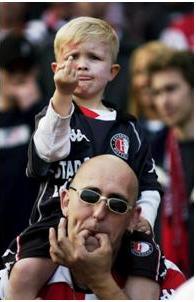
    It is notable how this gesture, that comes from ancient Greece and Rome, has come to our time and has spread widely as a sign of insult, disrespect, obscene gesture among many social groups. Probably it is the oldest and most widespread worldwide insult gesture. Instead it has lost its apotropaic value, deterrent  of evil eye.

    It is everywhere and every times: it has been used by politicians, singers, artists, sportsmen; it has penetrated completely in today's society; it is certainly the preferred reaction violent of car drivers, etc.. Yet the gesture is genuine tacky and rude today as it was yesterday.

    In summary of this obscene generalization, I will reproduce, for example, a shocking photograph of the famous Lady Di performing this gesture. Photograph is false, it is an assembly and therefore it does not  cease to be a fraud, but it reinforces the importance of the extension and generalization of gesture in our society that produces such compositions: the photograph is part of an exhibition at the Pompidou Museum in Metz titled "Paparazzi"; it is the work of "paparazzo" Alison Jackson, who titled "Diana: finger-up." And it was echoed by the Spanish newspaper (probably many others as well) El País, February 25, 2014.


    Or this photograph published in the Spanish newspaper El Mundo, the day March 9, 2014 to illustrate the article: A naturally violent species. / Spanish scientists argue in an essay that human aggression as a biological trend that can not be eradicated.


    Or this one of a member of a famous feminist group of Spanish “El Mundo”. Day March 29, 2014)


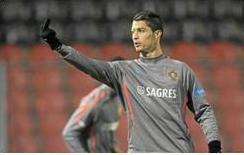
    Or this one of a famous footballer:


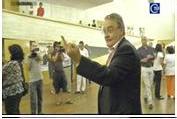
    Or these of known politicians


    We could reproduce  thousands of photographs to this effect in the strangest situations, but these are enough.

  • A 2000 years old Handbook for an election campaign

    We are in one of several election campaigns that decide issues that make up our lives. In this case it’s European Parliament elections. Also in the ancient world, there were elections for public office and, even certain differences with the current time there were, many similarities are also too numerous, until to the point that some people will stay really surprised.

    In Roman republica there was  an entire political career called "cursus honorum". To access the highest office, that of consul (equivalent to President of the Republic), the man  had to have previously passed by the aedile (Councillor), Quaestor (Head of Finance), Praetor (responsible for justice) and finally consul. Between the performance of them, it was intermediate times, because certain minimum age for each charge was required. Each of these magistracies  was made at the meeting (there were several) for. Just the Roman citizens voted. On another occasion I will deal with these issues more extensively. The term of office was annual.

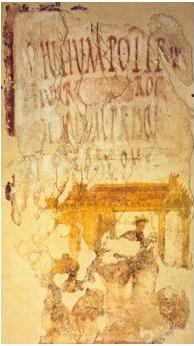
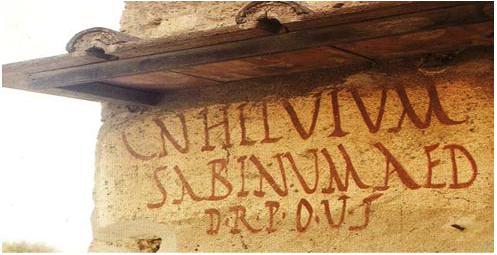
    Well, there were no political parties like these present, but there were social groups or classes with their interests and powerful families. Nor had a specific campaign period; the candidate made  visible his interest and abilities in ordinary life throughout the year. The electoral propaganda, mainly based on direct contact with citizens, also used  election posters to influence the decision of the voters. This is definitely a surprise to the modern citizen who is uninformed about  the ancient world.

    I've talked in a recent article about all that. See https://www.antiquitatem.com/en/pompeii-electoral-graffiti-aedile-iivir .

    I am going to present a exceptional document,  absolute present, valid even for candidates and political parties of today, that  again justifies the slogan of this blog "nihil novum sub sole".  It is a real guide to election campaign, "Commentariolum petitionis" which we could translate as "Notes to a candidacy" or "Notes about your candidacy." or "Handbook for an election campaign"

    It is a booklet in the form of letter  that Quintus Cicero sent to his brother, Marcus Cicero , on the occasion of his candidacy for the consulate in 64 B.C. in competition  with L. S. Catilina y C. Antonius.

    The important magistracies as the consulate and membership in the Senate were held by traditional powerful families. They  who are not from that social class and pretend access to the Senate are called "homo novus", "new man" in politics and this is the case of Cicero, for whom the campaign will not be easy.

    It has been doubted and still it is doubt the authorship of the brother of Cicero. This is not the occasion to discuss the arguments for or against. If it is  from the time of Cicero or from a few subsequent years, as it is advocated by some, it really interesting and surprising is the content of a "campaign guide" which in any is  2,000 years  old and shows how similar we are to our ancestors, the Romans .

    I will extract some of the essential ideas of this little work, but I will offer the full text in English  and Latin, advising the gentle reader to make the small effort of reading a few dozen pages that do not cease to amaze you.

    Comments and advice of a brother

    Do not trust your own intelligence; to prepare the campaign will be very useful

    Take it seriously and think who you are, what you want and in which city you are a candidate.
    Make use yourself especially the friends and acquaintances you have. If you need something indicate them that this it's time to return the favor.

    Earn the benefit of all people, starting with the most influential. Everyone must to think you have always thought like them.

    Attract young people because it gives you prestige.

    Highlight the negative aspects of the personality and history of your adversaries;  strive and work and you will earn them.

    You have to appear as worthy of the office to which you aspire. And think that many will envy you and others do not want anything right. So you must use all your intelligence and effort, but convince everyone that you are your best choice and you do not even want them bad or your opponents.

    It is essential to the support of friends and think you  that when the election the group of friends is much broader than that of normal life; anyone willing to vote for you, he is your friend. In campaign you will have the opportunity to make many new friends.

    Think that people vote based on the benefit they get, on hope that you generate for them and on the sympathy with which you are seen and they move even by small favors and details.

    Let them see that you value all your support, that you have them in high esteem and that they can always count on you.

    Go and meet everyone by name so that they see in you a friend.

    Always appear in public in the company of many friends, people of any condition of life and age. Never show up alone. Give all them to understand  that you are aware of your help.

    But you must also be aware of your enemies, the false, the envious.

    Use shameless flattery, because if in normal life it is inappropriate, in policy it is necessary.

    Go to the whole people for that:  no one refused support because you have not asked him.

    Do not deny anyone anything completely. People prefer a white lie to a flat refusal.

    Have no shame in promising many things; then they do not claim them. Besides the promise is for the future and you never know what can happen. People always will understand that you do not make it because circumstances do not allow it, but you'd want to keep your promises.

    Make sure that your campaign is all pomp, glitter, prestige, greatness.

    Everybody think you're the best solution for the republic and who better defend their interests.

    You also need to know to survive in Rome, where you have to endure the arrogance, malice, rudeness, arrogance, hatred and discomfort of many. Also you will must  to learn to adapt to such a variety of situations, opinions and interests.

    Your opponents must to understand that you will fight with all your strength to achieve your goal and you're going to be vigilant to avoid corruption and vote buying and therefore they must be careful.

    Full text:

    Handbook for an election campaign

    Although you have all the accomplishments within the reach of human genius, experience, or acuteness, yet I thought it only consistent with my affection to set down in writing what occurred to my mind while thinking, as I do, day and night on your canvass, not with the expectation that you would learn anything new from it, but that the considerations on a subject, which appeared to be disconnected and without system, might be brought under one view by a logical arrangement.
    Consider what the state is : what it is you seek: who you are that seek it. Almost every day as you go down to the forum you should say to yourself, "I am a novus homo," "I am a candidate for the consulship," "This is Rome." For the "newness" of your name you will best compensate by the brilliancy of your oratory. That has ever carried with it very great political distinction. A man who is held worthy of defending consulars cannot be thought unworthy of the consulship. Wherefore, since your reputation in this is your starting-point, since whatever you are, you are from this, approach each individual case with the persuasion that on it depends as a whole your entire reputation. See that those aids to natural ability, which I know are your special gifts, are ready for use and always available; and remember what Demetrius wrote about the hard work and practice of Demosthenes; and, finally, take care that both the number and rank of your friends are unmistakable. For you have such as few novi homines have had—all the publicani, nearly the whole equestrian order, many municipal towns specially devoted to you, many persons who have been defended by you, men of every order, many collegia, and, besides these, a large number of the rising generation who have become attached to you in their enthusiasm for rhetoric, and, finally, your friends who visit you daily in large numbers and with such constant regularity. See that you retain these advantages by reminding these persons, by appealing to them, and by using every means to make them understand that this, and this only, is the time for those who are in your debt to shew their gratitude, and for those who wish for your services in the future to place you under an obligation. It also seems possible that a "new man" may be much assisted by the fact that he has the good wishes of men of high rank, and especially of consulars. It is a point in your favour that you should be thought worthy of this position and rank by the very men to whose position and rank you are wishing to attain. All these men must be canvassed with care, agents must be sent to them, and they must be convinced that we have always been at one with the Optimates in our political sentiments, that we have never been demagogues in the very least : that if we seem ever to have said anything in the spirit of that party, we did so with the view of attracting Cn. Pompeius, that we might have the man of the greatest influence either actively on our side in our canvass, or at least not opposed to us. Furthermore, take pains to get on your side the young men of high rank, or retain the affection of those you already have. They will contribute much to your political position. You have very many; make them feel how much you think depends on them: if you induce those to be positively eager who are merely not disinclined, they will be of very great advantage to you.
    [2]
    It is also a great set-off to your "newness," that the nobles who are your competitors are of a such a kind that no one can venture to say that their nobility ought to stand them in greater stead than your high character. For instance, who could think of P. Galba and L. Cassius, though by birth of the highest rank, as candidates for the consulship? You see, therefore, that there are men of the noblest families, who from defect of ability are not your equals. But, you will say, Catiline and Antonius are formidable. Rather I should say that a man of energy, industry, unimpeachable character, great eloquence, and high popularity with those who are the ultimate judges, should wish for such rivals—both from their boyhood stained with blood and lust, both of ruined fortunes. Of one of them we have seen the property put up for sale, and actually heard him declare on oath that at Rome he could not contend with a Greek or obtain an impartial tribunal. We know that he was ejected from the senate by the judgment of genuine censors : in our praetorship we had him as a competitor, with such men as Sabidius and Panthera to back him, because he had no one else to appear for him at the scrutiny. Yet in this office he bought a mistress from the slave market whom he kept openly at his house. Moreover, in his canvass for the consulship, he has preferred to be robbing all the innkeepers, under the disgraceful pretext of a libera legatio, rather than to be in town and supplicate the Roman people. But the other! Good heavens what is his distinction ? Is he of equally noble birth ? No. Is he richer? No. In manliness, then? How do you make that out? Why, because while the former fears his own shadow, this man does not even fear the laws!—A man born in the house of a bankrupt father, nurtured in the society of an abandoned sister, grown to manhood amidst the massacre of fellow citizens, whose first entrance to public life was made by the slaughter of Roman knights For Sulla had specially selected Catiline to command that band of Gauls which we remember, who shore off the heads of the Titinii and Nannii and Tanusii : and while with them he killed with his own hands the best man of the day, his own sister's husband, Quintus Caecilius, who was a Roman eques, a man belonging to no party, always quiet by inclination, and then so from age also.
    [3]
    Why should I speak of him as a candidate for the consulship, who caused M. Marius, a man most beloved by the Roman people, to be beaten with vine-rods in the sight of that Roman people from one end of the City to the other—forced him up to the tomb—rent his frame with every kind of torture, and while he was still alive and breathing, cut off his head with his sword in his right hand, while he held the hairs on the crown of his head with his left, and carried off his head in his own hand with streams of blood flowing through his fingers ? A man who afterwards lived with actors and gladiators on such terms that the former ministered to his lust, the latter to his crimes—who never approached a place so sacred or holy as not to leave there, even if no actual crime were committed, some suspicion of dishonour founded on his abandoned character—a man whose closest friends in the senate were the Curii and the Annii, in the auction rooms the Sapalae and Carvilii, in the equestrian order the Pompilii and Vettii—a man of such consummate impudence, such abandoned profligacy, in fine, such cunning and success in lasciviousness, that he corrupted young boys when almost in the bosoms of their parents? Why should I after this mention Africa to you, or the depositions of the witnesses? They are well known—read them again and again yourself. Nevertheless, I think that I should not omit to mention that he left that court in the first place as needy as some of the jurors were before the trial, and in the second place the object of such hatred, that another prosecution against him is called for every day. His position is such that he is more likely to be nervous even if you do nothing, than contemptuous if you start any proceedings.
    What much better fortune in your canvass is yours than that which not long ago fell to the lot of another "new man", Gaius Caelius! He had two men of the highest rank as competitors, but they were of such a character that their rank was the least of their recommendations—genius of the highest order, supreme modesty, very numerous public services, most excellent methods of conducting a canvass, and diligence in carrying them out. And yet Caelius, though much inferior in birth, and superior in hardly anything, beat one of them. Wherefore, if you do what your natural ability and studies, which you have always pursued, enable you to do, what the exigencies of your present position require, what you are capable of doing and are bound to do, you will not have a difficult struggle with competitors who are by no means so conspicuous for their birth as notorious for their vices. For what citizen can there be found so ill-affected as to wish by one vote to draw two daggers against the Republic?
    [4]
    Having thus set forth what advantages you have and might have to set against your "newness," I think I ought now to say a word on the importance of what you are trying for. You are seeking the consulship, an office of which no one thinks you unworthy, but of which there are many who will be jealous. For, while by birth of equestrian rank, you are seeking the highest rank in the state, and yet one which, though the highest, reflects much greater splendour on a man of courage eloquence and pure life than on others. Don't suppose that those who have already held that office are blind to the political position you will occupy, when once you have obtained the same. I suspect, however, that those who, though born of consular families, have not attained the position of their ancestors will unless they happen to he strongly attached to you feel 'some' jealousy. Even "new men" who have been praetors I think, unless under great obligations to you, will not like to be surpassed by you in official rank. Lastly, in the populace itself, I am sure it will occur to you how many are envious, how many, from the precedents of recent years, are averse to "new men." It must also needs be that some are angry with you in consequence of the causes which you have pleaded. Nay, carefully consider this also, whether, seeing that you have devoted yourself with such fervour to the promotion of Pompey's glory you can suppose certain men to be your friends on that account. 2 Wherefore, seeing that you are seeking the highest place in the state, and at the same time that there do exist sentiments opposed to you, you must positively employ every method and all your vigilance, labour, and attention to business.
    [5]
    Again, the canvass for office resolves itself into an activity of two kinds, of which one is concerned with the loyalty of friends, the other with the feelings of the people. The loyalty of friends must be secured by acts of kindness and attention by length of time, and by an easy and agreeable temper. But this word "friends" has a wider application during a canvass than in other times of our life. For whosoever gives any sign of an inclination to you, or habitually visits at your house must be put down in the category of friends. But yet the most advantageous thing is to be beloved and pleasant in the eyes of those who are friends on the more regular grounds of relationship by blood or marriage, of membership of the same club or of some close tie or other. Farther, you must take great pains that, in proportion as a man is most intimate and most closely connected with your household, he should love you and desire your highest honour—as, for instance, your tribesmen, neighbours, clients, and finally your freedmen and even your slaves for nearly all the talk which forms one's public reputation emanates from domestic sources. In a word, you must secure friends of every class : for show—men conspicuous for their office or name, who, even if they do not give any actual assistance in canvassing, yet add some dignity to the candidate; to maintain your just rights—magistrates, consuls first and then tribunes to secure the votes of the centuries—men of eminent popularity. Those who either have gained or hope to gain the vote of a tribe or century, or any other advantage, through your influence, take all pains to collect and secure. For during recent years men of ambition have exerted themselves with all their might and main to become sure of getting from their tribesmen what they sought. Do you also do your very best, by every means in your power, to make such men attached to you from the bottom of their hearts and with the most complete devotion. If, indeed, men were as grateful as they ought to be, all this should be ready to your hand, as I trust in fact that it is. For within the last two years you have put under an obligation to you four clubs of men who have the very greatest influence in promoting an election, those of C. Fundanius, Q. Gallius, C. Cornelius, C. Orchivius. When they committed the defence of these men to you, I am acquainted with what their clubsmen undertook and promised you to do, for I was present at the interview. Wherefore you must insist at the present juncture on exacting from them your due by reminding them, appealing to them, solemnly assuring them, and taking care that they thoroughly understand that they will never have any other opportunity of shewing their gratitude. I cannot doubt that these men, from hope of your services in the future as well as from the benefits recently received, will be roused to active exertions. And speaking generally, since your candidature is most strongly supported by that class of friendships which you have gained as a counsel for the defence, take care that to all those, whom you have placed under this obligation to you, their duty should in every case be clearly defined and set forth. And as you have never been in any matter importunate with them, so be careful that they understand that you have reserved for this occasion all that you consider them to owe you.
    [6]
    But since men are principally induced to shew goodwill and zeal at the hustings by three considerations—kindness received, hope of more, personal affection and good feeling—we must take notice how best to take advantage of each of these. By very small favours men are induced to think that they have sufficient reason for giving support at the poll, and surely those you have saved (and their number is very large) cannot fail to understand that, if at this supreme crisis they fail to do what you wish, they will never have anyone's confidence. And though this is so, nevertheless they must be appealed to, and must even be led to think it possible that they, who have hitherto been under an obligation to us, may now put us under an obligation to them. Those, again, who are influenced by hope (a class of people much more apt to be scrupulously attentive) you must take care to convince that your assistance is at their service at any moment, and to make them understand that you are carefully watching the manner in which they perform the duties they owe you, and to allow no mistake to exist as to your clearly perceiving and taking note of, the amount of support coming from each one of them. The third class which I mentioned is that of spontaneous and sincere friends, and this class you will have to make more secure by expressions of your gratitude; by making your words tally with the motives which it shall appear to you influenced them in taking up your cause ; by shewing that the affection is mutual ; and by suggesting that your friendship with them may ripen into intimacy and familiar intercourse. In all these classes alike consider and weigh carefully the amount of influence each possesses, in order to know both the kind of attention to pay to each, and what you are to expect and demand from each. For certain men are popular in their own neighbourhoods and towns ; there are others possessed of energy and wealth, who, even if they ,have not heretofore sought such popularity, can yet easily obtain it at the moment for the sake of one to whom they owe or wish to do a favour. Your attention to such classes of men must be such as to shew them that you clearly understand what is to be expected from each, that you appreciate what you are receiving, and remember what you have received. There are, again, others who either have no influence or are positively disliked by their tribesmen, and have neither the spirit nor the ability to exert themselves on the spur of the moment : be sure you distinguish between such men, that you may, not be disappointed in your expectation of support by placing over-much hope on some particular person.
    [7]
    But although you ought to rely on and be fortified by, friendships already gained and firmly secured, yet in the course of the canvass itself very numerous and useful friendships are acquired. For among its annoyances a candidature has this advantage : you can without loss of dignity, as you cannot in other affairs of life, admit whomsoever you choose to your friendship to whom if you were at any other time to offer your society, you would be thought guilty of an eccentricity; whereas during a canvass, if you don't do so with many, and take pains about it besides, you would be thought to be no use as a candidate at all. Moreover, I can assure you of this, that there is no one unless he happens to be bound by some special tie to some one of your rivals, whom you could not induce, if you took pains, to earn your affection by his good services, and to seize the opportunity of putting you under an obligation—let him but fully understand that you value him highly, that you really mean what you say, that he is making a good investment, and that there will accrue from it not only a brief and electioneering friendship, but a firm and lasting one. There will be no one, believe me, if he has anything in him at all, who will let slip this opportunity offered of establishing a friendship with you, especially when by good luck you have competitors whose friendship is one to be neglected or avoided, and who not only are unable to secure what I am urging you to secure, but cannot even make the first step towards it. For how should Antonius make the first step towards attaching people to himself, when he cannot even call them, unaided, by their proper names? I, for one, think that there can be no greater folly than to imagine a man solicitous to serve you whom you don't know by sight. Extraordinary indeed must be the fame, the political position and extent of the public services of that man whom entire strangers, without supporters to back him, would elect to office. That a man without principle or energy, without doing any good service, and without ability, lying under a cloud of discredit, and without friends, should beat a man fortified with the devotion of a numerous circle and by the good opinion of all, cannot possibly occur except from gross negligence.
    [8]
    Wherefore see that you have the votes of all the centuries secured to you by the number and variety of your friends. The first and most obvious thing is that you should embrace the Roman senators and knights, and the active and popular men of all the other orders. There are many city men of good business habits, there are many freedmen engaged in the forum who are popular and energetic: these men try with all your might both personally and by common friends, as far as you can, to make eager in your behalf; seek them out, send agents to them, shew them that they are putting you under the greatest obligation. After that review the entire city, all colleges, districts, neighbourhoods. If you attach to yourself the leading men of these, you will by their means easily keep a hold upon the multitude. When you have done that, take care to have in your mind a chart of all Italy laid out according to the tribe of each town, and ]earn it by heart, so that you may not allow any municipium, colony, prefecture, or, in a word, any spot in Italy to exist, in which you have not a sufficient foothold. Inquire also for and trace out individuals in every region, inform yourself about them, seek them out, strengthen their resolution, secure that in their own neighbourhoods they shall canvass for you, and be as it were candidates in your interest. They will wish for you as a friend, if they once see that their friendship is an object with you. Make sure that they do understand this by directing your speech specially to this point. Men of country towns, or from the country, think themselves in the position of friends if we of the city know them by name : if, however, they think that they are besides securing some protection for themselves, they do not let slip the opportunity of being obliging. Of such people others in town, and above all your rivals, don't so much as know the existence : you know about them and will easily recognize them, without which friendship is impossible. Nor is such recognition enough (though it is a great thing) unless some hope of material advantage and active friendship follows, for your object is not to be looked upon as a mere "nomenclator," but as a sincere friend also. So when you have both got the favour of these same men in the centuries, who from the means they have taken to secure their personal objects enjoy most popularity among their fellow tribesmen; and have made those all desirous of your success who have influence in any section of their tribe, owing to considerations attaching to their municipality or neighbourhood or college, then you may allow yourself to entertain the highest hopes.
    Again, the centuries of the knights appear to me capable of being won over, if you are careful, with considerably more ease. Let your first care be to acquaint yourself with the knights ; for they are comparatively few : then make advances to them, for it is much easier to gain the friendship of young men at their time of life. Then again, you have on your side the best of the rising generation, and the most devoted to learning. Moreover, as the equestrian order is yours, they will follow the example of that order, if only you take the trouble to confirm the support of those centuries, not only by the general good affection of the order, but also by the friendships of individuals. Finally, the hearty zeal of the young in canvassing for votes, appearing at various places, bringing intelligence, and being in attendance on you in public are surprisingly important as well as creditable.
    [9]
    And since I have mentioned "attendance," I may add that you should be careful to see large companies every day of every class and order; for from the mere number of these a guess may well be made as to the amount of support you are likely to have in the campus itself. Such visitors are of three kinds: one consists of morning callers who come to your house, a second of those who escort you to the forum, a third of those who attend you on your canvass. In the case of the morning callers, who are less select and, according to the prevailing fashion, come in greater numbers, you must contrive to make them think that you value even this slight attention very highly. Let those who shall come to your house see that you notice it; shew your gratification to such of their friends as will repeat it to them ; frequently mention it to the persons themselves. It often happens that people, when they visit a number of candidates, and observe that there is one who above the rest notices these attentions, devote themselves to him ; leave off visiting the others ; little by little become devoted to one instead of being neutral, and from sham turn out real supporters. Furthermore, carefully remember this, if you have been told or have discovered that a man who has given you his promise is "dressing for the occasion," as the phrase goes, make as though you had neither heard it nor knew it ; if any offers to clear himself to you, because he thinks himself suspected, assert roundly that you have never doubted his sincerity and have no right to doubt it. For the man who thinks that he is not giving satisfaction can never be a friend. You ought, however, to know each man's real feeling, in order to settle how much confidence to place in him.
    Secondly, of those who escort you to the forum: since this is a greater attention than a morning call, indicate and make clear that it is still more gratifying to you, and as far as it shall lie in your power go down to the forum at fixed times. The daily escort by its numbers produces a great impression and confers great personal distinction. The third class is that of numbers perpetually attending you on your canvass. See that those who do so spontaneously understand that you regard yourself as for ever obliged by their extreme kindness : from those, on the other hand, who owe you this attention, frankly demand that, as far as their age and business allow, they should constantly be in personal attendance, and that those who are unable to accompany you in person should find relations to take their place in performing this duty. I am very anxious, and think it extremely important, that you should always be surrounded by large numbers. Besides, it confers a great reputation and great distinction to be accompanied by those who by your exertions have been defended, preserved, and acquitted in the law courts. Put this demand fairly before them, that, since by your means and without any payment some have retained their property, others their honour, others their civil existence and entire fortunes, and since there will never be any other time at which they can shew their gratitude, they should remunerate you by this service.
    [10]
    And since the point now in discussion is entirely a question of the loyalty of friends, I must not, I think, pass over one caution. Deception, intrigue, and treachery are everywhere. This is not the time for a formal disquisition on the indications by which a true friend may be distinguished from a false: al that is in place now is to give you a hint. Your exalted character has compelled many to pretend to be your friends while really jealous of you. Wherefore remember the saying of Epicharmus, "the muscle and bone of wisdom is to believe nothing rashly." Again, when you have got the feelings of your friends in a sound state, you must then acquaint yourself with the attitude and varieties of your detractors and opponents. There are three : first, those whom you have attacked second, those who dislike you without definite reason ; third, those who are warm friends of your competitors. As to those attacked by you while pleading a friend's cause against them, frankly excuse yourself; remind them of the ties constraining you; give them reason to hope that you will act with equal zeal and loyalty in their cases, if they become your friends. As for those who dislike you without reason, do your best to remove that prejudice either by some actual service, or by holding out hopes of it, or by indicating your kindly feeling towards them. As for those whose wishes are against you owing to friendship for your competitors, gratify them also by the same means as the former, and, if you can get them to believe it, shew that you are kindly disposed to the very men who are standing against you.
    [11]
    Having said enough about securing friendships, I must now speak on another department of a candidate's task, which is concerned with the conciliation of the people. This demands a knack of remembering names, insinuating manners, constant attendance, liberality, the power of setting a report afloat and creating a hopeful feeling in the state. First of all, make the faculty you possess of recognizing people conspicuous, and go on increasing and improving it every day. I don't think there is anything so popular or so conciliatory. Next, if nature has denied you some quality, resolve to assume it, so as to appear to be acting naturally. Although nature has great force, yet in a business lasting only a few months it seems probable that the artificial may be the more effective. For though you are not lacking in the courtesy which good and polite men should have, yet there is great need of a flattering manner which, however faulty and discreditable in other transactions of life, is yet necessary during a candidateship. For when it makes a man worse by truckling, it is wrong; but when only more friendly, it does not deserve so harsh a term ; while it is absolutely necessary to a candidate, whose face and expression and style of conversation have to be varied and accommodated to the feelings and tastes of everyone he meets. As for "constant attendance," there is no need of laying down any rule, the phrase speaks for itself. It is, of course, of very great consequence not to go away anywhere; but the real advantage of such constant attendance is not only the being at Rome and in the forum, but the pushing one's Canvass assiduously, the addressing oneself again and again to the same persons, the making it impossible (as far as your power goes) for anyone to say that he has not been asked by you, and earnestly and carefully asked. Liberality is, again, of wide application ; it is shewn in regard to the management of your private property, which, even if it does not actually reach the multitude, yet, if spoken of with praise by friends, earns the favour of the multitude. It may also be displayed in banquets, which you must take care to attend yourself and to cause your friends to attend, whether open ones or those confined to particular tribes. It may, again, be displayed in giving practical assistance, which I would have you render available far and wide : and be careful therein to be accessible to all by day and night, and not only by the doors of your house, but by your face and countenance, which is the door of the mind for, if that shews your feelings to be those of reserve and concealment, it is of little good to have your house doors open. For men desire not only to have promises made them, especially in their applications to a candidate, but to have them made in a liberal and complimentary manner. Accordingly, it is an easy rule to make, that you should indicate that whatever you are going to do you will do with heartiness and pleasure; it is somewhat more difficult, and rather a concession to the necessities of the moment than to your inclination, that when you cannot do a thing you should [either promise] or put your refusal pleasantly : the latter is the conduct of a good man, the former of a good candidate. For when a request is made which we cannot grant with honour or without loss to ourselves, for instance, if a man were to ask us to appear in a suit against a friend, a refusal must be given in a gentlemanly way: you must point out to him that your hands are tied, must shew that you are exceedingly sorry, must convince him that you will make up for it in other ways.
    [12]
    I have heard a man say about certain orators, to whom he had offered his case, "that he had been better pleased with the words of the one who declined, than of the one who accepted." So true it is that men are more taken by look and words than by actual services. [This latter course, however, you will readily approve : the former it is somewhat difficult to recommend to a Platonist like you, but yet I will have regard for your present circumstances.] For even those to whom you are forced by any other tie to refuse your advocacy may yet quit you mollified and with friendly feelings. But those to whom you only excuse a refusal by saying that you are hindered by the affairs of closer friends, or by cases more important or previously undertaken, quit you with hostile feelings, and are one and all disposed to prefer an insincere promise to a direct negative from you. C. Cotta, a master in the art of electioneering, used to say that, "so long as the request was not directly contrary to moral duty, he used to promise his assistance to all to bestow it on those with whom he thought it would be most advantageously invested: he did not refuse anyone, because something often turned up to prevent the person whom he promised from availing himself of it, and it often also occurred that he himself was less engaged than he had thought at the time nor could anyone's house be full of suitors who only undertook what he saw his way to perform: by some accident or other the unexpected often happens, while business, which you have believed to be actually in hand, from some cause or other does not come off: moreover, the worst that can happen is that the man to whom you have made a false promise is angry." This last risk, supposing you to make the promise, is uncertain, is prospective, and only affects a few; but, if you refuse, the offence given is certain, immediate, and more widely diffused. For many more ask to be allowed to avail themselves of the help of another than actually do so. Wherefore it is better that some of them should at times be angry with you in the forum than all of them perpetually at your own house : especially as they are more inclined to be angry with those who refuse, than with a man whom they perceive to be prevented by so grave a cause as to be Compatible with the desire to fulfil his promise if he possibly could. But that I may not appear to have abandoned my own classification, since the department of a candidate's work on which I am now dilating is that which refers to the populace, I insist on this, that all these observations have reference not so much to the feelings of friends as to popular rumour. Though there is something in what I say which comes under the former head—such as answering with kindness, and giving zealous assistance in the business and the dangers of friends—yet in this part of my argument I am speaking of the things which enable you to win over the populace: for instance, the having your house full of visitors before daybreak, the securing the affection of many by giving them hope of your support the contriving that men should leave you with more friendly feelings than they came, the filling the ears of as many as possible with the most telling words.
    [13]
    For my next theme must be popular report, to which very great attention must be paid. But what I have said throughout the foregoing discourse applies also to the diffusion of a favourable report: the reputation for eloquence; the favour of the publicani and equestrian order; the goodwill of men of rank; the crowd of young men; the constant attendance of those whom you have defended; the number of those from municipal towns who have notoriously come to Rome on your account the observations which men make in your favour—that you recognize them, address them politely, are assiduous and earnest in canvassing; that they speak and think of you as kind and liberal; the having your house full of callers long before daybreak ; the presence of large numbers of every class ; that your look and speech give satisfaction to all, your acts and deeds to many; that everything is done which can be done by hard work, skill, and attention, not to cause the fame arising from all these displays of feeling to reach the people, but to bring the people itself to share them. You have already won the city populace and the affections of those who control the public meetings by your panegyric of Pompey, by undertaking the cause of Manilius, by your defence of Cornelius. We must not let those advantages be forgotten, which hitherto no one has had without possessing at the same time the favour of the great. We must also take care that everyone knows that Cn. Pompeius is strongly in your favour, and that it emphatically suits his purpose that you should win your election. Lastly, take care that your whole candidature is full of éclat, brilliant, splendid, suited to the popular taste, presenting a spectacle of the utmost dignity and magnificence. See also, if possible, that some new scandal is started against your competitors for crime or looseness of life or corruption, such as is in harmony with their characters.
    Above all in this election you must see that the Republic entertains a good hope and an honourable opinion of you. And yet you must not enter upon political measures in senate-house and public meeting while a candidate: you must hold such things in abeyance, in order that from your lifelong conduct the senate may judge you likely to be the supporter of their authority; the Roman knights, along with the loyalists and wealthy, judge you from your past to be eager for peace and quiet times; and the people think of you as not likely to be hostile to their interests from the fact that in your style of speaking in public meetings, and in your declared convictions, you have been on the popular side.
    [14]
    This is what occurred to me to say on the subject of these two morning reflexions, which I said you ought to turn over in your mind every day as you went down to the forum: "I am a novus homo," "I am a candidate for the consulship." There remains the third, "This is Rome," a city made up of a combination of nations, in which many snares, much deception, many vices enter into every department of life: in which you have to put up with the arrogant pretensions, the wrong-headedness, the ill-will, the hauteur, the disagreeable temper and offensive manners of many. I well understand that it requires great prudence and skill for a man, living among social vices of every sort, so many and so serious, to avoid giving offence, causing scandal, or falling into traps, and in his single person to adapt himself to such a vast variety of character, speech, and feeling. Wherefore, I say again and again, go on persistently in the path you have begun: put yourself above rivalry in eloquence; it is by this that people at Rome are charmed and attracted, as well as deterred from obstructing a man's career or inflicting an injury upon him. And since the chief plague spot of our state is that it allows the prospect of a bribe to blind it to virtue and worth, be sure that you are fully aware of your own strength, that is, understand that you are the man capable of producing in the minds of your rivals the strongest fear of legal proceeding and legal peril. Let them know that they are watched and scrutinized by you : they will be in terror of your energy, as well as of your influence and power of speech, and above all of the affection of the equestrian order towards you. But though I wish you to hold out this before them, I do not wish you to make it appear that you are already meditating an action, but to use this terror so as to facilitate the gaining of your object: and, in a word, in this contest strain every nerve and use every faculty in such a way as to secure what we seek. I notice that there are no elections so deeply tainted with corruption, but that some centuries return men closely connected with them without receiving money. Therefore, if we are as vigilant as the greatness of our object demands, and rouse our well-wishers to put forth all their energies; and if we allot to men of influence and zeal in our service their several tasks; if we put before our rivals the threat of legal proceedings ; if we inspire their agents with fear, and by some means check the distributors, it is possible to secure either that there shall be no bribery or that it shall be ineffectual.
    These are the points that I thought, not that I knew better than you, but that I could more easily than you—in the pressing state of your present engagements—collect together and send you written out. And although they are written in such terms as not to apply to all candidates for office, but to your special case and to your particular election, yet I should be glad if you would tell me of anything that should be corrected or entirely struck out, or that has been omitted. For I wish this little essay "on the duties of a candidate" to be regarded as complete in every respect.

    (Cicero. The Letters of Cicero; the whole extant correspondence in chronological order, in four volumes. Evelyn S. Shuckburgh. London. George Bell and Sons. 1908-1909.)

    QUINTUS MARCO FRATRI S. D.
       I. 1. Etsi tibi omnia suppetunt ea, quae consequi ingenio aut usu homines aut diligentia possunt, tamen amore nostro non sum alienum arbitratus ad te perscribere ea, quae mihi veniebant in mentem dies ac noctes de petitione tua cogitanti, non ut aliquid ex iis novi addisceres, sed ut ea, quae in re dispersa atque infinita viderentur esse, ratione et distributione sub uno aspectu ponerentur. [Quamquam plurimum natura valet, tamen videtur in paucorum mensum negotio posse simulatio naturam vincere.] Civitas quae sit cogita, quid petas, qui sis. 2. Prope quotidie tibi hoc ad forum descendenti meditandum est: "novus sum, consulatum peto, Roma est." Nominis novitatem dicendi gloria maxime sublevabis: semper ea res plurimum dignitatis habuit; non potest, qui dignus habetur patronus consularium, indignus consulatu putari. Quamobrem, quoniam ab hac laude proficisceris et, quidquid es, ex hoc es, ita paratus ad dicendum venito, quasi in singulis causis iudicium de omni ingenio tuo futurum sit. 3. Eius facultatus adiumenta, quae tibi scio esse seposita, ut parata ac prompta sint cura–et saepe, quae de Demosthenis studio et exercitatione scripsit Demetrius, recordare–, deinde ut amicorum et multitudo et generea appareant; habes enim ea, quae non multi homines novi habuerunt: omnes publicanos, totum fere equestrem ordinem, multa propria municipia, multos abs te defensos homines cuiusque ordinis, aliquot collegia, praeterea studio dicendi conciliatos plurimos adolescentulos, quotidianam amicorum assiduitatem et frequentiam: 4. haec cura ut teneas commendando et rogando et omni ratione efficiendo, ut intelligant, qui debent tua causa, referendae gratiae, qui volunt, obligandi tui tempus sibi aliud nullum fore. Etiam hoc multum videtur adiuvare posse novum hominem: hominum nobilium voluntas et maxime consularium; prodest, quorum in locum ac numerum pervenire velis, ab iis ipsis illo loco ac numero dignum putari. 5. Hi rogandi omnes sunt diligenter et ad eos allegandum est persuadendumque iis nos semper cum optimatibus de re publica sensisse, minime populares fuisse; si quid locuti populariter videamur, id nos eo consilio fecisse, ut nobis Cn. Pompeium adiungeremus, ut eum, qui plurimum posset, aut amicum in nostra petitione haberemus aut certe non adversarium. 6. Praeterea adolescentes nobiles elabora ut habeas vel ut teneas studiosos [tui], quos habes: multum dignitatis afferent. Plurimos habes: perfice, ut sciant, quantum in iis putes esse. Quod si adduxeris, ut ii, qui non nolunt, cupiant, plurimum proderunt.
       II. 7. Ac multum etiam novitatem tuam adiuvat, quod eiusmodi nobiles tecum petunt, ut nemo sit, qui audeat dicere plus illis nobilitatem quam tibi virtutem prodesse oportere. Nam P. Galbam et L. Cassium summo loco natos quis est qui petere consulatum putet oportere? vides igitur amplissimis ex familiis homines, quod sine nervis sint, tibi pares non esse. 8. "At Catilina et Antonius molesti sunt." Immo homini navo, industrio, innocenti, diserto, gratioso apud eos, qui res iudicant, optandi competitores ambo a pueritia sicarii, ambo libidinosi, ambo egentes. Eorum alterius bona proscripta vidimus, vocem denique audivimus iurantis se Romae iudicio aequo cum homine Graeco certare non posse, ex senatu eiectum scimus [, optima vero censorum existimatione]; in praetura competitorem habuimus amico Sabidio et Panthera, cum alios, ad tabulam quos poneret, non haberet, quo tamen in magistratu amicam, quam domi palam haberet, de machinis emit; in petitione autem consulatus caupones omnes compilare per turpissimam legationem maluit quam adesse et populo Romano supplicare. 9. Alter vero, di boni! quo splendore est? Primum nobilitate eadem. Num maiore re? Non, sed virtute. Quamobrem? Quod inanius umbram suam metuit, hic ne leges quidem, natus in patris egestate, educatus in sororis stupris, corroboratus in caede civium, cuius primus ad rem publicam aditus in equitibus Romanis occidendis fuit–nam illis, quos meminimus, Gallis, qui tum Titiniorum ac Nanniorum ac Tanusiorum capita demetebant, Sulla unum Catilinam praefecerat–, in quibus ille hominem optimum, Q. Caecilium, sororis suae virum, equitem Romanum, nullarum partium, cum semper natura, tum etiam aetate iam quietum, suis manibus occidit.
       III. 10. Quid ego nunc dicam petere eum consulatum, qui hominem carissimum populo Romano, M. Marium inspectante populo Romano vitibus per totam urbem ceciderit, ad bustum egerit, ibi omni cruciatu lacerarit, vivo stanti collum gladio sua dextera secuerit, cum sinistra capillum eius a vertice teneret, caput sua manu tulerit, cum inter digitos eius rivi sanguinis fluerent? qui postea cum histrionibus et cum gladiatoribus ita vixit, ut alteros libidinis, alteros facinoris adiutores haberet, qui nullum in locum tam sanctum ac tam religiosum accessit, in quo non, etiamsi aliis culpa non esset, tamen ex sua nequitia dedecoris suspicionem relinqueret, qui ex curia Curios et Annios, ab atriis Sapalas et Carvilios, ex equestri ordine Pompilios et Vettios sibi amicissimos comparavit, qui tantum habet audaciae, tantum nequitiae, tantum denique in libidine artis et efficacitatis, ut prope in parentum gremiis praetextatos liberos constuprarit? Quid ego nunc tibi de Africa, quid de testium dictis scribam? Nota sunt, et ea tu saepius legito; sed tamen hoc mihi non praetermittendum videtur, quod primum ex eo iudicio tam egens discessit, quam quidem iudices eius ante illud iudicium fuerunt, deinde tam invidiosus, ut aliud in eum iudicium quotidie flagitetur. Hic se sic habet, ut magis timeat, etiamsi quierit, quam ut contemnat, si quid commoverit. 11. Quanto melior tibi fortuna petitionis data est quam nuper homini novo, C. Caelio! ille cum duobus hominibus ita nobilissimis petebat, ut tamen in iis omnia pluris essent quam ipsa nobilitas: summa ingenia, summus pudor, plurima beneficia, summa ratio ac diligentia petendi; ac tamen eorum alterum Caelius, cum multo inferior esset genere, superior nulla re paene, superavit. 12. Quare tibi, si facies ea, quae natura et studia, quibus semper usus es, largiuntur, quae temporis tui ratio desiderat, quae potes, quae debes, non erit difficile certamen cum iis competitoribus, qui nequaquam sunt tam genere insignes quam vitiis nobiles; quis enim reperiri potest tam improbus civis, qui velit uno suffragio duas in rem publicam sicas destringere?
       IV. 13. Quoniam, quae subsidia novitatis haberes et habere posses, exposui, nunc de magnitudine petitionis dicendum videtur: consulatum petis, quo honore nemo est quin te dignum arbitretur, sed multi, qui invideant; petis enim homo ex equestri loco summum locum civitatis atque ita summum, ut forti homini, diserto, innocenti multo idem ille honos plus amplitudinis quam ceteris afferat. Noli putare eos, qui sunt eo honore usi, non videre, tu, cum idem sis adeptus, quid dignitatis habiturus sis; eos vero, qui consularibus familiis nati locum maiorum consecuti non sunt, suspicor tibi, nisi si qui admodum te amant, invidere; etiam novos homines praetorios existimo, nisi qui tuo beneficio vincti sunt, nolle abs te se honore superari. 14. Iam in populo quam multi invidi sint, quam multi consuetudine horum annorum ab hominibus novis alienati, venire tibi in mentem certo scio; esse etiam nonnullos tibi iratos ex iis causis, quas egisti, necesse est. Iam illud tute circumspicito, quod ad Cn. Pompeii gloriam augendam tanto studio te dedidisti, num quos tibi putes ob eam causam esse amicos. 15. Quamobrem, cum et summum locum civitatis petas et videas esse studia, quae tibi adversentur, adhibeas necesse est omnem rationem et curam et laborem et diligentiam.
       V. 16. Et petitio magistratuum divisa est in duarum rationum diligentiam, quarum altera in amicorum studiis, altera in populari voluntate ponenda est. Amicorum studia beneficiis et officiis et vetustate et facilitate ac iucunditate naturae parta esse oportet; sed hoc nomen amicorum in petitione latius patet quam in cetera vita; quisquis est enim, qui ostendat aliquid in te voluntatis, qui colat, qui domum ventitet, is in amicorum numero est habendus; sed tamen, qui sunt amici ex causa iustiore cognationis aut affinitatis aut sodalitatis aut alicuius necessitudinis, iis carum et iucundum esse maxime prodest. 17. Deinde, ut quisque est intimus ac maxime domesticus, ut is amet et quam amplissimum esse te cupiat, valde elaborandum est, [tum] ut tribules, ut vicini, ut clientes, ut denique liberti, postremo etiam servi tui; nam fere omnis sermo ad forensem famam a domesticis emanat auctoribus. 18. Denique sunt instituendi cuiusque generis amici: ad speciem homines illustres honore ac nomine, qui etiamsi suffragandi studia non navant, tamen afferunt petitori aliquid dignitatis, ad ius obtinendum magistratus, ex quibus maxime consules, deinde tribuni pl., ad conficiendas centurias homines excellenti gratia. Qui abs te tribum aut centuriam aut aliquod beneficium aut habeant aut sperent, eos prorsus magno opere et compara et confirma; nam per hos annos homines ambitiosi vehementer omni studio atque opera elaborarunt, ut possent a tribulibus suis ea, quae peterent, impetrare: hos tu homines, quibuscumque poteris rationibus, ut ex animo atque ex illa summa voluntate tui studiosi sint, elaborato. 19. Quod si satis grati homines essent, haec tibi omnia parata esse debebant, sicuti parata esse confido; nam hoc biennio quattuor sodalitates hominum ad ambitionem gratiosissimorum tibi obligasti, M. Fundanii, Q. Gallii, C. Cornelii, C. Orchivii: horum in causis ad te deferendis quid tibi eorum sodales receperint et confirmarint, scio, nam interfui; quare hoc tibi faciendum est, hoc tempore ut ab iis quod debent exigas saepe commonendo, rogando, confirmando, curando ut intelligant nullum tempus aliud se umquam habituros referendae gratiae: profecto homines et spe reliquorum tuorum officiorum et [iam] recentibus beneficiis ad studium navandum excitabuntur. 20. Et omnino, quoniam eo genere amicitiarum petitio tua maxime munita est, quod ex causarum defensionibus adeptus es, fac, ut plane iis omnibus, quos devinctos tenes, descriptum ac dispositum suum cuique munus sit, et, quemadmodum nemini illorum molestus ulla in re umquam fuisti, sic cura, ut intelligant omnia te, quae ab illis tibi deberi putaris, ad hoc tempus reservasse.
       VI. 21. Sed, quoniam tribus rebus homines maxime ad benevolentiam atque haec suffragandi studia ducuntur, beneficio, spe, adiunctione animi ac voluntate, animadvertendum est, quemadmodum cuique horum generi sit inserviendum. Minimis beneficiis homines adducuntur, ut satis causae putent esse ad studium suffragationis, nedum ii, quibus saluti fuisti, quos tu habes plurimos, non intelligant, si hoc tuo tempore tibi non satisfecerint, se probatos nemini umquam fore. Quod cum ita sit, tamen rogandi sunt atque etiam in hanc opinionem adducendi, ut, qui adhuc nobis obligati fuerint, iis vicissim nos obligari posse videamur. 22. Qui autem spe tenentur, quod genus hominum multo etiam est diligentius atque officiosius, iis fac ut propositum ac paratum auxilium tuum esse videatur, denique ut spectatorem te suorum officiorum esse intelligant diligentem, ut videre te plane atque animadvertere, quantum a quoque proficiscatur, appareat. 23. Tertium illud genus est studiorum voluntarium, quod agendis gratiis, accommodandis sermonibus ad eas rationes, propter quas quisque studiosus tui esse videbitur, significanda ergo illos pari voluntate, adducenda amicitia in spem familiaritatis et consuetudinis confirmari oportebit. Atque in iis omnibus generibus iudicato et perpendito, quantum quisque possit, ut scias et quemadmodum cuique inservias et quid a quoque exspectes ac postules. 24. Sunt enim quidam homines in suis vicinitatibus et municipiis gratiosi, sunt diligentes et copiosi, qui etiamsi antea non studuerunt huic gratiae, tamen ex tempore elaborare eius causa, cui debent aut voluit, facile possunt: his hominum generibus sic inserviendum est, ut ipsi intelligant te videre, quid a quoque exspectes, sentire, quid accipias, meminisse, quid acceperis; sunt autem alii, qui aut nihil possunt aut etiam odio sunt tribulibus suis nec habent tantum animi aut facultatis, ut enitantur ex tempore: hos ut internoscas, videto, ne spe in aliquo maiore posita praesidii parum comparetur.
       VII. 25. Et, quamquam partis ac fundatis amicitiis fretum ac munitum esse oportet, tamen in ipsa petitione amicitiae permultae ac perutiles comparantur; nam in ceteris molestiis habet hoc tamen petitio commodi, ut possis honeste, quod in cetera vita non queas, quoscumque velis adiungere ad amicitiam, quibuscum si alio tempore agas, ut te utantur, absurde facere videare, in petitione autem nisi id agas et cum multis et diligenter, nullus petitor esse videare. 26. Ego autem tibi hoc confirmo, esse neminem, nisi aliqua necessitudine competitorum alicui tuorum sit adiunctus, a quo non facile, si contenderis, impetrare possis, ut suo beneficio promereatur, se ut ames et sibi ut debeas, modo ut intelligat te magni aestimare ex animo agere, bene se ponere, fore ex eo non brevem et suffragatoriam, sed firmam et perpetuam amicitiam. 27. Nemo erit, mihi crede, in quo modo aliquid sit, qui hoc tempus sibi oblatum amicitiae tecum constituendae praetermittat, praesertim cum tibi hoc casus afferat, ut ii tecum petant, quorum amicitia aut contemnenda aut fugienda sit, et qui hoc, quod ego te hortor, non modo assequi, sed ne incipere quidem possint. 28. Nam qui incipiat Antonius homines adiungere atque invitare ad amicitiam, quos per se suo nomine appellare non possit? mihi quidem nihil stultius videtur quam existimare esse eum studiosum tui, quem non noris. Eximiam quandam gloriam et dignitatem ac rerum gestarum magnitudinem esse oportet in eo, quem homines ignoti nullis suffragantibus honore afficiant; ut quidem homo nequam, iners, sine officio, sine ingenio, cum infamia, nullis amicis hominem plurimorum studio atque omnium bona existimatione munitum praecurrat, sine magna culpa negligentiae fieri non potest.
       VIII. 29. Quamobrem omnes centurias multis et variis amicitiis cura ut confirmatas habeas. Et primum, id quod ante oculos est, senatores equitesque Romanos, ceterorum ordinum navos homines et gratiosos complectere. Multi homines urbani industrii, multi libertini in foro gratiosi navique versantur: quos per te, quos per communes amicos poteris, summa cura, ut cupidi tui sint, elaborato: appetito, allegato, summo beneficio te affici ostendito. 30. Deinde habeto rationem urbis totius: collegiorum omnium, pagorum, vicinitatum: ex iis principes ad amicitiam tuam si adiunxeris, per eos reliquam multitudinem facile tenebis. Postea totam Italiam fac ut in animo ac memoria tributim descriptam comprehensamque habeas, ne quod municipium, coloniam, praefecturam, locum denique Italiae ne quem esse patiare, in quo non habeas firmamenti quod satis esse possit, 31. perquiras et investiges homines ex omni regione, eosque cognoscas, appetas, confirmes, cures, ut in suis vicinitatibus tibi petant et tua causa quasi candidati sint. Volent te amicum, si tuam a te amicitiam expeti videbunt: id ut intelligant, oratione ea, quae ad eam rationem pertinet, habenda consequere. Homines municipales ac rusticani, si nomine nobis noti sunt, in amicitia esse se arbitrantur; si vero etiam praesidii se aliquid sibi constituere putant, non amittunt occasionem promerendi. Hos ceteri et maxime tui competitores ne norunt quidem: tu et nosti et facile cognosces, sine quo amicitia esse non potest. 32. Neque id tamen satis est, tametsi magnum est, si non consequatur spes utilitatis atque amicitiae, ne nomenclator solum, sed amicus etiam bonus esse videare. Ita cum et hos ipsos, propter suam ambitionem qui apud tribules suos plurimum gratia possunt, [tui] studiosos in centuriis habebis et ceteros, qui apud aliquam partem tribulium propter municipii aut vicinitatis aut collegii rationem valent, cupidos tui constitueris, in optima spe esse debebis. 33. Nam equitum centuriae multo facilius mihi diligentia posse teneri videntur. Primum cognoscito equites; pauci enim sunt: deinde appetito; multo enim facilius illa adolescentulorum ad amicitiam aetas adiungitur, deinde habes tecum ex iuventute optimum quemque et studiosissimum humanitatis, tum autem, quod equester ordo tuus est, sequuntur illi auctoritatem ordinis, si abs te adhibetur ea diligentia, ut non ordinis solum voluntate, sed etiam singulorum amicitiis eas centurias confirmatas habeas, nam studia adolescentulorum in suffragando, in obeundo, in nuntiando, in assectando mirifice et magna et honesta sunt.
       IX. 34. Et, quoniam assectationis mentio facta est, id quoque curandum est, ut quotidiana cuiusque generis et ordinis et aetatis utare frequentia; nam ex ea ipsa copia coniectura fieri poterit, quantum sis in ipso campo virium ac facultatis habiturus. Huius autem rei tres partes sunt: una salutatorum, altera deductorum, tertia assectatorum. 35. In salutatoribus, qui magis vulgares sunt et hac consuetudine, quae nunc est, plures veniunt, hoc efficiendum est, ut hoc ipsum minimum officium eorum tibi gratissimum esse videatur: qui domum tuam venient, iis significato te animadvertere; eorum amicis, qui illis renuntient, ostendito, saepe ipsis dicito. Sic homines saepe, cum obeunt plures competitores et vident unum esse aliquem, qui haec officia maxime animadvertat, ei se dedunt, deserunt ceteros, minutatim ex communibus proprii, ex fucosis firmi suffragatores evadunt. Iam illud teneto diligenter, si eum, qui tibi promiserit, audieris fucum, ut dicitur, facere velle aut senseris, ut te id audisse aut scire dissimules, si qui tibi se purgare volet, quod suspectum esse se arbitretur, affirmes te de illius voluntate numquam dubitasse nec debere dubitare; is enim, qui se non putat satisfacere, amicus nullo modo potest esse. Scire autem oportet, quo quisque animo sit, ut,
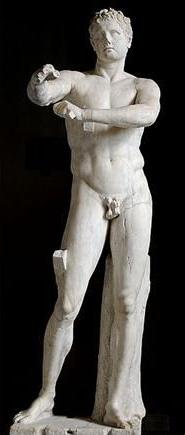
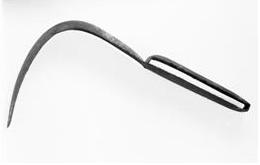
  • Local elections in Pompeii

    We are now in election campaign to we elect deputies or representatives in the European Parliament. The streets are again plastered with election ads. Also the Old World had elections for some political office and had “campaign” with their messages of propaganda to persuade voters.

    Vesuvius that destroyed Pompeii, has also given us a lot of information about daily life in a Roman city, for example on the elections that were held every year for some charges  of the municipal government.
    In 87 B.C. Pompeii became a municipality as most of the cities of Italy and shortly after in the 80- it was colony. This double origin of the inhabitants of Pompeii was reflected initially in the institutions until to be unified.

    The old democracies have a big difference with today: they are not universal and therefore very few individuals are involved. The number of electors of Pompeii would be very small. With  the city and the surrounding countryside there were an estimated 36,000 people, of which half were slaves; half of the remaining half would be women who did not vote; there were also the children. We may think that they could vote 2,500 people in the city and 5,000 in the field. So we think that family relationships,friendship  would be  determining. 

    In cities such as Pompeii they were chosen some charges similar to then of the "urbs", the  "city", Rome, with responsibilities relating exclusively to your local office.

    Specifically the aediles, like the aediles  of Rome and like our present councilors, also annual, and duoviri or more important local magistrates, like the Roman consuls, were  elected by the citizens, for annual term.To be Duovir it was necessary  to have been before aedile.

    The deputies, the aediles,  took care of the municipal police, streets, public buildings, water, assigning positions in the market, to raise local taxes and municipal properties leased, etc.. In some inscription they are called "duoviri charged  of streets and public and sacred buildings"

    The ancient duoviri made the “ordo decurionum”,  similar to the Senate, for life, elected by themselves.

    The seviri augustales or priests of Augustus, were chosen in turn by the ordo decurionum.

    Every five years the quinquenales (for five year)  duoviri played local functions similar to the censors of Rome.

    It seems that for duoviri it was only two annual candidates, ie, as many as charges. We could raise a question about real democracy in Pompeii, but it bear in mind that to be duunvir,  it had to have been before aedile, and only two councilors were elected each year, so the list of possible candidates was very small. So the closest elections were of aedile,  Elections would be held in March or April and the term would begin in July.

    The vote (suffragium) was expressed in writing (per tabellam) in a wax tablet on which candidate’s name  was engraved with a stylus. The tablet was deposited in a box (arca) or basket (cista) in your district, overseen by representatives from other districts, usually three. The process was chaired and supervised by the proposed by the electoral assembly duovirum, generally greatest in old, sitting in the stands (suggestum) assisted by his collaborators, as the specialist Staccioli, RA says in his Manifesti elettorali nell'antica Pompei.

    The description corresponds in its entirety to the current process: districts, ballot boxes, ballot papers, agents and representatives, president of the board of elections …

    An important element of the process was the electoral propaganda.

    We have many testimonies of election posters in Pompeii: the 25,000 inscriptions or graffiti appearing on walls of houses, some on the outside and others inside, tenth, about 2,500 are election posters that provide us a lot and sometimes curious information.

    It should be made some general consideration. First such registration implies a certain level and development of reading ability of Pompeian people; some famous paintings and mosaics also reflect the literacy rate.
    The graffiti, generally well calligraphed, are made by professional sign makers who make any kind of registration; they are  as conscious of his art that they sometimes initialed his name. For example a certain Celer reports that "Aemilius Celer, his neighbor, wrote it," and in anticipation that someone erased, he  added: "If you have the evil to erase it, I wish something wrong for you." This Celer is the author of other graffiti announcing a gladiatorial show.
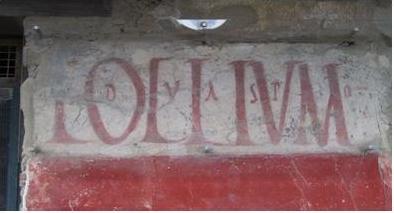

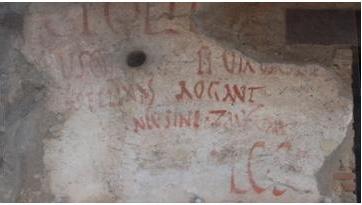
    CIL 04, 03775

    Neighbours beg you to elect Lucius Statius Receptus duumvir with judicial
    power, a worthy man. Aemilius Celer wrote this, a neighbour. You jealous
    one who destroys this, may you fall ill.

    L(ucium) Statium Receptum
    IIvir(um) i(ure) d(icundo) o(ro) v(os) f(aciatis) vicini dig(num) 
    scr(ibsit) Aemilius Celer vic(ini)
    invidiose 
    qui  deles
    ae[g]rotes

    Most are written in red and black. They are written into capital (uppercase) letter and in italics and reflect spoken Latin, Vulgar Latin as some call …

    They are usually very formulaic and respect a formula that is repeated constantly (also current ads are very formulaic and do not vary in its general form of a campaign to another, they do not lack in, for example, VOTE …). That is, in general they are very monotonous and uncreative and they  use abbreviations  profusely,  O for “oro, orant (to beg); V for vobis (to you), F for faciatis (made); ROG for ROGo, rogant; DRP for Dignum rei publcae (ideal for Public Affairs).

    The general formula is: name of the candidate in the accusative and  office which is demanded in abbreviated, AED (ILEM), II VIR (um). Then the name whose  proposes or endorses asking the vote in nominative and Formula ROG (at / ant, propose, ask, or O (ro) V (os) F (aciatis) (I ask you to do). The  indicate in general way:

    Mrs so-and-so asks you to do (duunvir) to Mrs. So-and-so ...

    Ever they have a little more originality, as in the following example where the message is interspersed between the letters of the candidate (CIL, IV 07868):

    I beg you to elect Lollius, suitable for roads and public and sacred buildings.

    Lollium d(ignum) v(iis) a(edibus) s(sacris) p(ublicis) o(ro) v(os) f(aciatis)
                                L OD LV LA IS VP M OVF


    Generally each poster is dedicated to one a candidate and rarely both names appear.

    The posters are not cleared after each campaign, but they are accumulated on each other; sometimes the old posters are covered with a layer of plaster to register new top of them. Some advertisements correspond to the time of creation of Pompei as a Roman colony in 80 BC, but most correspond to the last years of the city, between the earthquake of 62 DC and  the eruption of Vesuvius in 79 AD that destroyed the city.

    Considering that some are superimposed on other advertisements that were not deleted, it has been tried to set a timeline of the candidates, but it is a very difficult and challenging task.

    Some have certainly been directly commissioned by the candidate concerned, other are given by  members of the family, others show  anonymous support  or of certain social groups (fullers, dyers, millers, poultry, harvesters, carpet makers  or matting makers, ointments vendors, fishermen , muleteers, onion sellers, jewelers, hairdressers, barbers, bakers, hatters, ..),or religious brotherhoods (devotees of Venus, devotees of Isis, …); or groups of friends (ball players, checkers players, comrades, friends amphitheater shows, the workers and the poor, prostitutes …); or of certain influential people. So one resorts to the authority of Suedius Titus Clemens, agent of the emperor Vespasian. Naturally, the owner of the building in which the graffiti appears  would support the candidate.

    CIL 04, 01147:
    I ask that you elect aedile Aulus Vettius Firmus, worthy of public things, ask you to elect him; ball players elect him.

    A(ulum) Vettium Firmum / aed(ilem) o(ro) v(os) f(aciatis) d(ignum) r(ei) p(ublicae) o(ro) v(os) f(aciats) pilicrepi facite

    CIL IV 09932
    Modestus for aedile  (city councillor). The underprivileged and the poor elect him.

    Modestum aed (ilem)[prole]tari et pauper[es] facite

    Note: others read [unguen] tari (i) perfumers

    CIL, IV 00202
    All sellers of apples with Helvius Vestalis  propos Marcus Holconius Priscus  for duunvir (major)  (II vir) in charge of justice (iure dicundo)

    M  HOLCONIVM
    PRISCVM .II VIR . I. D.
    POMARI. VNIVERSI
    CVM HELVIO  VESTALE ROG…

    M(arcum) Holconium / Priscum IIvir(um) i(ure) d(icundo) / pomari universi / cum Helvio Vestale rog(ant)

    In any case there are no formal political parties and others are who  ask to vote for the candidate.

    Ever, few times, the name of a woman appears,  as for example Tedia Secunda, who  turns out to be the grandmother of Lucius Popidius Secundus, with him she  appears next to. Anyway, grandmothers before as now have a weakness for their grandchildren and this would be proud of the political career of his grandson.

    (CIL 04, 07469)
     I beg you to make Lucius Popidius Secundus aedile. His anxious grandmother Tedia Secunda  ask it and he did him. 

    L(ucium) Popi[dium] S[ecun]d[u]m aed(ilem) o(ro) v(os) f(aciatis) / Taed[i]a secunda cupiens avia rog(at) et fecit

    On several occasions the girls of a tavern are  the support for a candidate, in jest or seriously, we do not know …

    CIL IV 07863
    [Make] C.Lollius Fuscus duumvir for looking after the roads [and] the sacred [and] oublic buildings. Aselina’s [girls?] ask you, not without Zmyrna.

    Note: Aselina’s girls  would be prostitutes.

    C(aium) Lollium / Fuscum IIvir(um) v(iis) a(edibus) s(acris) p(ublicis) p(rocurandis) / Asellinas(!) rogant(!) / nec sine Zmyrina

    It is striking the support to candidate of a group of women who just do not vote or participate in politics.
    Sometimes irony can be glimpsed, such as when certain not advisable groups seem  to show support for a candidate or maybe it's also an example of counter-propaganda. See below the comment to a graffiti referred to Helvius

    The names of four women, Aselina, Egle, Smyrna and Mary, who may belong to the same inscription, appear  on the outer wall of a tavern in Via dell'Abbondanza;  they probably are  waitresses or prostitutes. Maybe it's the maids; for example,  Greek names Egle and Smyrna seem slave name; maybe some horny put the names of the maids next to the electoral advises  jokingly completing the ad. Perhaps the interested Gayo Juiio Polybius, did not like it because it appears erased the name of Smyrna with a layer of lime, as if he wanted to remove that support … or maybe i was the concerned girl who covered it.

    CIL IV  7862

    I beg you to elect Cn. Helvius Sabinus aedile, worthy of public office. Aegle
    asks this.

    Cn(aeum) Helvium Sabinum / aed(ilem) d(ignum) r(ei) p(ublicae) o(ro) v(os) f(aciatis) Aegle rogat

    CIL IV 7866

    I beg you to elect Cn. Helvius Sabinus aedile, worthy of public office. Maria
    asks this.

    Cn(aeum) Helvium Sabinum / aed(ilem) d(ignum) r(ei) p(ublicae) o(ro) v(os) f(aciatis) Maria rogat

    So too it has been deleted the name Cuculla from the inscription, perhaps because the candidate did not like him  or his "election committee":

    CIL IV 07841
    Caius Julis Polybius for duunvirum. Cuculla beg it.

    C(aium) Iulium Polybium. (duo)vir(um) Cuculla rog(at)

    Marcus Cerrinius Vatia is supported by numerous individuals and groups such as pomari or apple sellers,  (CIL, IV 00149), or by the saccari or boots bags (CIL, IV 00274), or by the campanians  (CIL, IV 00480), or by coronarii, the manufacturers of crowns (CIL, IV 00502) and by all seribibi or "drinking late into the night" (CIL, IV, 00581), which I reproduce below:

    The late drinkers all ask you to elect Marcus Cerrinius Vatia aedile. Florus
    and Fructus wrote this.

    M(arcum) Cerrinium / Vatiam aed(ilem) o(rant) v(os) f(aciatis) seribibi / universi rogant / scr(ipsit) Florus cum Fructo

    Note: some commenter thinks that the names of the clerks are fictitious.

    And they who sleep with … (do not know with whom):

    CIL IV  00575
    All those asleep and Macerius ask for Vatia as aedile.

    Vatiam aed(ilem) rogant / Ma cerio(m!) dormientes / universi cum / [

    And thieves:

    CIL IV  00576
    The little thieves ask for Vatia as aedile.

    Vatiam aed(ilem)  furunculi rog(ant)

    And fugitive  slaves

    CIL IV 07389

    Marcus  Cerrinius Vatia. All fugitive slaves.

    [M Cerrinium Vatiam?] drapetae omnes

    They all seem examples of counter-propaganda or unwanted support.

    It is funny one in which the artist adds some harvest

    CIL IV 07621

    Caius Julis Polybius  for aedile for looking after the roads [and] the sacred [and] public buildings. Lantern carrier, hold the ladder.

    C(aium) Iulium Polybium / aed(ilem) v(iis) a(edibus) s(acris) p(ublicis) p(rocurandis) // lanternari tene / scalam.

    There is not program or campaign promises; it seems to prevail the moral status of the candidate. Sometimes the initials DRP (Dignum Rei Ppublicae)  and adjectives related to your dignity and honesty appear. "Dignus" actually means “suitable, adequate”. Other laudatory adjectives that can be used sometimes are virum bonum (good man), virum probum (honest man); iuvenem (Young), iuvenem probum (honest young) adulescentem probum (honest teenager), verecundissimum (very respectable), adding so any reason to vote for him.

    CIL 04, 06626
    If integrity in life is thought to be of any use,
    This man, Lucretius Fronto is worthy of great honour.

    Si pudor in vita quicquam prodesse putatur / Lucretius hic Fronto dignus honore bono est.

    It is said about Gaius Julius Polybius that "shows (or bring) good bread" without knowing if he is the baker or someone who makes a deal of free bread.

    (CIL.IV 00429)

    I beg you to elect Gaius Julius Polybius aedile. He brings good bread.

    C(aium) Iulium Polybium / aed(ilem) o(ro) v(os) f(aciatis) panem bonum fert

    It is said about Brutius  Balbus  that "he does not squander money in town" and this may mean that it is a good manager or that he spends their own money

    (CIL, IV 03702):

    Brutius Balbus for duumvir.  This will save the public purse. Genialis asks it.

    Bruttium Balbum // IIvir(um) / hic aerarium conservabit // Gen[ialis] / rog(at)

    Casuistry is huge in 2500 ads. I reproduce  some more with some curious detail, so:

    (CIL, IV, 02887)
    If reject Quintius, , sit on a donkey

    Quintio(m) si qui recusat, assidat ad asinum”

    Note: Unlike most, this does not call for the vote butt announces  evils for those who do not provide. With "sit on a donkey" it seems to refer to heavy and constant work with which the asses were circling the mill wheel; to it the poet Catullus refers in his poem  97, v, 10: "et non Pistrino asino atque traditur?" (and is he not sent to the mill as a donkey. It could also mean "to ride on a donkey to serve. derision and mockery. "

    CIL, IV, 07791

    The youth club of youth of Venus proposes  Ceyus Secundus  for  duumvir in charge of justice

    CEIVM  SECVNDVM  IIV  I  D
    VENERIOSI  ROG  IVVENEM

    Ceium Secundum IIv(irum) i(ure) d(icundo) / Veneriosi rog(ant) iuvenem

    CIL, IV, 00346

    One of the councilors loves M.Cerrinus, the other is his love. That makes me hate him. He who hates love.

    M(arcum) Cerrinium / aed(ilem) alter amat alter / amatur ego fastidi(i?) / qui fastidit amat

    Note: We remember the famous poem 85 of Catullus ' Odi et amo "," I hate and I love "

    There are several candidates on more than a hundred ads. I will make some consideration on one of them, Cnaeus Helvius Sabinus, appearing in at least 140 times and so we learn more details about this political propaganda.

    (CIL 4, 9928):
    I beg you to elect Cn. Helvius Sabinus aedile, worthy of public office.

    CN HELVIVM
    SABINVM AED(ilem)
    D R P O V F

    Cn(aeum) Helvium / Sabinum aed(ilem)/ d(ignum) r(ei) p(ublicae) o(ro) v(os) f(aciatis)

    As I said, he appears in 140 entries. In most he figures with three names Cn (aeum) Helvium Sabinum; 15 times as Helvium Sabinum; 8 as Cnaeum Helvium; in 6 as Helvium; 1 as Cnaeum Helvium Sabinum Arieh. We conclude, therefore, that is a well known character and easily identified by citizens.

    In the majority of cases he appears only as a candidate; on 6 occasions with another candidate who appears only once for aedile also ; he appears in  the rest for duumvir.

    In most  times it appears the office that he wants, aedilem (over 100); once  duumvir (IIvirum); he only appears in a dozen with a name of the three without more data, so that the voter should know what position he wants.

    Only twice the functions as aedile are specified: the charge of sacred and  public buildings (temples):

    I beg you make him aedile for looking after the sacred and  public buildings

    Aed(ilem)d(ignum) r(ei) p(yublicae) v(iis) a(edibus) s(acris) p(ublicis) p(rocurandis) O(ro)  V(os) F(aciatis)

    In most, at least half, full or not typical formula is used: D (Ignum) R (ei) P (ublicae) O (ro,-ant) ((or rog (o,-ant) (V ( os) F (aciatis):  (more than 60 times). Dignum, dignified, proper, refers to the merits and suitability fotr he position.

    On four occasions he is called virum bonum (good man), in five virum probum (honest man); one time  iuvenem (young) and twice iuvenem probum (honest young), thus providing a reason why that he should be elected.

    In most times the ad is anonymous, it was probably at the behest of the candidate himself.
    On more than 34 occasions he is proposed by others:
    – By individuals, sometimes accompanied by his families (suis) or by his wife (sua) Aegle (twice); Popidi (us), Caprasia, Balbus, Iunia, Thyrsus, Parthope and Rufino, Crescens (twice), Vesonius Primus, Infantio, Astylus, Astyle, Pacuvius, Lorei, Maria.
    – By individuals with family: Equitius cum suis, Primus cum suis, Infantio cum suis, Amandio cum sua , Epidius cum suis, Porcellus cum suis, Biri cum Biria.
    – By his  neighbors: vicini (twice)
    – By groups: urbulanenses, Poppaei, Aliari, Isiaci (devotees of Isis), cum gallinariis Hermes (Hermes with caregivers of hens), pistores cum vicinis (twice): bakers with its neighbors, Masculus cum codatis.

    The latter, Masculus cum codatis, has been object of special attention. The graffiti, CIL IV 7240 says:

    Elect Gnaeus Helvius Sabinus aedile; he is worthy to manage the community. Masculus and all those who have a tail you recommend him.

    CN HELVIVM
    SABINVM AED D R P O F
    MASCVLVS CVM CODATIS VBIQ

    Cn(aeum) Helvium / Sabinum aed(ilem) d(ignum) r(ei) p(ublicae) o(rat) f(aciatis) / Masculus cum codatis ubiq(ue).

    Some commentators, such as Della Corte, reviewers that the graffiti may refer to a brotherhood of devotees of the god Priapus whose Masculus  would be their chairman. It is interpreted in any case, as an example of unwanted support ads,  which  discredit a candidate or just a bad joke.

    Anyway, they are 2500 graffiti which are valuable documents to know  one aspect of the social and political life of a Roman city of the first century. Apparently there are many differences with the world today; in the background there are not many. The purpose or object and form of these messages are actually very similar to ours: it is to persuade the voter to choose a particular candidate usually without further additions. Sometimes some data based on the candidate's qualities and sometimes the support of certain social groups is reflected, as now it is offered.

  • Marcus Tullius Tiro, father of shorthand

    We find it striking and curious the usual image of some officials (mostly women) of the Spanish Congress of Deputies, busily transcribing on a paper tape the oral intervention of the deputies. They are shorthand writers or fast writers (actually they are stenographers, as we will clarify later).

     This image seems an anachronism to us (from the Greek ἀναχρονισμός, from ανα- , ana– = about, against, and Χρονος, Chronos, time), an unworthy situation of our time when digital technology records images and sounds easily and it even becomes the sounds of a language into letters, that is, into writing; modern shorthand machines exceed two hundred words per minute, which is not bad. Actually, the spectacle of the Congress of Deputies strikes or amazes us, because shorthand has practically disappeared.

    We call shorthand to the art, technique or skill to write so quickly that the sound words of a speaking person are faithfully transcribed. The word shorthand, takigraphy,  like so many other techniques, is Greek, from ταχύς, tachis (read "tajís", soon, fast) and γραφία (graphy, “writing”). It is not a mere abbreviation or braquigraphy * (from the Greek βραχύς, brachis, "short" and γραφία, graphy, "writing") because in shorthand the aim is not to gain time or space, but to reproduce the spoken language.

    The braquigraphy is the science that studies the abbreviations which are reduced representations of words.

    Stenography instead (from the Greek στενος, stenos, narrow), γραφειν (grafein, = write) is a word with an equivalent or very similar meaning. Actually the stenography transcribes signs and no complete words. But we shouldn´t confuse it with the stenotype (from the Greek στενος, stenos, narrow and τύπος, typos, seal, label, mold) that, although it´s very similar, is based on the use of a machine with a small number of keys that can be pressed simultaneously and allow to transcribe complete syllables and words in order also to reproduce the oral speech of a speaker. Modern stenotype machines are computing machines that allow digital recording.

    We do not know whether the art of writing fast was first used by the Greeks. A somehow shorthand system to take notes is attributed to Xenophon which was used by him later in his Memorabilia, Memories of Socrates (Απομνημονεύματα, in Latin, Memorabilia) to write the biography of the Greek philosopher. This would give a great value to those notes, as Socrates did not write any text.

    In any case, the Romans used it in forensic life, in judgments and speeches, and in the administration, since the year 63 BC, information according to Plutarch himself.

    Plutarch. Cato. Mi. 23.3 :

    This is the only speech of Cato which has been preserved, we are told, and its preservation was due to Cicero the consul, who had previously given to those clerks who excelled in rapid writing instruction in the use of signs, which, in small and short figures, comprised the force of many letters; these clerks he had then distributed in various parts of the senate-house. For up to that time the Romans did not employ or even possess what are called shorthand writers, but then for the first time, we are told, the first steps toward the practice were taken. (Tr. by Bernadotte Perrin)

    This is the famous conspiracy of Catalina, which Cicero the consul disrupts.

    Precisely in Antiquity are famous the so-called “Tironian notes” (notae tironianae) which the Secretary of Cicero, Marcus Tullius Tiro, slave first and then freeman or manumitted slave, transcribed the speaker´s speeches with. Naturally, they are called after him. Tiro was probably a slave of Cicero´s family, who served him as secretary, who was later manumitted and who Cicero treated like a family member. This Marcus Tullius Tiro was also who edited numerous speeches of the great orator. His notes, that I comment next, were still used, with several modifications, throughout the Middle Ages, especially by the monks who copied manuscripts and documents. In fact, we only know them from medieval manuscripts and texts, as long as we have no original Roman document about them.

    Dio Cassius in his History of Rome, 55.7.6 says with regard to Maecenas:

    He was the first who established in Rome a place to swim in warm water and also the first who imagined or envisioned the "notes" to write quickly and he made his freedman Aquila teach them to others.

    πρῶτός τε κολυμβήθραν θερμοῦ ὕδατος ἐν τῇ πόλει κατεσκεύασε, καὶ πρῶτος σημεῖά τινα γραμμάτων πρὸς τάχος ἐξεῦρε, καὶ αὐτὰ διὰ Ἀκύλου ἀπελευθέρου συχνοὺς ἐξεδίδαξε.

    Tironian notes consist of letters of the alphabet, simplified and modified to achieve greater speed in their writing. They have two elements: a radical or main sign and an ending or auxiliary sign indicating the tense or the case of nouns and adjectives.

    Saint Isidore of Seville (Etymologies I, 22 and 23) refers to them:

    (22) Ennius was the first to create a thousand and a hundred vulgar notes. Notes were used so copyists could write everything that was said at the meetings, assemblies or in the courts, attending several copyists at the same time, dividing the parts themselves, and how many words and in what order each one should collect or pick them up. Tullius Tiro, Cicero's freedman, was the first to talk about these notes in Rome, but only about those referring to prepositions. After him, Vipsanius, Filargius and Aquila, freedman of Maecenas, added others each. Later, Seneca, with the agreement of all, classified them and increased their number reaching his work at five thousand. They are called "notes" because they recorded or wrote the words and syllables with preset characters and later they remade them for the information of readers. Those who learned them were already and quite properly called "notaries”.

    XXII. DE NOTIS VVLGARIBVS. [1] Vulgares notas Ennius primus mille et centum invenit. Notarum usus erat ut, quidquid pro con[ten]tione aut [in] iudiciis diceretur, librarii scriberent conplures simul astantes, divisis inter se partibus, quot quisque verba et quo ordine exciperet. Romae primus Tullius Tiro Ciceronis libertus commentus est notas, sed tantum praepositionum. [2] Post eum Vipsanius, Philargius, et Aquila libertus Maecenatis alius alias addiderunt. Deinde Seneca, contractu omnium digestoque et aucto numero, opus efficit in quinque milia. Notae autem dictae eo, quod verba vel syllabas praefixis characteribus notent et ad notitiam legentium revocent; quas qui didicerunt proprie iam notarii appellantur.

    (23) However, in law books certain letters are “notes” of their words to make writing faster and shorter. For example, they wrote B and F for "bonum factum", S and C for "Senatus Consultum", R and P for "republica" (Republic), P and R for "populus romanus", D and T for "dumtaxat", letter W up for "mulier", letter P in its usual shape for "pupillus" and the P upside down for "pupilla", a K for "caput", two KK together for "calumniae causae", I and E for "iudex this", D and M for "Dolum malum". In ancient books we find many similar notes. The new emperors ordered to abolish these notes in law codices, books and texts because with them malicious mind persons deceived or cheated the ignorant people and therefore they ordered that all the letters should be written in the laws so as not to give rise to any error, no ambiguity, and so they showed clearly what must be fulfilled and what must be avoid.

    XXIII. DE NOTIS IVRIDICIS. [1] Quaedam autem litterae in libris iuris verborum suorum notae sunt, quo scriptio celeris breviorque fiat. Scribebatur enim verbi gratia per B et F "bonum factum" per S et C "senatus consultum" per R et P "respublica" per P et R "populus Romanus" per D et T "dumtaxat" per supinam W litteram "mulier" per P secundum naturam "pupillus" per P verso capite "pupilla" per unum K "caput" per duo KK iuncta "calumniae causa" per I et E "iudex esto" per D et M "dolum malum" [2] Cuius generis plurimas consimiles notas in libris antiquis invenimus. Has iuris notas novicii imperatores a codicibus legum abolendas sanxerunt, quia multos per haec callidi ingenio ignorantes decipiebant, atque ita iusserunt scribendas in legibus litteras, ut nullos errores, nullas ambages afferant, sed sequenda et vitanda aperte demonstrarent.

    Tironian notes, of which we have got what is called the Lexicon Tironianum, from Roman times, but of which we only have copies since the tenth, eleventh centuries, were about four thousand, but they managed to be approximately 14,000 in medieval times.

    Picture of the start of an edition of the "Notae Senecae"

    Form and shape of some Tironian notes

    The comment of the sign &, whose origin is without doubt in the unions of letters of the Tironian notes, helps us to understand better and come a little bit closer to what these notes have been. The name of this sign in Spanish is "et" because it is a graphical alternative way to this conjunction, from which it derives our conjunctive "y". In English it is called "ampersand", from the saying or expression "and per se and", meaning "and Practicing Self, and" (that is, “and by itself, and”).

    These are various forms ranging from the centuries II-IV, from the Roman cursive to the Carolingian lowercase letter from the ninth century, and which evidence the origin of the ligature "et":

    Another example that shows how the bound form derives from the Italic "et":

    In Spanish texts it is not used since it involves no economy on "et", but in ancient texts it can be found the expression &c. or &cetera as an abbreviation of &c. or &cetera, et caetera (and the rest), from our etcetera comes from.


    We do not comment on the extensive use that it is made of the ampersand sign (&) in modern computer languages.     

  • Ancient cities were very noisy

    We often develop our busy lives in an excessively noisy urban environment. The life and urban society, labor activity and some social customs and practices as hobby to large outdoor concerts, often produce excessive noise no according to health and peace of mind.

    The noise is even considered as another  contamination that litter the natural environment. Since a few years ago it is celebrated on  April every year the  International Noise Awareness Day.  It was first celebrated in New York on April 24, 1996.

    Spain has a sad second place, behind Japan, in the ranking of the noisiest countries.

    Noise is measured in decibels (dB). WHO (World Health Organization) as a suitable top  suggests a maximum of 50 dB outdoor,  70 dB for traffic or 100 dB  for a concert.

    We might think that this is a unique evil of modern times, but remember the famous verses of our Spanish immortal poet Fray Luis de León (1527-1591) in his Ode The Life Removed:

    How tranquil is the life
    Of him who, shunning the vain world’s uproar, …

    Que descansada vida
    La del que huye del mundanal ruido….

    The ancient world was much less inhabited than ours, transportation of people and goods was much smaller, his life less hectic and work and industrial activity occurred with magnitudes without possible comparison with the present time. But ancient cities, of course Rome, were also very noisy.

    The ancient testimonies on "rugitus" or noise and discomfort are numerous. Perhaps two of the most famous are an epigram of the Hispanic poet Martial (40-104)(born in Bilbilis near Calatayud)  and also a letter from Hispanic Seneca (4 BC-65 AD) to his friend Lucilius.

    Martial tells us that when he  himsel feels  sick and tired by  the noise of the city (Rome) goes to his small farm in the countryside. Seneca also complains about  the many noises that he must suffer because he  lives just above the baths, but his inner self control allows him to ignore  outside disturbance. I transcribes both documents below in Latin and Spanish, although the Seneca’s one  can be a bit long, for not  interrupt the story now.

    Also another satirist, Juvenal, in his Saturae, III, 236-237 complaining about the noise that the cars produced at the crossroads of the streets of Rome:

    For what sleep is possible in a lodging? Who but the wealthy get sleep in Rome? There lies the root of the disorder. The crossing of wagons in the narrow winding streets, the slanging of drovers when brought to a stand, would make sleep impossible for a Drusus or a sea-calf. (Translated by G. G. Ramsay]

    Nam quae meritoria somnum admittunt? Magnis opibus formitur in urbe. Inde caput morbi, raedarum transitus arto vicorum in flexu et stantis convicia mandrae eripient somnum Druso vitulisque marinis.

    (Note: Drusus, is the emperor famous for his deep sleep, some read in the text "urso" instead of "Drusus", bringing to bear the dream, long reputed to sleep deeply and snatch)

    There was even a fledgling law on occasion, that  some historian called protolaw  with more technical term. Too early and  curious it  is the case of the city of Sybaris, a Greek colony in Italy, on the Gulf of Taranto, founded around 720 BC. The historical reality and popular fantasy have made Síbaris a steeped in luxury and pleasure city; Sybarite is the adjective that refers to its inhabitants, but the term came to refer to refined people of delicious tastes.

    The ancients themselves and then some Renaissance put some reserve to things that were told about inhabitants of Sybaris people; we should put it well.

    In any case, it is told about them how they banned around 600 BC perform inside the offices of blacksmiths, boilermakers and other noise producing for  not disturb the rest of city residents; not even allowed in the city raising roosters, which have the strange habit of announcing the early arrival of the new day.

    It is told, for example, by Atenaeus of Naukratis (II-III century AD. JC), in his book The  Deipnosophistae,  "Dinner-table philosophers" or  "Authorities on banquets". He says it in XII 518 C-D:

    And the Sybarites were the first people to forbid those who practice noisy arts from dwelling in their city; such as blacksmiths, and carpenters, and men of similar trades;  providing that their slumbers should always be undisturbed. And it used to be unlawful to rear a cock in their city.

    And Timaeus relates concerning them, that a citizen of Sybaris once going into the country, seeing the farmers digging, said that he himself felt as if he had broken his bones by the sight; and some one who heard him replied, "I, when I heard you say this, felt as if I had a pain in my side." (Translated by C.D.Yonge (1854)).

    It is therefore surprising that in this context, the Sybarites are  person who are devoted to luxury and pleasure. This would be the first case we have news of protolaw limiting noise in cities. But  the effect that the noise of the hammer would result in the ears of blacksmiths or tinkers artisans, seems not to care to these comfort-loving. 

    In this sense, it is said that Pliny the Elder (23-79), the scientist who died precisely because of the eruption of Vesuvius that devastated Pompeii, in his Natural History (Naturalis Historia) refers to acoustic problems facing those living in the vicinity of the Falls of the Nile This was the first reference we have to the harmful effects of noise on hearing.

    Hundreds, thousands books, articles, blogs, institutions, etc.. currently relate to auditory problems or environmental pollution, say that quote.  All cited Pliny, but none gives the exact reference, the book and paragraph of the Natural History of Pliny in which this statement is made.

    Yes I found what the naturalist says about Nile Falls in Naturalis Historia, 5,9,54 but this passage does not refer at all to the alleged widespread deafness of inhabitants.

    Every now and then its course is interrupted by islands which intervene, and which only serve as so many incentives to add to the impetuosity of its torrent; and though at last it is hemmed in by mountains on either side, in no part is the tide more rapid and precipitate. Its waters then hastening onwards, it is borne along to the spot in the country of the Æthiopians which is known by the name of "Catadupi;" where, at the last Cataract, the complaint is, not that it flows, but that it rushes, with an immense noise between the rocks that lie in its way: after which it becomes more smooth, the violence of its waters is broken and subdued, and, wearied out as it were by the length of the distance it has travelled, it discharges itself, though by many mouths, into the Egyptian sea. During certain days of the year, however, the volume of its waters is greatly increased, and as it traverses the whole of Egypt, it inundates the earth, and, by so doing, greatly promotes its fertility. (John Bostock, M.D., F.R.S., H.T. Riley, Esq., B.A., Ed.)

    “subinde insulis impactus, totidem incitatus inritamentis, postremo inclusus montibus, nec aliunde torrentior, vectus aquis properantibus ad locum Aethiopum, qui Catadupi vocantur, novissimo catarracte inter occursantes scopulos non fluere inmenso fragore creditur, sed ruere. postea lenis et confractis aquis domitaque violentia, aliquid et spatio fessus, multis quamvis faucibus in Aegyptium mare se evomat, certis tamen diebus auctu magno per totam spatiatus Aegyptum fecundus innatat terrae”.

    I suspect that Pliny did not state that the locals were deaf and that this is one of the so frequent misquotation. Strengthens my suspicion that in 1637 the book of Abbe Don Secondo Lancellotti "Farfalloni de gli antichi historici" (Nonsense of ancient historians) was published in Venice

    He indicates as a second error to eradicate precisely the statement that "all people nex to the falls (cataracts) of  the Nile were suffering from deafness by noise of the falls."He says: 

    The II nonsense:peoples inhabiting next to falls (cataracts) of the Nile are all deaf.
    Ancient historians have achieved so much reputation among later than not only from Pythagorean, but most from them is almost enough "ipse dixit". This or that author has said this or that thing, therefore it is true and none more you look. And so their absurdities are admired, quoted and transcribed as great wonders.

    Farfallone II  Che que’ popoli, c’habitano appresso le Catadupe del Nilo sieno tutti sordi Acquistano gli Scrittori Antichi tanta riputatione appresso i posteri, e persevera in modo, che non solamente di Pittagora, ma della maggior parte d’essi, par quasi che basti l’ Ipse dixit.  Ha detto questa o quella cosa questo o quell’Autore, dunque vera, non si cerchi più oltre.  E cosí i loro FARFALLONI sono ammirati, citati, trascritti per marauiglie grandi.

    Lancellotti does not made reference to this quote from Pliny but to the known from Cicero in the famous "Somnium Scipionis  (Scipio's Dream) at the end of the work "De Republica". Cicero lived from 106 BCE 43 BCE, and therefore he is prior to Pliny.

    Cicero speaking about  sound produced by the movement of the spheres of heaven, says we can not hear us, because due to the frequency our ears have become deaf and the ear is the most rude and obtuse of all senses. And he cites to confirm that one of the people living along the Nile cataracts, which have lost their hearing due to the noise of the fall of the river. He says it in De Republica, 6, 19 (Somnium Scipionis):

    But the ears of men are deafened by being filled with this melody; nor is there in you mortals a duller sense than that of hearing. As where the Nile at the Falls of Catadupa pours down from the loftiest mountains, the people who live hard by lack the sense of hearing because of the loudness of the cataract,  (Translator: Andrew P. Peabody)

    Hoc sonitu oppletae aures hominum obsurduerunt; nec est ullus hebetior sensus in vobis, sicut, ubi Nilus ad illa, quae Catadupa nominantur, praecipitat ex altissimis montibus, ea gens, quae illum locum adcolit, propter magnitudinem sonitus sensu audiendi caret.

    The odd thing is that this alleged statement of Pliny on the deafness of the dwellers of the Nile Falls is quoted in dozens, hundreds, thousands of articles, blogs, web pages and even some doctoral thesis on noise or hearing problems .

    Also the philosopher and naturalist Seneca (4 BC-65 d. C.) describes Nile Falls and emphasizes the deafening noise that forced a garrison to seek another location in Quaestiones Naturales, 4,2,5:

    When at length it has struggled through the obstructions, suddenly deprived of support, it falls from a vast height with a roar that resounds through all the surrounding regions. The race planted in that savage place was indeed unable to endure the din ; their ears were deafened by the constant crash, and they were therefore removed from the settlement. (translated by John Clarke)

    …tandemque eluctatus obstantia in uastam altitudinem subito destitutus cadit cum ingenti circumiacentium regionum strepitu. Quem perferre gens ibi a Persis collocata non potuit obtusis assiduo fragore auribus et ob hoc sedibus ad quietiora translatis.

    Pliny himself in Natualis History, lib. VI, 35, 181 refers to the roar of the  Nile falling by cataracts, which  deprives hearing the inhabitants, but in no way does it in the terms in which the quote I am commenting is expressed. He says exactly:

    This general took the following cities, … Atteva, and Stadasis, where the river Nile, as it thunders down the precipices, has quite deprived the in- habitants of the power of hearing: he also sacked the town of Napata.

    is oppida expugnavit … Attenam, Stadissim, ubi Nilus praecipitans se fragore auditum accolis aufert. Diripuit et Napata.

    We conclude that, indeed, in the ancient world, at least among the learned of the ancient world, there is a belief or at least quote the inhabitants of the regions of the cataracts of the Nile are deaf. This reference, repeated many times, is proof of the importance that excess annoying noise had for ancient ; exaggeration it self of  belief, far from any logic, supports this concern. But this is quite another thing, repeat and to assume a quote which does not correspond to the  reality.

    Martial, Epigrams. Book 12, LVII

    To Sparsus.

    You ask why I so often go to my small domain at arid Momentum and the humble household at my farm? There is no place in town, Sparsus, where a poor man can either think or rest One cannot live for schoolmasters in the morning, corn grinders at night, and braziers' hammers all day and night. Here the money-changer indolently rattles piles of Nero's rough coins on his dirty counter; there a beater of Spanish gold belabours his worn stone with shining mallet. Nor does the fanatic rabble of Bellona cease from its clamour, nor the gabbling sailor with his piece of wreck hung over his shoulder; nor the Jew boy, brought up to begging by his mother, nor the blear-eyed huckster of matches. Who can enumerate the various interruptions to sleep at Rome? As well might you tell how many hands in the city strike the cymbals, when the moon under eclipse is assailed with the sound of the Colchian magic rhomb.2 You, Sparsus, are ignorant of such things, living, as you do, in luxurious ease on your Petilian domain;3 whose mansion, though on a level plane, overlooks the lofty hills which surround it; who enjoy the country in the city4 (rus in urbe), with a Roman 5 vine-dresser, and a vintage not to be surpassed on the Falernian mount. Within your own premises is a retired carriage drive; in your deep recesses sleep and repose are unbroken by the noise of tongues: and no daylight penetrates unless purposely admitted. But I am awakened by the laughter of the passing crowd; and all Rome is at my bed-side. Whenever, overcome with weariness, I long for repose, I repair to my country-house. (anonymous translation published in the Bohn Bohn's Classical Library edition.1897)

          Liber XII, Epigrammaton LVII

    Cur saepe sicci parva rura Nomenti
    Laremque villae sordidum petam, quaeris?
    Nec cogitandi, Sparse, nec quiescendi
    In urbe locus est pauperi. Negant vitam
    Ludi magistri mane, nocte pistores,
    Aerariorum marculi die toto;
    Hinc otiosus sordidam quatit mensam
    Neroniana nummularius massa,
    Illinc balucis malleator Hispanae
    Tritum nitenti fuste verberat saxum;
    Nec turba cessat entheata Bellonae,
    Nec fasciato naufragus loquax trunco,
    A matre doctus nec rogare Iudaeus,
    Nec sulphuratae lippus institor mercis.
    Numerare pigri damna quis potest somni?
    Dicet quot aera verberent manus urbis,
    Cum secta Colcho Luna vapulat rhombo.
    Sparse, nescis ista, nec potes scire,
    Petilianis delicatus in regnis,
    Cui plana summos despicit domus montis,
    Et rus in urbe est vinitorque Romanus
    Nec in Falerno colle maior autumnus,
    Intraque limen latus essedo cursus,
    Et in profundo somnus, et quies nullis
    Offensa linguis, nec dies nisi admissus. 
    Nos transeuntis risus excitat turbae,
    Et ad cubile est Roma. Taedio fessis
    Dormire quotiens libuit, imus ad villam.


    Lucius Annaeus Seca. Epistle LVI.  On Tranquility

    Let me die, if I think silence so absolutely necessary for a studious man as it seems at first to be: variety  of noise surrounds me on every side: I lodge even over a bath. Suppose now all kinds of sounds that can be harsh and disagreeable to the ears; as when the strong boxers are exercising themselves, and fling about their hands loaded with lead, or when they are in distress, or imitate those that are, and I hear their groans; or when sending forth their breath, which for some time they held in, I hear their hissing, and violent sobs; or when I meet with an idle varlet, who anoints the ordinary wrestlers for their exercise, and I hear the different flaps he gives them on their shoulder, with either a flat or hollow palm; or if a ball-player comes in, and begins to count the balls, it is almost over with me. Add to these the rank and swaggering bully, the taking a pickpocket, or the bawling of such as delight to hear their voice echo through the bath; add also those, who dash into the pond with a great noise of the water; and besides these, such whose voices at least are tolerable: suppose a hair-plucker every now and then squeaking with a shrill and effeminate tone, to make himself the more remarkable, and is never silent but when he is at work, and making his patient cry for him: add to these the various cries of those that sell cakes and sausages, the gingerbread baker, the huckster, and all such as vend their wares about the streets with a peculiar tone. Sure you have no ears, you say, or must be made of iron, whose mind is not disturbed with such various and dissonant sounds, whe aour Chrysippus is almost killed, with only the common salutations of the morning. I assure you, Lucilius, I regard all this noise no more than the ebbing and flowing of the water: though I hear that a certain people, near de River Nile, gave this as a reason for changing the site of their city, because they could not bear the noise of the waterfalls. But as for me, I own a voice distracts me more than any noise whatever;  for that draws off the mind, but this only strikes, and sills the ear: and I will moreover tell you what  I reckon among those things that give me no disturbance, the rattling of the carriages in the streets, a smith’s forge in the house, a sawyer’s yard next door; and the horrid noise a fellow makes, who, by the Temple of Peace, is ever trying this new-made hautboys and trumpets, and does not sing but bawl: the sound indeed, which startles me after intermissions, is somewhat more troublesome to me than that which is continued; but I am so inured to these things, that I could even hear a boatswain giving orders to his crew, with the most harsh and hoarse vociferation, without being in the least discomposed.

    The truth is; I force my mind to be so intent upon itself, as not to be drawn off by any thing from without. Whatever noise is abroad, I care not, while all is calm and quiet within; no jarring between desire and fear; no dissension between avarice and luxury: in short, no one passion thwarting another; for what availeth all imaginable silence, if the passions are at variance?
             Omnia noctis errant placida composta quiete;
             All things were lull’d, by night, in pleasing rest,
    Faith the poet (Varro); but ‘tis false; there can be no pleasing rest, but what is the effect or reason: the night rather promotes than prevents trouble, and only changes one scene of anxiety for another; for even the dreams of those that steep, are as turbulent as all the accidents of the day. There can be no true tranquility, but what ariseth  from a sound mind. Behold the man, who endeavours to sleep, while the whole house is silent; and, that the least noise may not reach his ears, all the servants are order’d not to speak a word: and, if they approach near his bed, to tread as softly as possible; yet is he turning from one side to another, and would fain get a map; still complaining, that he hears noises, while not the least is made. Now, what do you think  is the reason of this? Why, his mind is disturb’d; this must be appeased; the sedition within must be calm’d; the noise is there; for you must not think the mind is at peace; tho’ the body were to lie as still as in the arms of death.
    Even rest itself is sometimes restless; and therefore it is proper we should be roused to action, and employ’d in some of the liberal sciences, as often as listlessness seiseth  us impatient of its own weight. Great generals when they see a soldier disobedient to orders, condemn him to some hard labour; nor will permit him to join his company. They have no time to play and wanton, who are tied down to business; and nothing is more certain, than that the vices of idleness are thrown off by proper employ.

    We often seem  to retire, when fatigued with public affairs, and chagrin’d at some unhappy and disagreeable station; yet even amidst this retirement, which fear and disgust have induced us to seek, ambition sometime rankles at the heart: for it  was not quite cut off, but only tired, and sore vexed at things not succeeding to its wish: I say the same of luxury, which sometimes seems to give way. But soon again revives, soliciting those who have professed frugality; and in the midst of parsimony pursues the pleasures it had  not entirely condemn’d, but only  left for a time; and pursues them now the more vehemently, as the more secretly it can obtain its desires; for the more public all vices are, they are the less daring. Diseases likewise are more easily curable, when they break out, and shew themselves what they are: and you may be assured that avarice, ambition, and all the evils of the human heart are the most dangerous, when they subside, and are patched up by a pretended cure. We may seem at ease, but are far from being so; were we really so; -if we have sounded a retreat;- if we have despised all specious trifles- nothing, as I have before observ’d, can recall us; or withdraw our attention; not even the harmony of men or birds, coud interrupt our serious thoughts, now become sure and solid.  The disposition is light and wavering, which can be moved by any accidental sound: it still retains anxiety, and a dread of something that excites its curiosity and care, as says our Virgil (2, 726)

           A me quem dudum non ulla iniecta movebant
           Tela, neque adverso glomerati exagmine Graii,
            Nunc omnes terrent aurae,sonus excitat omnis
            Suspensum, et pariter comitique onerique timenti.

            I who so bold and dauntless just before
            The Grecian darts and shocks of lances bore,
            At every shadow now am seiz’d  with fear,
            Not for myself but for the charge I bear (Dryden).

    In the former part of these lines Aeneas resembles a wise and brave man,whom not the brandishing of spears, nor the clashing arms of an engaged troop, nor the outcries of  a besieged city, can terrify; in the latter, a meer coward, wrapt in fear, and startled at every noise; whom a single voice, taken for the din of a multitude, quite casts down; and the lightest motions drive to despair: his burthen (bis aged father) makes him timorous. –Take whom you will, of those rich men who gather much, and load themselves therewith, you will see him (like Aeneas) fearful for his charge. Know therefore you are then only truly composed, when no alarm can move you;  when no voice can shake you from yourself, whether it flatters, or threatens you; or pours forth a variety of idle sounds. What then? Is it not more convenient sometimes to be free from noise and bawling? No doubt of it. Therefore I intend soon to change my quarters; I had a mind, once to try and exercise myself; but what necessity is there for tormenting myself any longer, when Ulysses found so early a remedy, for prewserving his companions from the sweet melody of the Syrens?  (By Thomas Morell D.D., 1786))

    Peream si est tam necessarium quam videtur silentium in studia seposito. Ecce undique me varius clamor circumsonat: supra ipsum balneum habito. Propone nunc tibi omnia genera vocum quae in odium possunt aures adducere: cum fortiores exercentur et manus plumbo graves iactant, cum aut laborant aut laborantem imitantur, gemitus audio, quotiens retentum spiritum remiserunt, sibilos et acerbissimas respirationes; cum in aliquem inertem et hac plebeia unctione contentum incidi, audio crepitum illisae manus umeris, quae prout plana pervenit aut concava, ita sonum mutat. Si vero pilicrepus supervenit et numerare coepit pilas, actum est. [Adice nunc scordalum et furem deprensum et illum cui vox sua in balineo placet, adice nunc eos qui in piscinam cum ingenti impulsae aquae sono saliunt. Praeter istos quorum, si nihil aliud, rectae voces sunt, alipilum cogita tenuem et stridulam vocem quo sit notabilior subinde exprimentem nec umquam tacentem nisi dum vellit alas et alium pro se clamare cogit; iam biberari varias exclamationes et botularium et crustularium et omnes popinarum institores mercem sua quadam et insignita modulatione vendentis.
    'O te' inquis 'ferreum aut surdum, cui mens inter tot clamores tam varios, tam dissonos constat, cum Chrysippum nostrum assidua salutatio perducat ad mortem.' At mehercules ego istum fremitum non magis curo quam fluctum aut deiectum aquae, quamvis audiam cuidam genti hanc unam fuisse causam urbem suam transferendi, quod fragorem Nili cadentis ferre non potuit.  Magis mihi videtur vox avocare quam crepitus; illa enim animum adducit, hic tantum aures implet ac verberat. In his quae me sine avocatione circumstrepunt essedas transcurrentes pono et fabrum inquilinum et serrarium vicinum, aut hunc qui ad Metam Sudantem tubulas experitur et tibias, nec cantat sed exclamat:  etiam nunc molestior est mihi sonus qui intermittitur subinde quam qui continuatur. Sed iam me sic ad omnia ista duravi ut audire vel pausarium possim voce acerbissima remigibus modos dantem. Animum enim cogo sibi intentum esse nec avocari ad externa; omnia licet foris resonent, dum intus nihil tumultus sit, dum inter se non rixentur cupiditas et timor, dum avaritia luxuriaque non dissideant nec altera alteram vexet. Nam quid prodest totius regionis silentium, si affectus fremunt?
    Omnia noctis erant placida composta quiete.
    Falsum est: nulla placida est quies nisi quam ratio composuit; nox exhibet molestiam, non tollit, et sollicitudines muta. Nam dormientium quoque insomnia tam turbulenta sunt quam dies: illa tranquillitas vera est in quam bona mens explicatur.  Aspice illum cui somnus laxae domus silentio quaeritur, cuius aures ne quis agitet sonus, omnis servorum turba conticuit et suspensum accedentium propius vestigium ponitur: huc nempe versatur atque illuc, somnum inter aegritudines levem captans; quae non audit audisse se queritur.  Quid in causa putas esse? Animus illi obstrepit. Hic placandus est, huius compescenda seditio est, quem non est quod existimes placidum, si iacet corpus: interdum quies inquieta est; et ideo ad rerum actus excitandi ac tractatione bonarum artium occupandi sumus, quotiens nos male habet inertia sui impatiens.  Magni imperatores, cum male parere militem vident, aliquo labore compescunt et expeditionibus detinent: numquam vacat lascivire districtis, nihilque tam certum est quam otii vitia negotio discuti. Saepe videmur taedio rerum civilium et infelicis atque ingratae stationis paenitentia secessisse; tamen in illa latebra in quam nos timor ac lassitudo coniecit interdum recrudescit ambitio. Non enim excisa desit, sed fatigata aut etiam obirata rebus parum sibi cedentibus. Idem de luxuria dico, quae videtur aliquando cessisse, deinde frugalitatem professos sollicitat atque in media parsimonia voluptates non damnatas sed relictas petit, et quidem eo vehementius quo occultius. Omnia enim vitia in aperto leniora sunt; morbi quoque tunc ad sanitatem inclinant cum ex abdito erumpunt ac vim sui proferunt. Et avaritiam itaque et ambitionem et cetera mala mentis humanae tunc perniciosissima scias esse cum simulata sanitate subsidunt. Otiosi videmur, et non sumus. Nam si bona fide sumus, si receptui cecinimus, si speciosa contempsimus, ut paulo ante dicebam, nulla res nos avocabit, nullus hominum aviumque concentus interrumpet cogitationes bonas, solidasque iam et certas.  Leve illud ingenium est nec sese adhuc reduxit introsus quod ad vocem et accidentia erigitur; habet intus aliquid sollicitudinis et habet aliquid concepti pavoris quod illum curiosum facit, ut ait Vergilius noster:
    Et me, quem dudum non ulla iniecta movebant
    tela neque adverso glomerati e agmine Grai,
    nunc omnes terrent aurae, sonus excitat omnis
    suspensum et pariter comitique onerique timentem.
    Prior ille sapiens est, quem non tela vibrantia, non arietata inter arma agminis densi, non urbis impulsae fragor territat: hic alter imperitus est, rebus suis timet ad omnem crepitum expavescens, quem una quaelibet vox pro fremitu accepta deiecit, quem motus levissimi exanimant; timidum illum sarcinae faciunt.  Quemcumque ex istis felicibus elegeris, multa trahentibus, multa portantibus, videbis illum 'comitique onerique timentem'. Tunc ergo te scito esse compositum cum ad te nullus clamor pertinebit, cum te nulla vox tibi excutiet, non si blandietur, non si minabitur, non si inani sono vana circumstrepet.  'Quid ergo? non aliquando commodius est et carere convicio?' Fateor; itaque ego ex hoc loco migrabo. Experiri et exercere me volui: quid necesse est diutius torqueri, cum tam facile remedium Ulixes sociis etiam adversus Sirenas invenerit Vale.


  • Gabriel García Márquez and the Greek and Latin classics

    Many elements of Greco-Roman culture still alive in our time, among many others, myths and literary topics. The current writers and artists sometimes look to them directly and consciously even quoting verbatim, sometimes develop the same issues adapting them to changing times and on other occasions they integrate them into their work unaware naturally.

    This is also the case of Gabriel García Márquez, the Colombian Nobel laureate, recently deceased, who opened, together with other great Latin American authors, the eyes and horizons in an explosion of tropical color and imagination to people who  in the sixties of the past century were  avid letters young.

    Bringing grist to the mill of this blog, I make a reference to the importance of the classics in Gabriel García Márquez, which is no small, both directly and textually as naturally similar.

    In his autobiography "Living to Tell the tale" makes clear references to the importance of knowledge of the classics. So in chapter 6, recalls, referring to his friend Gustavo Ibarra Merlano:

    The thing that bothered him about me was my dangerous contempt for the Greek and Latin classics, which I found boring and useless, except for the Odyssey, that I had read and reread to pieces several times in high school. So before you say goodbye,  he  chose a bound leather book from his library and gave it to me with a certain solemnity. "You could become a good writer-he said- but you'll never be very good if you do not know well the Greek classics."  The book was  the complete works of Sophocles. Gustavo was from that moment one of the key persons  in my life, because Oedipus is revealed to me in the first reading as the perfect work.

    The author recognizes again and again this impact of Sophocles' Oedipus, for example in one of the script workshops which he has imparted. According to Professor  at the University of Huelva.  Manuel Cabello Pino in his article "Mayor Oedipus: Sophocles through the eyes of Gabriel García Márquez”:

    I would almost say that Oedipus Rex was the first great intellectual shock of my life. I already knew I would be a writer and when I read that, I said, " This is the kind of things I want to write." I had published some stories and , while working as a journalist in Cartagena , was trying to see if I could finished a novel. I remember one night talking about literature with a friend,  Gustavo Ibarra Merlano , who besides being a poet,  is the man who knows more in Colombia on customs duties – and comes and tells me: " You'll never amount to anything until you read the Greek classics . " I was very impressed , so that night I walked his home and put me in the hands a volume of Greek tragedies. I went to my room , I slept , I started reading the book to the first page – Oedipus was just – and I could not believe . He read , and read , and read – started about two in the morning and it was already dawning – and the more I read the more I wanted to read . I think that since then I have not stopped reading this blessed work . I know it by heart .

    Like so many others, the discovery of Greek tragedy struck García Márquez and he realized the importance of knowing the classics. Many influences from Oedipus Rex and its inexorable force of destiny, fatum, are found  in his novels “Autumn of the Patriarch  and Chronicle of a Death Foretold .
    Shortly thereafter, in the same work “Living to tell the tale, García Márquez  informs us about his progress in the knowledge of the classics:

    I returned to Cartagena with the air of someone who had discovered the world. The after dinners  in the house of Franco Munera family were not on poems of Golden Age and Twenty Love Poems of Neruda, but with paragraphs from Mrs. Dolloway and delusions of his torn character, Septimus Warren Smith. I turned the other, anxious and difficult, to the point that I seemed to Hector and to maestro Zabala a conscious imitator of Álvaro Cepeda. Gustavo Ibarra, with his compassionate vision of Caribbean heart,  was amused by  my narration of the night in Barranquilla, while I was growing increasingly reasonable tablespoons tablespoons of Greek poets, with the express and never explained  exception of Euripides. He  discovered to me Melville and his literary feat of Moby Dick, the great sermon on Jonah for whalers tanned in all seas of the world under the huge dome built with whale ribs. He lent me The House of Seven Gables, of Nathaniel Hawthorne, which marked me for life. We try together a theory about the fate of nostalgia in the wandering of Ulises Odysseus, in that we missed without exit. Half a century later I found it resolved in a masterful text by Milan Kundera.

    Garcia Marquez confirms  us later that readings and discussions on the classic produced fruit, even without being aware of it, with his first novel "Leaf Storm”  which tells the tragedy of a land ravaged by the powerful United Fruit Company:

    Instead, again ignoring Ramon Vinas, I did get to Gustavo Ibarra full draft, though still untitled, when I considered it finished. Two days later he invited me to his house. I found him in a rattan rocker on the terrace of the sea, sun tanning and relaxing in beach clothes, and I was touched by h tenderness with which he stroked my pages while he spoke me . A true master, who  did not gave a lecture on the book nor  told me if it  looked good or bad, but he made me aware of their ethical values. At the end he show me with pleasure and concluded with everyday simplicity:
    -This is the myth of Antigone
    By my expression he realized that I had left the lights, and took  from their shelves the book of Sophocles and read me what he meant. The plight of my novel, in fact, was essentially the same as one of Antigone, condemned to leave unburied corpse of Polynices his sister by King Creon, the uncle of both.  I read Oedipus at Colonus in volume which  the same Gustavo had given me in the days when we met, but I remembered very bad the myth of Antigone to reconstruct it by memory in the drama of the banana zone, whose emotional affinities had not noticed hitherto. I felt the revolt soul for happiness and disappointment. That night I reread the work, with an odd mixture of pride by having agreed in good faith with such great writer and of pain  by public embarrassment of plagiarism. After a week of cloudy crises I decided to make some fundamental changes to save my good faith, not yet realizing the superhuman futility of  edit a book of mine for it does not seem to Sophocles. In the end, I felt resigned to the moral right to use a phrase of his as a reverential title, and I did.

    And indeed, as "reverential" preface he put the following text  of Antigone, with which she informs  to Ismene  about  decision of Creon on the funeral of her brothers Eteocles and Polynices. It is well forever established the relationship with Sophocles:

    As for the poor corpse of Polyneices, however, they say that an edict has been published to the townsmen that no one shall bury him or mourn him, but instead leave him unwept, unentombed, for the birds a pleasing store [30] as they look to satisfy their hunger. Such, it is said, is the edict that the good Creon has laid down for you and for me—yes, for me—and it is said that he is coming here to proclaim it for the certain knowledge of those who do not already know. They say that he does not conduct this business lightly, [35] but whoever performs any of these rites, for him the fate appointed is death by public stoning among the entire city. (Antigone, 26 ff; tr. by Sir Richard Jebb. Sir Richard Jebb. Cambridge. Cambridge University Press. 1891.)

    In the novel by García Márquez, the doctor, whom he does not name, is condemned by the mayor, the priest and the people of Macondo to not be buried because he had not  received and denied care to the wounded in the Civil War .

    So with cited friendships and recommended readings (Homer, Sophocles, the classic Golden Age, Hermann Melville, Nathaniel Hawthorne, William Faulkner, Virginia Woolf …) Garcia Marquez wrote Leaf Storm and then as branches of the same tree No One Writes to the Colonel, In evil Hour,  Big Mama's Funeral (1962) One Hundred Years of Solitude.

    The echoes of the classics are preceived in all the works of García Márquez  one way or another..

    In One Hundred Years of Solitude he recreates the myth of Prometheus chained as punishment from the gods for having given fire to men for their progress. José Arcadio Buendía also tried to create a new society and so Macondo  born.

    Also in One Hundred Years of Solitude he recreates the myth of Teuth by Plato about the value of writing, character that reminds us  Melquiades of Hundred Years of Solitude; to the subject of the invention of writing is dedicated precisely the previous article in this blog https://www.antiquitatem.com/en/origin-of-writing-memory-plato-phaedrus

    It is very frequent the inclusion of Latin texts and references in works of fantastic modern literature exploiting the nature of mystery and archaism of Latin, which in these contexts can acquire a magic value. It does so in García Márquez One Hundred Years of Solitude, by talking to Jose Arcadio Buendia Latin:

    “-Hoc est simplicissimum- Jose Arcadio Buendia said -; homo iste statum quartum materiae invenit.
    Father Nicanor raised his hand and the four legs of the chair fell on earth at the same time.
       -Nego- he saido-. Factum hoc existentiam Dei probat sine dubio.
    And in this way people knew that  the devilish jargon of Jose Arcadio Buendia was Latin.

    Obvious relationship between The Incredible and Sad Tale of Innocent Erendira and Her Heartless Grandmother, one of whose characters is called precisely Ulysses,  and the Odyssey is also appreciated. This Ulises of García Márquez, adventurer, traveler, lovesick clarifies to the innocent Erendira clarifies that Ulysses is not a Gringo’s name but  navigator’s name, in what is a direct evocation of the Homeric hero.

    In Love in the Time of Cholera reasons and kind of love coincide with classic erotic topics, from love sickness (morbus amoris) to the remedies of love (remedia amoris ). Love in its various forms is precisely one of the favorite issues of García Márquez, who proves very familiar with the treatment of love which Greek and Latin classics had made.

    Another fact that demonstrates the impact that Sophocles caused him, is that García Márquez is the writer of the Colombian film Oedipus Mayor (1996), transposition of classical tragedy Oedipus Rex to the situation in his country, Colombia. García Márquez, of  course, is not limited to merely write a screenplay adaptation, but actually he is the author of the film in which he mixes  once again the issue of the plague with the violence in Colombia and the impact of Sophocles, of whose Oedipus Rex said to be the perfect work, as we read in the above quotes. It was directed by Jorge Alí Triana and starring by Jorge Perugorria,  Ángela Molina, Francisco Rabal, Jairo Camargo.

    Anyway, we will not be as demanding as John of Salisbury, who many centuries before, in the twelfth century, stated in his Policraticus (The statesman):

    All those who are ignorant of the Latin poets, historians, orators, and mathematicians should be called illiterati even if they know letters. (Bk. VII, ch.9, ed. C.C. J.Webb(1909),II,p.126)

    But instead we will recognize the need to know the classics if you will be a great author of literature and a good reader. It tells us and tests Gabriel García Márquez, Gabo for friends.

    Note: John of Salisbury is one of the best Latinists of his day, but unfortunately I have not been able to schedule his  Policraticus in Latin.
     

  • Plato rejects writing by the mouth of Socrates

    Frequently hear someone reject the computer as an educational tool for children and youth with the argument that it harms the development of memory or of some reasoning ability. Previously we heard similar arguments in rejecting electronic calculators that would prevent the ability of mathematical thinking. All this reminds me of a famous passage in Plato’s dialogue Phaedrus 274c-277a; Plato in the mouth of Socrates rejects the invention of writing by the same reason that it will end up with memory, essential human faculty.

    The passage contains within itself the greatest of contradictions because Plato is a philosopher who wrote much (unlike Socrates) and thanks to that script we  know the works and thoughts of Plato, including the passage to which I refer, although he claims that true philosophy can not be expressed in writing.

    But aside from the exposed contradiction, the myth raises a number of issues of great interest that deserve comment. In every case, the first step is to read and know itself the prescribed text, that I transcribe despite its length, in the translation  by Harold N. Fowler. Cambridge, MA, Harvard University Press; London, William Heinemann Ltd. 1925.)

    [274c]
    Socrates
    I can tell something I have heard of the ancients; but whether it is true, they only know. But if we ourselves should find it out, should we care any longer for human opinions?
    Phaedrus
    A ridiculous question! But tell me what you say you have heard.
    Socrates
    I heard, then, that at Naucratis, in Egypt, was one of the ancient gods of that country, the one whose sacred bird is called the ibis, and the name of the god himself was Theuth. He it was who  invented numbers and arithmetic and geometry and astronomy, also draughts and dice, and, most important of all, letters. Now the king of all Egypt at that time was the god Thamus, who lived in the great city of the upper region, which the Greeks call the Egyptian Thebes, and they call the god himself Ammon. To him came Theuth to show his inventions, saying that they ought to be imparted to the other Egyptians. But Thamus asked what use there was in each, and as Theuth enumerated their uses, expressed praise or blame, according as he approved or disapproved. The story goes that Thamus said many things to Theuth in praise or blame of the various arts, which it would take too long to repeat; but when they came to the letters, “This invention, O king,” said Theuth, “will make the Egyptians wiser and will improve their memories; for it is an elixir of memory and wisdom that I have discovered.” But Thamus replied, “Most ingenious Theuth, one man has the ability to beget arts, but the ability to judge of their usefulness or harmfulness to their users belongs to another; and now you, who are the father of letters, have been led by your affection to ascribe to them a power the opposite of that which they really possess. For this invention will produce forgetfulness in the minds of those who learn to use it, because they will not practice their memory. Their trust in writing, produced by external characters which are no part of themselves, will discourage the use of their own memory within them. You have invented an elixir not of memory, but of reminding; and you offer your pupils the appearance of wisdom, not true wisdom, for they will read many things without instruction and will therefore seem to know many things, when they are for the most part ignorant and hard to get along with, since they are not wise, but only appear wise.
    Phaedrus
    Socrates, you easily make up stories of Egypt or any country you please.
    Socrates
    They used to say, my friend, that the words of the oak in the holy place of Zeus at Dodona were the first prophetic utterances. The people of that time, not being so wise as you young folks, were content in their simplicity to hear an oak or a rock, provided only it spoke the truth; but to you, perhaps, it makes a difference who the speaker is and where he comes from, for you do not consider only whether his words are true or not.
    Phaedrus
    Your rebuke is just; and I think the Theban is right in what he says about letters.
    Socrates
    He who thinks, then, that he has left behind him any art in writing, and he who receives it in the belief that anything in writing will be clear and certain, would be an utterly simple person, and in truth ignorant of the prophecy of Ammon, if he thinks written words are of any use except to remind him who knows the matter about which they are written.
    Phaedrus
    Very true.
    Socrates
    Writing, Phaedrus, has this strange quality, and is very like painting; for the creatures of painting stand like living beings, but if one asks them a question, they preserve a solemn silence. And so it is with written words; you might think they spoke as if they had intelligence, but if you question them, wishing to know about their sayings, they always say only one and the same thing. And every word, when once it is written, is bandied about, alike among those who understand and those who have no interest in it, and it knows not to whom to speak or not to speak; when ill-treated or unjustly reviled it always needs its father to help it; for it has no power to protect or help itself.
    Phaedrus
    You are quite right about that, too.
    Socrates
    Now tell me; is there not another kind of speech, or word, which shows itself to be the legitimate brother of this bastard one, both in the manner of its begetting and in its better and more powerful nature?
    Phaedrus
    What is this word and how is it begotten, as you say?
    Socrates
    The word which is written with intelligence in the mind of the learner, which is able to defend itself and knows to whom it should speak, and before whom to be silent.
    Phaedrus
    You mean the living and breathing word of him who knows, of which the written word may justly be called the image.
    Socrates
    Exactly. Now tell me this. Would a sensible husbandman, who has seeds which he cares for and which he wishes to bear fruit, plant them with serious purpose in the heat of summer in some garden of Adonis, and delight in seeing them appear in beauty in eight days, or would he do that sort of thing, when he did it at all, only in play and for amusement? Would he not, when he was in earnest, follow the rules of husbandry, plant his seeds in fitting ground, and be pleased when those which he had sowed reached their perfection in the eighth month?
    Phaedrus
    Yes, Socrates, he would, as you say, act in that way when in earnest and in the other way only for amusement.
    Socrates
    And shall we suppose that he who has knowledge of the just and the good and beautiful has less sense about his seeds than the husbandman?
    Phaedrus
    By no means.
    Socrates
    Then he will not, when in earnest, write them in ink, sowing them through a pen with words which cannot defend themselves by argument and cannot teach the truth effectually.
    Phaedrus
    No, at least, probably not.
    Socrates
    No. The gardens of letters he will, it seems, plant for amusement, and will write, when he writes, to treasure up reminders for himself, when he comes to the forgetfulness of old age, and for others who follow the same path, and he will be pleased when he sees them putting forth tender leaves. When others engage in other amusements, refreshing themselves with banquets and kindred entertainments, he will pass the time in such pleasures as I have suggested.
    Phaedrus
    A noble pastime, Socrates, and a contrast to those base pleasures, the pastime of the man who can find amusement in discourse, telling stories about justice, and the other subjects of which you speak.
    Socrates
    Yes, Phaedrus, so it is; but, in my opinion, serious discourse about them is far nobler, when one employs the dialectic method and plants and sows in a fitting soul intelligent words which are able to help themselves and him who planted them, which are not fruitless, but yield seed from which there spring up in other minds other words capable of continuing the process for ever, and which make their possessor happy, to the farthest possible limit of human happiness.
    Phaedrus
    Yes, that is far nobler.
    Socrates
    And now, Phaedrus, since we have agreed about these matters, we can decide the others.
    Phaedrus
    What others?
    Socrates
    Those which brought us to this point
                  …..
    279b
    Phaedrus
    It shall be done; but now let us go, since the heat has grown gentler.
    Socrates
    Is it not well to pray to the deities here before we go?
    Phaedrus
    Of course.
    Socrates
    O beloved Pan and all ye other gods of this place, grant to me that I be made beautiful in my soul within, and that all external possessions be in harmony with my inner man. May I consider
    the wise man rich; and may I have such wealth as only the self-restrained man can bear or endure.—Do we need anything more, Phaedrus? For me that prayer is enough.
    Phaedrus
    Let me also share in this prayer; for friends have all things in common.
    Socrates
    Let us go.

    Note: Theuth is the Egyptian equivalent of Prometheus."Gardens of Adonis" refers to the pots  planted with cereals and aromatic flowers to beautify and flavoring the streets and squares in the celebrations of fest of Adonis (the Adonijah) which is held in summer. High temperatures made them grow quickly but just as quickly they withered.
                 ——————-
    The same ideas were expressed in Plato's Seventh Letter to the relatives and friends of Dion, though it must be noted that the authorship of the Seventh Letter by Plato has been questioned. In any case the letter is consistent with the other writings of Plato.

    The text is a topic to discuss about  "writing", but its current reading raises some important questions that I can only hint here.

    Of course,  Plato fails in his premonition of ruin of intelligence and knowledge, as surely fail who currently reject the use of electronic instruments at an early stage of education.

    But the article shows the usefulness of writing against the still very important in times of Plato oral world. As I said, Socrates, his teacher, did not write his thoughts.

    For Plato, writing, like painting, is but a stationary, passive representation of thought, an approach to object.

    For Plato, speaking is something internal and constitutive of the man himself, who  in dialogue and relationship with the other supports the question, the stimulation of the listener and constitutes the wisdom and the knowledge.

    Writing, however, is something external that can at best serve as a reminder, but it does not constitute part of man nor react to any question or issue and it can not defend itself if you contradict them; it is not wisdom, at most it is information, but not knowledge. The real writing is that "engraved in the soul of the learner; learning takes place when the word is written in the soul; writing is just an image. Writing is nothing but the "pharmakon", the remedy, to remember what they learned before through dialectical discussion.

    The writing is not due to life experience of reader but of another one. Written text  falls into the hands of anyone,  prepared to make sense or not prepared for it.

    This is the main objection of Plato. The second is that writing weakens and destroys memory and become forgetful men because the writing is not integrated into their own being.

    Naturally, if Plato was right at a time when writing and reading is not widespread but largely coexists with orality, what about the press and its huge production since it was invented?

    In fact there were critical voices against the press, as the Venetian humanist, printer and publisher Hieronimus Squarciafico, who worked for the famous printer Aldus Manutius. In his book Memory and books, 1477, said:

    Already abundance of books makes men less studious; it destroys memory and enfeebles the mind by relieving it of too much work. (Quoted by Lowry, Martin J. C. (1979), The World of Aldus Manutius: Business and Scholarship in Renaissance Venice, Ithaca, NY, p. 31)

    Yet Squarciafico promoted the printing of the Latin classics, but in 1481 he was skeptical of so much book publishing; He imagines receiving a letter from the humanist Francesco Filelfo, who had died shortly before, in which he realizes a discussion on the Champs Elysées between famous authors of the past. Some people are supporters of the press  because without it works perish, but others complain about it because  the print "now is the work of ignorant men who corrupt everything."

    Known is also the view of Rousseau in his Emile, or On Education:

    I hate books; they merely teach us to talk of what we do not know.(III, 145)
    No book but the world, no teaching but that of fact. The child who reads ceases to think, he only reads. He is acquiring words not knowledge. (III, 130)

    All the above applies a fortiori  to the world of computers, not only external support for  the man but  it far exceeds him because its information is enormous. In a way, we are now so used to writing since childhood that in some sense we felt it like something internal. Not so with computers  which by its  complexity and novelty yet we seem as external machines , techniques not integrated into the knowledge or own wisdom.

    But back to Plato, he is not realized that the personal writing , specific to each individual, it is also an element of identification. A handwritten note or signed by an individual is a document that attests not even being present even  the interested people, so writing transcends the present and projects itself  into the future.

    Neither realized the how important it would be the written document. If something exists in the document, more if the document is  formal,  that exists in reality. In this whole huge bureaucracy holding administrative apparatus of States is based. Who is, for example, in a register of births, he really is lived; he one of whom is no written report,  did not exist, but actually lived.

    For a long time, reading was made by vocalizing with  high voice and there is sufficient evidence of it in the ancient world; only very late, reading is without  sound, moving further away from the oral world. And instead it should be further developed at school "fine reading," aloud reading, sonorous reading.

    It is true that speakers could write his speeches, but it was to memorize them and expose them  with  the expressive power of the spoken word.

    It is true that education took longer to reduce the orality in favor of textbook, which seems to have now become the only instrument of education since the advent of printing and the spread of printed books. The presence of the textbook in education at all levels is certainly excessive and creates serious problems  because it does not address  essential aspects of human development.

    We can conclude that orality has been losing social significance and writing has been increasing in the social, cultural, legal, administrative life …

    Moreover, the writing, which is never out of context, allows storing  knowledge, retrieve and transmit it in a generally context other than that in which it was written, but no false or useless.

    Today when we talk about writing and storage of knowledge, we must also include in this concept  the modern ystems  of conservation of knowledge which  preserve vast amounts of information and facilitate its quick access and use. What man needs, then, are the tools and the ability to find and use that information to integrate it into vast knowledge.

    In any case, in view of what is happening, we can ask ourselves  on the effects of good or bad use of new technologies.

    This is what Nicholas Carr asks in a suggestive article in the magazine The Atlantic, July-August 2008: Is Google Making Us Stupid? What the Internet is doing to our brains.

    And José Manuel Trabado Cabado , from the University of León, states in his study "Information Saturation and new cronotopos of reading"  that the system of hypertext-links to the web-"threatens to leave us, never to return, promising wonders here and treasures hidden in there and too large forests for maps of man. "

    The issue is beyond the scope of this blog, but it will be fair to recognize that the bottom line is that 2400 years ago Plato raised.

    And we also can take this opportunity to emphasize the importance of dialogue and speech, which he calls "little puff", and his powers of persuasion, picking the famous words  of the  sophist Gorgias Leontines in his Praise of Helen, 8

    discourse is a great potentate, which by the smallest and most secret body accomplishes the most divine works; for it can stop fear and assuage pain and produce joy and make mercy abound.  (Translated by Brian R. Donovan)
     

  • No book is so bad as to not have something of use in some part of it. (Nullum esse librum tam malum, ut non in aliqua parte prodesset) Pliny Pliny the Younger, Epist.3,5,10

    This may be a good phrase to celebrate World Book Day, which according to UNESCO is celebrated on 23 April every year since 1995. On that day, in 1616, Miguel de Cervantes, William Shakespeare and the poet Garcilaso de la Vega, the Inca, died.

    The sentence  first appears in a letter from Pliny the Younger to his friend Bebio Macro. In this  letter he applies it to his uncle, the famous naturalist Pliny the Elder, who died in the eruption of Vesuvius in the interests of science.


    Pliny Episuolae,3,5,10:

    Dicere etiam solebat nullum esse librum tam malum ut non aliqua parte prodesset”.

    Then it may appear with some slight variant, such as:

    Nullus est liber tam malus, ut non aliqua parte prosit

    I quote a small fragment of the letter, to contextualize the phrase:

    To Baebius Macrus.
    I was delighted to find that you are so zealous a student of my uncle's books that you would like to possess copies of them all, and that you ask me to give you a complete list of them. I will play the part of an index for you, and tell you, moreover, the order in which they were written, for this is a point that students are interested to know.
    …….
    On his return home he would again give to study any time that he had free. Often in summer after taking a meal, which with him, as in the old days, was always a simple and light one, he would lie in the sun if he had any time to spare, and a book would be read aloud, from which he would take notes and extracts. For he never read without taking extracts, and used to say that there never was a book so bad that it was not good in some passage or another. After his sun bath he usually bathed in cold water, then he took a snack and a brief nap, and subsequently, as though another day had begun, he would study till dinner-time. After dinner a book would be read aloud, and he would take notes in a cursory way. I remember that one of his friends, when the reader pronounced a word wrongly, checked him and made him read it again, and my uncle said to him, "Did you not catch the meaning?" When his friend said "yes," he remarked, "Why then did you make him turn back? We have lost more than ten lines through your interruption." So jealous was he of every moment lost. 
    (Translated by John B. Firth)

    C.Plinius Baebio Macro Suo S(alutem)

    Pergratum est mihi quod tam diligenter libros avunculi mei lectitas, ut habere omnes velis quaerareque qui sint omnes. Fungar indicis partibus, atque  etiam quo sint ordine scripti notum tibi faciam: est enim haec quoque studiosis non iniucunda cogniti.
    ….
    Reversus domum, quod reliquum temporis, studiis reddebat. Post cibum saepe, quem interdiu levem et facile veterum more sumebat, aestate,si quid otii, iacebat in sole, liber legebatur, adnotabat excerpebatque. Nihil enim legit quod non excerperet. Dicere etiam solebat nullum esse librum tam malum, ut non aliqua parte prodesset. Post solem plerumque frigida lavabatur: deinde gustabat dormiebatque minimum:mox quasi alio die studebat in cenae tempus. Super hanc liber legebatur, adnotabatur, et quidem cursim. Memini quondam ex amicis cum lector quaedam perperam pronuntiasset, revocasse et repeti coegisse; huic avunculum meum dixisse “intellexeras nempe?” cum ille adnuisset, “cur ergo revocabas? Decem amplius versus hac tua interpellatione perdidimus.”  Tanta erat parsimonia temporis.

    The phrase became a cliché or commonplace in the Renaissance and no author is who do not use on occasion. It is frequently used in the prologues or prefaces to, healing health, few justify the alleged merits of a work.

    Logically, it be otherwise used by Erasmus in his Adages, but not as one of them, but upon a curious controversy with Luigi Ricchieri 1453 or 1469 to 1525, Celio Rodigino in Spanish  and  Caelius Rhodiginus in Latin,  professor of Latin and Greek languages and author of a great encyclopedia entitled "Antiquae Lectiones" which aimed to collect all the old knowledge,  like Aulus Gellius in his Noctes Atticae.

    It seems that Caelius Rhodiginius was also composing a collection of adages or Latin sentences but the work of Erasmus came before;  so he suspended his collection, although he used  in his  encyclopedia and other works this material. Well, Rodiginius drank in the work of Erasmus and Erasmus also drank in the work of Rodiginus, although neither  recognizeit. In cases where one  used  the source of another, he did not cited them. Erasmus complains of plagiarism (furtum, theft, robbery) in the letter to all philologists, preface to the edition of Basel of Adagia 1533 and that card is where he used the little phrase in question:

    Desiderius Erasmus of Rotterdam greets all philologists.

    I shall consider these things outrageous to be remembered if I  had not seen it treated seriously by some, who wanted to be like the others who were the first to have considered this example, without seeming to have taken some of my "chiliads" but they had done all the work with their own means and his Mars (his  job). But if they pick what they publish from ancient authors, inasmuch as in them infinite amount of proverbs is that I overlook, why overlooked these you catch many published by me and add so few untreated by me? Why rarely they cited  authors not cited by me? And if they add something new, do they  believe that  they  well conceal the theft with that, if they  put new handles to the old pots? If they  don’t  have  read my selection, with what kind of face they confess that they have nothing in common with me? If they have read it but they want to hide, certainly they should have done it with more diligence and skill of execution so that there they  were no suspects. I certainly even seem versed in good authors, I do not need  rob hidden in the mixes of the latest, however I do not think there is today an author as trivial than he is not worth reading, if he published a book of proverbs, because it's true the saying that there is no book so bad from where you can not get anything good. If I do not want to read those seeking a common argument with yours, is itself a shameful arrogance;  if you hide that you have read, is itself a shameful ambition; to deny the benefit is characteristic of the most shameful ingratitude.

    Desiderius Erasmus Roterodamus philologis ómnibus S.D.
    Haec indigna ducerem quae commemorentur, nisi uiderem hoc a quibusdam agi
    serio, ut primi hoc exemplum induxisse uideantur, ab aliis, ne quid ex meis
    Chiliadibus uideantur sumpsisse mutuo, sed rem totam suis auspiciis suoque
    Marte confecisse. Atqui si decerpunt ex uetustis autoribus quae produnt, quum in
    his resideat infinita prouerbiorum copia quae nos praetermisimus, quur his
    praeteritis tam multa congerunt a nobis prodita, tam pauca adferunt nobis
    intacta? Quur tam raro citant autores a nobis non citatos? Et si quid paululum
    nouent, an credunt ilico bene dissimulatum furtum, si ueteribus ollis nouas
    affigant ansas? Si nostra non legerunt, qua fronte profitentur se nihil habere
    mecum commune? Si legerunt ac dissimulandum putant, certe diligentia et
    dexteritate tractandi perficiendum erat, ne cui suboleret fucus. Ego sane
    quanquam ita uersatus uideor in bonis autoribus, ut non magnopere sit opus ex
    recentiorum miscellaneis suffurari, tamen nullus est hodie literator tam triuialis
    quin, si libellum aederet adagia pollicentem, dignaturus sim eum lectione, quod
    uere dictum sit nullum esse librum tam malum unde non aliquid boni possis
    decerpere. Nollem legere eos qui tractant argumentum commune tecum, turpis est
    arrogantiae: dissimulare quum legeris, turpioris est ambitionis: inficiari
    beneficium, turpissimae ingratitudinis.

    Another example is the use  that  Spanish Gabriel Alonso de Herrera makes of it, who wrote a book by Cisneros for improving agricultural practice of its time entitled " Agricultura General que trata de la labranza del campo y sus partiucularidades” General Agriculture about  plowing the field and their peculiarities" (1513). Healing in health, facing criticism that anyone can make: what use can have such a book for usually illiterate farmers, he  responds with the Pliny's famous phrase:

    "There is no book so bad that somewhere is not helpful, even to occupy the idle a little time and to not exercise vices  from where  tend to be many scandals and sins"

    But probably the most famous quotes made in Spanish  are that one of the Lazarillo de Tormes,  another one of Mateo Alemán  in Guzman de Alfarache and the two that makes Cervantes in the Quixote Part II.

    In the foreword of Lazarillo, Diego de Mendoza uses it using the authority of Pliny in the direction of  prudent presentation, justifying  to whom may feel some apprehension:

    "I have for good that things as mentioned, and never heard of or seen, come to the notice of many, and not are buried in the grave of oblivion; Doing so may be that one who reads them, finds something that him like, and those who do not read it, delight; this that is because  Pliny says "there is no book, however bad it is, than  do not have anything good",  mostly because tastes are not same for all, but what you do not eat, another is lost for it. "

    “Yo por bien tengo que cosas tan señaladas, y por ventura nunca oídas ni vistas, vengan a noticia de muchos, y no se entierren en la sepultura del olvido; pues podría ser que alguno que las lea halle algo que le agrade, y a los que no ahondaren tanto los deleite; y a este propósito dice Plinio “que no hay libro, por malo que sea, que no tenga alguna cosa buena” mayormente que los gustos no son todos unos, mas lo que uno no come, otro se pierde por ello.

    Guzmán de Alfarache I,33:

    Well I see with my rude wit and short studies it was very just to fear  the race and this freedom and license to have been very much; but considering  no book is so bad where there is not found something good, it is possible that where wit was missing, the zeal of leverage I had  will supply, doing some virtuoso effect, it would be pretty award of major works and worthy of forgiveness in such a daring .

    Bien veo de mi rudo ingenio y cortos estudios fuera muy justo temer la carrera y haber sido esta libertad y licencia demasiada; mas considerando no haber libro tan malo donde no se halle algo bueno, será posible que en lo que faltó el ingenio supla el celo de aprovechar que tuve, haciendo algún virtuoso efecto, que sería bastante premio de mayores trabajos y digno del perdón de tal atrevimiento.

    Cervantes in Chapter 3 of Part II:

    History is in a measure a sacred thing, for it should be true, and where the truth is, there God is; but notwithstanding this, there are some who write and fling books broadcast on the world as if they were fritters."
    "There is no book so bad but it has something good in it," said the bachelor.
    "No doubt of that," replied Don Quixote; "but it often happens that those who have acquired and attained a well-deserved reputation by their writings, lose it entirely, or damage it in some degree, when they give them to the press."
    (Translated by John Ormsby)

    La historia es como cosa sagrada, porque ha de ser verdadera, y donde está la verdad, está Dios, en cuanto a verdad; pero, no obstante esto, hay algunos que así componen y arrojan libros de sí como si fuesen buñuelos

    —No hay libro tan malo —dijo el bachiller—, que no tenga algo bueno.

    —No hay duda en eso —replicó don Quijote—, pero muchas veces acontece que los que tenían méritamente granjeada y alcanzada gran fama por sus escritos, en dándolos a la estampa la perdieron del todo o la menoscabaron en algo.

    And again in chapter 59 of the part II:

    "As you live, Senor Don Jeronimo, while they are bringing supper, let us read another chapter of the Second Part of 'Don Quixote of La Mancha.'"
    The instant Don Quixote heard his own name be started to his feet and listened with open ears to catch what they said about him, and heard the Don Jeronimo who had been addressed say in reply,
    "Why would you have us read that absurd stuff, Don Juan, when it is impossible for anyone who has read the First Part of the history of 'Don Quixote of La Mancha' to take any pleasure in reading this Second Part?"
    "For all that," said he who was addressed as Don Juan, "we shall do well to read it, for there is no book so bad but it has something good in it. What displeases me most in it is that it represents Don Quixote as now cured of his love for Dulcinea del Toboso."
    On hearing this Don Quixote, full of wrath and indignation, lifted up his voice and said,
    "Whoever he may be who says that Don Quixote of La Mancha has forgotten or can forget Dulcinea del Toboso, I will teach him with equal arms that what he says is very far from the truth; for neither can the peerless Dulcinea del Toboso be forgotten, nor can forgetfulness have a place in Don Quixote; his motto is constancy, and his profession to maintain the same with his life and never wrong it.
    " (Translated by John Ormsby)

    —Por vida de vuestra merced, señor don Jerónimo, que en tanto que traen la cena leamos otro capítulo de la segunda parte de Don Quijote de la Mancha.

    Apenas oyó su nombre don Quijote, cuando se puso en pie y con oído alerto escuchó lo que dél trataban y oyó que el tal don Jerónimo referido respondió:

    —¿Para qué quiere vuestra merced, señor don Juan, que leamos estos disparates, si el que hubiere leído la primera parte de la historia de don Quijote de la Mancha no es posible que pueda tener gusto en leer esta segunda?

    —Con todo eso —dijo el don Juan—, será bien leerla, pues no hay libro tan malo, que no tenga alguna cosa buena. Lo que a mí en este más desplace es que pinta a don Quijote ya desenamorado de Dulcinea del Toboso

    Oyendo lo cual don Quijote, lleno de ira y de despecho alzó la voz y dijo:

    —Quienquiera que dijere que don Quijote de la Mancha ha olvidado ni puede olvidar a Dulcinea del Toboso, yo le haré entender con armas iguales que va muy lejos de la verdad; porque la sin par Dulcinea del Toboso ni puede ser olvidada, ni en don Quijote puede caber olvido: su blasón es la firmeza, y su profesión, el guardarla con suavidad y sin hacerse fuerza alguna.

    Modern examples are endless. Serve as a sign of international use quotation made by the famous historian Edward Gibbon Emily (1737-1794), author of the great work The History of the Decline and Fall of the Roman Empire. Gibbon says in his Memoirs of My Life and writings:

    …and that I soon adopted the tolerating maxim of the elder Pliny, “nullum esse librum tam malum ut no ex aliqua parte  prodesset”.
       
    Oscar Wilde, modified the sentence, but giving it a moral sense shifting the possible evil of moral content to the reader, in the Preface to "The Picture of Dorian Gray".:

    There is no such thing as a moral or an immoral book. Books are well written, or badly written. That is all.

    The phrase has always generated thoughts I faced: on the one hand a certain appeal, almost fetishistic, by the book, the printing prevents me despise and more destroy any text; on the other hand I meet that there are many truly despicable,  essentially bad books. I find  history books absolutely false and lacking in rigor, I find publicized bestsellers  worthy of all rejection, I find  books (and I do not mean sexual content) which are morally negative. Sympathetically I remember an old column of an old humor magazine in the hard years of the Spanish dictatorship, “La Codorniz” (the Quail); in it there was a section called "Paper Jail"  in which the authors and especially crazy or false writings or bad solemnity, were detained. The truth is that much of the printed letter  in book form if not deserve the death penalty, against which I manifest contrary, deserves  a life sentence in this "paper prison of course ."

    The same Pliny says on Epistulae, 7,9,16:

    You often need to read a book, not many books

    Multum legendum esse,  non multa