Author: admin

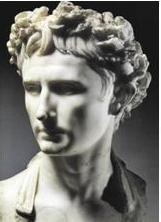
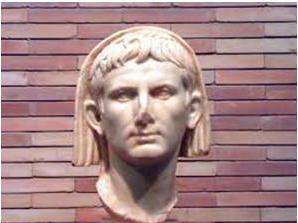
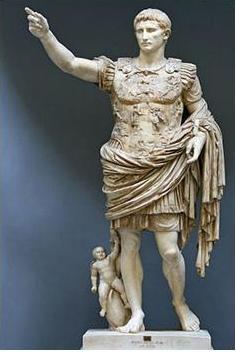
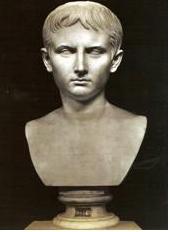
  • Portrait of Emperor Augustus

    We commemorate in this year 2014 the “bimillennium” of the death of Emperor Augustus, who gives his name to the same month on he is died. His long life, almost 76 years, 41 of them as emperor of Rome, is full of general interesting facts and full of curious anecdotes. I have referred to a number of them and to his presence in Hispania in several times in this blog

    It always intrigued historians how a young boy, just 19, named his heir by Julius Caesar, was able to  succeed in a violent and effervescent Rome by the struggles of parties and citizens of enormous power, on which republican institutions were going to give way to personal and authoritarian regime. The analysis, reasons, explanations are as many as historians have dealt with it.

    We can summarize them in a few. First the obvious intelligence, skill, personality and charm of Augustus himself, educated in the tradition of the great Roman families. Secondly he  belongs  to a large family, in which women have a very important role. Then the ability to maintain a semblance of more democratic republican institutions as part of a really absolute rule. Also the network of loyal customers that he has woven throughout the empire (their trips, such as those on the Hispania were used to it). Finally the huge fortune that he had accumulated and used for political purposes.

    Of course these are not sufficient reasons; demerits of the adversaries helped decisively to the success of Augustus. And even perhaps the "fortune",   as the historian Tacitus states, contrasting his good fortune in public life with with the least successful in family life.

    Though the Divine Augustus in his public life enjoyed unshaken prosperity, he was unfortunate at home from the profligacy of his daughter and granddaughter, both of whom he banished from Rome, and punished their paramours with death or exile. (Tacitus, Annales III, 24. Translated by Alfred John Church. William Jackson Brodribb, Sara Bryant)

    ut valida divo Augusto in rem publicam fortuna ita domi improspera fuit ob impudicitiam filiae ac neptis quas urbe depulit, adulterosque earum morte aut fuga punivit (Tácito, Annales III, 24)

    Well, to understand better the emperor who consolidated authoritarian regime to rule the Imperium Romanum and laid the foundation of a long peace (evidently at a very expensive price for the vanquished),I will reproduce the physical picture of Augustus that Suetonius  left to us. It is ultimately the physical portrait of a mortal man whom the Romans considered divine, "divus Augustus."

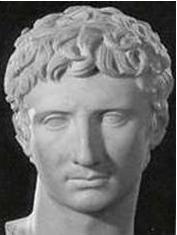
    I enclose some images, a young idealized Augustus, student in Apolonia of Greek culture,  another sculpture as  "imperator" or  army commander known as Augustus of Prima Porta, numerous copies of that  were distributed throughout the empire, another Augustus with  “capite velato” of Museum of Merida and anothers ..

    In person he was handsome and graceful through every period of his life. But he was negligent in his dress; and so careless about dressing his hair, that he usually had it done in great haste, by several barbers at a time. His beard he sometimes clipped, and sometimes shaved; and either read or wrote during the operation. His countenance, either when discoursing or silent, was so calm and serene, that a Gaul of the first rank declared amongst his friends, that he was so softened by it, as to be restrained from throwing him down a precipice, in his passage over the Alps, when he had been admitted to approach him, under pretence of conferring with him.

    His eyes were bright and piercing; and he was willing it should be thought that there was something of a divine vigour in them. He was likewise not a little pleased to see people, upon his looking stedfastly at them, lower their countenances, as if the sun shone in their eyes. But in his old age, he saw very imperfectly with his left eye. His teeth were thin set, small and scaly, his hair a little curled, and inclining to a yellow colour. His eye-brows met; his ears were small, and he had an aquiline nose. His complexion was betwixt brown and fair; his stature but low; though Julius Marathus, his freedman, says he was five feet and nine inches in height. This, however, was so much concealed by the just proportion of his limbs, that it was only perceivable upon comparison with some taller person standing by him.

    He is said to have been born with many spots upon his breast and belly, answering to the figure, order, and number of the stars in the constellation of the Bear. He had besides several callosities resembling scars, occasioned by an itching in his body, and the constant and violent use of the strigil1 in being rubbed. He had a weakness in his left hip, thigh, and leg, insomuch that he often halted on that side; but he received much benefit from the use of sand and reeds. He likewise sometimes found the fore-finger of his right hand so weak, that when it was benumbed and contracted with cold, to use it in writing, he was obliged to have recourse to a circular piece of horn. He had occasionally a complaint in the bladder; but upon voiding some stones in his urine, he was relieved from that pain.

    During the whole course of his life, he suffered, at times, dangerous fits of sickness, especially after the conquest of Cantabria; when his liver being injured by a defluxion upon it, he was reduced to such a condition, that he was obliged to undergo a desperate and doubtful method of cure: for warm applications having no effect, Antonius Musa1 directed the use of those which were cold. He was likewise subject to fits of sickness at stated times every year; for about his birth-day2 he was commonly a little indisposed. In the beginning of spring, he was attacked with an inflation of the midriff; and when the wind was southerly, with a cold in his head. By all these complaints, his constitution was so shattered, that he could not easily bear either heat or cold.

    In the winter, he was protected against the inclemency of the weather by a thick toga, four tunics, a shirt, a flannel stomacher, and swathings upon his legs and thighs. 1 In summer, he lay with the doors of his bedchamber open, and frequently in a piazza, refreshed by a bubbling fountain, and a person standing by to fan him. He could not bear even the winter's sun; and at home, never walked in the open air without a broad-brimmed hat on his head. He usually travelled in a litter, and by night; and so slow, that he was two days in going to Praeneste or Tibur. And if he could go to any place by sea, he preferred that mode of travelling.

    He carefully nourished his health against his many infirmities, avoiding chiefly the free use of the bath; but he was often rubbed with oil, and sweated in a stove; after which he was washed with tepid water, warmed either by a fire, or by being exposed to the heat of the sun. When, upon account of his nerves, he was obliged to have recourse to sea-water, or the waters of Albula,2 he was contented with sitting over a wooden tub, which he called by a Spanish name Dureta, and plunging his hands and feet in the water by turns.


    LXXIX Forma fuit eximia et per omnes aetatis gradus uenustissima, quamquam et omnis lenocinii neglegens; in capite comendo tam incuriosus, ut raptim compluribus simul tonsoribus operam daret ac modo tonderet modo raderet barbam eoque ipso tempore aut legeret aliquid aut etiam scriberet. uultu erat uel in sermone uel tacitus adeo tranquillo serenoque, ut quidam e primoribus Galliarum confessus sit inter suos, eo se inhibitum ac remollitum, quo minus, ut destinarat, in transitu Alpium per simulationem conloquii propius admissus in praecipitium propelleret.
    2] oculos habuit claros ac nitidos, quibus etiam existimari uolebat inesse quiddam diuini uigoris, gaudebatque, si qui sibi acrius contuenti quasi ad fulgorem solis uultum summitteret; sed in senecta sinistro minus uidit; dentes raros et exiguos et scabros; capillum leuiter inflexum et subflauum; supercilia coniuncta; mediocres aures; nasum et a summo eminentiorem et ab imo deductiorem; colorem inter aquilum candidumque; staturam breuem,—quam tamen Iulius Marathus libertus †etiam memoriam eius quinque pedum et dodrantis fuisse tradit—, sed quae commoditate et aequitate membrorum occuleretur, ut non nisi ex comparatione astantis alicuius procerioris intellegi posset.
    LXXX Corpore traditur maculoso dispersis per pectus atque aluum genetiuis notis in modum et ordinem ac numerum stellarum caelestis ursae, sed et callis quibusdam ex prurigine corporis adsiduoque et uehementi strigilis usu plurifariam concretis ad impetiginis formam. coxendice et femore et crure sinistro non perinde ualebat, ut saepe etiam inclaudicaret; sed remedio harenarum atque harundinum confirmabatur. dextrae quoque manus digitum salutarem tam imbecillum interdum sentiebat, ut torpentem contractumque frigore uix cornei circuli supplemento scripturae admoueret. questus est et de uesica, cuius dolore calculis demum per urinam eiectis leuabatur
    ….
    LXXXI Graues et periculosas ualitudines per omnem uitam aliquot expertus est; praecipue Cantabria domita, cum etiam destillationibus iocinere uitiato ad desperationem redactus contrariam et ancipitem rationem medendi necessario subiit: quia calida fomenta non proderant, frigidis curari coactus auctore Antonio Musa.
    LXXXII hieme quaternis cum pingui toga tunicis et subucula et thorace laneo et feminalibus et tibialibus muniebatur, aestate apertis cubiculi foribus ac saepe in peristylo saliente aqua atque etiam uentilante aliquo cubabat. solis uero ne hiberni quidem patiens, domi quoque non nisi petasatus sub diuo spatiabatur. itinera lectica et noctibus fere eaque lenta ac minuta faciebat,… ; ac si quo peruenire mari posset, potius nauigabat.
    [2] uerum tantam infirmitatem magna cura tuebatur, in primis lauandi raritate; unguebatur enim saepius aut sudabat ad flammam, deinde perfundebatur egelida aqua uel sole multo tepefacta. at quotiens neruorum causa marinis Albulisque calidis utendum esset, contentus hoc erat ut insidens ligneo solio, quod ipse Hispanico uerbo duretam uocabat, manus ac pedes alternis iactaret.

  • The language is one, the speech is various: some peculiarities of the speech of Octavian Augustus

    Great actions, wars, conquests, the laws of famous men are usually counted, but apparently less important details are not usually offered. Thanks to the historian Suetonius, (born 56 years after the death of the emperor) who collects numerous data, rumors and anecdotes, we know some of the details regarding the way of speaking of Augustus, which make him closer and attractive.

    Augustus cared language and always he sought a clearly intelligible speech, not without wit and grace. He enjoyed studying and reading since childhood. Always he prepared his speeches, writing and reading to avoid mistakes. Permanently he used auxiliary notes. He was exercised in declamation. He wrote several works in prose and verse. He tried to write a tragedy but he erased it because he was discontent for result. He avoided the  made, empty, archaic phrases. He always sought clarity using in his syntax unnecessary prepositions, as it is required by the grammar,  and trying to talk without darkness.

    He used some peculiar and funny expressions, some personal terms. He was a transgressor of the established orthography,  thinking  that "we must write like we speak." Like all Roman cult people, he was a great lover of Greek authors, but he did not speak this language fluently and spontaneously. Among his personal "hobbies" in this field of letters,

    I find a smaller, but no less curious: when he wrote, in his hand-writing , he  never divided the words, and at the end of a line he did not pass some letters at the beginning of the next, but he wrote these below  the same word, enclosed these with a bracket.

    This solution has lasted until today in some printed works with modern typography and, of course, it was widely used during the Renaissance. The Romans themselves should see this solution with some surprise, because Suetonius collects it as something exceptional.

    Finally, although the texts may seem a little long, nothing is like them to convey vividly the facts of history. I advise you to read the complete text of Suetonius “Life of Augustus”, not overly long. Meanwhile I extract or transcribe  some chapters of "Life of Augustus" of Suetonius:

    LXXXIV 
    From early youth he devoted himself with great diligence and application to the study of eloquence, and the other liberal arts. In the war of Modena, notwithstanding the weighty affairs in which he was engaged, he is said to have read, written, and declaimed every day. He never addressed the senate, the people, or the army, but in a premeditated speech, though he did not want the talent of speaking extempore on the spur of the occasion. And lest his memory should fail him, as well as to prevent the loss of time in getting up his speeches, it was his general practice to recite them. In his intercourse with individuals, and even with his wife Livia, upon subjects of importance he wrote on his tablets all he wished to express, lest, if he spoke extempore, he should say more or less than was proper. He delivered himself in a sweet and peculiar tone, in which he was diligently instructed by a master of elocution. But when he had a cold, he sometimes employed a herald to deliver his speeches to the people.
      ………..
    LXXXV
    He composed many tracts in prose on various subjects, …
    ….
    for though he begun a tragedy with great zest, becoming dissatisfied with the style, he obliterated the whole; and his friends saying to him, "What is your Ajax doing?" he answered, "My Ajax met with a sponge.
    " (1)

    LXXXVI
    He cultivated a style which was neat and chaste, avoiding frivolous or harsh language, as well as obsolete words, which he calls disgusting. His chief object was to deliver his thoughts with all possible perspicuity. To attain this end, and that he might nowhere perplex, or retard the reader or hearer, he made no scruple to add prepositions to his verbs (2), or to repeat the same conjunction several times; which, when omitted, occasion some little obscurity, but give a grace to the style. Those who used affected language, or adopted obsolete words, he despised, as equally faulty, though in different ways. He sometimes indulged himself in jesting, particularly with his friend Maecenas, whom he rallied upon all occasions for his fine phrases, and bantered by imitating his way of talking. Nor did he spare Tiberius, who was fond of obsolete and far-fetched expressions. He charges Mark Antony with insanity, writing rather to make men stare, than to be understood;  ….
    …..
    And in a letter where he commends the talent of his grand-daughter, Agrippina, he says, "But you must be particularly careful, both in writing and speaking, to avoid affectation."

    LXXXVII
    In ordinary conversation, he made use of several peculiar expressions, as appears from letters in his own hand-writing; in which, now and then, when he means to intimate that some persons would never pay their debts, he says, "They will pay at the Greek Calends." (3)  And when he advised patience in the present posture of affairs, he would say, "Let us be content with our Cato." (4) To describe anything in haste, he said, "It was sooner done than asparagus is cooked." He constantly puts baceolus for stultus, pulleiaceus for pullus, …. Likewise simus for sumus, … I have likewise remarked this singularity in his hand-writing: he never divides his words, so as to carry the letters which cannot be inserted at the end of a line to the next, but puts them below the other, enclosed by a bracket.

    LXXXVIII
    He did not adhere strictly to orthography as laid down by the grammarians, but seems to have been of the opinion of those who think, that we ought to write as we speak; for as to his changing and omitting not only letters but whole syllables, it is a vulgar mistake. Nor should I have taken notice of it, but that it appears strange to me, that any person should have told us, that he sent a successor to a consular lieutenant of a province, as an ignorant, illiterate fellow, upon his observing that he had written ixi for ipsi. When he had occasion to write in cypher, he put b for a, c for b, and so forth; and instead of z, aa.

    LXXXIX

    He was no less fond of the Greek literature, in which he made considerable proficiency; having had Apollodorus of Pergamus, for his master in rhetoric; whom. though much advanced in years, he took with him from The City, when he was himself very young, to Apollonia. Afterwards, being instructed in philology by Sephaerus, he received into his family Areus the philosopher, and his sons Dionysius and Nicanor; but he never could speak the Greek tongue readily, nor ever ventured to compose in it. For if there was occasion for him to deliver his sentiments in that language, he always expressed what he had to say in Latin, and gave it another to translate. He was evidently not unacquainted with the poetry of the Greeks, …

    He patronized the men of genius of that age in every possible way. He would hear them read their works with a great deal of patience and good nature; and not only poetry2 and history, but orations and dialogues. He was displeased, however, that anything should be written upon himself, except in a grave manner, and by men of the most eminent abilities: and he enjoined the praetors not to suffer his name to be made too common in the contests amongst orators and poets in the theatres.
    (An English Translation  by Alexander Thomson).

    1.  In spongam incubuisse, literally has fallen upon a sponge, as Ajax is said to have perished by falling on his own sword.
    2. It is against the grammatical rule
    3. (3) there are  not calends in Greek calendar (the first day of each month is called so); "ad kalendas Graecas” means “for never”.
    4. Cato is dead, we must be content with the men under current

    84  Eloquentiam studiaque liberalia ab aetate prima et cupide et laboriosissime exercuit. Mutinensi bello in tanta mole rerum et legisse et scripsisse et declamasse cotidie traditur. nam deinceps neque in senatu neque apud populum neque apud milites locutus est umquam nisi meditata et composita oratione, quamuis non deficeretur ad subita extemporali facultate.
    ac ne periculum memoriae adiret aut in ediscendo tempus absumeret, instituit recitare omnia. sermones quoque cum singulis atque etiam cum Liuia sua grauiores non nisi scriptos et e libello habebat, ne plus minusue loqueretur ex tempore. pronuntiabat dulci et proprio quodam oris sono dabatque assidue phonasco operam; sed nonnumquam infirmatis faucibus praeconis uoce ad populum contionatus est.
    85 Multa uarii generis prosa oratione composuit, …
    nam tragoediam magno impetu exorsus, non succedenti stilo, aboleuit quaerentibusque amicis, quidnam Aiax ageret, respondit Aiacem suum in spongiam incubuisse.
    86 Genus eloquendi secutus est elegans et temperatum uitatis sententiarum ineptiis atque concinnitate et 'reconditorum uerborum,' ut ipse dicit, 'fetoribus'; praecipuamque curam duxit sensum animi quam apertissime exprimere. quod quo facilius efficeret aut necubi lectorem uel auditorem obturbaret ac moraretur, neque praepositiones urbibus addere neque coniunctiones saepius iterare dubitauit, quae detractae afferunt aliquid obscuritatis, etsi gratiam augent.
    cacozelos et antiquarios, ut diuerso genere uitiosos, pari fastidio spreuit exagitabatque nonnumquam; in primis Maecenatem suum, cuius 'myrobrechis,' ut ait, 'cincinnos' usque quaque persequitur et imitando per iocum irridet. sed nec Tiberio parcit et exoletas interdum et reconditas uoces aucupanti. M. quidem Antonium ut insanum increpat, quasi ea scribentem, quae mirentur potius homines quam intellegant; …
    …..
    et quadam epistula Agrippinae neptis ingenium conlaudans: 'sed opus est,' inquit, 'dare te operam, ne moleste scribas et loquaris.'
    87 Cotidiano sermone quaedam frequentius et notabiliter usurpasse eum, litterae ipsius autographae ostentant, in quibus identidem, cum aliquos numquam soluturos significare uult, 'ad K(a)l(endas) Graecas soluturos' ait; et cum hortatur ferenda esse praesentia, qualiacumque sint: 'contenti simus hoc Catone'; et ad exprimendam festinatae rei uelocitatem: 'celerius quam asparagi cocuntur.'
    ponit assidue et pro stulto 'baceolum apud pullum pulleiaceum' et pro cerrito 'uacerrosum' et 'uapide' se habere pro male et 'betizare' pro languere, quod uulgo 'lachanizare' dicitur; item 'simus' pro sumus et 'domos' genetiuo casu singulari pro domuos. nec umquam aliter haec duo, ne quis mendam magis quam consuetudinem putet.
    Notaui et in chirographo eius illa praecipue: non diuidit uerba nec ab extrema parte uersuum abundantis litteras in alterum transfert, sed ibidem statim subicit circumducitque
    orthographiam, id est formulam rationemque scribendi a grammaticis institutam, non adeo custodiit ac uidetur eorum potius sequi opinionem, qui perinde scribendum ac loquamur existiment. nam quod saepe non litteras modo sed syllabas aut permutat aut praeterit, communis hominum error est. nec ego id notarem, nisi mihi mirum uideretur tradidisse aliquos, legato eum consulari successorem dedisse ut rudi et indocto, cuius manu 'ixi' pro ipsi scriptum animaduerterit. quotiens autem per notas scribit, B pro A, C pro B ac deinceps eadem ratione sequentis litteras ponit; pro X autem duplex A.
    89  Ne Graecarum quidem disciplinarum leuiore studio tenebatur. in quibus et ipsis praestabat largiter magistro dicendi usus Apollodoro Pergameno, quem iam grandem natu Apolloniam quoque secum ab urbe iuuenis adhuc eduxerat, deinde eruditione etiam uaria repletus sper Arei philosophi filiorumque eius Dionysi et Nicanoris contubernium; non tamen ut aut loqueretur expedite aut componere aliquid auderet; nam et si quid res exigeret, Latine formabat uertendumque alii dabat. sed plane poematum quoque non imperitus, delectabatur etiam comoedia ueteri et saepe eam exhibuit spectaculis publicis
    In euoluendis utriusque linguae auctoribus nihil aeque sectabatur, quam praecepta et exempla publice uel priuatim salubria, eaque ad uerbum excerpta aut ad domesticos aut ad exercituum prouinciarumque rectores aut ad urbis magistratus plerumque mittebat, prout quique monitione indigerent. etiam libros totos et senatui recitauit et populo notos per edictum saepe fecit, ut orationes Q. Metelli 'de prole augenda' et Rutili 'de modo aedificiorum,' quo magis persuaderet utramque rem non a se primo animaduersam, sed antiquis iam tunc curae fuisse
    Ingenia saeculi sui omnibus modis fouit. recitantis et benigne et patienter audiit, nec tantum carmina et historias, sed et orationes et dialogos. componi tamen aliquid de se nisi et serio et a praestantissimis offendebatur, admonebatque praetores ne paterentur nomen suum commissionibus obsolefieri

    These are the  texts that reflect education, literary taste and some peculiarities of the most powerful man in the universe at the time. It is these little details that make him more interesting and near.

  • A positive measure of Augustus for the integration of peoples

    In such troubled times like these, the memory of a little story may not be very important, but there is a story of Octavius Augustus which has some interest; it concerns a positive, proactive measure, as it is said now, of integration between cultures called to supplement these self.

    The Latin poet Horace left to posterity a few sentences converted to full content famous phrases. One of them refers to the Roman military and political dominance over Greece but also to the Greek cultural superiority, in Epistles II, 1, 156-157, :

    Conquered Greece took captive her savage conqueror and brought her arts into rustic Latium.

    Graecia capta ferum victorem cepit et artes intulit in agresti Latio.

    We shall consider that the Greek people recited the verses of the Iliad and Odyssey of Homer even before Rome exist.

    Well, the Greeks endured Roman domination and Roman always were attracted and "dominated" by Greek culture, to the point that every cult  Roman fellowt, important person or people of rich family, go  to Greece to complete their studies and  well learn  the Greek language.

    In honor of the truth, there was someone who opposed the influence. In the third century BC, Cato the Elder, defender of the Roman tradition, interpreted the Greek influence as a lethal danger to Rome and he opposed her in his youth, but eventually with little success,  as Plutarch says in Parallel Lives, Marcus Cato 2, 4:

    Further than this, it is said, he did not learn Greek till late in life, and was quite well on in years when he took to reading Greek books; then he profited in oratory somewhat from Thucydides, but more from Demosthenes. However, his writings are moderately embellished with Greek sentiments and stories, and many literal translations from the Greek have found a place among his maxims and proverbs. (Translated by Bernadotte Perrin).

    Well, there is a small story of Augustus which reflects  the spirit and desire for integration by proposing a positive measure that seeks the good understanding between the two peoples, Roman and Greek. Suetonius refers it in his Lives of the Twelve Caesars, Life of Augustus. XCVIII, 1-3:

    notwithstanding which, he went round the coast of Campania, and the adjacent islands, and spent four days in that of Capri; where he gave himself up entirely to repose and relaxation.

    Happening to sail by the bay of Puteoli, the passengers and mariners aboard a ship of Alexandria, just then arrived, clad all in white, with chaplets upon their heads, and offering incense, loaded him with praises and joyful acclamations, crying out, " By you we live, by you we sail securely, by you enjoy our liberty and our fortunes." At which being greatly pleased, he distributed to each of those who attended him, forty gold pieces, requiring from them an assurance on oath, not to employ the sum given them in any other way, than the purchase of Alexandrian merchandize.

    And during several days afterwards, he distributed Togae  and Pallia, among other gifts, on condition that the Romans should use the Greek, and the Greeks the Roman dress and language. (Translation by Alexander Thomson).

    tunc Campaniae ora proximisque insulis circuitis Caprearum quoque secessui quadriduum impendit remississimo ad otium et ad omnem comitatem animo.
    Forte Puteolanum sinum praeteruehenti uectores nautaeque de naui Alexandrina, quae tantum quod appulerat, candidati coronatique et tura libantes fausta omina et eximias laudes congesserant: per illum se uiuere, per illum nauigare, libertate atque fortunis per illum frui. qua re admodum exhilaratus quadragenos aureos comitibus diuisit iusque iurandum et cautionem exegit a singulis, non alio datam summam quam in emptionem Alexandrinarum mercium absumpturos.
    sed et ceteros continuos dies inter uaria munuscula togas insuper ac pallia distribuit, lege proposita ut Romani Graeco, Graeci Romano habitu et sermone uterentur

    2000 years have passed. Augustus died shortly after this story, but if we talk about integration between peoples,  the positive measures of assimilation will be  today as yesterday more appropriate than confrontation. Of course,  messages such as "you do not consume products of… Alexandria” don’t help us for good living .
     

  • Octavian Augustus in Hispania (in its two thousandth anniversary)

    Finally the hot summer has given way to sweeter autumn . The summer lasts June, the month of the goddess Juno, the homologous Roman of the Greek Hera, to September, the seventh month of the initial year of ten months. Between the initial month and the end of summer the months of July and August are threshed day to day. July first was called “Quinctilis”, ie, the fifth month, and August “Sextilis”, ie, the sixth month. The general or “imperator” Julius Caesar gave his name to the fifth and his nephew and first emperor Octavian Augustus gave the name to the sixth.

    Octavian was born in September of the year 63 B.C. and he died in August 14 AD, (regardless of chronological accuracy by difficulty of the changes, adaptations and adjustments of the calendar, that his uncle Julius Caesar  reformed until today). So just fulfilled 2,000 years and this may be a good opportunity to discuss any details.

    Augustus was one of numerous honorary names that  Caesar Octavius accumulated in his person. The word is related to "augeo" which means to increase, grow, gain strength and “augurium”, "omen", "observation and interpretation of the positive messages from the gods". So  "august" comes to mean "consecrated by the auguries, with favorable omens, holy, venerable, the chosen or favored by divinity. " Even today in Italian the word “auguri” is used to express "best wishes" to someone. Until Octavius, the term "augustus" was applied only to things and not to people.

    The poet Ovid tells us about the meaning of the term. By chanting the festival and ceremonies of January 13 dedicated to Augustus, tells us in his Fasti 1. 607 et seq.

    Yet these are human honours bestowed on all.
    Augustus alone has a name that ranks with great Jove.
    Sacred things are called august by the senators,
    And so are temples duly dedicated by priestly hands.
    From the same root comes the word augury,
    And Jupiter augments things by his power.
    May he augment our leader’s empire and his years,
    And may the oak-leaf crown protect his doors.
    By the god’s auspices, may the father’s omens
    Attend the heir of so great a name, when he rules the world.

    (Translated by A. S. Kline)

    sed tamen humanis celebrantur honoribus omnes:

    hic socium summo cum Iove nomen habet,
    sancta vocant augusta patres, augusta vocantur
    templa sacerdotum rite dicata manu;
    huius et augurium dependet origine verbi,
    et quodcumque sua Iuppiter auget ope.
    augeat imperium nostri ducis, augeat annos,
    protegat et vestras querna corona fores,
    auspicibusque deis tanti cognominis heres
    omine suscipiat, quo pater, orbis onus

    According to sources, at least the ones I know, Augustus was three times in Hispania and from the three there are some relevant facts and anecdotes.

    The first trip took place in the year 45 BC, when he was just 18. He must have traveled before with his uncle, but illness prevented him from walking. So he came alone without company to be in Tarraco with Julius Caesar. The trip was wrecked to when he arrived, his uncle was not there, so he must to march through hostile enemy territory to Andalusia where he was fighting in the civil war against Pompey's sons.

    Nicholas of Damascus tell that in his Life of Augustus, FGrH F 127, … (10-11)

    (10)… Many were eager to accompany him on account of his great promise but he rejected them all, even his mother herself, and selecting the speediest and strongest of his servants he hastened on his journey and with incredible dispatch he covered the long road and approached Caesar, who had already completed the whole war in the space of seven months.
    11) When Octavius reached Tarraco it was hard to believe that he had managed to arrive in so great a tumult of war. Not finding Caesar there, he had to endure more trouble and danger. He caught up with Caesar in Spain near the city of Calpia. Caesar embraced him as a son and welcomed him, for he had left him at home, ill, and he now unexpectedly saw him safe from both enemies and brigands. In fact, he did not let him go from him, but he kept him at his own quarters and mess. He commended his zeal and intelligence, inasmuch as he was the first of those who had set out from Rome to arrive. And he made the point of asking him in conversation, for he was anxious to make a trial of his understanding; and finding that he was sagacious, intelligent, and concise in his replies and that he always answered to the point, his esteem and affection for him increased. After this they had to sail for Carthago Nova, and arrangements were made whereby Octavius embarked in the same boat as Caesar, with five slaves, but, out of affection, he took three of his companions aboard in addition to the slaves, though he feared that Caesar would be angry when he found this out. However, the reverse was the case, for Caesar was pleased in that Octavius was fond of his comrades and he commended him because he always liked to have present with him men who were observant and who tried to attain to excellence; and because he was already giving no little thought to gaining a good reputation at home.
    (Translated by Clayton M. Hall)

    The speed and courage with which the young Octavius came  and the common sense to responsibility with which he performed during the stay in Hispania impressed favorably Julius Caesar, who probably began to think on  him as his heir, as will be found in the opening of his will that the priestess Vestal Maxima had guarded.

    This information is also offered by Suetonius in his Life of Augustus VIII:

    Upon his uncle's expedition to Spain against the sons of Pompey, he was followed by his nephew, although he was scarcely recovered from a dangerous sickness; and after being shipwrecked at sea, and travelling with very few attendants through roads that were infested with the enemy, he at last came up with him. This activity gave great satisfaction to his uncle, who soon conceived an increasing affection for him, on account of such indications of character. (Translated by Alexander Thomson, Ed.)

    profectum mox auunculum in Hispanias aduersus Cn. Pompei liberos uixdum firmus a graui ualitudine per infestas hostibus uias paucissimis comitibus naufragio etiam facto subsecutus, magno opere demeruit, approbata cito etiam morum indole super itineris industriam.

    And Veleius Patérculus, 2.59.3 reminds us how his uncle Caesar took him to Hispania at eighteen and kept it with him, even by mounting his chariot.

    Though he had been reared in the house of his stepfather, Philippus, Gaius Caesar, his great-uncle, loved this boy as his own son. At the age of eighteen Octavius followed Caesar to Spain in his campaign there, and Caesar kept him with him thereafter as his p179companion, allowing him to share the same roof and ride in the same carriage, and though he was still a boy, honoured him with the pontificate. (Translated by Frederick W. Shipley, in the Loeb Classical Library edition, 1924)

    Quem C. Caesar, maior eius avunculus, educatum apud Philippum vitricum dilexit ut suum, natumque annos duodeviginti Hispaniensis militiae adsecutum se postea comitem habuit, numquam aut alio usum hospitio quam suo aut alio vectum vehiculo, pontificatusque sacerdotio puerum honoravit.

    The second trip was made between 27 and 24 BC and he went to Spain to direct personally the war against the Cantabrian and Asturian. In 26 he retired ill himself to Tarraco , having suffered before a mishap of enormous importance to a Roman citizen.

    During a night march, (Augustus preferred to travel at night) it is triggered a major storm and one lightning, thrown undoubtedly by the mighty Jupiter, killed one of the bearers of his litter, leaving perhaps unconscious or seriously damaged  Octavius himself . This lightning  left him forever aftermath , apparently a kind of trembling that occasionally  was present on him.

    Suetonius tells us how Octavius dedicated a temple to Iuppiter Tonans, Jupiter the Thunderer on the Capitol for having rid of this lightning. Thunderer is precisely the adjective expressing the superstitious terror that Iuppiter makes to Roman citizen  with his thunder and lightning. Of all the epithets given to Jupiter, none conveyed more terror to superstitious minds than that of the Thunderer.

    In the Life of Augustus, 29, 3

    He dedicated the temple to Jupiter Tonans in acknowledgment of his escape from a great danger in his Cantabrian expedition; when, as he was travelling in the night, his litter was struck by lightning, which killed the slave who carried a torch before him. (Translated by Alexander Thomson, Ed.)

    Tonanti Iovi aedem consecravit liberatus periculo,cum   expeditione Cantabrica per nocturnum iter lecticam eius fulgur praestrinxisset servumque praelucentem exanimasset.

    Suetonius refers to  disease that pushed him to Tarraco, perhaps a result of the lightning that almost killed him. Life of Augustus, 81, 1:

    During the whole course of his life, he suffered, at times, dangerous fits of sickness, especially after the conquest of Cantabria; when his liver being injured by a defluxion upon it, he was reduced to such a condition, that he was obliged to undergo a desperate and doubtful method of cure: for warm applications having no effect, Antonius Musa1 directed the use of those which were cold.  (Translated by Alexander Thomson, Ed.)

    Graues et periculosas ualitudines per omnem uitam aliquot expertus est; praecipue Cantabria domita, cum etiam destillationibus iocinere uitiato ad desperationem redactus contrariam et ancipitem rationem medendi necessario subiit: quia calida fomenta non proderant, frigidis curari coactus auctore Antonio Musa

    Dio Cassius in History of Rome in 53, 25 reminds us of the coming of Augustus from Gaul to Spain "to restore order" in 27 BC and how he personally directed the war:

    Augustus was planning an expedition into Britain, since the people there would not come to terms, but he was detained by the revolt of the Salassi and by the hostility of the Cantabri and Astures. The former dwell at the foot of the Alps, as I have stated, whereas both the other tribes occupy the strongest part of the Pyrenees on the side of Spain, together with the plain which lies below.
    …..
    Augustus himself waged war upon the Astures and upon the Cantabri at one and the same time. But these peoples would neither yield to him, because they were confident on account of their strongholds,  nor would they come to close quarters, owing to their inferior numbers and the circumstance that most of them were javelin-throwers, and, besides, they kept causing him a great deal of annoyance, always forestalling him by seizing the higher ground whenever a manoeuvre was attempted, and lying in ambush for him in the valleys and woods.  Accordingly Augustus found himself in very great embarrassment, and having fallen ill from over-exertion and anxiety, he retired to Tarraco and there remained in poor health. Meanwhile Gaius Antistius fought against them and accomplished a good deal, not because he was a better general than Augustus,  but because the barbarians felt contempt for him and so joined battle with the Romans and were defeated. In this way he captured a few places, and afterwards Titus Carisius took Lancia, the principal fortress of the Astures, after it had been abandoned, and also won over many other places.
    (Translation by Earnest Cary).

    Other historians such as Florus, in his Epitome Rerum Romanorum 2,33,12, 46 ff. and Orosius in his "Historiae adversus paganos"  6, 20-21 also remind the Cantabrian Wars and how after they are finished, as it is determined by Augustus in 24,  but they were extended until 19 BC, the doors of temple of Janus in Rome were  closed after two hundred years, because they must to remain open during wartime. Thus began the "peace of Augustus" (pax augusta) ..

    Precisely during this trip Dio Cassius tells us how 25 BC Augustus disbanded veterans soldiers and he founded Augusta Emerita, the modern city of Mérida.

    Dio Cassius 53, 26, 1

    26 1 Upon the conclusion of this war Augustus discharged the more aged of his soldiers and allowed them to found a city in Lusitania, called Augusta Emerita. For those who were still of military age he arranged some exhibitions in the very camps, under the direction of Tiberius and Marcellus, since they were aediles. (Translation by Earnest Cary).

    The third trip took place between 16 and 13 BC. First he went to Gaul and Hispania them from there.
    In Narbonne, in February of the year 15 B.C. Augustus issued edicts referred to "Paemeiobrigenses" and "Aiiobrigiaecini", both in the Bierzo, which appear in the" tessera Paemeiobrigensis "or Edict of the Bierzo. They  rewarded people who remained faithful in the Cantabrian wars. No doubt these decrees and many other measures concerning the promotion of the status of many cities in Hispania in recent years are related to the fact Augustus  came to Spain for the third time, although sources does not prove it directly.

    Just after  return to Rome, the Senate decided to build an altar to peace, the famous Ara Pacis, which seems to refer Dio Cassius in his History of Rome, 54, 25:

    25 1 Now when Augustus had finished all the business which occupied him in the several provinces of Gaul, of Germany and of Spain, having spent large sums from others, having bestowed freedom and citizenship upon some and taken them away from others, he left Drusus in Germany and returned to Rome himself in the consulship of Tiberius and Quintilius Varus. 2 Now it chanced that the news of his coming reached the city during those days when Cornelius Balbus was celebrating with spectacles the dedication of theatre which is even to day called by his name; and Balbus accordingly began to put on airs, as if it were he himself that was going to bring Augustus back, — although he was unable even to enter his theatre, except by boat, on account of the flood of water caused by the Tiber, which had overflowed its banks, — and Tiberius put the vote to him first, in honour of his building the theatre. 3 For the senate convened, and among its other decrees voted to place an altar in the senate-chamber itself, to commemorate the return of Augustus, and also voted that those who approached him as suppliants while he was inside the pomerium should not be punished. (Translation by Earnest Cary).

    Augustus himself refers to it in his Res Gestae divi Augusti (Monumnetum Ancyranum), 12:

    When I returned to Rome from Spain and Gaul, after having successful operations in those provinces when Tiberius Nero and Publius Quintilius were consuls, the senate voted for  my return the consecration of the altar to Pax Augusta in the Campus Martius, and on this altar it ordered the magistrates and priests and Vestal virgins to offer annual sacrifices.

    Cum ex Hispania Gallaque, rebus in iis provincis prospere gestis, Romam redi Ti. Nerone P. Quintilio consulibus, aram Pacis Augustae senatus pro reditu meo consacrandam censuit ad campum Martium, in qua magistratus et sacerdotes et virgines Vestales  anniversarium sacrificium facere iussit.

    Ovid also refers to the foundation of the Ara Pacis: Fasti 1 709 ss. He refers to the “Fasti” of the day January 30. These final verses of the book are  a celebration of peace, which I would play:

    My song has led to the altar of Peace itself.
    This day is the second from the month’s end.
    Come, Peace, your graceful tresses wreathed
    With laurel of Actium: stay gently in this world.
    While we lack enemies, or cause for triumphs:
    You’ll be a greater glory to our leaders than war.
    May the soldier be armed to defend against arms,
    And the trumpet blare only for processions.
    May the world far and near fear the sons of Aeneas,
    And let any land that feared Rome too little, love her.
    Priests, add incense to the peaceful flames,
    Let a shining sacrifice fall, brow wet with wine,
    And ask the gods who favour pious prayer
    That the house that brings peace, may so endure.

    (Translated by A. S. Kline)

    Ipsum nos carmen deduxit Pacis ad aram.
    haec erit a mensis fine secunda dies.
    frondibus Actiacis comptos redimita capillos,
    Pax, ades et toto mitis in orbe mane. 
    dum desint hostes, desit quoque causa triumphi:
    tu ducibus bello gloria maior eris.
    sola gerat miles, quibus arma coerceat, arma,
    canteturque fera nil nisi pompa tuba.
    horreat Aeneadas et primus et ultimus orbis:
    si qua parum Romam terra timebat, amet.
    tura, sacerdotes, pacalibus addite flammis,
    albaque percussa victima fronte cadat,
    utque domus, quae praestat eam, cum pace perennet
    ad pia propensos vota rogate deos.

    This phrase, “domus utque, quae praestat pacem, cum pace perennet”, could be the old version of the maxim: "If you want peace, work for peace."

  • Shows that generate passions and clashes: Pompeii versus Nuceria

    The inhabitants of Pompeii and its surroundings, as all the inhabitants of the Roman Empire in general, were fond of gladiatorial shows in the amphitheater and of racing horses and chariots in the circus or hippodrome.

    Note: The word 'amphitheater' is formed from two Greek words amphi, ἀμφι, meaning "two" and Theatrum θέατρον; it is a roughly circular building result of the union of two approximately semicircular theaters.

    But the Greeks did not have "amphitheaters"; so we have to assume that the word, though Greek, was created by the Romans. The word "circus", from latin "circus" etymologically means "circle, fence." Hippodrome, from the Greek ἱππόδρομος (ἱππός, hipos, horse and  δρομος, dromos, race, travel). The most famous amphitheater in Rome, the Flavian Amphitheatre, is known as the "Colosseum" precisely because he had before it the statue of the famous "Colossus", Colosseum, Nero statue about 30 or 35 meters. The Spanish word "coso", from "colosseum", means "bull ring".

    Rivalries between neighboring cities and team rivalries were sometimes masked in those competitions, sometimes even violent, as it occurs now primarily in football, that raises  true passions.

    The violence in stadiums (arena, circus) sometimes reached such proportions that sanctions such as the closure of the field are imposed.

    This is that  happened in the year 59 AD, under Nero, in the amphitheater of Pompeii during a show of gladiators offered by Livineius Regulus.

    Citizens of the neighboring city of Nuceria attended the show. The insults took the place  of each others bets and  bluffs, the stoning took the places of the insults, the unsheathing of swords took the place of the stoning. The consequences were: the Pompeii won,  but there they were dead; many nucerians  were wounded and maimed.

    The Emperor Nero himself, after consulting with the nucerians, commissioned a research to the consuls and punished the culprits: the Senate forbade to  celebrate such shows in Pompeii for ten years; ie,  he closed the amphitheater and those responsible for the game and the instigators of the riot were expelled from the city.

    During the period of the ban just games of athletes were held as usual with this type of sanction, Nero have softened the punishment and permitted to open again in 64.

    Anyway, since we have a chronicle of the event, it would  better to listen that Tacitus tells us in his Annals, 14.17:

    About the same time a trifling beginning led to frightful bloodshed between the inhabitants of Nuceria and Pompeii, at a gladiatorial show exhibited by Livineius Regulus, who had been, as I have related, expelled from the Senate. With the unruly spirit of townsfolk, they began with abusive language of each other; then they took up stones and at last weapons, the advantage resting with the populace of Pompeii, where the show was being exhibited. And so there were brought to Rome a number of the people of Nuceria, with their bodies mutilated by wounds, and many lamented the deaths of children or of parents. The emperor entrusted the trial of the case to the Senate, and the Senate to the consuls, and then again the matter being referred back to the Senators, the inhabitants of Pompeii were forbidden to have any such public gathering for ten years, and all associations they had formed in defiance of the laws were dissolved. Livineius and the others who had excited the disturbance, were punished with exile. (Transl.Alfred John Church. William Jackson Brodribb. Sara Bryant.)

    Sub idem tempus levi initio atrox caedes orta inter colonos Nucerinos Pompeianosque gladiatorio spectaculo quod Livineius Regulus, quem motum senatu rettuli, edebat. quippe oppidana lascivia in vicem incessentes probra, dein saxa, postremo ferrum sumpsere, validiore Pompeianorum plebe, apud quos spectaculum edebatur. ergo deportati sunt in urbem multi e Nucerinis trunco per vulnera corpore, ac plerique liberorum aut parentum mortis deflebant. cuius rei iudicium princeps senatui, senatus consulibus permisit. et rursus re ad patres relata, prohibiti publice in decem annos eius modi coetu Pompeiani collegiaque quae contra leges instituerant dissoluta; Livineius et qui alii seditionem conciverant exilio multati sunt

    The altercation should have been of such proportions that not only it is told bt the historian Tacitus in his Annals, but there is a wall painting in Pompeii, in the house  I.3.23,  the house known as house of Actius Anicetus, representing the altercation. It can be seen, in addition to the fallen and the litigants, the candle which served to shade the sand on hot summer days.

    Among the many graffiti of Pompeii, over twenty thousand, there is one that certainly seems to refer to the episode that I comment. It corresponds to Corpus Inscriptionum Latinarum, IV, 1293 via Mercury.

    Campanians, with this one victory, you have lost with Nucerians

    Campani, victoria una cum Nucerinis peristis

    Another graffiti can give us some  idea about the passion with which the residents of the county attending these shows. 

    CIL  IV, 1329, Mercury via:

    Misfortunes to people of Nocera

    Nucerinis infelicia

    CIL IV, 2183, Vico del Lupanare:

    'Up with the people of Pozzuoli, up with all the people of Nocera, and a hook for) the people of Pompei and those of Pithecusa”.

    Puteolanis feliciter, omnibus Nucerinis felicia et uncum Pompeianis Petecusanis.

    Why there are rivalries between the neighbor of Pompeii and they of Nuceria? Probably the rivalries are from afar. The neighborhood always is cause for friction. After the Social War of 91-88 years B.C. Sila established a colony at Pompeii. The amphitheater is at that time, from around 70 BC Nuceria, whose people had not rebelled and it was better treated. Then Nero settled a colony of veterans who maybe disputed some land to Pompeii. Moreover, in the reduction of the penalty she may intervene Nero's wife Poppaea, whose family lived in Pompeii. Perhaps it was due to relieve the stress of the city after the earthquake that seriously damaged it in the year 62 AD.

    Another graphite reports us that to drinking good wine we should go to Nuceria:

    CIL III.5.4 (exterior of a small house); 8903:

    Gaius Sabinus says a fond hello to Statius. Traveler, you eat bread in Pompeii but you go to Nuceria to drink. At Nuceria, the drinking is better.

    Ga. Sabinius Statio plurima sal. Viator Pompeis pane gustas, Nuceriae bibes, Nuceri[…] melius.

    We could continue mulling more about it, but what for if every day or weekends we still see these fights of fans of different teams in the league, in the Champions League or in any other European or American competition?

    It seems as if some of them were doomed to find their identity in confrontation with each other all the time and occasion. Of course then also the games (ludi circus) as today  mass sports are good valves to exhaust the  stress generated in an absurd daily life.

  • Hypatia opens the eyes of a madcap in love young

    A young disciple confessed to his teacher Hypatia its on love because of her beauty, but the teacher bluntly disabused him of the truth of beauty and mere appearance.

    This anecdote, that I will develop, reminds me another similar happened in Madrid in the time of the Habsburgs.

    All great  cities have  a "sub urbe" or underground world of tunnels, passageways, and various pipelines. One of the first major pipelines and soundness is, for example, the "Cloaca Maxima" of Rome  to clean up the marshy valley of the "forum".

    Madrid, capital of Spain, is, like Rome, built on "seven hills" and like any big city, it is  pierced by hundreds of kilometers of pipelines with different galleries and purposes. On many of them there are fantastic stories, full of imagination at times and at other times with historical foundation, though it may seem curious.

    Among those tunnels they have always generated great curiosity that united the palaces castles with exits to the outside walls or entries in special enclosures. One of the most curious in Madrid is apparently it that linked the “Alcázar de los Austrias”, precursor of the current Royal Palace, with the Convent of the Incarnation. By it kings were traveling to attend religious services.

    According to one of those apocryphal or imaginative stories, King Philip IV inter alia transited the tunnel to visit a beautiful convent novice of  San Placido because he felt attracted to her.  The novice found an effective way to end the harassment of lubricious monarch : she called for, before the visit of the monarch, she was dressed in the shroud of dead and was placed in a lit by torches coffin faking the funeral of her death.

    This fictional or real story remember, as I said, another less extreme attributed to the famous philosopher and mathematical Hypatia of Alexandria, a victim of the intransigence of a group of Christians in the V century under religious and social conflicts fueled by the intransigence of some leaders like bishop Cyril. Hypatia was brutally murdered in 415.

    Her figure, long forgotten, was then and still it is now the subject of many opposing interpretations, about  which probably I will talk in another time, and interest in modern media and art (remember the famous movie “Agora”, directed by  Alejandro Amenabar released in 2009 with great success, despite also notable historical errors.

    Well, Hypatia joined her womanhood, the wisdom, illustration, philosophy, virginity and beauty.  Virginity will come in part imposed by his absolute dedication to science and philosophical reflection, which require continuous attention . Apart by her neoplatonic philosophical orientation, she  was interested in the ideal world of ideas and not in that of the miserable matter.

    It is said that  a giddy and inexperienced young, madly in love with her, insisted on his amorous desires. Hypatia let him see his condition of mortal and imperfect being, like the nun although with a less drastic method: she showed the young the sanitary napkin with which young wiped menstrual blood that, monthly, as the name suggests, expels the status of women in fertility, saying:  "dear young man, this is actually what you love, not beauty in itself" or according to another version "this is what you love, young, and it is not beautiful" .

    The story is told by the Athenian Damascius, in his book  “Alexandria”:

    She used to wear her mantle of philosopher and stroll through town performing publicly Plato and Aristotle, and the works of some other philosophers whom  wanted to listen her. In addition to his teaching ability, she stood at the pinnacle of virtue. She was fair and always remained chaste and virgin. It was so beautiful and well made that one of his students loved her and being unable to control himself, he showed a sign of his enchantment. Hypatia, tried unsuccessfully to calm him through music. Actually she took some cloths stained with menstruation and said "this is what you love, young, and this is not beautiful." He felt so ashamed and frightened by the horrible sight that he experienced a change on his  heart and quickly became a better man.

    So Hypatia was both intelligent and eloquent in his speeches and courteous in their actions. The whole city loved  undoubedly her and the  had great veneration for her, but the rulers of the city envied her from the beginning, that often occurred in Athens also. But if philosophy had perished, yet its name still appeared grand and venerable to men who exercised leadership in the State (Alexandria2: 1993, 57-58)

    Note: The text is reproduced by Amalia Gonzalez Suarez, who published first it in "La otra Historia", Another  History. Ed Tertulia Feminist les Comadres, Gijón, 2003. The author Maria Dzielska, author of Hypatia of Alexandria (Ed.Siruela) locates the event in Damascius, frag. 102, pp-17-77.15

    Also the Suda (Byzantine Greek encyclopedia of X century with over 30,000 entries) says about this word Hypatia, Ὑπατία:

    In addition to her teaching, attaining the height of practical virtue, becoming just and prudent, she remained a virgin. She was so very beautiful and attractive that one of those who attended her lectures fell in love with her. He was not able to contain his desire, but he informed her of his condition. Ignorant reports say that Hypatia relieved him of his disease by music; but truth proclaims that music failed to have any effect. She brought some of her female rags and threw them before him, showing him the signs of her unclean origin, and said, "You love this, o youth, and there is nothing beautiful about it." (Suda online, Upsilon 166)

    The story may seem grotesque, but it increases its chance considering the interest in Platonic philosophy by Hypatia. The sanitary napkin is the symbol of materiality and imperfection of the female body in front of the perfection of beauty itself that is sought by the  philosopher. Interestingly, the name Hypatia etymologically means "the perfect, the sublime, the high". Naturally, today it is very different the consideration of the matter against the spirit and the perfection or imperfection of the female body. The ideas can only be explained and understood in its historical context.
     

  • Ornament books

    Today thousands of books, thousands of titles and thousands of copies of each title are published. In antiquity the publishing industry was much smaller, but there is an important book trade first on papyrus and then on parchment or skin.

    Well, then as now there were people who exhibited books on the shelves in their homes just for show, books which they had not read, if not they went so far as to state simulated books in the libraries, empty boxes representing the book spine of important books, although according to the words of Seneca, book spines were all that some Romans saw.

    Seneca refers to this custom in his "De animi tranquillitate," (On tranquillity of mind), 9, 4

    What is the use of having countless books and libraries, whose titles their owners can scarcely read through in a whole lifetime?   The learner is, not instructed, but burdened by the mass of them, and it is much better to surrender yourself to a few authors than to wander through many.  Forty thousand books were burned\b at Alexandria; let someone else praise this library as the most noble monument to the wealth of kings, as did Titus Livius, who says\c that it was the most distinguished achievement of the good taste and solicitude of kings.  There was no "good taste" or "solicitude" about it, but only learned luxury – nay, not even "learned," since they had collected the books, not for the sake of learning, but to make a show, just as many who lack even a child's knowledge of letters use books, not as the tools of learning, but as decorations for the diningroom.  Therefore, let just as many books be acquired as are enough, but not for mere show. "It is more respectable," you say, "to squander money on these than on Corinthian bronzes and on pictures." But excess in anything becomes a fault.  What excuse have you to offer for a man who seeks to have bookcases of citrus-wood and ivory, who collects the works of unknown or diseredited authors and sits yawning in the midst of so many thousand books, who gets most of his pleasure from the outsides of volumes and their titles?  Consequently it is in the houses of the laziest men that you will see a full collection of orations and history with the boxes piled right up to the ceiling; for by now among cold baths and hot baths a library also is equipped as a necessary ornament of a great house.  I would readily pardon these men if they were led astray by their excessive zeal for learning. But as it is,these collections of the works of sacred genius with all the portraits that adorn them are bought for show and a decoration of their walls. (Translation by  J.W. Basore) .

    Studiorum quoque, quae liberalissima impensa est, tamdiu rationem habet quamdiu modum. Quo innumerabiles libros et bibliothecas, quarum dominus uix tota uita indices perlegit? Onerat discentem turba, non instruit, multoque satius est paucis te auctoribus tradere quam errare per multos. 5 Quadraginta milia librorum Alexandriae arserunt. Pulcherrimum regiae opulentiae monumentum alius laudauerit, sicut et Liuius, qui elegantiae regum curaeque egregium id opus ait fuisse. Non fuit elegantia illud aut cura, sed studiosa luxuria, immo ne studiosa quidem, quoniam non in studium, sed in spectaculum comparauerant, sicut plerisque ignaris etiam puerilium litterarum libri non studiorum instrumenta, sed cenationum ornamenta sunt. Paretur itaque librorum quantum satis sit, nihil in apparatum. 6 (Honestius, inquis, huc se impensae quam in Corinthia pictasque tabulas effuderint.) Vitiosum est ubique quod nimium est. Quid habes cur ignoscas homini armaria e citro atque ebore captanti, corpora conquirenti aut ignotorum auctorum aut improbatorum et inter tot milia librorum oscitanti, cui uoluminum suorum frontes maxime placent titulique? 7 Apud desidiosissimos ergo uidebis quicquid orationum historiarumque est, tecto tenus exstructa loculamenta: iam enim, inter balnearia et thermas, bibliotheca quoque ut necessarium domus ornamentum expolitur. Ignoscerem plane, si studiorum nimia cupidine erraretur; nunc ista conquisita, cum imaginibus suis discripta, sacrorum opera ingeniorum in speciem et cultum parietum comparantur.
     

  • The fingers

    Each of the fingers has a name: thumb, index, middle finger, ring finger and little finger. But why are these names? Some names seem obvious; others are less so, but all must have reason, as in its origin with all the names that we apply to all beings

    The Latin word "digitus" means "finger", appendix of extremities, and it is also a measure of length equal to about 18 millimeters. As we learn to count on the fingers, also it means "figure or number", from  where on turn derives the current term "digital". See: https://www.antiquitatem.com/en/language-by-the-gesture-digital-computer .

    The actual names of each of the fingers are a continuation of the Latin names and they are formed either from the position at hand, from some characteristic such as strength or size and from the role they  can play.

    St. Isidore of Seville sums up it perfectly in his Etymologies XI, 1, 70-71:

    On man and his parts
    The fingers (digitus) are so called, either because there are ten (decem) of the, or because they are connected handsomely (decenter), for the combine in them selves both the perfect number  and the most appropriate order. The first finger is called thumb (pollex), vbecause among the rest it prevails (pollere) in strength and power . The sond is the index finger (index), which is also called “greeter” (salutaris) or pointer (demonsstratorius), because  we greet someone (salutare) point something out (ostendere) usually  with it. The third finger is called “immodest” (impudicus), because often an accusation of a shameful action is expressed by it.The fourth is the ring  (anularis) finger, because it is the one on which the ring (annulus) is worn. It is also called medical (medicinalis), because physicians (medicus) use it to scoop up ground eye-salves.  The fifth is called auricularis, because we use it to scrape out the ear (auris)
    . (Translated by  Stephen A. Barney et alii. Cambridge University Press)

    De homine et partibus eius.

    Digiti nuncupati, vel quia decem sunt, vel quia decenter existuntt. Nam habent in se et numerum perfectum et ordinem decentissimum. Primus pollex vocatus, eo quod inter caeteros polleat virtute, et potestate. Secundus index et salutaris, seu demonstratorius, quia fere eo salutamus, vel ostendimus. Tertius impudicus, quod plerumque per eum  opprobrii insectatio exprimitur. Quartus anularis, eo quod in ipso anulus geritur. Idem et medicinalis, quod eo trita collyria a medicis colliguntur. Quintus auricularis, pro eo, quod eo aurem scalpimus.

    It  should draw attention to the curious and elementary etymologies of  St. Isidore, following in the footsteps of some famous Roman grammarians as Varro.

    So he says that they are called “digiti” (fingers) because they are  “decem”, (ten) or because they coexist “decenter”, ("decently, properly")   in an clearly unjustified exercise of imagination. The truth is that there is not an Indo-European word for "digitus",  which seems rather a familiar form about which little can be said.

    But it is correct  the etymology of the first finger,  pollex, (the thumb), which comes from pulgaris and this from pollicaris and this from "pollere", “to be strong”. In some places it is also called "flea dip" because so undesirable insects are killed with it, and there is for some people the explanation of why the current form is in Spanish "pulgar" (from “pulga”)  and not "polgar" as it seems it should be derived from "pollicaris"; it would be a vulgar assimilation to “pulga” (flea). Rather the process however seems to have been the reverse: from pollicaris, it is deduced that pulgaris serves to kill the bugs.

    The explanation about the second finger, "index" (salutaris, demonstrativus) also seems clear and obvious. For example, Horace  have used it in their Sermons  (or Satires). 2.8, 20-26:

    Myself at top, then Viscus, and below
    Was Varius: after us came Balatro,
    Vibidius also, present at the treat
    Unasked, as members of Maecenas' suite.
    Porcius and Nomentanus last, and he,
    Our host, who lay betwixt them, made the three:
    Porcius the undermost, a witty droll,
    Who makes you laugh by swallowing cheesecakes whole:
    While Nomentanus' specialty was this,
    To point things out that vulgar eyes might miss;

    (Translation by John Conington, M.A. Corpus Professor of Latin in the University of Oxford).

    'summus ego et prope me Viscus Thurinus et infra,
    si memini, Varius; cum Seruilio Balatrone
    Vibidius, quos Maecenas adduxerat umbras.
    Nomentanus erat super ipsum, Porcius infra,
    ridiculus totas semel absorbere placentas;

    Nomentanus ad hoc, qui, siquid forte lateret,
    indice monstraret digito;

    The third finger is the "middle" "medius", or large (summus), as it is called in Latin. Why St. Isidorus and the Romans called it impudicus, infamis, famosus? St.  Isidorus explains only half, although his readers know exactly what he means. It, 2400 years ago as today,  was the ugly, obscene and insulting gesture  of “giving the finger” or “flipping the bird”, “short the bird”, which so much extension has acquired in recent times. It consists on  maintaining the four closed fingers, lift the middle on a clear representation of the penis and testicles; it is a vulgar gesture that we read in vulgar terms like "to fuck off". To this issue, see: https://www.antiquitatem.com/en/digitus-impudicus-giving-the-finger

     The fourth is called  “anularis”, from “anulus” ("ring") and also honestus and medicus in Latin,  because in it the ring is worn as St. Isidore says.

    "anulus" comes from Latin anus, meaning ringin circular shape. It is clear, then, why it is named so to the "hole in the digestive tract ends and by which the excrement is expelled".

    The name of this finger deserves its own article, because it is very much the ancient literature on the Roman rings, and on the fingers and hand in which it must to be carried. It is no less interesting to analyze why  it is called "medical or doctor finger" St.  Isidore gives us a simple explanation, which may not be enough. Aulus Gellius, Macrobius, Pliny give us curious and less interesting  news on this finger. We also discuss it in a separate article.

    The fifth finger is called in Latin "ultimus", "nimius" and "minimus"  and meñique, "little",  in Spanish precisely because it is the smallest. The Royal Spanish Academy explains the term as "Crossing menino, child,  and mermellique or  margarique,  variations of margarite, from old French margariz, renegade, traitor, paper sometimes attributed to this finger on sayings and fables).  In any case it involved with “minino, menino,  and these with minimus, the smallest. On English is equally obvious "Little Finger" and in French "petit doigt", in German klein Finger, Italian mignolo, Catalan it petit, dedinho in Galician.

    It is also called "auricularis", from “auricula”, the ear, by its adaptation to the function of picking ears.

  • The roaring noise which the high waterfall roars with

    The Spanish word “ruido” (noise) comes from the Latin word “rugidus”, from where also comes the cultism “rugido” (roar/ roaring noise). The noise is an unpleasant sound to the ear and an annoying sound for the spirit. There are therefore numerous associations and movements that fight against what is also called “acoustic pollution”.

    Actually we live in a very noisy society and culture due to the constant movement we are subjected to, that is, due to the work and industrial activity and to some social customs like our interest in music and crowed outdoor concerts that are usually held.

    We can think, and no doubt that it would be accurate, that people´s life in the ancient times was generally quieter and calmer, much less noisy that the current one, but this in no way can mean they didn´t also suffer the consequences of annoying and unnerving noises.

    Somehow interested in knowing more about the impact of the noise on ancient people´s life I have been gathering diverse information. There are many texts that inform us about it.

    One of the most known and quoted texts is the one which refers to Sybaris, Greek city in southern Italy where apparently, around the year 600 BC, the practice within the city of different professions would have been prohibited, such as blacksmith, boilermaker, or carpenter who, with his hammer and noise, disturbs the sleep and rest of the citizens; it seems that the roosters breeding, which early announce the new day, would have also been banned.

    We are informed, for example, by Athenaeus of Naucratis (centuries II-III A.D.), in his book "The Deipnosophistae, XII 518 C-D", which means "dinner-table philosophers" or perhaps "authorities on banquets", (that is known and cited with these titles). He tells us about it in XII 518 C-D. See:

    https://www.antiquitatem.com/en/ancient-cities-and-noise-deafness-sybari

    No wonder, then, that Sybarites, as well as inhabitants of Sybaris, is also used to designate any person of exquisite taste and pleasure lover.

    Popular imagination has attributed or awarded numerous extravagances to the “Sybarites” and maybe the mentioned ones are some of them we must give little credit to, but the fact that the people of the ancient times refer to them is evidence that the noise was also a worry at that time and somehow we might consider the mentioned banning as the first case of acoustic protection pre-legislation.

    Very well known and quoted is also the poem 57 of Book XII of Epigrams by the satirical poet Martial, from Hispanic origin, where he tells us how when he is fed up, sick and tired of the many noises of the city , Rome , he goes to his small farm in the field.

    It is also quoted a letter from the naturalist and philosopher Seneca, from Hispanic origin too, to his friend Lucilius, in which he complains bitterly about all the noise he has to suffer to live just above the baths, which Romans were so fond of. This is letter number 56 "Ad Lucilium”.

    Less mentioned are some verses by the also satirical poet Juvenal in which he complains about the noise the wheels of the carriages make at a crossroads. It does it in Saturae, III, 236-237.

    But the more widely quoted text certainly is one by Pliny the Elder (23-79), the naturalist who died as a victim due to his curiosity in the eruption of the Vesuvius Mount that destroyed Pompeii, where he allegedly states in his book Naturalis Historia (Natural History) that the people who live next to the Nile River cataracts are deaf as a result of the bellow and noise the water causes as it falls.

    The passage is quoted in hundreds, perhaps thousands, of books, articles, blogs, web sides, documents from different institutions, medical associations ‘documents, associations of lawyers, citizens, hospital departments and even in some doctoral thesis. But none of them gives the precise reference of the text, indicating the particular book from the 37 books that make up Pliny´s whole work (Natural History) nor the chapter or paragraph.

    It´s only pealed and repeated again and again a general reference or statement that in English is generally "Pliny the Elder in his Natural History mentions persons living near the Nile cataracts became deaf".

    In some cases the information is completed by adding a generalizing "all inhabitants" and some even specify that "Pliny observes" as if he had personally watched them, or still more because some authors, in their desire to concretion, report that they were fishermen from the area, but in no case giving specific reference, as it is required whenever ancient and modern texts are quoted.  

    I have tried to locate on my own the particular passage, the “topos” or place where Pliny makes this statement. I humbly confess that I have not found it, in spite of having revised each one of the 37 books, (in the ancient sense), which form, as I said, the encyclopedia of Pliny. Therefore I would be very grateful to anyone who could give me this information, that I'm afraid it's wrong.

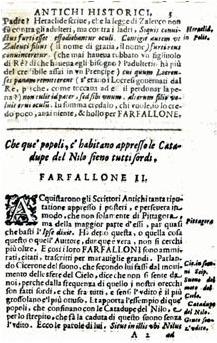
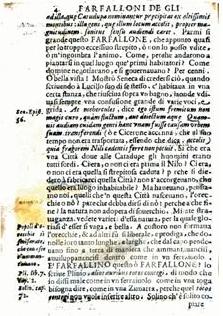
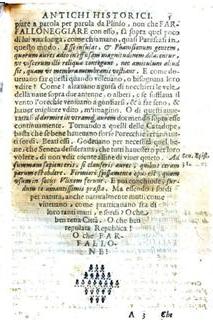
    Soon I suspected about the mistake of this quote which attributes to Pliny a statement in his Naturalis Historia that does not really exist. My suspicion was confirmed by the happy discovery of a curious book by Abbe Secundo Lanncellotti entitle "Farfalloni de gli Antichi Historici" (nonsense, piffles of the ancient historians) published in Venice in 1636 in which he criticizes what he considers huge mistakes or blunders made by the ancient authors and people.

    Precisely the second "farfallone" or "nonsense" he talks about is called “Che que  popoli, c’habitano appresso le Catadupe del Nilo sieno tutti sordi” (The one about the people living besides the Nile Falls are all deaf) .

    Abbe Lancelloti does not attribute this statement to Pliny, but Cicero, as I will explain or commentate later, and in the beginning of the comment or statement he says something of great interest to the case we are discussing now that I can´t resist to transcribe literally, in Italian first and, then, in English:

    Acquistarono gli Scrittori Antichi tanta riputatione appresso i posteri, e persevera in modo, che non solamente di Pittagora, ma della maggior parte d’essi, par quasi che basti l’ Ipse dixit. Ha detto questa, o quella cosa questo o quell’ Auttore, dunque vera, non si cerchi più oltre. E cosí i loro FARFALLONI sono ammirati, citati, trascritti per marauiglie grand.”

    "Ancient writers acquired such a big reputation among subsequent or later writers, and even still nowadays it goes on, that not only of Pythagorean but of most of them, like the Ipse dixit is enough. This or that author has said this or that thing; it is true and do not look anywhere else. And so their follies are admired, quoted, transcribed as great wonders”.


    Abbe Lancellotti himself references in this "farfallone" to Cicero (106 BC-43 BC), who in his work "De Republica, 6.19" (About the Republic, 6.9), in the famous passage about Somnium Scipionis (Scipio´s dream), talking about the sound produced by the movement of the spheres of the heaven, says we can´t hear it, because due to their frequency our ears have become deaf and he states that of every sense the ear is the most rude and obtuse one. And he cites as an example to confirm it that of the people who live along the Nile cataracts that have lost their hearing due to the noise of the fall of the river.

    Saturated men´s ears with this sound, they deafened; as there isn´t in you rougher sense, like there where the Nile River falls from the high mountains where they are called cataracts, the people inhabiting that place, have no sense of hearing because of the bellow of the noise.

    'Hoc sonitu oppletae aures hominum obsurduerunt; nec est ullus hebetior sensus in vobis, sicut, ubi Nilus ad illa, quae Catadupa nominantur, praecipitat ex altissimis montibus, ea gens, quae illum locum adcolit, propter magnitudinem sonitus sensu audiendi caret. (Cic. De Republica, 6, 19)

    This is really a contrasted quotation. But why has Cicero been less successful among scientists, with hardly any success, that Pliny´s apocryphal quote? Maybe because Pliny´s condition of naturalist and therefore scientist gives him more authority than what a rhetorician as Cicero says, at the far end too loquacious as a good lawyer.

    But the fact that Cicero quotes it is proof enough that this opinion, crazy according to Lancellotti, was widespread among educated people of Rome of the first century BC.

    Well, back to Pliny we will say that in his remarkable encyclopedia Natural History he refers, of course, to the Nile Falls and even to their deafening noise, but by no means in the terms in which it does the quote we are discussing.

    In Naturalis Historia, Book V, 10, 54 he says:

    Then, after crashing with some islands, and interrupted by many other obstacles, finally enclosed by the mountains, is pushed like a flood, the waters accelerated to the point of the Ethiopians, which are called Catadupas (cataracts); locked again in a channel between rocks, it is believed that it does not flow but plunges with an immense bellow.

    subinde insulis impactus, totidem incitatus inritamentis, postremo inclusus montibus, nec aliunde torrentior, vectus aquis properantibus ad locum Aethiopum, qui Catadupi vocantur, novissimo catarracte inter occursantes scopulos non fluere inmenso fragore creditur, sed ruere.

    In Natualis Historia, Book VI, 35, 181 he says:

    This one conquered cities….. Attena, Stadisse, where the Nile River, rushing, removes with its clash the hearing from its inhabitants. He also conquered Napata.

    is oppida expugnavit … Attenam, Stadissim, ubi Nilus praecipitans se fragore auditum accolis aufert. diripuit et Napata.

    Otherwise other authors state the same, like Seneca himself (4 BC-65 AD), who refers in his Quaestiones Naturales (Natural Questions) 4, 2, 5 to the cataracts of the Nile and its deafening noise:

    "… Finally, overcome the obstacles, without ground, it falls into a huge deep with huge bellow of the place. A colony, placed there by the Persians, could not stand the noise, canceled their ears by the continuous roar, so they had to be moved to another quieter place. "

    …tandemque eluctatus obstantia in uastam altitudinem subito destitutus cadit cum ingenti circumiacentium regionum strepitu. Quem perferre gens ibi a Persis collocata non potuit obtusis assiduo fragore auribus et ob hoc sedibus ad quietiora translatis

    By the way, this idea of the translation of the colony or city is repeated by Seneca himself in the famous LVI Epistle to Lucilius cited above.

    It’s not easy to understand how a questionable or doubtful quotation is profusely made while several others, which confirm what at the far end is aimed, however aren´t used: that the ancient Greeks and Romans were aware of the damages a high level of noise represents to the hearing, both produced by the human being or nature.

    Nor it is easy to understand how a quote has been mentioned, alleged and used as “argument from authority” without checking its true existence first.

    At least from all this we draw some conclusions:

    1. The “argument from authority “must be based primarily on real and proven sources. That is, there must be the source.

    2. The sources, despite their author having much authority, must be subjected to textual criticism and also to scientific contrast. The scientific errors existed both in antiquity and today too, even published by prestigious authors and scientific journals.

    3. Multiplication and repetition of the same quote (easy task nowadays with computer media) does not increase its authority; if the quote does not really exist, what it shows is how little rigor we usually act with.

  • The first very misogynistic old poem

    In the ancient world, Greek and Roman, the woman has no presence in the social and political life even with very few exceptions.

    The gynoecium (from Greek γυναικεῖον (gynaikeion from γυνή (Gyne) ,woman, and οἰκίον, oikion, house) was the domestic space in that the women were reduced limited to housework and childbearing  (see: https://www.antiquitatem.com/en/matron-lanam-fecit-epitaph-lapidary )

    Note: as opposition, the androcium  (Lat androecium, and this from Greek ἀνήρ, ἀνδρός,aner, andros, man, male, and οἰκίον, oikion, house) is the space for men.

    The view about the  women, that the ancient literary texts give to us, is in its huge majority misogynistic and contemptuous to the  women.

    Note: misogyny,  μισογυνία,  'hatred of women' or contempt to women;  from Greek μισόγυνος, misogynos,  and this from μισέω (miseo), "hate" , and γυνή (Gyne), "woman."

    All texts concerning women are not misogynist nor is the entire Greek culture and society. Of course, in Greek religion and mythology, beside  the myth of Pandora as introducer in the humanity of all evil (similar, therefore, to  the role of Eve in the Judaeo Christian Paradise), it is  also  the important role of numerous goddesses and heroines . But generally, as I said, what transpires is a very sexist view.

    Semonides of Amorgos (VII -. VI BC), who according to tradition was born on the island of Samos and then he went to organize the colony of Amorgos in the Cyclades, is a satirical poet of poor quality from whom only 29 fragments are preserved.

    The most technical manuals of literature called him "iambic poet," though the term has no absolute specific meaning of the  content or the form of this kind of poetry,

    One of the longer fragments is Fragment number 7, of which 118 lines are preserved. It is the most famous poem of Semonides by his shocking, today we would say aberrant, misogyny, and it is one of the oldest examples. Since Hesiod, shortly before, also offered a misogynistic and contemptuous view about the woman in his Theogony and Works and Days.

    The famous poem of Semonides is often called Iambus on women.

    In this poem it is is given  a view on the various kinds of women that clashes with our modern society and gives us a huge upset. But if  it is objectionable, it does not mean that it does not must be known, not least because it is necessary to know the origin and use over time of these social topics, which then are reflected in the literary work and secondly because there is still even people with very similar ideas which are  close to those of Semonides and they must be put before the mirror of the time.

    Moreover, although its literary quality is rather poor, the document helps us to know Greek thought.

    To be fair, we must say that Semonides  is also acid and critical to men. For example, in the  Fragment 1D, that I reproduce at the end of this article, on the vulnerability of man.  In fact, as many bitter critics, this of Amorgos seems angry at the world.

    Also he is not so original; his comparison of the different genres of women with animals, either by his physical resemblance or his behavior, it links to the world of "fable" in which the vices and human virtues are embodied in talking animals, a genre that his also  linked to some myths, like this of Prometheus, who partitioned the qualities between  many animals and  ran out raw materials for men and so he had to change the appearance of many animals by men, yet retained their animal spirit . Perhaps even he is inspired in some folktale.

    In the poem we can establish two parts: the first tells us that God made ten different types of women, which he describes making them come from eight animals: dog, donkey, pig, fox, weasel, the monkey, the mare and bee and from two natural elements: the sea and the earth. The comparison or identification is with the negative aspects of these animals; only he has a positive and laudatory view on the bee, which is working and prudent. Moreover, the comparison is only with the function or household chores that are attributed her in Greek society. So the only type that is not censored  is it which guaranteed and work for the prosperity of the house, of the oikos (οἰκοs).

    Note incidentally that the word "economy" comes precisely from the Greek term  οἰκονομία (oikonomia), consisting of oikos (οἰκοs),house, and νομία (nomia) from νομοs, nomos, rule, law, principle. So the economy is beginning the science of household management.

    The second part extracts the moral lesson, after to say:

    "So, Zeus made  this enormous pain, woman”'

    Ζεὺς γὰρ μέγιστον τοῦτ’ ἐποίησεν κακόν, γυναῖκας·

    Semonides collects these comparisons without any psychological depth from the topics that the society of men of his time uses; imagine us banquets and celebrations of men in which, among others, these would be topics of conversation and sexist jokes of this kind.

    It is more likely this poem is written specifically for the symposium, an exclusively male space or eating time only for men that  pleased very much  the Greeks and in which they used so  unfair and sexist topics,  expression of male sexual power, that would amuse male diners. Actually what they are criticizing is the transgression of the behavior which they expect from the domestic and submissive wife.

    But we can also think that the vices and behaviors that are criticized: gluttony, obesity, ugliness, clumsiness, hysteria, volubility, laziness, inertia, malice, wickedness, vanity, conceit or lust, are proper  to men and women but for men they are more reprehensible in women, whose activities should be focused on the prosperity of the home and family. It is, this criticism also in women forced men to be critical of these attitudes themselves, regardless of who practiced them.

    Of course, in this battle of the sexes, women also sometimes formulate  topical and platitudes of such inaccuracy on men. And these competitions, of course, are very old and they have endured over the centuries.

    This is a vision on their day, more prosaic day and stuck to the reality of the moment than this of the Homeric epics, with its beautiful and graceful women of the war heroes.

    Unfortunately, these and several other topics (remember the frequent comparison with snake in Western culture from the episode of Eve in the Earthly Paradise) are still used until to this day in popular songs of all time everywhere,  in sexist macho pearls immersed in any context, in frequently tasteless jokes and even in any more serious look treatise. We could provide hundreds of citations. Certainly they are not uncommon in men meetings in taverns.

    It's time to read the text  in the translation by J. M. Edmonds. Cambridge, MA. Harvard University Press. London. William Heinemann Ltd. 1931. 2.:

    Semonides on Women

    In the beginning God made woman's mind apart from man's. One made He of a bristly Sow; all that is in her house lies disorderly, defiled with dirt, and rolling upon the floor, and she groweth fat a-sitting among the middens in garments as unwashed as herself. Another did God make of a knavish Vixen, a woman knowing in all things, who taketh note of all, be it bad or good; for the bad often calleth she good and the good bad; and she hath now this mood and now that. Another of a Bitch, a busybody like her mother, one that would fain hear all, know all, and peering and prying everywhere barketh e'en though she see nothing; a man cannot check her with threats, no, not if in anger he dash her teeth out with a stone, nor yet though he speak gently with her, even though she be sitting among strangers —she must needs keep up her idle baying. Another the Olympians fashioned of Earth, and gave to her husband all wanting in wits; such a woman knoweth neither evil nor good; her only art is to eat; and never though God give a bad winter draweth she her stool nigher the fire for the cold. Another of the Sea, whose thoughts are in two minds; one day she laughs and is gay —a stranger seeing her within will praise her, saying ‘There's no better wife in all the world, nay, nor comelier’; the next she is intolerable to behold or draw nigh to, for then she rageth unapproachably, like a bitch with young; implacable and nasty is she to all, alike foe and friend. Even as the sea in summertime often will stand calm and harmless, to the great joy of the mariners, yet often will rage and toss with roaring waves, most like unto it is such a woman in disposition, nor hath the ocean a nature of other sort than hers. Another's made of a stubborn and belaboured She-Ass; everything she doeth is hardly done, of necessity and after threats, and then 'tis left unfinished; meanwhile eateth she day in day out, in bower and in hall, and all men alike are welcome to her bed. Another of a Cat, a woeful and miserable sort; for in her there's nought of fair or lovely or pleasant or desirable; she is wood for a love-mate, and yet when she hath him turneth his stomach; she doeth her neighbours much harm underhand, and often eateth up unaccepted offerings. Another is the child of a dainty long-maned Mare; she refuseth menial tasks and toil; she'll neither set hand to mill nor take up sieve, nor cast forth the muck, nor, for that she shunneth the soot, will she sit beside the oven. She taketh a mate only of necessity. Every day will she wash herself twice, or even thrice, and anointeth her with unguents. She ever weareth her hair deep-combed and wreathed with flowers. Such a wife may be a fair sight for other men, but she's an ill to her husband if he be not a despot or a king, such as take pride in adornments like to her. Another cometh of an Ape; she is the greatest ill of all Zeus giveth man. Foul of face, such a woman maketh laughter for all men as she goeth through the town; short in neck, she moveth hardly, hipless, leanshanked —alas for the wretched man that claspeth such a mischief! Like an ape she knoweth all arts and wiles, nor recketh of men's laughter. Neither will she do a man any kindness; all her care, all her considering, is how she shall do the greatest ill she may. Another of a Bee; and happy he that getteth her. On her alone alighteth there no blame, and life doth flourish and increase because of her; loving and loved groweth she old with her husband, the mother of a fair and name-honoured progeny; she is pre-eminent among all the women, and a divine grace pervadeth her; neither taketh she delight in sitting among women where they tell tales of venery. Such wives are the best and wisest that Zeus bestoweth upon men; these other kinds, thanks unto Him, both are and will ever be a mischief in the world. For this is the greatest ill that Zeus hath made, women. Even though they may seem to advantage us, a wife is more than all else a mischief to him that possesseth her; for whoso dwelleth with a woman, he never passeth a whole day glad, nor quickly shall he thrust out of doors Hunger the hated housefellow and hostile deity. But when a man thinketh withindoors to be gladdest at heart by grace of God or favour of man, then of all times will she find cause for blame and gird herself for battle. For where a woman is, they e'en cannot receive a stranger heartily. And she that most seemeth to be discreet, she is all the time doing the greatest harm; her husband is all agape for her, but the neighbours rejoice that yet another is deceived. And no man but will praise his own wife when he speaketh of her, and blame another's, yet we cannot see that we be all alike. Aye, this is the greatest ill that Zeus hath made, this hath he put about us as the bondage of a fetter irrefragable, ever since Death received them that went a-warring for a woman.


    Fragment 1 D
    Helplessness and vulnerability of man

    Thundering Zeus, lad, hath the ends of all things there be, and doeth with them what he will. There's no mind in us men, but we live each day as it cometh like grazing cattle, knowing no whit how God shall end it. Yet Hope and Trust keep us all a-pondering the impracticable; some abide till a day come, others for the turning of years. There 's none alive but thinketh he will come home winged with wealth and good things next year; yet one of us ere he reach his goal is taken with unenvied Age, another's mind is wasted by miserable Disease, or Death sendeth him below dark Earth whelmed by War. Some die at sea when they have laden a ship with their substance, confounded by storm and the many waves of the purple brine; others tie a noose about their miserable neck and leave the sunlight of their free choice. So true is it that nothing is without ills, nay, ten thousand the Dooms of men, and their woes and sorrows past reckoning. If they would be advised by me, we should not set our hearts on good things, nor yet do ourselves despite by letting our minds dwell upon evil troubles.