Author: admin

  • Ecphrasis, ekphrasis. Ut pictura poesis (Horace). Poetry is like painting

    “Ekphrasis” o “ephrasis” is a Greek word ἔκφρασις (ek and phrasis, ‘out’ and ‘to talk’), (from the verb ἐκφράζο, ekphraso, from ek, out, and phraso, to explain with signs and words) that therefore means “exhibition in detail, explanation, description from outside or from the beginning or till the end,” to make intelligible, discover, uncover, …. It is a vivid description placing the object or event before the eyes.

    The term designates in Antiquity a rhetoric figure of speech. For example, Hermogenes of Tarsus (h 160 -.. 225 h) defines it in his Ecphrasis Progymnasmata as "the extensive, detailed, vivid description, which places the object before the eyes."

    In the ancient world the word ekphrasis means any vivid description, full of energeia, energy, of strength, of artworks, objects, landscapes and people which  places them with words before the eyes of the listener or the reader.

    Over time this general sense was limited to verbal representation of a plastic object, usually a painting or sculpture, because it would be more frequent in rhetorical exercises. That is the literary description of a work of art.

    Philostratus Lemnius was precisely who helped to fix this more restricted sense of this term at the beginning of his work in the second century,  in Imagines I, 1:

    Whosoever scorns painting is unjust to truth ; and he is also unjust to all the wisdom that has been bestowed upon poets — for poets and painters make equal contribution to our knowledge of the deeds and the looks of heroes — and he withholds his praise from symmetry of proportion, whereby art partakes of reason. (Translation by Arthur Fairbanks.
    London: William Heineman Ltd. New York.G.P.Putman’s sons. MCMXXXI)

    This is the sense that has prevailed modern. Thus Umberto Eco (2003: 110): "When a verbal text describes a visual artwork, the classical tradition speaks of ekphrasis".

    Or Leo Spitzer, "the poetic description of a pictorial or sculptural work of art" (1962, 72);

    or James Heffernan: "the verbal representation of a visual representation" (1993, 3)

    or Clüver Claus: "the verbal representation of a real or fictional text set in a nonverbal sign system" (1994, 26).

    It is therefore a detailed description, from the beginning, which is what the word "de- scribere means: writing, from the beginning); and it is also a re-presentation or  second presentation because it represents another object, the painting, which is also the first representation of the object.

    Note: progymnasmata (from pro and gymnasmata) designates the previous exercises in which the students of rhetoric were able to use the topoi or loci commonplace in speeches.

    As long as it is an emotional, vivid, lifelike, animated description,it coincides with the meaning of hypotyposis (Greek: úποτúπωσις, sketch, to place a sketch before the eyes of someone), or especially emotional story to excite the imagination of listening public. Some more nuanced, in the sense that in the hypotyposis it leaves  from a text and goes to the image and in  the ekphrasis, by contrast, it leaves from the picture and goes to the text. Actually, the nuances are many, because there it is not an exact definition of the terms. Curiously, the Dictionary of the Royal Spanish Academy does not adopt the term ekphrasis and instead it collects “hypotyposis”, that is defined as: From Greek  Ὑποτύπωσις.  Quick and powerful description of someone or something through language. The Webster's 1913 Dictionary defines it: (Rhet.) A vivid, picturesque description of scenes or events.

    Note: the “portrait” is the description of the physical appearance and spiritual characteristics of a person; prosopography is the portrait of physical ant ethopoeia  is the portrait of  the interior.  Topography is the description of the land .. Other more specialized terms like topofesía and pragmatography  exceed the interest of this article.

    Theorizing about ekphrasis is part of the extensive theorizing about the relationship between the arts together and especially painting and literature, parallel and complementary arts: the visual arts are part of the static space and the verbal arts are developed in the time: painting tries to break the statism, the immobility, the poetry seeks the materiality of the space.

    It is attributed to Simonides (c. 556 BC-c. 468 BC) to have  raised the relationship between art and literature in accordance with the sentence "Painting is silent poetry and painting is verbal poetry", which was so successful later.

    So in écfrasis the literary expression, which is capable of expressing the movement and the  time, imitates the stillness of the painting; the painting in turn often aspires, being static, to express the movement and time.

    Is worth a picture more than a thousand words? Perhaps it is in some cases, but the words can  made to see something exciting the imagination and using metaphors. It is possible to give voice to the image.

    Today the discussion is extended to the relationship between the verbal and the visual in the new digital context and textual video products support a wide variety of formats.

    Plato referred to these issues when he comes to try about the beauty and mimesis or imitation. Mimesis is representation,  interpretation and recreation.

    About the ,imitation  Aristotle says in his Poetics, 1448 b,

    From childhood men have an instinct for representation, and in this respect, differs from the other animals that he is far more imitative and learns his first lessons by representing things. (translated by W.H. Fyfe. Cambridge, MA, Harvard University Press; London, William Heinemann Ltd. 1932.)

    In this regard in relation to mimesis, the ekphrasis is representation but also interpretation and recreation, because naturally, the poet gives us his vision and interpretacón of the visual work. Even the poet can create the visual object, nonexistent before their description, as it is the case in  the description of the shield of Achilles, that I reproduce below.

    Plato says, linking poetry with painting, in Republic, X, 601a:

    “Certainly.” “And similarly, I suppose, we shall say that the poet himself, knowing nothing but how to imitate, lays on with words and phrases the colors of the several arts in such fashion that others equally ignorant, who see things only through words, will deem his words most excellent, (Translated by Paul Shorey. Cambridge, MA, Harvard University Press.)

    And Aristotle in his Poetics, 1460b:

    Since the poet represents life, as a painter does or any other maker of likenesses, he must always represent one of three things—either things as they were or are; or things as they are said and seem to be; or things as they should be. (translated by W.H. Fyfe. Cambridge, MA, Harvard University Press; London, William Heinemann Ltd. 1932.

    The phrase which summarizes sententiously the subject matter is the famous sentence of Horace  "Ut Pictura Poesis", “Poetry is like painting”, in his  Epistula ad Pisones, v. 361

    Just he started this work (Epistula ad Pisones) on literary prescriptive with the comparison of the poetry to the painting: (v 1-10.)

    If a painter should wish to unite a horse's neck to a human head, and spread a variety of plumage over limbs [of different animals] taken from every part [of nature], so that what is a beautiful woman in the upper part terminates unsightly in an ugly fish below; could you, my friends, refrain from laughter, were you admitted to such a sight Believe, ye Pisos, the book will be perfectly like such a picture, the ideas of which, like a sick man's dreams, are all vain and fictitious: so that neither head nor foot can correspond to any one form. "Poets and painters [you will say] have ever had equal authority for attempting any thing."  (C. Smart. Theodore Alois Buckley. New York. Harper & Brothers. 1863.)

    Humano capiti cervicem pictor equinam
    iungere si velit et varias inducere plumas,
    undique collatis membris, ut turpiter atrum
    desinat in piscem mulier Formosa superne:
    spectatum admissi risum teneatis, amici?
    Credite, Pisones, isti tabulae fore librum
    persimilem, cuis, velut aegri somnia, vanae
    fingentur species, ut nec pes nec caput uni
    reddatur formae. Pictoribus atque poetis
    quidlibet audendi simper fuit aequa potestas.

    The ekphrasis or vivid and detailed description of a work precisely interrelates the two arts and and provides liaison between the verbal and the visual.

    Ovid is the poet who very often and in detail describes pictures and at turn he generated pictorial works over all time. The museums are riddled with  paintings that recreate some of the myths and mythological characters described by Ovid.

    Ovid indeed in this context of relationship between the textual and the visual and art and imitation, mimesis and reproduction of reality,  had said in Metamorphoses, III, 155

    The vale Gargaphia stretch’d along the glade,
    Hid from the sun,and thick with Cypress shade,
    Sacred to Dian: … in its deepest part,
    Ingenious Nature, imitating art,
    Had form’d a sylvan grot with moss o’ergrown,
    Arch’d in a bow, and bright with spars and stone;

    (Translated by Thomas Orger. London, 1814)

    Vallis erat piceis et acuta densa cupressu,
    nomine Gargaphie, succintae sacra Dianae,
    cuius in extremo est antrum nemorale recessu
    arte laboratum nulla; simulaverat artem
    ingenio natura suo; nam pumice vivo
    et levibus tofis nativum duxerat arcum.

    Centuries later Oscar Wilde made the statement “Life imitates art far more than arts imitates life” in The Decay of Lying. 

    There are numerous examples of authors on every language.  Probably the most famous in Antiquity is the famous description in the  XVIII book of Iliad of the shield of Achilles manufactured by Hephaestus. His influence has been enormous in all poetry, especially in the epic. Despite its size, I reproduce the fragment at the end of this article.

    I will give other examples:

    The vision of a painting that a certain Zoilus has in the dining room of his home in Trier is what causes the famous poem in 103 hexameters of Ausonius (310-395) entitled "Cupid tortured" (Cupidus cruciatus) in which he describes how some women are crucifying Cupid, the god of love.

    The poem, in which Ausonius sends greetings to his son Gregorius begins:

    Cupid crucified. 1,1-7) 

    Ausonius to his son Gregorius, Greeting

    " Pray, have you ever seen a picture painted on a wall ? " To be sure you have, and remember it. Well, at Treves, in the dining-room of Zoilus, this picture is painted : Cupid is being nailed to the cross by certain lovelorn women not those lovers of our own day, who fall into sin of their own freewill, but those heroic lovers who excuse themselves and blame the gods. Some of these our own Virgil recounts in his description of the Fields of Mourning. I was greatly struck by the art and the subject of this picture. Subsequently I translated my amazed admiration into insipid versification… (Translation by Hugh G. Evelyn White, M.A. The Loeb Classical Library)

    En umquam vidisti tabulam pictam in pariete? vidisti utique et meministi. Treveris quippe in triclinio Zoili fucata est pictura haec: Cupidinem cruci adfigunt mulieres amatrices, non istae de nostro saeculo, quae sponte peccant, sed illae heroicae, quae sibi ignoscunt et plectunt deum. quarum partem in lugentibus campis Maro noster enumerat. hanc ego imaginem specie et argumento miratus sum. Deinde mirandi stuporem transtuli ad ineptiam poetandi.

    The poem follows them.

    See now:

    https://www.antiquitatem.com/en/christian-martyrs-prudentius-ekphrasis

    https://www.antiquitatem.com/en/hyppolitus-phaedra-martyr-prudentius

    Another example. The Christian poet Prudentius, (348 AD -.. C 410), from Calahorra, use this figure in several of his poems in which he sings the deaths of some martyrs. I reproduce two texts also concerned to the poems IX about Cassianus and XI about on Hippolitus. In both cases narrates the ordeal describing the paintings illustrating the graves of martyrs.

    Passage of Prudentius, IX, on the martyrdom of Cassianus, v. 7-20 

    …and while in tears I was thinking of my sins and all my life's distresses and stinging pains, I lifted my face towards heaven, and there stood confronting me a picture of the martyr painted in colours, bearing a thousand wounds, all his parts torn, and showing his skin broken with tiny pricks. Countless boys round about (a pitiful sight !) were stabbing and piercing his body with the little styles " with which they used to run over their wax tablets, writing down the droning lesson in school.

    I appealed to the verger and he said : " What you are looking at, stranger, is no vain old wife's tale. The picture tells the story of what happened ; it is recorded in books and displays the honest assurance of the olden time.   (Translation BY H. J. THOMSON)
    ………

    dum lacrimans mecum reputo mea vulnera et omnes
    vitae labores ac dolorum acumina,
    erexi ad caelum faciem, stetit obvia contra
    fucis colorum picta imago martyris
    plagas mille gerens, totos lacerata per artus,
    ruptam minutis praeferens punctis cutem,
    innumeri circum pueri, miserabile visu,
    confossa parvis membra figebant stilis,
    unde pugillares soliti percurrere ceras
    scholare murmur adnotantes scripserant.
    aedituus consultus ait: ‘quod prospicis, hospes,
    non est inanis aut anilis fabula;
    historiam pictura refert, quae tradita libris
    veram vetusti temporis monstrat fidem.

    And at the end of the poem, verses 93-94,he abstracts:

    " This, stranger, is the story you wonder to see represented in liquid colours, this is the glory of Cassian"

    haec sunt, quae liquidis expressa coloribus, hospes, 
    miraris, ista est Cassiani gloria
    ,

    Passage of the poem XI of Prudentius on Hippolytus, verses 123-152:

    There is a picture of the outrage painted on a wall,
    showing in many colours the wicked deed in all its
    details ; above the tomb is depicted a lively likeness,
    portraying in clear semblance Hippolytus' bleeding
    body as he was dragged along. I saw the tips of
    rocks dripping, most excellent Father, and scarlet
    stains imprinted on the briers, where a hand that
    was skilled in portraying green bushes had also
    figured the red blood in vermilion. One could see
    the parts torn asunder and lying scattered in dis-
    order up and down at random. The artist had
    painted too his loving people walking after him in
    tears wherever the inconstant track showed his zig-
    zag course. Stunned with grief, they were searching
    with their eyes as they went, and gathering the
    mangled flesh in their bosoms. One clasps the snowy
    head, cherishing the venerable white hair on his
    loving breast, while another picks up the shoulders,
    the severed hands, arms, elbows, knees, bare frag-
    ments of legs. With their garments also they wipe
    dry the soaking sand, so that no drop shall remain to
    dye the dust; and wherever blood adheres to the
    spikes on which its warm spray fell, they press a
    sponge on it and carry it all away.

    Now the thick wood held no longer any part of
    the sacred body, nor cheated it of a full burial. The
    parts were reviewed and found to make the number
    belonging to the unmutilated body ; the pathless
    ground being cleared, and the boughs and rocks
    wiped dry, had nothing of the whole man still to
    give up ; and now a site was chosen on which to set a
    tomb. They left the river-mouth," for Rome found
    favour with them as the place to keep the holy
    remains.

    (TRANSLATION BY H. J. THOMSON)

    Exemplar sceleris paries habet illitus, in quo
    multicolor fucus digerit omne nefas ;
    picta super tumulum species liquidis uiget umbris,
    effigians tracti membra cruenta uiri.
    Rorantes saxorum apices uidi, optime papa,
    purpureasque notas uepribus impositas.
    Docta manus uirides imitando effingere dumos
    luserat et minio russeolam saniem.
    Cernere erat, ruptis compagibus, ordine nullo,
    membra per incertos sparsa iacere situs.
    Addiderat caros gressu lacrimisque sequentes,
    deuia quo fractum semita monstrat iter.
    Mærore adtoniti atque oculis rimantibus ibant
    implebantque sinus uisceribus laceris.
    Ille caput niueum complectitur ac reuerendam
    canitiem molli confouet in gremio ;
    hic humeros truncasque manus et brachia et ulnas
    et genua et crurum fragmina nuda legit.
    Palliolis etiam bibulæ siccantur harenæ,
    ne quis in infecto puluere ros maneat.
    Si quis et in sudibus recalenti aspergine sanguis
    insidet, hunc omnem spongia pressa rapit.
    Nec iam densa sacro quidquam de corpore silua
    obtinet aut plenis fraudat ab exsequiis.
    Cumque recensitis constaret partibus ille
    corporis integri qui fuerat numerus,
    nec purgata aliquid deberent auia, toto
    ex homine extersis frondibus et scopulis,
    metando eligitur tumulo locus, ostia linquunt,
    Roma placet, sanctos quæ teneat cineres.

    Iliad, book XVIII, v. 478 y ss.

    First he shaped the shield so great and strong, adorning it all over and binding it round with a gleaming circuit in three layers; and the baldric was made of silver. He made the shield in five thicknesses, and with many a wonder did his cunning hand enrich it.
    He wrought the earth, the heavens, and the sea; the moon also at her full and the untiring sun, with all the signs that glorify the face of heaven- the Pleiads, the Hyads, huge Orion, and the Bear, which men also call the Wain and which turns round ever in one place, facing. Orion, and alone never dips into the stream of Oceanus.

    He wrought also two cities, fair to see and busy with the hum of men. In the one were weddings and wedding-feasts, and they were going about the city with brides whom they were escorting by torchlight from their chambers. Loud rose the cry of Hymen, and the youths danced to the music of flute and lyre, while the women stood each at her house door to see them.

    Meanwhile the people were gathered in assembly, for there was a quarrel, and two men were wrangling about the blood-money for a man who had been killed, the one saying before the people that he had paid damages in full, and the other that he had not been paid. Each was trying to make his own case good, and the people took sides, each man backing the side that he had taken; but the heralds kept them back, and the elders sate on their seats of stone in a solemn circle, holding the staves which the heralds had put into their hands. Then they rose and each in his turn gave judgement, and there were two talents laid down, to be given to him whose judgement should be deemed the fairest.
    About the other city there lay encamped two hosts in gleaming armour, and they were divided whether to sack it, or to spare it and accept the half of what it contained. But the men of the city would not yet consent, and armed themselves for a surprise; their wives and little children kept guard upon the walls, and with them were the men who were past fighting through age; but the others sallied forth with Mars and Pallas Minerva at their head- both of them wrought in gold and clad in golden raiment, great and fair with their armour as befitting gods, while they that followed were smaller. When they reached the place where they would lay their ambush, it was on a riverbed to which live stock of all kinds would come from far and near to water; here, then, they lay concealed, clad in full armour. Some way off them there were two scouts who were on the look-out for the coming of sheep or cattle, which presently came, followed by two shepherds who were playing on their pipes, and had not so much as a thought of danger. When those who were in ambush saw this, they cut off the flocks and herds and killed the shepherds. Meanwhile the besiegers, when they heard much noise among the cattle as they sat in council, sprang to their horses, and made with all speed towards them; when they reached them they set battle in array by the banks of the river, and the hosts aimed their bronze-shod spears at one another. With them were Strife and Riot, and fell Fate who was dragging three men after her, one with a fresh wound, and the other unwounded, while the third was dead, and she was dragging him along by his heel: and her robe was bedrabbled in men's blood. They went in and out with one another and fought as though they were living people haling away one another's dead.

    He wrought also a fair fallow field, large and thrice ploughed already. Many men were working at the plough within it, turning their oxen to and fro, furrow after furrow. Each time that they turned on reaching the headland a man would come up to them and give them a cup of wine, and they would go back to their furrows looking forward to the time when they should again reach the headland. The part that they had ploughed was dark behind them, so that the field, though it was of gold, still looked as if it were being ploughed- very curious to behold.

    He wrought also a field of harvest corn, and the reapers were reaping with sharp sickles in their hands. Swathe after swathe fell to the ground in a straight line behind them, and the binders bound them in bands of twisted straw. There were three binders, and behind them there were boys who gathered the cut corn in armfuls and kept on bringing them to be bound: among them all the owner of the land stood by in silence and was glad. The servants were getting a meal ready under an oak, for they had sacrificed a great ox, and were busy cutting him up, while the women were making a porridge of much white barley for the labourers' dinner.

    He wrought also a vineyard, golden and fair to see, and the vines were loaded with grapes. The bunches overhead were black, but the vines were trained on poles of silver. He ran a ditch of dark metal all round it, and fenced it with a fence of tin; there was only one path to it, and by this the vintagers went when they would gather the vintage. Youths and maidens all blithe and full of glee, carried the luscious fruit in plaited baskets; and with them there went a boy who made sweet music with his lyre, and sang the Linus-song with his clear boyish voice.

    He wrought also a herd of homed cattle. He made the cows of gold and tin, and they lowed as they came full speed out of the yards to go and feed among the waving reeds that grow by the banks of the river. Along with the cattle there went four shepherds, all of them in gold, and their nine fleet dogs went with them. Two terrible lions had fastened on a bellowing bull that was with the foremost cows, and bellow as he might they haled him, while the dogs and men gave chase: the lions tore through the bull's thick hide and were gorging on his blood and bowels, but the herdsmen were afraid to do anything, and only hounded on their dogs; the dogs dared not fasten on the lions but stood by barking and keeping out of harm's way.

    The god wrought also a pasture in a fair mountain dell, and large flock of sheep, with a homestead and huts, and sheltered sheepfolds.

    Furthermore he wrought a green, like that which Daedalus once made in Cnossus for lovely Ariadne. Hereon there danced youths and maidens whom all would woo, with their hands on one another's wrists. The maidens wore robes of light linen, and the youths well woven shirts that were slightly oiled. The girls were crowned with garlands, while the young men had daggers of gold that hung by silver baldrics; sometimes they would dance deftly in a ring with merry twinkling feet, as it were a potter sitting at his work and making trial of his wheel to see whether it will run, and sometimes they would go all in line with one another, and much people was gathered joyously about the green. There was a bard also to sing to them and play his lyre, while two tumblers went about performing in the midst of them when the man struck up with his tune.

    All round the outermost rim of the shield he set the mighty stream of the river Oceanus.
    Then when he had fashioned the shield so great and strong, he made a breastplate also that shone brighter than fire. He made helmet, close fitting to the brow, and richly worked, with a golden plume overhanging it; and he made greaves also of beaten tin.

    Lastly, when the famed lame god had made all the armour, he took it and set it before the mother of Achilles; whereon she darted like a falcon from the snowy summits of Olympus and bore away the gleaming armour from the house of Vulcan. (Translated by Samuel Butler)
     

  • Mundus (World) / cosmos: the creation of a new scientific language in Latin

    The legendary and mythical foundation of Rome is dated 753 BC; then the Greeks recited the two great epics of the West, the Iliad and the Odyssey. One hundred and fifty years after the death of Alexander the Romans conquered Greece and declared it a Roman province, although a hundred years earlier they had already made contact with the Greeks of Sicily, the Magna Graecia, the Great Greece. Among the cultural contributions of Greece to the Romans highlights the Filososfía. But Latin lacks sufficient scientific terminology.

    But we know according to the happy verse of Horace in Epistles II, 1, verse 156 to 157 that  ultimately it was Greece that dominated the Romans with their culture and civilization, which is ours civilization:

    Conquered Greece took captive her savage conqueror  and brought her arts into rustic Latium.

    Graecia capta ferum victorem cepit artes et intulit agresti Latio

    See: https://www.antiquitatem.com/en/graecia-capta-greek-culture-quignard

    Well, in this process of acculturation, the Romans found a huge lack  when they came to translating and integrating into Latin the specialized and scientific terminology that Greeks had coined. Latin did not have technical terms appropriate to the invasion of new knowledge.

    Latin authors respond to the problem by two possible ways: trying to translate and seek the equivalent Latin term or simply transcribing the Greek word into Latin adapting its spelling. So the numerous Greek terms  in the Romance languages, the languages  derived from Latin, do not come directly from the Greek but through its Latin form.

    Latin authors were very conscious of this problem. So Lucretius writes a great scientific treaty: physics, chemistry, natural science,  in verse, in a poem of 7415 hexameters.

    He titled it "On the Nature of Things", "De Rerum Natura", and he expounds the theories of Epicurus, from whom we have little and rare texts. Lucretius is precisely the main source to know the thought of Epicurus, who incidentally has little to do with the caricature since Antiquity was made of him.

    Well, Lucretius, conscious of the linguistic difficulty of the work  and perfectly raising the question, says in the verses of the Book I, 136-145:

    I know how hard it is in Latian verse
    To tell the dark discoveries of the Greeks,
    Chiefly because our pauper-speech must find
    Strange terms to fit the strangeness of the thing;
    Yet worth of thine and the expected joy
    Of thy sweet friendship do persuade me on
    To bear all toil and wake the clear nights through,
    Seeking with what of words and what of song
    I may at last most gloriously uncloud
    For thee the light beyond, wherewith to view
    The core of being at the centre hid.

    (Translation  by William Ellery Leonard, 1916)

    Nec me animi fallit Graiorum obscura reperta
    difficile inlustrare Latinis versibus esse,
    multa novis verbis praesertim cum sit agendum
    propter egestatem linguae et rerum novitatem;
    sed tua me virtus tamen et sperata voluptas
    suavis amicitiae quemvis efferre laborem
    suadet et inducit noctes vigilare serenas
    quaerentem dictis quibus et quo carmine demum
    clara tuae possim praepandere lumina menti,
    res quibus occultas penitus convisere possis.

    Maybe some kind reader asks curiously why he wrote this treaty of science on hexameter verses. The answer lies partly in connection with the stated above. The issue of the “nature” deserves an adequate, great and full of prestige and high tone treatment. At that time there is still no scientific prose sufficiently developed; so it uses the already prestigious, the epic verse, the hexameter, but now applied to a work whose aim is mainly didactic

    Cicero also recognizes the importance of the work of translating Greek texts into Latin in his "On the Nature of the Gods", I, 4,7-8:

    If again anyone asks what motive has induced me so late in the day to commit these precepts to writing, there is nothing that I can explain more easily. I was languishing in idle retirement, and the state of public affairs was such that an autocratic form of government had become inevitable. In these circumstances, in the first place I thought that to expound philosophy to my fellow-countrymen was actually my duty in the interests of the commonwealth, since in my judgement it would greatly contribute to the honour and glory of the state to have thoughts so important and so lofty enshrined in Latin Literature also ; and I am the less inclined to repent of my undertaking because I can clearly perceive what a number of my readers have been stimulated not only to study but to become authors themselves. A great many accomplished students of Greek learning were unable to share their acquisitions with their fellow-citizens, on the ground that they doubted the possibility of conveying in Latin the teachings they had received from the Greeks. In the matter of style however I believe that we have made such progress that even in richness of vocabulary the Greeks do not surpass us. (Translation by H.Rackham, M.A.  Harvard University Press)

    Sin autem quis requirit quae causa nos inpulerit ut haec tam sero litteris mandaremus, nihil est quod expedire tam facile possimus. Nam cum otio langueremus et is esset rei publicae status ut eam unius consilio atque cura gubernari necesse esset, primum ipsius rei publicae causa philosophiam nostris hominibus explicandam putavi, magni existimans interesse ad decus et ad laudem civitatis res tam gravis tamque praeclaras Latinis etiam litteris contineri.
    eoque me minus instituti mei paenitet, quod facile sentio quam multorum non modo discendi sed etiam scribendi studia commoverim. complures enim Graecis institutionibus eruditi ea quae didicerant cum civibus suis communicare non poterant, quod illa quae a Graecis accepissent Latine dici posse diffiderent; quo in genere tantum profecisse videmur, ut a Graecis ne verborum quidem copia vinceremur.

    Cicero himself also complains bitterly about  his countrymen who despise the Latin works even if they are a direct translation from Greek on  De finibus bonorum et malorum ("On the ends of good and evil"), I,2,4

    A more difficult task therefore is to deal with the objection of those who profess a contempt Latin writings as such. What astonishes me first of all about them is this, — why should they dislike their native language for serious and important subjects, when they are quite willing to read Latin plays translated word for word from the Greek ? Who has such a hatred, one might almost say, for the very name of Roman, as to despise and reject the Medea of Enniusor or the Antiope of Pacuvius, and give as his reason that though he enjoys the corresponding plays of Euripides he cannot endure books written in Latin ?….
    (Translation by H.Rackham, M.A.  Harvard University Press)

    Iis igitur est difficilius satis facere, qui se Latina scripta dicunt contemnere. in quibus hoc primum est in quo admirer, cur in gravissimis rebus non delectet eos sermo patrius, cum idem fabellas Latinas ad verbum e Graecis expressas non inviti legant. quis enim tam inimicus paene nomini Romano est, qui Ennii Medeam aut Antiopam Pacuvii spernat aut reiciat, quod se isdem Euripidis fabulis delectari dicat, Latinas litteras oderit?….

    Cicero follows opposing the two languages in this passage for a long text and again in the same work (De finibus bonorum et malorum) in II, 4.12 and III, 2, 4

    I now specify and exemplify this question with the term "cosmos" which is translated into Latin by "Mundus", a word that has passed into the Romance languages (Spanish: mundo, Italian mondo, French: monde …).

    cosmos, κόσμος in Greek means order, arranged, how beautiful, clean; the Latin "mundus" is nothing but a translation that means the same. Who has not fallen into this reflect on the meaning of "in-mundus" on roman languages, which is the negation of the previous concept, ie "dirty, messy, ugly."

    By extension cosmos and mundus (world)  refer to the order of the universe and therefore mean universe, bright sky, cosmos and world, set of celestial bodies.

    Moreover, when Cicero has translated κόσμιος, kosmios, usually, well ordered, moderate, he  does it by  "mundanus" for example in Tusculanae, 5,3,108.

    Pliny begins his book II, precisely dedicated to astronomy, with the term "mundum"

    Book II, 1.

    The world1, and whatever that be which we otherwise call the heavens2, by the vault of which all things are enclosed, we must conceive to be a Deity3, to be eternal, without bounds, neither created, nor subject, at any time, to destruction4. To inquire what is beyond it is no concern of man, nor can the human mind form any conjecture respecting it. (The Natural History. Pliny the Elder. John Bostock, M.D., F.R.S. H.T. Riley, Esq., B.A. London. Taylor and Francis, Red Lion Court, Fleet Street. 1855.)

    Liber II, 1

    Mundum et hoc quodcumque nomine alio caelum appellare libuit, cuius circumflexu degunt cuncta, numen esse credi par est, aeternum, inmensum, neque genitum neque interiturum umquam. huius extera indagare nec interest hominum nec capit humanae coniectura mentis.
    Then further down, in the same book, he clearly explains why the the universe is called "mundus" in Latin:

    And in Pliny, Book II,(4) 8

    With respect to the name, I am influenced by the unanimous opinions of all nations. For what the Greeks, from its being ornamented, have termed κόσμος, we, from its perfect and complete elegance, have termed mundus. The name cœlum, no doubt, refers to its being engraven, as it were, with the stars, as Varro suggests.  In confirmation of this idea we may adduce the Zodiac, in which are twelve figures of animals; through them it is that the sun has continued its course for so many ages.  (The Natural History. Pliny the Elder. John Bostock, M.D., F.R.S. H.T. Riley, Esq., B.A. London. Taylor and Francis, Red Lion Court, Fleet Street. 1855.)

    Equidem et consensu gentium moveor; nam quem  κόσμοn Graeci nomine ornamenti appellavere eum et nos a perfecta absolutaque elegantia mundum. caelum quidem haud dubie caelati argumento diximus, ut interpretatur M. Varro. 9 adiuvat rerum ordo discripto circulo qui signifer vocatur in duodecim animalium effigies et per illas solis cursus congruens tot saeculis ratio.

    But Pliny seems to quote from memory  Varro to establish the relationship between caelum (heaven) and caelare (chisel). Varro is quoting his master Aelius  Stilo ,  who establish the relationship, with that Varro himself is not on accord.

    Varro  says on his "De lingua Latina" V, 18

    Caelum, Aelius writes, was so called because it is ‘caelatum' raised above the surface,' or from the opposite of its idea, ‘celatum’ 'hidden' because it is exposed ; not ill the remark, that the one who applied the term took caelare 'to raise' much rather from caelum than caelum from caelare. But that second origin, from celare ‘to hide,’ could be said from this fact, that by day it celatur ‘is hidden,’ no less than that by night it is not hidden.
    (Translated by Roland G.Kent, Ph.D.)

    Caelum dictum scribir Aelius, quod est caelatum, aut contrario nomine,celatum quod apertum est; non, male: quod postriora multo potius a caelo quam caelum a celando vel caelando. Sed non minus illud alterum de celando ab eo potuit dici, quod interdiu celatur, quam quod noctu non celatur.

    Later S. Isidore of Seville repeats these explanations in his Etymologies, XIII, 4:

    The sky (caelum) is so named because it is like an engraved (caelatum) vessel, whicht has the lights of the stars pressed in it, just like ornament;  a vessel which shines  with fine figures  is called engraving (caelatus).God honored  the heaven and filled it with bright light,  with the sun and the refulgent orb of the moon; he adorned it with  the bright constellations of glittering stars. [However according to some,  it is named so from engraving (caelare) the superior bodies.]

    Caelum vocatum eo quod, tamquam caelatum vas, inpressa lumna habeat stellarum veluti signa. Nam caelatum dicitur vas quod signis eminentioribus refulget. Distinxit enim eum Deus claris luminibus, et inplevit; sole scilicet et lunae orbe fulgenti et astrorum micantium splendentibus signis adornavit. [Alias autem a superiora calenado].

    Naturally modern scientific philology does not accept these simplistic etymologies of  caelum "heaven" rather own of elementary popular imagination. Nor it accepts another long-standing, which derives "caelum" from Greek κοῖλον (koilonconcave´´,´´empty´´, ´´hollow´´,  allowing transcribe sometimes belatedly as "coelum" because the sky seems an immense concavity. Also sometimes it is spelled "celum" as "celare".

    But philology did not find the origin of the Latin term. It is also thought that it derives from the verb "caedo", "to cut", meaning the  space which it is cut  or delimited by the augur for  observe the signs of the gods. All these are somewhat outlandish mere hypotheses. At most it is suspected  an early Indo-European word * kaid-slo-, from a root meaning "bright, clear" that leaves traced in Germanic and Baltic.

    Mundus is the term very used by Lucretius, especially in the book V, often with the extended sense of "universe", including heaven and earth. Cicero also uses it with the same sense. Roman authors sometimes use it as "land" or "heaven". The reduction of the meaning of mundus "world" to "terrestrial world, earth, earth dweller" came since the imperial era.

    Then even it  suffered a further restrictions on the language of the Church, opposing mundus "the world" to caelum "heaven", becoming along with "the devil" and "meat" as an object of sexual incontinence one of the three enemies of the soul .

    These polyvalences have passed to the Romance languages, where it is the context that is to clarify the specific meaning.

    In any case universum  is actually the neutral form of the adjective universus-a-um, which means "all"; etymologically it is composed of unus and versus, turned to one point, one. Cicero translated the Greek word τὸ ὅλον, "to holon"  with the term “universes”, meaning all, entire, whole, and therefore universe becomes to mean "the whole, the set of all things."

    Well, going back to the initial question, the translation of cosmos by Mundus, if cosmetic, κοσμητικός,  is derived from cosmos, like beauty products or art of applying beauty products for the body, especially on the face, hiding what ugly it may have, it should be known that also on Latin  the objects or toilet kits of girls and ladies are called “mundus

    I will finish this long article by saying that mundus "world" soon stopped been perceived as scientific or technical term to refer to the cosmos or to the  whole of all things perfectly ordereded. That perception and etymology is much less evident today. Of course nobody would identify at this time the "cosmology" with the “mundology?”, "worldly wisdom", “savoir vivre”,  for example.

  • The appeal of historic places

    Why are we excited by the places where lived the great men, great artists?

    There is a strong and strange bond between people and the places where they spend their life. Moreover, these places have a strong appeal and create a strong desire to know and visit by those  who admire this people.

    What a tourist in Verona does not visited thrilled the home of Romeo and Juliet, although having the doubt or evidence that this is a mere claim for the visitor? Are  not organized fervent tours around the Dublin of Joyce's Ulysses? We do not imagine smiling the figure of Archpriest hovering rogue around the girls who attend the celebration of the Festival in Hita (Spanish little town)?
    Are not we turn curious the places of Cervantes, especially his  house in Alcala? And soon we will not go  serious and silent to the crypt of the Trinity convent of nuns in Madrid, where it seems that they had been found the remains of our most famous Spanish writer? And what about  Stratford on Avon in England, the birthplace of immortal Shakespeare? And about the classroom of the poet Antonio Machado and his walks along the river Duero in Soria or his grave at Collioure (France), or the chair of Fray Luis de León in Salamanca?

    If it  has always been so, what will not happen now, when abundant and restless masses of tourists flock to any site with any claim?

    Well, we have a really interesting document on which  Cicero and some friends visite  with emotion some of the places in Athens where the most illustrious and famous men of the educated and cultured Greece taught and lived .

    Cicero, together with Brutus, Piso,  his brother Quintus, Titus Pomponius, and his cousin Lucius are in Athens and decided to take a walk through the Academy at noon because it is  the time when the place,  very depressed at this moment, are more solitary:

    Cicero, De finibus (On the Ends of Good and Evil 5,1-8)

    My dear Brutus, — Once I had been attending a lecture of Antiochus, as I was in the habit of doing, with Marcus Piso, in the building called the School of Ptolemy; and with us were my brother Quintus, Titus Pomponius, and Lucius Cicero, whom I loved as a brother but who was really my first cousin. We arranged to take our afternoon stroll in the Academy, chiefly because the place would be quiet and deserted at that hour of the day. Accordingly at the time appointed we met at our rendezvous, Piso's lodgings, and starting out beguiled with conversation on various subjects the three-quarters of a mile from the Dipylon Gate. When we reached the walks of the Academy, which are so deservedly famous, we had them entirely to ourselves, as we had hoped. 

    Thereupon Piso remarked: "Whether it is a natural instinct or a mere illusion, I can't say; but one's emotions are more strongly aroused by seeing the places that tradition records to have been the favourite resort of men of note in former days, than by hearing about their deeds or reading their writings. My own feelings at the present moment are a case in point. I am reminded of Plato, the first philosopher, so we are told, that made a practice of holding discussions in this place; and indeed the garden close at hand yonder not only recalls his memory but seems to bring the actual man before my eyes. This was the haunt of Speusippus, of Xenocrates, and of Xenocrates' pupil Polemo, who used to sit on the very seat we see over there. For my own part even the sight of our senate-house at home (I mean the Curia Hostilia, not the present new building, which looks to my eyes smaller since its enlargement) used to call up to me thoughts of Scipio, Cato, Laelius, and chief of all, my grandfather;  such powers of suggestion do places possess. No wonder the scientific training of the memory is based upon locality."

    "Perfectly true, Piso," rejoined Quintus. "I myself on the way here just now noticed yonder village of Colonus, and it brought to my imagination Sophocles who resided there, and who is as you know my great admiration and delight. Indeed my memory took me further back; for I had a vision of Oedipus, advancing towards this very spot and asking in those most tender verses, 'What place is this?' — a mere fancy no doubt, yet still it affected me strongly."

    "For my part," said Pomponius, "you are fond of attacking me as a devotee of Epicurus, and I do spend much of my time with Phaedrus, who as you know is my dearest friend, in Epicurus's Gardens which we passed just now; but I obey the old saw: I 'think of those that are alive.' Still I could not forget Epicurus, even if I wanted; the members of our body not only have pictures of him, but even have his likeness on their drinking-cups and rings."
    "As for our friend Pomponius," I interposed, "I believe he is joking; and no doubt he is a licensed wit, for he has so taken root in Athens that he is almost an Athenian; in fact I expect he will get the surname of Atticus!  But I, Piso, agree with you; it is a common experience that places do strongly stimulate the imagination and vivify our ideas of famous men. You remember how I once came with you to Metapontum, and would not go to the house where we were to stay until I had seen the very place where Pythagoras breathed his last and the seat he sat in. All over Athens, I know, there are many reminders of eminent men in the actual place where they lived; but at the present moment it is that alcove over there which appeals to me, for not long ago it belonged to Carneades. I fancy I see him now (for his portrait is familiar), and I can imagine that the very place where he used to sit misses the sound of his voice, and mourns the loss of that mighty intellect."

    "Well, then," said Piso, "as we all have some association that appeals to us, what is it that interests our young friend Lucius? Does he enjoy visiting the spot where Demosthenes and Aeschines used to fight their battles? For we are all specially influenced by our own favourite study."

    "Pray don't ask me," answer Lucius with a blush; "I have actually made a pilgrimage down to the Bay of Phalerum, where they say Demosthenes used to practise declaiming on the beach, to learn to pitch his voice so as to overcome an uproar. Also only just now I turned off the road a little way on the right, to visit the tomb of Pericles. Though in fact there is no end to it in this city; wherever we go we tread historic ground."

    "Well, Cicero," said Piso, "these enthusiasms befit a young man of parts, if they lead him to copy the example of the great. If they only stimulate antiquarian curiosity, they are mere dilettantism. But we all of us exhort you — though I hope it is a case of spurring a willing steed — to resolve to imitate your heroes as well as to know about them." "He is practising your precepts already, Piso," said I, "as you are aware; but all the same thank you for encouraging him." "Well," said Piso, with his usual amiability, "let us all join forces to promote the lad's improvement; and especially let us try to make him spare some of his interest for philosophy, either so as to follow the example of yourself for whom he has such an affection, or in order to be better equipped for the very study to which he is devoted. But, Lucius," he asked, "do you need our urging, or have you a natural leaning of your own towards philosophy? You are keeping Antiochus's lectures, and seem to me to be a pretty attentive pupil." "I try to be," replied Lucius with a timid or rather a modest air; "but have you heard any lectures on Carneades lately? He attracts me immensely; but Antiochus calls me in the other direction; and there is no other lecturer to go to."

    "Perhaps," said Piso, "it will not be altogether easy, while our friend here" (meaning me) "is by, still I will venture to urge you to leave the present New Academy for the Old, which includes, as you heard Antiochus declare, not only those who bear the name of Academics, Speusippus, Xenocrates, Polemo, Crantor and the rest, but also the early Peripatetics, headed by their chief, Aristotle, who, if Plato be excepted, I almost think deserves to be called the prince of philosophers. Do you then join them, I beg of you. From their writings and teachings can be learnt the whole of liberal culture, of history and of style; moreover they include such a variety of sciences, that without the equipment that they give no one can be adequately prepared to embark on any of the higher careers. They have produced orators, generals and statesmen. To come to the less distinguished professions, this factory of experts in all the sciences has turned out mathematicians, poets, musicians and physicians."  "You know that I agree with you about that, Piso," I replied; "but you have raised the point most opportunely; for my cousin Cicero is eager to hear the doctrine of the Old Academy of which you speak, and of the Peripatetics, on the subject of the Ends of Goods. We feel sure you can expound it with the greatest ease, for you have had Staseas from Naples in your household for many years, and also we know you have been studying this very subject under Antiochus for several months at Athens." "Here goes, then," replied Piso, smiling, "(for you have rather craftily arranged for our discussion to start with me), let me see what I can do to give the lad a lecture. If an oracle had foretold that I should find myself discoursing in the Academy like a philosopher, I should not have believed it, but here I am, thanks to our having the place to ourselves. Only don't let me bore the rest of you while I am obliging our young friend." "What, bore me?" said I. "Why, it is I who asked you to speak." Thereupon Quintus and Pomponius having declared that they wished it too, Piso began. And I will ask you, Brutus, kindly to consider whether you think his discourse a satisfactory summary of the doctrine of Antiochus, which I believe to be the system which you most approve, as you have often attended the lectures of his.  (English translatiion by H. Harris Rackham. the Loeb Classical Library, Harvard University Press, 1931.)

    Let us conclude, as Piso said, that  visits to these so full of science, art and wisdom places, do not should be  due only to a mere tourist attraction but to the desire of imitating artists, and they should serve for at least some of the authors remain within us and affect us.

    Cicero, De Finibus, 5, 1-8 

    Cum audissem Antiochum, Brute, ut solebam, cum M. Pisone in eo gymnasio, quod Ptolomaeum vocatur,  unaque nobiscum Q. frater et T. Pomponius Luciusque Cicero, frater noster cognatione patruelis, amore germanus, constituimus inter nos ut ambulationem postmeridianam conficeremus in Academia, maxime quod is locus ab omni turba id temporis vacuus esset. itaque ad tempus ad Pisonem omnes. inde sermone vario sex illa a Dipylo stadia confecimus. cum autem venissemus in Academiae non sine causa nobilitata spatia, solitudo erat ea, quam volueramus.  tum Piso: Naturane nobis hoc, inquit, datum dicam an errore quodam, ut, cum ea loca videamus, in quibus memoria dignos viros acceperimus multum esse versatos, magis moveamur, quam si quando eorum ipsorum aut facta audiamus aut scriptum aliquod legamus? velut ego nunc moveor. venit enim mihi Platonis in mentem, quem accepimus primum hic disputare solitum; cuius etiam illi hortuli propinqui non memoriam solum mihi afferunt, sed ipsum videntur in conspectu meo ponere. hic Speusippus, hic Xenocrates, hic eius auditor Polemo, cuius illa ipsa sessio fuit, quam videmus. Equidem etiam curiam nostram—Hostiliam dico, non hanc novam, quae minor mihi esse videtur, posteaquam est maior—solebam intuens Scipionem, Catonem, Laelium, nostrum vero in primis avum cogitare; tanta vis admonitionis inest in locis; ut non sine causa ex iis memoriae ducta sit disciplina. 

    Tum Quintus: Est plane, Piso, ut dicis, inquit. nam me ipsum huc modo venientem convertebat ad sese Coloneus ille locus, cuius incola Sophocles ob oculos versabatur, quem scis quam admirer quamque eo delecter. me quidem ad altiorem memoriam Oedipodis huc venientis et illo mollissimo carmine quaenam essent ipsa haec loca requirentis species quaedam commovit, inaniter scilicet, sed commovit tamen.

    Tum Pomponius: At ego, quem vos ut deditum Epicuro insectari soletis, sum multum equidem cum Phaedro, quem unice diligo, ut scitis, in Epicuri hortis, quos modo praeteribamus,  sed veteris proverbii admonitu vivorum memini, nec tamen Epicuri licet oblivisci, si cupiam, cuius imaginem non modo in tabulis nostri familiares, sed etiam in poculis et in anulis habent.
    Hic ego: Pomponius quidem, inquam, noster iocari videtur, et fortasse suo iure. ita enim se Athenis collocavit, ut sit paene unus ex Atticis, ut id etiam cognomen videatur habiturus. Ego autem tibi, Piso, assentior usu hoc venire, ut acrius aliquanto et attentius de claris viris locorum admonitu cogitemus. scis enim me quodam tempore Metapontum venisse tecum neque ad hospitem ante devertisse, quam Pythagorae ipsum illum locum, ubi vitam ediderat, sedemque viderim. hoc autem tempore, etsi multa in omni parte Athenarum sunt in ipsis locis indicia summorum virorum, tamen ego illa moveor exhedra. modo enim fuit Carneadis, quem videre videor—est enim nota imago—, a sedeque ipsa tanta ingenii magnitudine orbata desiderari illam vocem puto.

    Tum Piso: Quoniam igitur aliquid omnes, quid Lucius noster? inquit. an eum locum libenter invisit, ubi Demosthenes et Aeschines inter se decertare soliti sunt? suo enim quisque studio maxime ducitur.

    Et ille, cum erubuisset: Noli, inquit, ex me quaerere, qui in Phalericum etiam descenderim, quo in loco ad fluctum aiunt declamare solitum Demosthenem, ut  fremitum assuesceret voce vincere. modo etiam paulum ad dexteram de via declinavi, ut ad Pericli sepulcrum accederem. quamquam id quidem infinitum est in hac urbe; quacumque enim ingredimur, in aliqua historia vestigium ponimus.

    Tum Piso: Atqui, Cicero, inquit, ista studia, si ad imitandos summos viros spectant, ingeniosorum sunt; sin tantum modo ad indicia veteris memoriae cognoscenda, curiosorum. te autem hortamur omnes, currentem quidem, ut spero, ut eos, quos novisse vis, imitari etiam velis.
    Hic ego: Etsi facit hic quidem, inquam, Piso, ut vides, ea, quae praecipis, tamen mihi grata hortatio tua est.

    Tum ille amicissime, ut solebat: Nos vero, inquit, omnes omnia ad huius adolescentiam conferamus, in primisque ut aliquid suorum studiorum philosophiae quoque impertiat, vel ut te imitetur, quem amat, vel ut illud ipsum, quod studet, facere possit ornatius. sed utrum hortandus es nobis, Luci, inquit, an etiam tua sponte propensus es? mihi quidem Antiochum, quem audis, satis belle videris attendere.

    Tum ille timide vel potius verecunde: Facio, inquit, equidem, sed audistine modo de Carneade? rapior illuc, revocat autem Antiochus, nec est praeterea, quem audiamus.

    Tum Piso: Etsi hoc, inquit, fortasse non poterit sic abire, cum hic assit—me autem dicebat—, tamen audebo te ab hac Academia nova ad veterem illam vocare, in qua, ut dicere Antiochum audiebas, non ii soli numerantur, qui Academici vocantur, Speusippus, Xenocrates, Polemo, Crantor ceterique, sed etiam Peripatetici  veteres, quorum princeps Aristoteles, quem excepto Platone haud scio an recte dixerim principem philosophorum. ad eos igitur converte te, quaeso. ex eorum enim scriptis et institutis cum omnis doctrina liberalis, omnis historia, omnis sermo elegans sumi potest, tum varietas est tanta artium, ut nemo sine eo instrumento ad ullam rem illustriorem satis ornatus possit accedere. ab his oratores, ab his imperatores ac rerum publicarum principes extiterunt. ut ad minora veniam, mathematici, poetae, musici, medici denique ex hac tamquam omnium artificum officina profecti sunt.

    Atque ego: Scis me, inquam, istud idem sentire, Piso, sed a te oportune facta mentio est. studet enim meus audire Cicero quaenam sit istius veteris, quam commemoras, Academiae de finibus bonorum Peripateticorumque sententia. censemus autem facillime te id explanare posse, quod et Staseam Neapolitanum multos annos habueris apud te et complures iam menses Athenis haec ipsa te ex Antiocho videamus exquirere.

    Et ille ridens: Age, age, inquit,—satis enim scite me nostri sermonis principium esse voluisti—exponamus adolescenti, si quae forte possumus. dat enim id nobis solitudo, quod si qui deus diceret, numquam putarem me in Academia tamquam philosophum disputaturum. sed ne, dum huic obsequor, vobis molestus sim.

    Mihi, inquam, qui te id ipsum rogavi?

    Tum, Quintus et Pomponius cum idem se velle dixissent, Piso exorsus est. cuius oratio attende, quaeso, Brute, satisne videatur Antiochi complexa esse sententiam, quam tibi, qui fratrem eius Aristum frequenter audieris, maxime probatam existimo.

  • Summum ius, summa iniuria. Rigorous law is often rigorous injustice

    The meaning of this Latin phrase, which has become a proverb, is warning of how an application of the law strictly to the letter can become a huge injustice.

    It is a Latin maxim remarkably rooted in the West because it has become a Latin proverb or phrase or sentence, like many others which in its conciseness and brevity are loaded with meaning content.

    Many citizens who reject a stickler and mechanical application of the law, which, as it is  collected on Digesta Iustiniani, 40,  9.12 on another lapidary sentence also,  is always hard: Dura lex, sed lex, The law is harsh, but it is the law.

    There are also many supporters of a harsh application. Perhaps without an enough  knowledge of the situation, I have the personal impression that the law is a stickler application in the US, although the Anglo-Saxon tradition of law based on the experience of the application, which applies in Britain, it would seem advise the opposite.

    The origin of this phrase does not appear in the world of law itself, because it contains within itself a contradiction or denial of the law itself. It seems rather collect the value of experience in the application, which advised to consider the circumstances of the breach of the rule and its application.

    From a rhetorical point of view it would be a kind of an oxymoron ((gr. Ὀξύμωρον) or union of two ideas of contradictory significance or "ingenious absurdity" as they call the Greek, or in Latin "contradictio in terminis" (contradictio in terms –linguistic terms-), which is explained by the context.  The word “oxymoron” comes from the Greek ὀξύς (oxys,  'sharp, stabbing') and μωρός (morós. 'flabby, dull, stupid'); so that the same word is a example of an oxymoron.

    It can also be seen as a case of "etymological figure" or use of various forms derived from the same lexeme:  "iniuria", derived from “ius”, refuses it.

    The phrase such as "summum ius summa iniuria" only appears in Cicero on his work “On Duties” (De officiis I, 33), which later I will comment.

    It is cited as precedent a very similar text of a comedy of TerenceTerence used in its Heautontimorumenos (The tormentor of himself) the term "summum ius saepe malitia summa'st", " Extreme law, often extreme evil”.

    Terence, the Latin author of comedies, is directly inspired, if not literally translator,  in the Greek comedies of Menander.  This fact and the Greek influence  also in Cicero himself, suggests that the origin of the phrase would be in the Greek world, but we do not keep the work of Menander to check it.

    In any case it is true that it is arisen in the Greek world the question of the relationship between justice δίκαιον, dikaion, νόμος , nomos, the law, and ἐπιείκεια, epiqueya, equity. 

    Note that in the implementation of the right of Attica it is preferred the arbitration and the conciliatory proposals than the exclusive performance of the courts.

    Cicero, collecting definitely  an opinion and widespread citizen feeling, rejects  or warns of the formalistic and literal rigidity of Roman law, as it is clear from the examples adduced in the text that I will immediately transcribe, without claiming why that the judgment Iuridicum question was part of the corpus iuridicum itself.

    "Epikeia" ἐπιείκεια (equity), is a Greek term, with legal value, which refers to the concrete application of a law, which is always general, to the specific cases which are real. It is a moral virtue that allows a person not to apply the literal observation of a positive rule to respect and be faithful to the meaning or true spirit of the regulation itself. The dictionary of the Royal Spanish Academy defines it as: 1. f. Moderate and cautious interpretation of the law, according to the circumstances of time, place and person.

    The ancients (Plato, Aristotle, …) devoted much time to this issue of "epikeia" and therefore the meaning and value of the law as an instrument for its application. This subject certainly deserves an article that I will do.

    So the first Latin text with this phrase corresponds to Terence, who, as I  said in his Heautontimorumenos (The tormentor of himself), Act IV, Scene 5.48 (v. 796) uses the term "ius summum saepe summa'st malitia ".

    Note: the  comedy of Terence, copy or a simply translation of one similar of Menander, was represented for the first time in the year 163 BC. On it Menedemus, another elderly father torments himself and regrets being too stern father who forced his son Clinias to run away from home  and enlist in a foreign army. Then the play is developed  around a love affair typical of these comedies.

    HEAVTON TIMORVMENOS 795 (Act4,5,48)

    SYRUS: But for my part, Chremes, I take it well and good, either way.

    CHREMES: But still, I especially wish you to do your best for it to be brought about; but in some other way.

    SYRUS: It shall be done: some other method must be thought of; but as to what I was telling you of,–about the money which she owes to Bacchis,–that must now be repaid her. And you will not, of course, now be having recourse to this method; "What have I to do with it? Was it lent to me? Did I give any orders? Had she the power to pawn my daughter without my consent?" They quote that saying, Chremes, with good reason, " Riorous law1 is often rigorous injustice."

    CHREMES: I will not do so.

    SYRUS: On the contrary, though others were at liberty, you are not at liberty; all think that you are in good and very easy circumstances. 
    (Translation by Henry Thomas Riley, Ed.)

    SYRUS: (servus)Caeterum equidem istuc, Chrene,
    Aequi bonique facio.

    CHREMES:  (pater)atqui quam maxume
    volo te dare operam ut fiat, verum alia via.

    SYRUS : fiat, quaeratur aliquid. sed illud quod tibi      790
    dixi de argento quod ista debet Bacchidi,
    id nunc reddendumst illi: neque tu scilicet
    illuc confugies: "quid mea? num mihi datumst?
    num iussi? num illa oppignerare filiam
    meam me invito potuit?" verum illuc, Chreme,       795
    dicunt: "ius summum saepe summast malitia."

    CHREMES. haud faciam.

    SYRUS. immo aliis si licet, tibi non licet:
    “omnes te in lauta et bene acta parte putant.”

    The phrase of Cicero is the only one that appears as such in Latin literature. It appears in his work On Duties (De officiis) lib.I, 33.

    Injustice often arises also through chicanery, that is, through an over-subtle and even fraudulent construction of the law. This it is that gave rise to the now familiar saw, “More law, less justice.” Through such interpretation also a great deal of wrong is committed in transactions between state and state; thus, when a truce had been made with the enemy for thirty days, a famous general went to ravaging their fields by night, because, he said, the truce stipulated “days,” not nights. Not even our own countryman's action is to be commended, if what is told of Quintus Fabius Labeo is true—or whoever it was (for I have no authority but hearsay): appointed by the Senate to arbitrate a boundary dispute between Nola and Naples, he took up the case and interviewed both parties separately, asking them not to proceed in a covetous or grasping spirit, but to make some concession rather than claim some accession. When each party had agreed to this, there was a considerable strip of territory left between them. And so he set the boundary of each city as each had severally agreed; and the tract in between he awarded to the Roman People. Now that is swindling, not arbitration. And therefore such sharp practice is under all circumstances to be avoided.
    Again, there are certain duties that we owe even to those who have wronged us. For there is a limit to retribution and to punishment; or rather, I am inclined to think, it is sufficient that the aggressor should be brought to repent of his wrong-doing, in [p. 37] order that he may not repeat the offence and that others may be deterred from doing wrong.

    Then, too, in the case of a state in its external relations, the rights of war must be strictly observed. For since there are two ways of settling a dispute: first, by discussion; second, by physical force; and since the former is characteristic of man, the latter of the brute, we must resort to force only in case we may not avail ourselves of discussion. (English Translation. Walter Miller. Cambridge. Harvard University Press; Cambridge, Mass., London, England. 1913.)

    This story is told of Cleomenes, King of Sparta (520- 491 B.C.), in the war with Argos. (Plutarch, on  Apophthegmata Laconica, 223A) 

    DE OFFICIIS LIBER PRIMVS 33

    Existunt etiam saepe iniuriae calumnia quadam et nimis callida sed malitiosa iuris interpretatione. Ex quo illud "summum ius summa iniuria" factum est iam tritum sermone proverbium. Quo in genere etiam in re publica multa peccantur, ut ille, qui, cum triginta dierum essent cum hoste indutiae factae, noctu populabatur agros, quod dierum essent pactae, non noctium indutiae. Ne noster quidem probandus, si verum est Q. Fabium Labeonem seu quem alium–nihil enim habeo praeter auditum –arbitrum Nolanis et Neapolitanis de finibus a senatu datum, cum ad locum venisset, cum utrisque separatim locutum, ne cupide quid agerent, ne appetenter, atque ut regredi quam progredi mallent. Id cum utrique fecissent, aliquantum agri in medio relictum est. Itaque illorum finis sic, ut ipsi dixerant, terminavit; in medio relictum quod erat, populo Romano adiudicavit. Decipere hoc quidem est, non iudicare. Quocirca in omni est re fugienda talis sollertia.

    Sunt autem quaedam officia etiam adversus eos servanda, a quibus iniuriam acceperis. Est enim ulciscendi et puniendi modus; atque haud scio an satis sit eum, qui lacessierit, iniuriae suae paenitere, ut et ipse ne quid tale posthac et ceteri sint ad iniuriam tardiores.

    Atque in re publica maxime conservanda sunt iura belli. Nam cum sint duo genera decertandi, unum per disceptationem, alterum per vim, cumque illud proprium sit hominis, hoc beluarum, confugiendum est ad posterius, si uti non licet superiore.

    Interestingly we find an appointment on Columella, author of a work on agriculture, based on the relationship of master and owner of the land with his colonists; He says in De re rustica, Book I, 7:

    After all these arrangements have been acquired or contrived, especial care is demanded of the master not only in other matters, but most of all in the matter of the persons in his service; and these are either tenant-farmers or slaves, whether unfettered or in chains. He should be civil in dealing with his tenants, should show himself affable, and should be more exacting in the matter of work than of payments, as this gives less offence yet is, generally speaking, more profitable. For when land is carefully tilled it usually brings a profit, and never a loss, except when it is assailed by unusually severe weather or by robbers; and for that reason the tenant does not venture to ask for reduction of his rent.  But the master should not be insistent on his rights in every particular to which he has bound his tenant, such as the exact day for payment, or p81the matter of demanding firewood and other trifling services in addition, attention to which causes country-folk more trouble than expense; in fact, we should not lay claim to all that the law allows, for the ancients regarded the extreme of the law as the extreme of oppression. (The English translation  is that of the Loeb Classical Library edition: Vol. I (Books 1 4) by H. B. Ash, first published in 1941).

    His omnibus ita vel acceptis vel compositis, praecipua cura domini requiritur, cum in ceteris rebus, tum maxime in hominibus. Atque hi vel coloni vel servi sunt, soluti aut vincti. Comiter agat cum colonis, facilemque se praebeat. Avarius opus exigat quam pensiones, quoniam et minus id offendit, et tamen in universum magis prodest. Nam ubi sedulo colitur ager, plerumque compendium, numquam (nisi si caeli maior vis aut praedonis accessit) detrimentum affert, eoque remissionem colonus petere non audet. Sed nec dominus in unaquaque re, cum colonum obligaverit, tenax esse iuris debet, sicut in diebus pecuniarum, ut lignis et ceteris parvis accessionibus exigendis, quarum cura maiorem molestiam quam impensam rusticis licet. Nec sane est vindicandum nobis quidquid licet. Nam summum ius antiqui summam putabant crucem.

    Note that Columella replaced "iniuria" by "crucem", cross, with the meaning  of punishment, which also moves away  the expression of the legal technical language.

    There is another curious appointment at the first of the letters of St. Jerome (c.340-420), which in this case he sends to his fellow Innocent. On it he tells the miraculous story of a Christian girl falsely accused by her husband of adultery. She denies the accusation relying on God's help. The executioner tries execute her six times in vain; every time he downloads the stroke of his sword on the neck of the young, the sword is stopped by contact with meat. A second executioner finally gets at the seventh attempt to kill the girl, who suddenly comes to life with God's help. Meanwhile another woman has died, who replaces  the first at the tomb; the revived girl is hidden on a nearby farm. But behold, a zealous officer suspects something and asks to see again the body of the young. That's when Jerome exclaims on paragraph 14 of the letter:
     

    Before such opprobrious words the executioner retires in confusion, while the woman is secretly revived at home. Then, lest the frequency  of the doctor's visits to the church might give occasion for suspicion,    they cut her hair short and send her in the company of some virgins to a sequestered country house. There she changes her dress for that of a man, and scars form over her wounds. Yet even after the great miracles worked on her behalf, the laws still rage against her. So true is it that, where there is most law, there, there is also most injustice. (Freemantle, M.A., The Hon. W.H. Translator), 1892)

    Tali invidia carnifice confuso clam domi mulier fodiatur et, ne forte creber ad ecclesiam medici commeatus suspicionis panderet viam, eum quibusdam virginibus ad secretiorem villulam secto crine transmittitur. Ibi paulatim virili habitu veste mutata in cicatricem vulnus obducitur. Et—‘ O vere ius summum summa malitia! ’—post tanta miracula adhuc saeviunt leges.
    Interestingly, Jerome uses the term of Terence "summa malitia" and not that of Cicero "summa iniuria", which is what has become widespread later, probably by the colorful and rhetoric contrast "ius / in-iuria".

    In short, the proverb warns us that rigorous and literal application of positive law, can produce great damage, so the judge or bailiff must act on the advice of the equity; otherwise the law and justice can become ironically an  injustice.

    This explains what the Spanish Civil Code states in Article 3:

    Article 3.

    1. Rules shall be interpreted according to the meaning of his own words, in relation to the context, historical and legislative history, and the social reality of the time on that must be applied, mainly in response to the spirit and purpose of those.

    2. Equity must be weighed in the application of the rules, although the decisions of the tribunals can only rest exclusively on it when the law expressly permits it.

    The proverb, moreover, is widespread in all languages, including: on  English: Rigorous law is often rigorous injustice./ Extreme law, extreme injustice; on Italian: il sommo diritto è somma ingiustizia or Gran giustizia, grande offesa; on French: Excès de justice, excès d’injustice; on German: Das strengste Recht, das grösste Unrecht.

  • “Violet-haired, pure, honey-smiling Sappho

    Sappho was the first major poet of the West and one of the creators of the lyrical, personal and intimate poetry.

    Sapphic and lesbian are two words with which we name the homosexual love between women. The origin of these terms is in the name of the most famous Greek poetess of all antiquity, Sappho, and the name of the island where she lived most of his time, Lesbos, in the late seventh century BC in an aristocratic family.

    Some other of the few biographical data that the ancient sources, no secure nor firm,  provide us, are that she was married to a merchant, that she  had a daughter named Cleis, that she lived some time in exile in Sicily and that she had three brothers, one of them ruined by his mad love for a prostitute (some poems refer this). Some other interesting details  can be deducted from her own poems.

    By the way,  Alcaeus, the other great primitive lyric poet, was also from Lesbos,  and sometimes these two great poets are represented together.

    Note: homosexual is a word compound of the Greek word ὅμοιος, homoyos, meaning "same" and the Latin word sexualis, from sexus, sex. Therefore it refers to the love between persons of same sex. It has nothing to do  its origin with the Latin word "homo" meaning “man”.

    Love between persons of the male gender is often called specifically "gay", English term which originally means "happy"; the love between women, as it is indicated, is called "Sapphic" or "lesbian". It seems that these terms began to be used in the eighteenth century in the Illustrated France.

    We know almost nothing about Sappho of Lesbos, and even  much of which about her is said with little critical sense, it is due to a negative opinion and tradition since antiquity itself, then enhanced by Christian morality. And yet in that there is general agreement is that she was the first and best Greek poetess whose reputation was known from antiquity itself. (There were other lesser-known poetesses   like Sappho, Korinna, Telesila, Praxila, Cleobulina, Beo, Erina, Noside, …)

    Sappho wrote nine books of odes, epithalamiums or wedding songs, elegies, hymns to the gods and goddesses. But just we know only seven long poems which we might considered quasi-full or less destroyed, and a few fragments, 264 in total, the most from quotes, sometimes a word on ancient grammarians and commentators. In fact, 63 are formed by a single line; 21 by a strophe and, as I said  7 are quasi full poems.

    Almost everything in your life is enigmatic and fascinating and rarely tested. It has been said, without sufficient basis, that Sappho had and governed a school or group of young girls (parthenoi, maidens) circle of hetairai or "partners", perhaps in the likeness of male groups. The discussion about the nature of this group or "thiasos" θίασος, has been abundant. The girls would go to his house, which she called "Abode of the servants of the Muses", as reflected in the passage 101, perhaps to receive some training and cultivate the spirit, composing and singing poems of love, of beauty , of the modesty of the virgin girls, learning gymnastics, music and dance, personal adornment, like a girls' school; perhaps as preparation for marriage; perhaps to worship Aphrodite or Eros, like other similar associations or "thiasos" θίασος. Perhaps for some of this. In any case it would be a group of friends women who meet to celebrate with singing and dancing, also with banquets, friendship, as the men did. But if this is so, what is needed to make it a sort of directress of "Academy" for young ladies of good family?

    The discussions and clarifications about the type of relationships that were established in the thiasos have been very numerous and still they are today in that many feminist groups with different ideas about the role, status and relationships of women in society are also involved.

    The opinion expressed without any rigor, that her house was simply a brothel is absolutely discredited. Seneca, it is true that ignoring the useless know to that many persons are delivered, makes a reference to it in his letter to Lucilius, LXXXVIII, 37:

    Didymus the Grammarian is said to have wrote 4000 lbooks; how wretched must a man have been only to have read so many trifling things? For, in these books, great enquiry is made after the country of Homer; who was the true mother of Aeneas; whether Anacreon was more sottish than  amorous; wheter Sappho was a prostitute; and other the like trifles; which, if a man knew them, he would not be sorry to forget. Go now, O man, and deny, that life is long. (Translated by Thomas Morrell, London 1786

    Quattuor milia librorum Didymus grammaticus scripsit: misererer si tam multa supervacua legisset. In his libris de patria Homeri quaeritur, in his de Aeneae matre vera, in his libidinosior Anacreon an ebriosior vixerit, in his an Sappho publica fuerit, et alia quae erant dediscenda si scires. I nunc et longam esse vitam nega!

    Sappho is one of the creators of lyric poetry, which does not sing the great epic feats  of the Greek heroes who represent the collective spirit, but the simple and refined personal feelings of delicate and educated girls of Lesbos and especially the love between people. She sings  the goddesses of the arts, of the beauty, of the love, of the voluptuousness: Eros, Aphrodite, the Muses. Clearly she expresses  her disinterest in the epic and her interest in her feminine  and delicate world in these verses:

    Some say an army of horsemen, or infantry,
    A fleet of ships is the fairest thing
    On the face of the black earth, but I say
    It's what one loves.

    (Translated by William Harris)

    This poetry of personal feelings, especially the love, face the great heroic ideals today does not strike our attention, but we should think that we're talking about the origins, the first time this has happened and this must be shocking then.

    It is a poetry to be sung at the sound of the lyre (curiously, though unfounded, it is credited to Sappho  the invention of plectrum or pick which is used to vibrate the strings of musical instruments). The musicality and sonority is precisely one of her most valuable features.

    Note: Precisely because of the accompanying of the musical instrument, the lyre, this poetry is called “lyric”. The word epic comes from the Greek adjective ἐπικός (epikos),from ἔπος (epos = word, speech, story, song, sentence).

    Other features, which cause a strong emotion, are the simplicity of the words (she uses everyday language, the name of things), naturalness of feelings and freshness of a strongly sensuous poetry of direct and intelligible expression, unadorned or affectation, as far from many ancient and modern poets, saturated with rhetorical or cloying incomprehensible language. Her simplicity, then, is in words, in expression and sound.

    The Sapphic stanza consists of three heroic verses  and another one of five syllables called “adonius”. Although this metric is still based on the length of syllables, the fact that they are verses of a certain number of syllables, approaches it to our system of versification. Sappho popularized this strophe and from her it is called so.

    Definitely it is not an irrelevant fact that the island of Lesbos is facing  and close to the coasts of sensual Asia  and not to the most severe and rigid coasts of the Greek mainland.

    Although it has long wanted to hide, sometimes not knowing the correct interpretation of the text, it is evident a homosexual love, that was probably true, in his poems aimed to  young girls "servants of the Muses" expressing feelings of love, tenderness, jealousy, rejection …,

    Lying on soft beds
        you could fill your desire
    (fragment 54)

    So the appointment of Horace in Carmen II, XIII 24-25 takes it for granted

    and Sappho complaining on her Aeolian lyre
    of her own country-damsels
    (Translated by C.Smart,A.M.)

    Aeolibus fidiibus  quaerentem
    Sappho puellis de popularibus

    And the same Horace in the Epistle 19 of Book I, verse 28 refers to her as "mascula Sappho," "masculine Sappho."

    I first showed to Italy the Parian iambics:
    following the numbers and spirit of Archilochus,
    but not his subject and style, which afflicted Lycambes.
    You must not, however, crown me with a more sparing wreath,
    because I was afraid to alter the measure and structure of his verse:
    for the manly Sappho governs her muse by the measures of Archilochus,
    so does Alcaeus; but differing from him in the materials and disposition.
    [of his lines] (Translated by C. Smart, A.M.)

    Parios ego primus iambos
    ostendi Latio, numeros animosque secutus
    25Archilochi, non res et agentia verba Lycamben.
    ac ne me foliis ideo brevi oribus ornes,
    quod timui mutare modos et carminis artem,
    temperat Archilochi Musam pede mascula Sappho,
    temperat Alcaeus, sed rebus et ordine dispar,

    Her womanhood, the direction of a group of girls (thiasos), cultivating an intimate poetry that sings personal feelings, aimed especially to  other girls  (up to fifteen: Atis, Anactoria, Citron, Arquenasa, Girino, etc. ) and revealing her  homosexual relationships, her devotion to Aphrodite, goddess of love, and to Eros himself, the accusations of immorality …, they were essential components with which the ancient moralists and built a negative view of the great poet, censored, misunderstood and forgotten. Of course,  her model of freedom and equal sex between relations between lovers certainly would clash  with the model of love of men, where there is always a hint of one over another woman domain or another man (in the case of pederast love of youth).

    But her work was preserved at least until the third century AD; it is proof of appreciation that she enjoyed. Then, because of his bad reputation, it, which has come of her, is just a few snippets (218 fragments) of her work.

    In a paroxysm of moral criticism, both blamed are attributed her: unrestrained sexual appetite that caused her to have many male lovers, and the statement that if she would  been  more attractive to men, she should not have had relations with women. There are theater plays with your name where she is drawn   as dominated by a strong sexual appetite. So on Aristophanes it appears the term "lesbiatsein", verb formed from "Lesbos", which would mean "doing a lesbian";  the reader can easily deduce the meaning of this word comparing it  with other forms of loving practice which is also designated by the name of the place, like "French or Greek."

    There are even some text that describes her as short, brunette and ugly. It is curious how modern they seem  some of these statements, absolutely sexist, related to homosexual women.

    Menander created a legend about his death, which also Ovid divulges and recreates  in his Heroidas, according to which Sappho jumped off the cliff Leucade (Lefkada) by unrequited love for the young and beautiful Phaon. Lefkada is a mythical place, a high promontory and who throws from it, he or she is freed from a unrequited passion of love.

    Although  it is a little digression, I will comment that Ovid wrote a book of imaginary letters in which twenty Greek heroines write to their loved ones. They are The Heroides. All women are mythical characters, except Sappho, real character, protagonist of the letter number XV, which sends to her love Phaon.

    With this letter Ovide greatly helped to spread some of the topics on Sappho which and ran in antiquity. Thus:

    the inflamed sexual appetite and lust of the poetesses, in verses 9-10:

    I burn like a ripened field of corn,
    when driving east-winds spread the catching flames.

    Uror, ut, indomitus ignem exercentibus Euris,
    Fertilis accensis messibus ardet ager.

    Also in Ars amatoria, III, 331  he asks rhetorically

    Look at Sappho: what more lascivious than she?

    Nota sit et Sappho (quid enim lascivius illa?),

    a bad reputation for her love, on  Heroides, verse 201:

    Lesbians, the objects of my guilty love;

    Lesbides, infamem quae me fecistis amatae

    the recognition and fame she already had, v. 29-30

    and the name of Sappho resounds through all nations. Even great Alcæus, the partner of my country and my harp, has not more renown, though he sings in loftier notes.

    Iam canitur toto nomen in orbe meum.
    Nec plus Alcaeus, consors patriaeque lyraeque,
    Lausdis habet, quamvis grandius ille sonet

    her ugliness, short and dark-skinned, 31-38

    If unfriendly nature has denied me an engaging form,
    yet the charms of my wit abundantly compensate that deficiency.
    I am short of stature; yet I have a name that fills the whole earth,
    and by my own merit have gained this extensive renown.
    What if I am not fair? Was not even Perseus
    pleased with Andromede, an Æthiopian dame?
    Doves of various colours often unite,
    and the white turtle matches with the shining green.

    Si mihi difficilis formam natura negavit,
    Ingenio formae damna rependo meae.
    “Sum brevis; at nomen quod terras impleat omnes
    Est mihi; mensuram nominis ipsa fero.
    Candida si non sum, placuit Cepheia Perseo
    Andromede, patriae fusca colore suae.
    Et variis albae iunguntur saepe columbae;
    Et niger a viridi turtur amatur ave.

    In this letter Ovide created a famous verse, expression of love feeling: the v. 96

    I ask not your love, but let me love you

    Non ut ames oro, verum ut amare sinas.

    Or verse 121, abstract of very much love and socially correct behavior:

    Love and shame are ever inconsistent

    Non veniunt in idem pudor atque amor:…

    But all this negative view clashes with the serious and important old men and with the recognition with  which she was considered by her city and by these men, even though her work and poetry is enclosed exclusively in the female world.

    Dionysius of Halicarnassus, in his De Compositione verborum XXIII, 173 considers her as the best representative of the lyric, with Anacreon. It is in this passage in which is transcribed and preserved,  thanks to him by the conservation, almost single complete poem, Hymn to Aphrodite.

    Stobaeus is a Byzantine author of the V-VI centuries who wrote an anthology of texts; he makes a quote of  Aelian in which he says an interesting anecdote referring to the poetess.

    Stobaeus,  Florilegium, 3.29.58:   

    Aelian

    Solon of Athens heard  his nephew Execestides sing a song of Sappho about wine and he liked the song so much than  he asked the boy to teach it to him; when he was asked why he wanted to learn, he replied that “So I may  learn it and then die”.
    Socrates  also considered her as one of the sages of ancient Greek history.

    The following epigram of the Palatine Anthology is credited to Plato, who calls her "the tenth Muse"

    Antología Palatina, IX, 506

    Some say the Muses are nine, but how carelessly!
    Look at the tenth, Sappho from Lesbos.

    (Translated by W.R. Paton. The Loeb Classical Library).

    And some attributed to Plato and others to Antipater of Sidon an epigram called "Epitaph for Sappho", on which she is called "mortal Musa who sang with the immortal Muses". It is in  Palatine Anthology, Hellenistic Epigram (VII 14):

    Antipater of Sidon: On Sappho

    O Aeolian land, thou coverest Sappho, who with the immortal Muses is celebrated as the mortal Muse; whom Cypris and Eros together reared,with whom Peitho wove the undying wreath of song, a joy to Hellas and a glory to thee. O ye Fates twirling the triple thread on the spindle, why spun ye not an everlasting life for the singer who devised the deathless gifts of the Muses of Helicon? (Translated by W.R. Paton. The Loeb Classical Library.)

    Her compatriot Alcaeus gave him a tender and lovely verse on fragment 63D:

    Violet-haired, pure, honey-smiling Sappho"

    I wanted to title this article with this verse.

    Strabo also in XIII, 2,3:

    And along with these flourished also Sappho, a marvellous woman; for in all the time of which we have record I do not know of the appearance of any woman who could rival Sappho, even in a slight degree, in the matter of poetry. (translated by  ed. H. L. Jones, The Geography of Strabo. Cambridge, Mass.: Harvard University Press; London: William Heinemann, Ltd. 1924.)

    There are many other positive or negative similar valuations. These contradictions in the assessment  brought  some antiques to assume or absurdly invent the existence of two Sapphos, one the beloved  poetess  and another one of frivolous life and lover to Phaon.

    Sappho certainly impressed Ovid and Catullus (see the article https://www.antiquitatem.com/en/catullus-sapho-lesbian-sapphic-love

     where I mention the poem 51 of Catullus, translation of Sappho) and Petrarca and Leopardi and Byron and Baudelaire

    I will present the Hymn to Aphrodite, very interesting, although with some difficulty of understanding for the little knowledgeable reader of the ancient world. I also introduce the famous poem that inspired Catullus, but also Plutarch, Longo, Horace, and Lucretius himself in his De Rerum Natura III, 53-156 when he speaks on the relationship between body and soul. I also offer a few minor pieces for the reader should check the fragmented state of her work that we have and the enormous value which from  these bits can be deducted.

    The numbering of the fragments is certainly complicated; as far as possible I use the numbering Page and Campbell in the edition of The Loeb Classical Library  or Voigt.

    1. (Pag,Voigt)

    Hymn to Aphrodite

    Immortal Aphrodite of the broidered throne, daughter of Zeus, weaver of wiles, I pray thee break not my spirit with anguish and distress, O Queen. But come hither, if ever before thou didst hear my voice afar, and listen, and leaving thy father's golden house camest with chariot yoked, and fair fleet sparrows drew thee, flapping fast their wings around the dark earth, from heaven through mid sky. Quickly arrived they; and thou, blessed one, smiling with immortal countenance, didst ask What now is befallen me, and Why now I call, and What I in my mad heart most desire to see. 'What Beauty now wouldst thou draw to love thee? Who wrongs thee, Sappho? For even if she flies she shall soon follow, and if she rejects gifts shall yet give, and if she loves not shall soon love, however loth.' Come, I pray thee, now too, and release me from cruel cares; and all that my heart desires to accomplish, accomplish thou, and be thyself my ally. (Translated by H. T. Wharton)

    31 (Voigt)

    That man seems to me peer of gods, who sits in thy presence, and hears close to him thy sweet speech and lovely laughter; that indeed makes my heart flutter in my bosom. For when I see thee but a little, I have no utterance left, my tongue is broken down, and straightway a subtle fire has run under my skin, with my eyes I have no sight, my ears ring, sweat pours down, and a trembling seizes all my body; I am paler than grass, and seem in my madness little better than one dead. But I must dare all, since one so poor ...(Translated by H. T. Wharton)

    2 (Voigt)

    Come, goddess of Cyprus, and in golden cups
    serve nectar delicately mixed with delights.

    (Translation by Henry Thornton Wharton)

    160 (Page)

    This will I now sing deftly to please my girl-friends.
    (H.T.Wharton)

    37 (Page)

    …….
    Pain penetrates
    Me drop
    by drop

    (Mary Barnard)

    36 (Page, Voigt) .

    And I long and yearn

    15   (Page, Voigt)

    Cypris, and may she find you very harsh; and may she, Dorica, not boast, telling how he came the second time to a longed-for love.

    16  (Page, Voigt)

    Some say an army of horsemen, or infantry,
    A fleet of ships is the fairest thing
    On the face of the black earth, but I say
    It's what one loves.
    This is very easily understandable to do
    For each of us. She who far surpassed
    The beauty of all, Helen, just went and left
    Her noble husband
    Sailing she went far away to Troy,
    And thought nothing of child or parents dear,
    Nothing at all, but ……………….led her off,
    …………ing.
    …………………….bent…….
    ……………………….and lightly………
    …reminds me of Anactoria who is not here
    Whose lovely way of walking, and the dark flash
    Of her face I would rather see —- than
    War-chariots of Lydians and spear-men struggling
    On a dusty battlefield.

           (Translated by William Harris)

    23 ( Page, Voigt)

    …(hoped?)… of love…

    (for when) I look at you face to face,
    (not even) Hermione (seems to be) likie you,
    and to compare you to golden-haired Helen
    (is not unseemly)
    … mortal women; and be assured,
    by your…(you) would (free?) me
    from all my cares…
    (dewy) banks…
    to stay awake all night…

    22 (Page,Voigt)

    I bid thee come back the quickest way, my rosebud Gongyla, taking thy milk-white cloak; truly a longing from me flits about thyself, the beautiful, for thy robe sets me all aflutter, as I look at it, and I rejoice. For I myself once blamed the Cyprus-born goddess. I pray that this word lose me not her grace, but bring to me back again thee
    whom most of all mortal women I desire to see.

    30 (Voigt)

    . . . And we maidens spend all the night at this door,
    singing of the love that is between thee, thrice happy
    bridegroom, and a bride whose breast is sweet as violets.
    But get thee up and go when the dawn shall come, and
    may great Hermes lead thy feet where thou shalt find
    just so much ill-luck as we shall see sleep to-night.
    (Edmons 47)

    47  (Page, Voigt)

    Eros harrows my heart:
    wild winds sweeping desolate mountains
    uprooting oaks. 
    (translation by Michael R. Burch)

    48  (Page, Voigt)

    You came, and I was longing for you; you cooled my heart
    which was burning with desire.

    50 (Voigt)

    He who is fair to look upon is good, and he who is good,
    will soon be fair also.
      (Wharton)

    46 (Page,Voigt) 

    And I will lay down my limbs on soft cushions

    55 (Page, Voigt)

    But thou shalt ever lie dead,
    nor shall there be any remembrance of thee then or thereafter,
    for thou hast not of the roses of Pieria;
    but thou shalt wander obscure even in the house of Hades,
    flitting among the shadowy dead
    . (Wharthon)

    82 (Page,Voigt)

    Mnasidica is more shapely than the tender Gyrinno.

    168B (Voigt)

    The moon has long since set;
    the Pleiades are gone;
    now half the night is spent,
    yet here I lie—alone.
    (Translation by Michael R. Buch)

    94 (Page, Voigt)

    I just really want to die.
    She, crying many tears, left me
    And said to me:
    "Oh, how terribly we have suffered, we two,
    Sappho, really I don't want to go away." And I said to her this:
    Go and be happy, remembering me,
    For you know how we cared for you.
    And if you don't I want to remind you
    ………….and the lovely things we felt
    with many wreathes of violets
    and ro(ses and cro)cuses
    and …………..and you sat next to me
    and threw around your delicate neck
    garlands fashioned of many woven flowers
    and with much……………costly myrrh
    …………..and you anointed yourself with royal…..
    and on soft couches…….(your) tender…….
    fulfilled your longing……….

           (Translated by William Harris)  

    130(Page,Voigt)

    by J. Addington Symonds

    The bitter-sweet impracticable thing,
    Wild-beast-like rends me with fierce quivering
    . (Translated by J. Addington Symonds)

    102 (Page,Voigt)


    Sweet mother, I cannot weave my web, broken as I am
    by longing for a maiden, at soft Aphrodite's will
    . (Warthon)

    112 ( Page)

    Thy form, O bride, is all delight; thy eyes are of a gentle
    hue; thy fair face is overspread with love; Aphrodite hath
    done thee exceeding honor.
    (Edmonds)

    114 (Page,Voigt)

    ‘Virginity, virginity, where have you gone, deserting me?’
    ‘Never again shall I come to you: never again shall I come.’

    115 (Page, Voigt)

    To what may I well compare you, dear bridegroom?
    I compare you above all to a slender sapling.

    142 (Page, Voigt)

    Leto and Niobe were very dear companions

    126 (Page, Voigt)

    May you sleep on the bosom of your tender companion

    138 (Page, Voigt)

    Stand before me if you love me, and spread abroad the grace that is on your eyes.

    119  ( Bergk)

    This is the dust of Timas, whom Persephone's dark chamber received, dead before her wedding; when she perished, all her fellows dressed with sharpened steel the lovely tresses of their heads. (H. T. Wharton)
     

  • Animals should not be treated badly

    Respect for animals and nature in general is a very modern concern. There are numerous ancient texts that involve explicit reflection on the need to respect the “environment”, among other reasons because the ability to destroy or modify was much lower and this probably makes unnecessary that reflection.

    But certainly there are numerous references in ancient texts that advise the  man "to live  in accordance with nature", but the point of view of this advice is not focused on nature conservation but in the way of life of the man himself.

    Nor is there an explicit awareness of today called "animal rights"; rather, the widespread opinion is rather that the animals, which  do not have souls, at least as human, they do not have "rights".

    It is an exception is the belief and vital rule of Pythagoras and his disciples, and several other thinkers  who believe in metempsychosis or transmigration of souls, also in animals and therefore they can not eat animal flesh and they are vegetarians.

    Because  all this there are some particularly interesting and shocking texts in the above context, including some laws that obliged to respect and not mistreating loading animals of "cursus publicus" or "state transport service and official communications of the Empire" .

    This "transport service" is a remarkable Roman creation attributed to Augustus and developed remarkably in the Empire. There were notable precedents, like the system by changing horses in order to transmit or report messages w created by the Persian king Darius I, on the "royal road", that I referred in https://www.antiquitatem.com/en/post-service-road-mail-cursus-publicus .

    On another occasion I will discuss the issue of cursus publicus at greater length and detail; it is enough  today know that this "public" or state service  was created, not surprisingly, on the structure of the special system of "roads" , "viae", which go  to Rome, "the city par excellence”. Along the way, every twenty or thirty kilometers, there were some stations,  guesthouses or hostels where rest overnight and change animal for transport of passenger or cargo .

    Relatively speaking, they were something like our stations or service areas on  our roads and highways.

    Well, this "cursus publicus" is highly regulated by law. The  Codex Theodosianus On the post, carriages and complementary services "(In angariis et parangariis)"  Sixty-six regulatory provisions of service are precisely preserved on Book VIII, Title 5, that  is titled “De angariis et parangariis " “The public post, post wagons and supplementary post wagons” .

    Among them there are some that require treat well  post and cargo animals.  The most striking of these is the 8.5.2 that prevents excesses and cruelty in the treatment of these animals:

    Codex Theodosianus, 8.5.2 The public post animals  (cursus publicus) only should  be forced by  switch  or whips, but not by clubs.

    The same Augustus to Titianus

    Since many people require at the beginning of their course the public animals to exhaust all the strength they have by knotty clubs, it is my pleasure that no person  in any way shall use a club to spur them, but he shall use either a switch or a whip with a little sting tied in the tip, by which the lazy members may be gently stimulate, but not to try to get everything that forces of animals can not give.
    If a person  (soldier) of high gradation  should act against this law, he shall be punished by  humiliation of degradation; if a simple operator (soldier), he shall receive the penalty of deportation.

    Give on the day before the ides of May in the consulship of Sabinus and Rufinus.  May 14, 316

    CTh.8.5.2 De animalibus cursus publici,virga tantum, aut flagro, non fustibus cogendis

    Idem a. ad Titianum.

    Quoniam plerique nodosis et validissimis fustibus inter ipsa currendi primordia animalia publica cogunt quidquid virium habent absumere, placet, ut omnino nullus in agitando fuste utatur, sed aut virga aut certe flagro, cuius in cuspide infixus brevis aculeus pigrescentes artus innocuo titillo poterit admonere, non ut exigat tantum, quantum vires valere non possunt. Qui contra hanc fecerit sanctionem promotus, regradationis humilitate plectetur: munifex poenam deportationis excipiat. Dat. prid. id. mai. Sabino et Rufino conss. (316 mai. 14).

    This law is from  time of Constantine. The rule punishes the excesses and cruelty in the treatment of animals of  cursus publicus and punishment is depending on the category of offender: if the offender is of no gradation, it is certainly very severe. 

    Some others laws regulate precisely the weight and burden that the various types of vehicles may to carry and the animals themselves. You can also see in them a tinge of respect and consideration for animals.

    On CTh.8.5.8.1 y 2:

    We determine that the four-wheeled cart (Raeda) will only be loaded with thousand pounds, the two-wheeled cart (birota) with two hundred, a horse with thirty; it does not appear appropriate that they cannot support heavier weights.

    That in summer eight mules shall be yoked to the four-wheeled cart (raeda), but ten in winter.  We consider believe that three mules are sufficient for a two-wheeled carts (birota). And we ordain that the supervisors of each region shall administer  all these issues, under penalty legally established for them.

    Given on the eighth  day before the Kalends of July at Milan, in the ninth consulship of Constantius  Augustus and in the second consulship of Julian Caesar. (June 24, 357 [356])

    CTh.8.5.8.1

    Statuimus raedae mille pondo tantummodo superponi, birotae ducenta, veredo triginta; non enim ampliora onera perpeti videntur. (357 [356] iun. 24).

    Octo mulae iungantur ad raedam aestivo videlicet tempore, hiemali decem; birotis trinas sufficere iudicavimus. Adque haec cuncta regionibus praestitutos curare praecipimus poena eis proposita. Dat. VIII kal. iul. Mediolano Constantio a. VIIII et Iuliano caes. II consulibus. (357 [356] iun. 24).

    And the same weight limitation requirements are repeated on CTh.8.5.17,  a norm of  March 14, 364, where they are fixed sentence to exile for the free citizen and to  work in the mines for slave (si liber sit, exilii poenam, si servus, metalli perpetua supplicia subeunda)

    Emperors Valentinian and Valens Augustuses to Menander.

    We do not shall allow  to charge  vehicles  beyond a thousand pounds, and mail users will have sufficient the concession to carry thirty pounds on horses. All things considered that exceed  this measure must be confiscated to the Treasury at the expense of the person who has broken the law.

    To  end completely the use of huge vehicles, we decree also quite that if any manufacturer suppose that he might  build a vehicle  bigger than  the rule says we just prescribe he shall not doubt that if he is free, he will suffer the punishment  of exile and if he is a slave, he will suffer the punishment of perpetual work in the mines.

    Given on the day before the ides of March at Milan in the consulship of the divine  Jovian and of Varronianus. March 14, 364

    CTh.8.5.17pr. y 8.5.17.1 De mensura seu modo ponderis et vehiculorum

    Impp. Valentinianus et Valens aa. ad Menandrum. Vehiculis nihil ultra mille librarum mensuram patiemur imponi, ita ut veredarii sat habeant, quod his triginta libras equis vehere concessimus. Quidquid igitur supra mensuram exsuperare constiterit, ad dispendium eius, qui in legem conmiserit, fisco conveniet adscribi.

    Illud sane, ut penitus enormium vehiculorum usus intercidat, sanciendum esse decernimus, ut, quisquis opificum ultra hanc quam perscripsimus normam vehiculum crediderit esse faciendum, non ambigat sibi, si liber sit, exilii poenam, si servus, metalli perpetua supplicia subeunda. Dat. prid. id. mart. Mediolano divo Ioviano et Varroniano conss. (364 mart. [?] 14).

    And again these loads and weights are specified on CTh.8.5.28 De pondere seu onere  redae, angariae, veredi, where these rules applied in Gaul are  extended to Italy and to Ilyrium:

    On weight or load to four-wheel carriage (Raeda), to the wagons  (angaria) and to post horses.

    The same Augustuses to Probus, PraetorianPrefect.

    Since already it is very helpful to Gaul, it should now be repeated to Illyricum and to the regions of Italy: that in the four-wheeled cart (Raeda) it may be transported not more than a thousand pounds; one thousand five hundred are sufficient for a wagon  (angaria, with a team of four oxen), and no person shall impose more than thirty pounds upon a horse.

    Dispatched  in Sirmium on the fifth day before the calends of January in the consulship of Valentinian and Valens,  Augustuses. December 28, 368.                     

    CTh.8.5.28 De pondere seu onere redae, angariae, veredi

    Iidem aa. ad Probum praefectum praetorio.

    Quod iam Gallis prodest, ad Illyricum etiam Italiaeque regiones convenit redundare, ut non amplius raeda quam mille pondo subvectet, angariae mille quingenta sufficiant, veredo ultra triginta nullus imponat. Directa V kal. ian. Sirmio Valentiniano et Valente aa. conss. (368? 370? 373? dec. 28).

    And once again on CTh.8.5.47. Load or weight that may  to be put on vehicles and post horses.

    The same Augustuses to Cynegius, Praetorian Prefect.

    The four-wheeled cart shall be loaded with a weight of a thousand pounds and the car with no more than six hundred, adding that gold and the various types of products which are distributed shall be conveyed not on  vehicles selected by  escorts and tax collectors, but on the vehicles appropriated for the weight and burden. These of course will not be allowed under the threat of capital punishment to take any private burden cargo contradicting  what our law prescribes nor to carry  as a gift other persons who  should be transported as if it were an auction, except for those who are required by the need of escort. 

    And since the care of post horses must be treated  with the same rationality, the saddle and the bridle shall not pass beyond sixty pounds and certainly saddlebags beyond  thirty-five, with the proviso that if any person  exceeds the limits prescribed by the imperial moderation, his saddle shall be cut into pieces, and the saddlebags shall be allocated to the accounts of the treasury.

    Given on the fifteenth day before the calends of July at Constantinople in the first consulship of Arcadius Augustus and in the consulship of Bauto- June 17, 385.

    CTh.8.5.47pr. De onere seu pondere vehiculis et veredis imponendo.

    Idem aaa. Cynegio praefecto praetorio.

    Raedae mille librarum onus imponi debet, carro sescentarum nec amplius addito eo, ut aurum ceteraeque species largitionales non ad libidinem prosecutorum vel susceptorum, sed aptis oneri ac ponderi vehiculis deferantur. Quibus utique non licebit sub capitalis exitii minis quicquam oneris privati secus quam lex nostra praescribit imponere neque alios mercede subvehendos velut proposita licitatione conducere, exceptis his quos necessitas prosecutionis adiunxerit. (385 iun. 17).
    CTh.8.5.47.1

    Et quoniam veredorum quoque cura pari ratione tractanda est, sexaginta libras sella cum frenis, triginta quinque vero averta non transeat, ea condicione, ut, si quis praescripta moderaminis imperatorii libramenta transscenderit, eius sella in frusta caedatur, averta vero fisci viribus deputetur. Dat. XV kal. iul. Constantinopoli Arcadio a. I et Bautone conss. (385 iun. 17).

    There's even a norm for ensuring the adequate feed of animals of official post.

    CTh.8.5.60 On fodder of animal of official post (cursus publicus)

    The same Augustuses to Messala, Praetorian Prefect.

    If the forage is valued at an excessively high and unfair price, the public animals (official post)  are clearly harmed  by supervisors (of the service) and the escorts (apparitores) of magistrate. To prevent this happening, your "sublimity" shall provide that  forage does not lack at the changing  stations nor tax for the provincials shall be heavier than it which justice reasonably allows.

    Given on the fifth day before the calends of December at Milan in the consulship of Stilicho and Aurelianus. November 27,400

    CTh.8.5.60 De pabulo animalium cursus publici

    Idem aa. Messalae praefecto praetorio.

    Animalia publica, dum longe maiore ac periniquo pretio pabula aestimantur, per mancipes adque apparitores aperte vexantur. Ne id contingat, sublimitas tua disponat, ut neque pabula mutationibus desint neque provinciales ultra, quam iustitiae sinit ratio, praegraventur. Dat. V k. dec. Mediolano Stilichone et Aureliano conss. (400 nov. 27).

    Someone may think that these norms are not so much by respect for the animal as a living being, similar to a man,  than regarding an economic interest for not to destroy a necessary tool. Each one shall judge previous texts as he will considerer relevant.

    Of course  these texts contrast  with the use that the Romans themselves make of the animals, if  more exotic best, for all kinds of shows in the amphitheater. As they contrast also with the fun and joy that they arise in many sectors of society today the acts of atavistic cruelty like unhappy and famous "Toro de la Vega", (an Spanish bull festival)  and many dozens of similar examples that the "tradition" can not justify morally.

  • The Death of Socrates: his last day.

    The Death of Socrates was on a day in 399 BC. at dusk after sunset, Socrates, the wisest and best of men, hurried the glass of hemlock (a well common plant in our geographical area) that will produce death, in the presence of his close friends who desolate attend the moral fortitude with which he faces the judgment. Socrates was 70 or 71 years old. An unjust sentence, following the infamous complaints of three opportunist, envious and resentful citizens with their teacher, made in a favorable overall environment for it, killed the teacher and gave him everlasting fame that in no way could suspect his contemporaries.

    Since then until now we have not stopped to wonder in amazement how it was possible that the world’s first democracy condemned “the best man … of which … we met, and, very prominently, the smarter and more just” with the expression Plato just ends his dialog “Phaedo“.

    We have several accounts of the death of Socrates, the main of Plato, his disciple,  which focuses on this issue two of his “Dialogues“: the “Defense or Apology of Socrates” in which the philosopher himself dismantled the arguments of his accusers and courageously assumed the unjust sentence, and the Phaedo, known with the subtitle “On the immortality of the soul“, but certainly his real intention is to exalt the exemplary figure of Socrates. He also makes reference to it on other dialogues, as in the Crito and Euthyphro. The death of Socrates certainly deeply impressed his disciple Plato.

    Another disciple, Xenophon (circa 431 BC-354 BC), wrote  “Memories of Socrates” and a brief Apology  in which naturally recalls his unjust condemnation and death.

    Why was Socrates condemned to die?

    Socrates was accused basically of three crimes: to introduce new gods and to despise existing,  to transform with the art of the word the  truth into falsehood without  respecting the law, to corrupt the youth.

    Plato makes Socrates remove all the accusations of his opponents in his Apology.
    See the explanation of themain reasons of his death at https://www.antiquitatem.com/en/socrates-condemned-apology-the-clouds

    Plato narrates in Phaedo the last days of Socrates‘ life, especially the latter, one in which with all serenity and grief of his friends he hurries the glass of hemlock, which paralyzes your muscles to final death.

    What is hemlock and how does it cause death?

    Hemlock or cicuta is abundant in our geographical mediterranean area; it is similar to parsley or fennel, and it has a neurotoxin that inhibits the function of the central nervous system and causes paralysis rising from the extremities to paralyze muscles and essential functions like heart and breathing and cause death accordingly. Its effect is similar to that produced by the Amazonian curare.

    Image of the hemlock plant
    Image of the hemlock plant

    Some paragraphs from the Phaedo that speak of the last day of Socrates’ life

    Well, I persistent in my quest to meet and promote genuine knowledge of ancient texts, so often away from our educational methods, let me reproduce some paragraphs of the Phaedo.

    It is considered that Plato wrote the Phaedo in his mature period, when he has made up his philosophical system, especially the theory of ideas; and ethics and politics according to his idealistic conception about  the universe and about the man. At that time he has acquired considerable expertise as a writer and a complete mastery of literary expression, which often translate into dialogue form, giving them a huge drama. Plato would be 40 or 45 years old.

    In his dialogues Socrates is precisely the spokesman of his own opinions (those of Plato).

    I shamelessly confess emotion that reading this text has always given me, the Phaedo, a masterpiece of world literature, witnessed the folly and wickedness that often men show  and example of moral integrity of a good citizen whom the practice of philosophy has taught him how to die.

    Otherwise the example of Socrates also serves to comfort and viaticum for every human being who knows and faces the inevitable and near end of his life.

    When Socrates was condemned, the annual pilgrimage to Delos were held to commemorate the journey of Theseus to Crete for liberate Greece from tribute of seven boys and seven girls whom  monster of Labyrinth devoured. His sentence could not be performed during these holidays because the city must to be purified. So It was a long month until the ship returned from Delos. During those days his friends visited and accompanied him his grieved friends who argued still with him about philosophical issues. What a more appropriate topic, then,  that of the “immortality of the soul” and its fate after death of the body? But then the fateful day came.

    I will reproduce a good part of this exemplary dialogue without comment unnecessary. I recommend the complete reading this vibrant dialogue; and also the reader will check among other things how Christianity is indebted to Plato in his theories on the soul.

    You can find the full text of the Phaedo in many Web pages for example in the following link:

    http://www.perseus.tufts.edu/hopper/text?doc=Perseus%3Atext%3A1999.01.0170%3Atext%3DPhaedo

    Plato: Phaedo

    (Execrates  and Phaedo. Socrates -. Apolodoro – Cebes – Simmias – Crito Phaedo -. Xanthippe – Eleven server. (Phaedo, witness of the conversation the last day of Socrates’ life, he tells Execrates, neighbor of Phlius. Together with Two other people together with Socrates, join in the dialogue, almost in the manner of the tragedy, Simnias and Cebes. )

    57a and ss.

    Echecrates: Were you with Socrates yourself, Phaedo, on the day when he drank the poison in prison, or did you hear about it from someone else?

    Phaedo: I was there myself, Echecrates.

    Echecrates: Then what did he say before his death? and how did he die? I should like to hear, for nowadays none of the Phliasians go to Athens at all, and no stranger has come from there for a long time, who could tell us anything definite about this matter, except that he drank poison and died, so we could learn no further details.

    Phaedo: Did you not even hear about the trial and how it was conducted?

    Echecrates: Yes, some one told us about that, and we wondered that although it took place a long time ago, he was put to death much later. Now why was that, Phaedo?

    Phaedo: It was a matter of chance, Echecrates. It happened that the stern of the ship which the Athenians send to Delos was crowned on the day before the trial.

    Echecrates: What ship is this?

    Phaedo: This is the ship, as the Athenians say, in which Theseus once went to Crete with the fourteen  youths and maidens, and saved them and himself. Now the Athenians made a vow to Apollo, as the story goes, that if they were saved they would send a mission every year to Delos. And from that time even to the present day they send it annually in honor of the god. Now it is their law that after the mission begins the city must be pure and no one may be publicly executed until the ship has gone to Delos and back; and sometimes, when contrary winds  detain it, this takes a long time. The beginning of the mission is when the priest of Apollo crowns the stern of the ship; and this took place, as I say, on the day before the trial. For that reason Socrates passed a long time in prison between his trial and his death.

    Echecrates: What took place at his death, Phaedo? What was said and done? And which of his friends were with him? Or did the authorities forbid them to be present, so that he died without his friends? 

    Phaedo: Not at all. Some were there, in fact, a good many.

    Echecrates: Be so good as to tell us as exactly as you can about all these things, if you are not too busy.

    Phaedo: I am not busy and I will try to tell you. It is always my greatest pleasure to be reminded of Socrates whether by speaking of him myself or by listening to someone else.

    Echecrates: Well, Phaedo, you will have hearers who feel as you do; so try to tell us everything as accurately as you can. 

    Phaedo: For my part, I had strange emotions when I was there. For I was not filled with pity as I might naturally be when present at the death of a friend; since he seemed to me to be happy, both in his bearing and his words, he was meeting death so fearlessly and nobly. And so I thought that even in going to the abode of the dead he was not going without the protection of the gods, and that when he arrived there  it would be well with him, if it ever was well with anyone. And for this reason I was not at all filled with pity, as might seem natural when I was present at a scene of mourning; nor on the other hand did I feel pleasure because we were occupied with philosophy, as was our custom—and our talk was of philosophy;—but a very strange feeling came over me, an unaccustomed mixture of pleasure and of pain together, when I thought that Socrates was presently to die. And all of us who were there were in much the same condition, sometimes laughing and sometimes weeping; especially one of us, Apollodorus; you know him  and his character.

    Echecrates: To be sure I do.

    Phaedo: He was quite unrestrained, and I was much agitated myself, as were the others.
    Echecrates: Who were these, Phaedo?

    Phaedo: Of native Athenians there was this Apollodorus, and Critobulus and his father, and Hermogenes and Epiganes and Aeschines and Antisthenes; and Ctesippus the Paeanian was there too, and Menexenus and some other Athenians. But Plato, I think, was ill.

    Echecrates: Were any foreigners there?

    Phaedo: Yes, Simmias of Thebes and Cebes and Phaedonides, and from Megara Euclides and Terpsion.

    Echecrates: What? Were Aristippus and Cleombrotus there?

    Phaedo: No. They were said to be in Aegina.

    Echecrates: Was anyone else there?

    Phaedo: I think these were about all.

    Echecrates: Well then, what was the conversation?

    Phaedo: much was said, and the servant  of the eleven came and stood beside him and said: “Socrates, I shall not find fault with you, as I do with others, for being angry and cursing me, when at the behest of the autho I will try to tell you everything from the beginning. On the previous days  I and the others had always been in the habit of visiting Socrates. We used to meet at daybreak in the court where the trial took place, for it was near the prison; and every day we used to wait about, talking with each other, until the prison was opened, for it was not opened early; and when it was opened, we went in to Socrates and passed most of the day with him. On that day we came together earlier; for the day before,  when we left the prison in the evening we heard that the ship had arrived from Delos. So we agreed to come to the usual place as early in the morning as possible. And we came, and the jailer who usually answered the door came out and told us to wait and not go in until he told us. “For,” he said, “the eleven are releasing Socrates from his fetters and giving directions how he is to die today.” So after a little delay he came and  told us to go in. We went in then and found Socrates just released from his fetters and Xanthippe—you know her—with his little son in her arms, sitting beside him. Now when Xanthippe saw us, she cried out and said the kind of thing that women always do say: “Oh Socrates, this is the last time now that your friends will speak to you or you to them.”

    And Socrates glanced at Crito and said, “Crito, let somebody take her home.”

    And some of Crito’s people took her away wailing and beating her breast. But Socrates sat up on his couch and bent his leg and rubbed it with his hand, and while he was rubbing it, he said, “What a strange thing, my friends, that seems to be which men call pleasure! How wonderfully it is related to that which seems to be its opposite, pain, in that they will not both come to a man at the same time, and yet if he pursues the one and captures it he is generally obliged to take the other also, as if the two were joined together in one head. And I think,”  he said, “if Aesop had thought of them, he would have made a fable telling how they were at war and god wished to reconcile them, and when he could not do that, he fastened their heads together, and for that reason, when one of them comes to anyone, the other follows after. Just so it seems that in my case, after pain was in my leg on account of the fetter, pleasure appears to have come following after.”

    Here Cebes interrupted and said, “By Zeus, Socrates, I am glad you reminded me.  Several others have asked about the poems you have composed, the metrical versions of Aesop’s fables and the hymn to Apollo, and Evenus asked me the day before yesterday why you never wrote any poetry before, composed these verses after you came to prison. Now, if you care that I should be able to answer Evenus when he asks me again—and I know he will ask me—tell me what to say.”

    “Then tell him, Cebes,” said he, “the truth, that I composed these verses not because I wished to rival him or his poems,  for I knew that would not be easy, but because I wished to test the meaning of certain dreams, and to make sure that I was neglecting no duty in case their repeated commands meant that I must cultivate the Muses in this way. They were something like this. The same dream came to me often in my past life, sometimes in one form and sometimes in another, but always saying the same thing: ‘Socrates,’ it said, ‘make music and work at it.’ And I formerly thought it was urging and encouraging me  to do what I was doing already and that just as people encourage runners by cheering, so the dream was encouraging me to do what I was doing, that is, to make music, because philosophy was the greatest kind of music and I was working at that. But now, after the trial and while the festival of the god delayed my execution, I thought, in case the repeated dream really meant to tell me to make this which is ordinarily called music, I ought to do so and not to disobey. For I thought it was safer not to go hence  before making sure that I had done what I ought, by obeying the dream and composing verses. So first I composed a hymn to the god whose festival it was; and after the god, considering that a poet, if he is really to be a poet, must compose myths and not speeches, since I was not a maker of myths, I took the myths of Aesop, which I had at hand and knew, and turned into verse the first I came upon. So tell Evenus that, Cebes, and bid him farewell, and tell him, if he is wise, to come after me as quickly as he can. I, it seems, am going today; for that is the order of the Athenians.”

    And Simmias said, “What a message that is, Socrates, for Evenus! I have met him often, and from what I have seen of him, I should say that he will not take your advice in the least if he can help it.”

    “Why so?” said he. “Is not Evenus a philosopher?”

    “I think so,” said Simmias.

    “Then Evenus will take my advice, and so will every man who has any worthy interest in philosophy. Perhaps, however, he will not take his own life, for they say that is not permitted.”  And as he spoke he put his feet down on the ground and remained sitting in this way through the rest of the conversation.

    Then Cebes asked him: “What do you mean by this, Socrates, that it is not permitted to take one’s life, but that the philosopher would desire to follow after the dying?”

    “How is this, Cebes? Have you and Simmias, who are pupils of Philolaus, not heard about such things?”

    “Nothing definite, Socrates.”

    “I myself speak of them only from hearsay; but I have no objection to telling what I have heard. And indeed it is perhaps especially fitting, as I am going to the other world, to tell stories about the life there and consider what we think about it; for what else could one do in the time between now and sunset?”

    “Why in the world do they say that it is not permitted to kill oneself, Socrates? I heard Philolaus, when he was living in our city, say the same thing you just said, and I have heard it from others, too, that one must not do this; but I never heard anyone say  anything definite about it.”

    “You must have courage,” said he, “and perhaps you might hear something. But perhaps it will seem strange to you that this alone of all laws is without exception, and it never happens to mankind, as in other matters, that only at some times and for some persons it is better to die than to live; and it will perhaps seem strange to you that these human beings for whom it is better to die cannot without impiety do good to themselves, but must wait for some other benefactor.”

    And Cebes, smiling gently, said, “Gawd knows it doos,” speaking in his own dialect.

    “It would seem unreasonable, if put in this way,” said Socrates, “but perhaps there is some reason in it. Now the doctrine that is taught in secret about this matter, that we men are in a kind of prison and must not set ourselves free or run away, seems to me to be weighty and not easy to understand. But this at least, Cebes, I do believe is sound, that the gods are our guardians and that we men are one of the chattels of the gods. Do you not believe this?”

    “Yes,” said Cebes,  “I do.”

    “Well then,” said he, “if one of your chattels should kill itself when you had not indicated that you wished it to die, would you be angry with it and punish it if you could?”

    “Certainly,” he replied.

    “Then perhaps from this point of view it is not unreasonable to say that a man must not kill himself until god sends some necessity upon him, such as has now come upon me.”

    “That,” said Cebes, “seems sensible. But what you said just now, Socrates, that philosophers ought to be ready and willing to die, that seems  strange if we were right just now in saying that god is our guardian and we are his possessions. For it is not reasonable that the wisest men should not be troubled when they leave that service in which the gods, who are the best overseers in the world, are watching over them. A wise man certainly does not think that when he is free he can take better care of himself than they do. A foolish man might perhaps think so, that he ought to run away from his master,  and he would not consider that he must not run away from a good master, but ought to stay with him as long as possible; and so he might thoughtlessly run away; but a man of sense would wish to be always with one who is better than himself. And yet, Socrates, if we look at it in this way, the contrary of what we just said seems natural; for the wise ought to be troubled at dying and the foolish to rejoice.”

    When Socrates heard this I thought he was pleased by Cebes’ earnestness, and glancing at us, he said, “Cebes is always on the track of arguments and will not be easily convinced by whatever anyone says.”

    And Simmias said, “Well, Socrates, this time I think myself that Cebes is right. For why should really wise men run away from masters who are better than they and lightly separate themselves from them? And it strikes me that Cebes is aiming his argument at you, because you are so ready to leave us and the gods, who are, as  you yourself agree, good rulers.”

    “You have a right to say that,” he replied; “for I think you mean that I must defend myself against this accusation, as if we were in a law court.”

    “Precisely,” said Simmias.

    “Well, then,” said he, “I will try to make a more convincing defence than I did before the judges. For if I did not believe,” said he, “that I was going to other wise and good gods, and, moreover, to men who have died, better men than those here, I should be wrong in not grieving at death. But as it is, you may rest assured  that I expect to go to good men, though I should not care to assert this positively; but I would assert as positively as anything about such matters that I am going to gods who are good masters. And therefore, so far as that is concerned, I not only do not grieve, but I have great hopes that there is something in store for the dead, and, as has been said of old, something better for the good than for the wicked.”

    “Well,” said Simmias, “do you intend to go away, Socrates, and keep your opinion to yourself, or would you let us share it? It seems to me that this is a good which belongs in common to us also, and at the same time, if you convince us by what you say, that will serve as your defence.”
    “I will try,” he replied. “But first let us ask Crito there what he wants. He has apparently been trying to say something for a long time.”

    “Only, Socrates,” said Crito, “that the man who is to administer the poison to you has been telling me for some time to warn you to talk as little as possible. He says people get warm when they talk and heat has a bad effect on the action of the poison;  so sometimes he has to make those who talk too much drink twice or even three times.”

    And Socrates said: “Never mind him. Just let him do his part and prepare to give it twice or even, if necessary, three times.”

    “I was pretty sure that was what you would say,” said Crito, “but he has been bothering me for a long time.”

    “Never mind him,” said Socrates. “I wish now to explain to you, my judges, the reason why I think a man who has really spent his life in philosophy is naturally of good courage when he is to die, and has strong hopes that when he is dead he will attain the greatest blessings in that other land. So I will try to tell you, Simmias, and Cebes, how this would be.

    “Other people are likely not to be aware that those who pursue philosophy aright study nothing but dying and being dead. Now if this is true, it would be absurd to be eager for nothing but this all their lives, and then to be troubled when that came for which they had all along been eagerly practicing.”

    ….

    Socrates’ spiritual reflection on death

    Socrates continues explaining how the true philosopher must be prepared for death, which is only the separation of the soul from the body, wrap in which it is enclosed and imprisoned and that impedes access to the truth. The psyche, the soul, is the spiritual, the rational, the vital, facing the body, soma, sensory envelope and perishable: a radical dualism between body and soul is supported. The true philosopher who throughout his life has only tried purified from the corporeal and attend to the care of the soul, eternal bliss awaits watching the gods and talking with them, seeing the sun, moon and stars, in the company of their beloved.

    Then it is posed whether the soul disappears completely or it is immortal. This is undoubtedly a matter adequate to time. The various friends present are giving their opinion. The affirmation of the immortality of the soul requires that the necessary tests are given and explain where it goes when it separates from the body at death. Socrates gives arguments, one of the most powerful is the “anamnesis” or “remembrance“, the knowledge of things as memory of something already known before. The eternal and exemplary ideas are the causes of real things, participating in them.

    The arguments and tone of the discussion may seem too cold, but the cold is only apparent if you think on time prior to the death of Socrates that we are witnessing now. If Socrates‘ arguments are true, his accepted death worth it.

    In the dialogue on these issues, Socrates‘ friends, aware of the moment, they do not want to annoy the teacher, who asks them to raise their objections, to which he will respond.

    ….84d

    And Simmias said: “Socrates, I will tell you the truth. For some time each of us has been in doubt and has been egging the other on and urging him to ask a question, because we wish to hear your answer, but hesitate to trouble you, for fear that it may be disagreeable to you in your present misfortune.”

    And when he heard is, he laughed gently and said: “Ah,  Simmias! I should have hard work to persuade other people that I do not regard my present situation as a misfortune, when I cannot even make you believe it, but you are afraid I am more churlish now than I used to be. And you seem to think I am inferior in prophetic power to the swans who sing at other times also, but when they feel that they are to die, sing most and best in their joy that they are to go to the god whose servants they are. But men, because of their own fear of death, misrepresent the swans and say that they sing for sorrow, in mourning for their own death. They do not consider that no bird sings when it is hungry or cold or has any other trouble; no, not even the nightingale or the swallow or the hoopoe which are said to sing in lamentation. I do not believe they sing for grief, nor do the swans; but since they are Apollo’s birds, I believe they have prophetic vision, and because they have foreknowledge of the blessings in the other world they sing and rejoice on that day more than ever before. And I think that I am myself a fellow-servant of the swans; and am consecrated to the same God and have received from our master a gift of prophecy no whit inferior to theirs, and that I go out from life with as little sorrow as they. So far as this is concerned, then, speak and ask what ever questions you please, so long as the eleven of the Athenians permit.”

    “Good,” said Simmias. “I will tell you my difficulty, and then Cebes in turn will say why he does not agree to all you have said. I think, Socrates, as perhaps you do yourself, that it is either impossible or very difficult to acquire clear knowledge about these matters in this life. And yet he is a weakling who does not test in every way what is said about them and persevere until he is worn out by studying them on every side. For he must do one of two things; either he must learn or discover the truth about these matters, or if that is impossible, he must take whatever human doctrine is best  and hardest to disprove and, embarking upon it as upon a raft, sail upon it through life in the midst of dangers, unless he can sail upon some stronger vessel, some divine revelation, and make his voyage more safely and securely. And so now I am not ashamed to ask questions, since you encourage me to do so, and I shall not have to blame myself hereafter for not saying now what I think. For, Socrates, when I examine what has been said, either alone or with Cebes, it does not seem quite satisfactory.”  And Socrates replied: “Perhaps, my friend, you are right. But tell me in what respect it is not satisfactory.”

    And the dialogue continues. From 107c to 115a Plato introduces the eschatological myth of trip to the Hereafter, the description of the fabulous geography of the other world, and the fate of souls after the judgment. The Greek word ἔσχατος, eschatos means ultimate, final, last and therefore “eschatological” refers to belonging or relating to the aftermath of the grave. Then follows:

    [113d]

    “Such is the nature of these things.of this river, as the Poets say, is Cocytus.

    Now when the dead have come to the place where each is led by his genius, first they are judged and sentenced, as they have lived well and piously, or not. And those who are found to have lived neither well nor ill, go to the Acheron and, embarking upon vessels provided for them, arrive in them at the lake; there they dwell and are purified, and if they have done any wrong they are absolved by paying the penalty for their wrong doings,  and for their good deeds they receive rewards, each according to his merits. But those who appear to be incurable, on account of the greatness of their wrongdoings, because they have committed many great deeds of sacrilege, or wicked and abominable murders, or any other such crimes, are cast by their fitting destiny into Tartarus, whence they never emerge. Those, however, who are curable, but are found to have committed great sins—who have, for example, in a moment of passion done some act of violence against father or mother and  have lived in repentance the rest of their lives, or who have slain some other person under similar conditions—these must needs be thrown into Tartarus, and when they have been there a year the wave casts them out, the homicides by way of Cocytus, those who have outraged their parents by way of Pyriphlegethon. And when they have been brought by the current to the Acherusian lake, they shout and cry out, calling to those whom they have slain or outraged, begging and beseeching them to be gracious and to let them come out into the lake; and if they prevail they come out and cease from their ills, but if not, they are borne away again to Tartarus and thence back into the rivers, and this goes on until they prevail upon those whom they have wronged; for this is the penalty imposed upon them by the judges. But those who are found to have excelled in holy living are freed from these regions within the earth and are released as from prisons; they mount upward into their pure abode and dwell upon the earth. And of these, all who have duly purified themselves by philosophy live henceforth altogether without bodies, and pass to still more beautiful abodes which it is not easy to describe, nor have we now time enough.

    “But, Simmias, because of all these things which we have recounted we ought to do our best to acquire virtue and wisdom in life. For the prize is fair and the hope great.  “Now it would not be fitting for a man of sense to maintain that all this is just as I have described it, but that this or something like it is true concerning our souls and their abodes, since the soul is shown to be immortal, I think he may properly and worthily venture to believe; for the venture is well worth while; and he ought to repeat such things to himself as if they were magic charms, which is the reason why I have been lengthening out the story so long. This then is why a man should be of good cheer about his soul, who in his life  has rejected the pleasures and ornaments of the body, thinking they are alien to him and more likely to do him harm than good, and has sought eagerly for those of learning, and after adorning his soul with no alien ornaments, but with its own proper adornment of self-restraint and justice and  courage and freedom and truth, awaits his departure to the other world, ready to go when fate calls him. You, Simmias and Cebes and the rest,” he said, “will go hereafter, each in his own time; but I am now already, as a tragedian would say, called by fate, and it is about time for me to go to the bath; for I think it is better to bathe before drinking the poison, that the women may not have the trouble of bathing the corpse.”

    When he had finished speaking, Crito said:  “Well, Socrates, do you wish to leave any directions with us about your children or anything else—anything we can do to serve you?”

    “What I always say, Crito,” he replied, “nothing new. If you take care of yourselves you will serve me and mine and yourselves, whatever you do, even if you make no promises now; but if you neglect yourselves and are not willing to live following step by step, as it were, in the path marked out by our present and past discussions, you will accomplish nothing,  no matter how much or how eagerly you promise at present.”

    “We will certainly try hard to do as you say,” he replied. “But how shall we bury you?”
    “However you please,” he replied, “if you can catch me and I do not get away from you.” And he laughed gently, and looking towards us, said: “I cannot persuade Crito, my friends, that the Socrates who is now conversing and arranging the details of his argument is really I; he thinks I am the one whom he will presently see as a corpse,  and he asks how to bury me. And though I have been saying at great length that after I drink the poison I shall no longer be with you, but shall go away to the joys of the blessed you know of, he seems to think that was idle talk uttered to encourage you and myself. So,” he said, “give security for me to Crito, the opposite of that which he gave the judges at my trial; for he gave security that I would remain, but you must give security that I shall not remain when I die,  but shall go away, so that Crito may bear it more easily, and may not be troubled when he sees my body being burnt or buried, or think I am undergoing terrible treatment, and may not say at the funeral that he is laying out Socrates, or following him to the grave, or burying him. For, dear Crito, you may be sure that such wrong words are not only undesirable in themselves, but they infect the soul with evil. No, you must be of good courage, and say that you bury my body,—and bury it  as you think best and as seems to you most fitting.”

    When he had said this, he got up and went into another room to bathe; Crito followed him, but he told us to wait. So we waited, talking over with each other and discussing the discourse we had heard, and then speaking of the great misfortune that had befallen us, for we felt that he was like a father to us and that when bereft of him we should pass the rest of our lives as orphans. And when he had bathed  and his children had been brought to him—for he had two little sons and one big one—and the women of the family had come, he talked with them in Crito’s presence and gave them such directions as he wished; then he told the women to go away, and he came to us. And it was now nearly sunset; for he had spent a long time within. And he came and sat down fresh from the bath. After that not

    rities, I tell them to drink the poison. No, I have found you in all this time in every way the noblest and gentlest and best man who has ever come here, and now I know your anger is directed against others, not against me, for you know who are blame. Now, for you know the message I came to bring you, farewell and try to bear what you must  as easily as you can.” And he burst into tears and turned and went away. And Socrates looked up at him and said: “Fare you well, too; I will do as you say.” And then he said to us: “How charming the man is! Ever since I have been here he has been coming to see me and talking with me from time to time, and has been the best of men, and now how nobly he weeps for me! But come, Crito, let us obey him, and let someone bring the poison, if it is ready; and if not, let the man prepare it.” And Crito said:  “But I think, Socrates, the sun is still upon the mountains and has not yet set; and I know that others have taken the poison very late, after the order has come to them, and in the meantime have eaten and drunk and some of them enjoyed the society of those whom they loved. Do not hurry; for there is still time.”

    And Socrates said: “Crito, those whom you mention are right in doing as they do, for they think they gain by it; and I shall be right in not doing as they do;  for I think I should gain nothing by taking the poison a little later. I should only make myself ridiculous in my own eyes if I clung to life and spared it, when there is no more profit in it. Come,” he said, “do as I ask and do not refuse.”

    Thereupon Crito nodded to the boy who was standing near. The boy went out and stayed a long time, then came back with the man who was to administer the poison, which he brought with him in a cup ready for use. And when Socrates saw him, he said: “Well, my good man, you know about these things; what must I do?” “Nothing,” he replied, “except drink the poison and walk about  till your legs feel heavy; then lie down, and the poison will take effect of itself.”

    At the same time he held out the cup to Socrates. He took it, and very gently, Echecrates, without trembling or changing color or expression, but looking up at the man with wide open eyes, as was his custom, said: “What do you say about pouring a libation to some deity from this cup? May I, or not?” “Socrates,” said he, “we prepare only as much as we think is enough.” “I understand,” said Socrates; “but I may and must pray to the gods that my departure hence be a fortunate one; so I offer this prayer, and may it be granted.” With these words he raised the cup to his lips and very cheerfully and quietly drained it. Up to that time most of us had been able to restrain our tears fairly well, but when we watched him drinking and saw that he had drunk the poison, we could do so no longer, but in spite of myself my tears rolled down in floods, so that I wrapped my face in my cloak and wept for myself; for it was not for him that I wept,  but for my own misfortune in being deprived of such a friend. Crito had got up and gone away even before I did, because he could not restrain his tears. But Apollodorus, who had been weeping all the time before, then wailed aloud in his grief and made us all break down, except Socrates himself. But he said, “What conduct is this, you strange men! I sent the women away chiefly for this very reason, that they might not behave in this absurd way; for I have heard that  it is best to die in silence. Keep quiet and be brave.” Then we were ashamed and controlled our tears. He walked about and, when he said his legs were heavy, lay down on his back, for such was the advice of the attendant. The man who had administered the poison laid his hands on him and after a while examined his feet and legs, then pinched his foot hard and asked if he felt it. He said “No”; then after that,  his thighs; and passing upwards in this way he showed us that he was growing cold and rigid. And again he touched him and said that when it reached his heart, he would be gone. The chill had now reached the region about the groin, and uncovering his face, which had been covered, he said—and these were his last words—

    “Crito, we owe a cock to Aesculapius. Pay it and do not neglect it.”

    “That,” said Crito, “shall be done; but see if you have anything else to say.”

    To this question he made no reply, but after a little while he moved; the attendant uncovered him; his eyes were fixed. And Crito when he saw it, closed his mouth and eyes.

    Such was the end, Echecrates, of our friend, who was, as we may say, of all those of his time whom we have known, the best and wisest and most righteous man.

    (Translated by Harold North Fowler; Introduction by W.R.M. Lamb. Cambridge, MA, Harvard University Press; London, William Heinemann Ltd. 1966.)

  • Why Socrates was condemned to death?

    The question has often been raised. Plato in his “Apology” or “Defense of Socrates” and in some dialogues and Xenophon in his “Defence of Socrates,” give us enough information about how the negative environment was generated to condemn the most wise and just man by the the apparently inconsistent reporting of three mediocre and envious fellow.

    And it is precisely this failure and injustice that keeps alive the interest in understanding the contradiction that the first democracy in history condemned unjustly the most wise and just man who courageously accept the death penalty.
    Now, as a general rule it can not be interpreted past with social values of the moment.

    Socrates won throughout his life numerous enemies by several reasons.

    Basically, what is faced in the process is the traditional city with its collective values against the emergence and rise of individual personalities, such as Socrates, questioning the ways citizens or breach of the collective. For example, Socrates is not atheist because he does not believe in the gods, but because he does not fulfill the rites in the traditional way.

    In 406 B.C. he was elected  Member of the Athenian Council of Five Hundred by lot. When he was a member of the Pritan Commission, the People's Assembly was determined to put to death the generals of the battle of Arginusae because they deid not collect the bodies of the dead soldiers. Socrates maintained his personal opinion and opposed himself to the absurd conviction; he faced the democratic power of the moment. Moreover, he criticized some characteristics of democratic power, as the choice of some public office by "drawing", without any guarantee of selecting the best.

    Later he disobeyed, also maintaining his opinion, the Thirty Tyrants when he was ordered to arrest Leo of Salamis and lead him to the death. He faces now the oligarchic power.

    Plato and Xenophon also wrote, as I said, two "Apologies or Defences"of his teacher Socrates. I transcribe and comment on the text of Plato. In consideration we must consider several issues.

    Although it is called "dialogue", really it is not so, but rather a "monologue" in which Socrates himself explains his defense and dismantled the arguments of his accusers. But note that, of course, this is not a trial transcript but a kind of forensic speech of defense that Plato wrote some years after the death of Socrates.

    It is therefore a literary work worthy to be read and commented even after 2300 years, from which we can draw important historical knowledge and civic and social values. The readers have every right to ask all the questions about the real force as a defensive speech that it would have if it should have been real. The aftertaste that leaves certainly is that it is defending a "social" guilty, a person who has clashed with the prevailing social norms and conventions in Athens at the time.

    In any case, because of the importance that the figure of Socrates and his death has had on all of Western culture, reading these texts is required.

    Plato in his Apology (of Socrates)  does relate to Socrates himself these two facts of moral integrity, the opposition to the established power, which brought him such bad consequences:

    Note: The works of Plato are accessible online. However, for convenience of readers, I reproduce at the end the full text of the "Apology of Socrates"  by Plato, which is a no too long little book and it is proud to be read in full by anyone interested in these issues.

    32b-32e

    I, men of Athens, never held any other office in the state, but I was a senator; and it happened that my tribe held the presidency when you wished to judge collectively, not severally, the ten generals who had failed to gather up the slain after the naval battle; this was illegal, as you all agreed afterwards. At that time I was the only one of the prytanes who opposed doing anything contrary to the laws, and although the orators were ready to impeach and arrest me, and though you urged them with shouts to do so, I thought I must run the risk to the end with law and justice on my side, rather than join with you when your wishes were unjust, through fear of imprisonment or death. That was when the democracy still existed; and after the oligarchy was established, the Thirty sent for me with four others to come to the rotunda and ordered us to bring Leon the Salaminian from Salamis to be put to death. They gave many such orders to others also, because they wished to implicate as many in their crimes as they could. Then I, however,  showed again, by action, not in word only, that I did not care a whit for death if that be not too rude an expression, but that I did care with all my might not to do anything unjust or unholy. For that government, with all its power, did not frighten me into doing anything unjust, but when we came out of the rotunda, the other four went to Salamis and arrested Leon, but I simply went home; and perhaps I should have been put to death for it, if the government had not quickly been put down. Of these facts you can have many witnesses. (Translated by Harold North Fowler. Harvard University Press; London, William Heinemann Ltd. 1966.)

    Note: If democracy, from ancient Greek δημοκρατία, compound of δῆμος (demos, "people") and κράτος (kratos), "power," government forces " is explained  as "government of the people "," oligarchy ", from the ancient Greek ὀλιγαρχία (oligarkhia), composed of ὀλίγος (oligos, "little") and -αρχία (-arkhía) of ἀρχός (arkhos, "head, chief"), or ἄρχω (arkhō), "lead", will be explained as "a  government of few ".  Ochlocracy (from Greek ὀχλοκρατία okhlokratía) is the mob rule, a degraded form of democracy.

    In the process he was formally accused of being introducer of new gods and impious with the gods of the city, of turning with his charlatanry the just into unjust and vice versa and of corrupter of youth, precisely he, whose goal was always to promote a critical education.

    In Plato's Apology, Socrates himself summarizes the charge of Meleto, failed poet who lends for to please politicians to make the following charges:

    19b-19c

    “Socrates is a criminal and a busybody, investigating the things beneath the earth and in the heavens and making the weaker argument stronger and teaching others these same things.” ( Translated by Harold North Fowler)

    His coherence with his philosophical teachings, his attitude towards death, his moral arrogance and constant irony, constantly questioning all the others and leaving evidence of their ignorance, they created the conditions for the fatal outcome, when he was seventy years old.

    Socrates was confounded with the Sophists, who enjoyed a very bad reputation because with their  language skills and his charlatanry they did lie from truth and truth from lie, while they defend an unacceptable social and moral relativism: the laws are an invention of the weak, the individual must be independent of the city and family, etc .. It is true that Socrates used a similar to that of the Sophists educational method, but he always seeking the truth and essence of things without accept uncritically the traditional positions.

    On the beginning of the "Defense of Socrates", 17a-17b, Socrates himself addresses the Athenians Court of Heliasts saying in reference to his accusers:

    Plato, Apology, 17a-17b:

    But I was most amazed by one of the many lies that they told—when they said that you must be on your guard not to be deceived by me, because I was a clever speaker.( translated by Harold North Fowler)

    The comedy of Aristophanes, The Clouds,  expresses perfectly the hostile to Socrates created environment better than any other explanation. Aristophanes certainly helped to create the enabling environment for his death sentence, but it is necessary to keep in mind that comedy The Clouds was performed twenty five years earlier than conviction of Socrates, although it is most likely that he  remade later perhaps for publication in the form of book (there was an incipient trade books, as in Plato's Apology it is checked).

    The portrait of Socrates, that Aristophanes makes,  is ruthless and absolutely  contradictory to the image which his disciples  Plato and Xenophon left us. Aristophanes looks  it that  ridiculous to make the public laugh and paints Socrates  as the true charlatan sophist, able to turn bad into good and vice versa, standing on a basket to observe the sky, in a school, when in fact he taught outdoors, disrespectful to the gods and greedy for money.

    Actually the conservative Aristophanes projects in Socrates all the new ideas and the new model of education that is being imposed in Athens, pernicious as the conservative approach of the playwright.

    In any case this comedy of Aristophanes, (with which incidentally he lost the contest for the Dionysian festivals of Athens, the Great Dionysian, to which he concurred, although Aristophanes considered it the best of their own comedies) gives a thorough account how  known and famous Socrates was and how much  hated he was by many people.

    Here are some texts of The Clouds:

    Verses 77 et seq.

    Strepsiades: …How? Phidippides, my little Phidippides?

    Phidippides: What, father?

    Strepsiades: Kiss me, and give me your right hand!

    Phidippides: There. What's the matter?

    Strepsiades:Tell me, do you love me?

    Phidippides: Yes, by this Equestrian Neptune.

    Strepsiades: Nay, do not by any means mention this Equestrian to me, for this god is the author of my misfortunes. But, if you really love me from your heart, my son, obey me.

    Phidippides: In what then, pray, shall I obey you?

    Strepsiades: Reform your habits as quickly as possible, and go and learn what I advise.

    Phidippides: Tell me now, what do you prescribe?

    Strepsiades: And will you obey me at all?

    Phidippides: By Bacchus, I will obey you.

    Strepsiades:Look this way then! Do you see this little door and little house?

    Phidippides: I see it. What then, pray, is this, father?

    Strepsiades: This is a thinking-shop of wise spirits. There dwell men who in speaking of the heavens persuade people that it is an oven, and that it encompasses us, and that we are the embers. These men teach, if one give them money, to conquer in speaking, right or wrong.

    Phidippides: Who are they?

    Strepsiades:I do not know the name accurately. They are minute philosophers, noble and excellent.

    Phidippides:Bah! They are rogues; I know them. You mean the quacks, the pale-faced wretches, the bare-footed fellows, of whose numbers are the miserable Socrates and Chaerephon.

    Strepsiades: Hold! Hold! Be silent! Do not say anything foolish. But, if you have any concern for your father's patrimony, become one of them, having given up your horsemanship.

    Phidippides: I would not, by Bacchus, even if you were to give me the pheasants which Leogoras rears!

    Strepsiades: Go, I entreat you, dearest of men, go and be taught.

    Phidippides:Why, what shall I learn?

    Strepsiades: They say that among them are both the two causes–the better cause, whichever that is, and the worse: they say that the one of these two causes, the worse, prevails, though it speaks on the unjust side. If, therefore you learn for me this unjust cause, I would not pay any one, not even an obolus of these debts, which I owe at present on your account.

    Phidippides: I can not comply; for I should not dare to look upon the knights, having lost all my colour.

    Strepsiades:Then, by Ceres, you shall not eat any of my good! Neither you, nor your blood-horse; but I will drive you out of my house to the crows.

    Phidippides: My uncle Megacles will not permit me to be without a horse. But I'll go in, and pay no heed to you.

    Exit Phidippides.

    Strepsiades: Though fallen, still I will not lie prostrate: but having prayed to the gods, I will go myself to the thinking-shop and get taught. How, then, being an old man, shall I learn the subtleties of refined disquisitions? I must go. … (William James Hickie. London. Bohn. 1853?.)

    Note: Phidippides is a compound name of –hippos (horse) proposed by his mother and another one proposed by his father, "phidonides", thrifty. Chaerophon was a sick person whom daylight bothers,  and so he just went out at night, so that Aristophanes called him "vampire"; cf. The Birds, 1296; 1564

    We still have some of that confidence or belief in the persuasive power of words against reality. We still believe that a skilled attorney on use of the word can win a lawsuit against  reason; it is almost universal belief that a good politician is a good speaker or someone who knows how to use and play with words to convince the undecided or even those who initially thought otherwise. And the funny thing is that it's not so far-fetched this widespread belief …

    One can imagine the hilarity that these exaggerations should  produce in audience so  easy to feed the rejection to so much charlatan as in social life. Later he presents Socrates hanging ridiculously on a basket far from the ground floor to see better atmospheric phenomena:

    Verses 217 ff.

    Strepsiades: Then you will weep for it.

    Looking up and discovering Socrates.

    Come, who is this man who is in the basket?

    Disciple: Himself.

    Strepsiades: Who's “Himself”?

    Disciple: Socrates.

    Strepsiades: O Socrates! Come, you sir, call upon him loudly for me.

    Disciple: Nay, rather, call him yourself; for I have no leisure.

    Exit Disciple.

    Strepsiades: Socrates! My little Socrates!

    Socrates: Why callest thou me, thou creature of a day?

    Strepsiades: First tell me, I beseech you, what are you doing.

    Socrates: I am walking in the air, and speculating about the sun.

    Strepsiades: And so you look down upon the gods from your basket, and not from the earth?

    Socrates: For I should not have rightly discovered things celestial if I had not suspended the intellect, and mixed the thought in a subtle form with its kindred air. But if, being on the ground, I speculated from below on things above, I should never have discovered them. For the earth forcibly attracts to itself the meditative moisture. Water-cresses also suffer the very same thing.

    Strepsiades: What do you say? Does meditation attract the moisture to the water-cresses? Come then, my little Socrates, descend to me, that you may teach me those things, for the sake of which I have come.

    Socrates lowers himself and gets out of the basket.

    Soccrates: And for what did you come?

    Strepsiades: Wishing to learn to speak; for by reason of usury, and most ill-natured creditors, I am pillaged and plundered, and have my goods seized for debt.

    Socrates: How did you get in debt without observing it?

    Strepsiades: A horse-disease consumed me–terrible at eating. But teach me the other one of your two causes, that which pays nothing; and I will swear by the gods, I will pay down to you whatever reward you exact of me. (Translated by William James Hickie. London. Bohn. 1853?).

    And Socrates in the Apology 18b-18c warns about the objective of this image that the playwright gives of those who investigate things of nature, presenting him  as an "atheist":

    18b-18c

    These, men of Athens, who have spread abroad this report, are my dangerous enemies. For those who hear them think that men who investigate these matters do not even believe in gods. ( Translated by Harold North Fowler)

    At the beginning of the "Apology  of Socrates" 18c-18d, Plato described, through the mouth of Socrates himself, that oppressive atmosphere of collective opinion against which it is impossible to fight and to which they are subjected who do not fit the spirit of uncritical social majority. In the same text it is complaint the responsibility of a "playwright", Aristophanes.

    18c-18d

    But the most unreasonable thing of all is this, that it is not even possible  to know and speak their names, except when one of them happens to be a writer of comedies. And all those who persuaded you by means of envy and slander—and some also persuaded others because they had been themselves persuaded—all these are most difficult to cope with; for it is not even possible to call any of them up here and cross-question him, but I am compelled in making my defence to fight, as it were, absolutely with shadows and to cross-question when nobody answers. ( Translated by Harold North Fowler)

    The theater, always related to the society in which it operates, has had an important influence on the collective behavior of the masses.

    In the explanation of the indictment, as it is expressed by Socrates himself in Plato's Apology, they have been decisive:

    His awareness of moral superiority over the rest: Your friend Chaerophon asked Apollo if there was a wiser man than Socrates and the Oracle responded that there was no one. Socrates tried to find out whether these things were so and just interprets the statement in the sense that he is wise "because he only knows that he knows nothing", while others think they know when in fact they know nothing.

    To check if the oracle told the truth, he investigated the men who was considered wise: he begins with a famous politician, then he investigated other and two others, then went to the poets, then the foreign and then the artists. In all of them he found ignorance and the belief that they knew when they do not knew that they knew nothing. This discovery of their superiority, with his inquisitive style against  the opponent until he was ridiculed, earned him many enemies.

    22e-23b

    Now from this investigation, men of Athens, many enmities have arisen against me, and such as are most harsh and grievous, so that many prejudices have resulted from them and I am called a wise man. For on each occasion those who are present think I am wise in the matters in which I confute someone else; but the fact is, gentlemen, it is likely that the god is really wise and by his oracle means this: “Human wisdom is of little or no value.” And it appears that he does not really say this of Socrates, but merely uses my name, and makes me an example, as if he were to say: “This one of you, O human beings, is wisest, who, like Socrates, recognizes that he is in truth of no account in respect to wisdom.”  ( Translated by Harold North Fowler)

    The same superiority again wield later when he refuses to plead to the judges, despite having his family, "three children, one just lad and two smaller" who will lose him. He  will not seek clemency by respect for his city, the laws and himself and his good name. He not even will accept pay a fine.

    The accusation he corrupts youth, when young people are flocking freely and are comfortable learning from the master.

    23c-23d

    And in addition to these things, the young men who have the most leisure, the sons of the richest men, accompany me of their own accord, find pleasure in hearing people being examined, and often imitate me themselves, and then they undertake to examine others; and then, I fancy, they find a great plenty of people who think they know something, but know little or nothing. As a result, therefore, those who are examined by them are angry with me, instead of being angry with themselves, and say that “Socrates is a most abominable person  and is corrupting the youth.”

    And when anyone asks them “by doing or teaching what?” they have nothing to say, but they do not know, and that they may not seem to be at a loss they say these things that are handy to say against all the philosophers, “the things in the air and the things beneath the earth” and “not to believe in the gods” and “to make the weaker argument the stronger.” For they would not, I fancy, care to say the truth, that it is being made very clear that they pretend to know, but know nothing.  ( Translated by Harold North Fowler)

    I mentioned how he maliciously is confused with the Sophists and their mastery of the word to twist the arguments and reality and how young people also learn those lessons.

    On 30a.30c: he teaching comments teaching that he really seeks to convey.

    30a-30c

    For I go about doing nothing else than urging you, young and old, not to care for your persons or your property  more than for the perfection of your souls, or even so much; and I tell you that virtue does not come from money, but from virtue comes money and all other good things to man, both to the individual and to the state. If by saying these things I corrupt the youth, these things must be injurious; but if anyone asserts that I say other things than these, he says what is untrue. Therefore I say to you, men of Athens, either do as Anytus tells you, or not, and either acquit me, or not, knowing that I shall not change my conduct even if I am  to die many times over.
    Do not make a disturbance, men of Athens; continue to do what I asked of you, not to interrupt my speech by disturbances, but to hear me; and I believe you will profit by hearing
    . (Translated by Harold North Fowler)
    v. 829-830

    The accusation of being an atheist and not believing in the gods of the city.

    Aristophanes  also presented him as an atheist. In verse 830 of The Clouds Strepsiades informs his son that to believe in Zeus is an old idea and this is what Socrates of Melos and Chaerophon said, and this is also a statement with with an ulterior motive, because he called him also atheist indirectly.

    Phidippides: Who says this?

    Strepsiades: Socrates the Melian, and Chaerephon, who knows the footmarks of fleas.  (Translated by William James Hickie. London. Bohn. 1853?.)

    But Socrates is not from  Melos but from Athens; Melian was the famous atheist Diagoras; so calling Socrates "Melian" actually he is calling him indirectly "atheist".

    On 26b-26e

    But nevertheless, tell us, how do you say, Meletus, that I corrupt the youth? Or is it evident, according to the indictment you brought, that it is by teaching them not to believe in the gods the state believes in, but in other new spiritual beings? Do you not say that it is by teaching this that I corrupt them? “Very decidedly that is what I say.” Then, Meletus, for the sake of  these very gods about whom our speech now is, speak still more clearly both to me and to these gentlemen. For I am unable to understand whether you say that I teach that there are some gods, and myself then believe that there are some gods, and am not altogether godless and am not a wrongdoer in that way, that these, however, are not the gods whom the state believes in, but others, and this is what you accuse me for, that I believe in others; or you say that I do not myself believe in gods at all and that I teach this unbelief to other people. “That is what I say, that you do not believe in gods at all.” You amaze me, Meletus! Why do you say this?  Do I not even believe that the sun or yet the moon are gods, as the rest of mankind do? “No, by Zeus, judges, since he says that the sun is a stone and the moon earth.” Do you think you are accusing Anaxagoras, my dear Meletus, and do you so despise these gentlemen and think they are so unversed in letters as not to know, that the books of Anaxagoras the Clazomenian are full of such utterances? And forsooth the youth learn these doctrines from me, which they can buy sometimes  (if the price is high) for a drachma in the orchestra and laugh at Socrates, if he pretends they are his own, especially when they are so absurd! But for heaven's sake, do you think this of me, that I do not believe there is any god? “No, by Zeus, you don't, not in the least.” You cannot be believed, Meletus, not even, as it seems to me, by yourself. For this man appears to me, men of Athens, to be very violent and unrestrained, and actually to have brought this indictment in a spirit of violence and unrestraint and rashness.  (Translated by Harold North Fowler)

    * Note: other translations referred not to hear the teachings of Anaxagoras, but to buy a book of Anaxagoras for one drachma. In that case Plato would  also reporting us the  existence of a market for books in Athens, since it is possible to buy in the agora a book of Anaxagoras by  one drachma. No doubt the price seems ridiculously cheap; surely that books would be scarce and the price rather high, but it is interesting to see how on the first democracy it was available to anyone who could afford  the book as a democratizing instrument of knowledge.

    In that context Anytus craftsman, Meletus, failed poet  and complacent with established power,  and Licon, speaker, made the complaint.

    23e-24a

    From among them Meletus attacked me, and Anytus and Lycon, Meletus angered on account of the poets, and Anytus on account of the artisans and the public men,  and Lycon on account of the orators.

    Socrates himself offers us the textual denounces on 24b-24c:

    It is about as follows: it states that Socrates is a wrongdoer because he corrupts the youth and does not believe in the gods the state believes in, but in other  new spiritual beings.

    Socrates repeated many times throughout his life he had a particular genius, a sort of guardian angel, who told him what to do inside or not.

    Socrates notes with pride to his fellow citizens of Athens the consequences that will flow from his wrongful conviction:

    30c-31c

    Do not make a disturbance, men of Athens; continue to do what I asked of you, not to interrupt my speech by disturbances, but to hear me; and I believe you will profit by hearing. Now I am going to say some things to you at which you will perhaps cry out; but do not do so by any means. For know that if you kill me, I being such a man as I say I am, you will not injure me so much as yourselves; for neither Meletus nor Anytus could injure me;  that would be impossible, for I believe it is not God's will that a better man be injured by a worse. He might, however, perhaps kill me or banish me or disfranchise me; and perhaps he thinks he would thus inflict great injuries upon me, and others may think so, but I do not; I think he does himself a much greater injury by doing what he is doing now—killing a man unjustly. And so, men of Athens, I am now making my defence not for my own sake, as one might imagine, but far more for yours, that you may not by condemning me err in your treatment of the gift the God gave you. For if you put me to death, you will not easily find another, who, to use a rather absurd figure, attaches himself to the city as a gadfly to a horse, which, though large and well bred, is sluggish on account of his size and needs to be aroused by stinging. I think the god fastened me upon the city in some such capacity, and I go about arousing, and urging and reproaching each one of you, constantly alighting upon you everywhere the whole day long. Such another is not likely to come to you, gentlemen; but if you take my advice, you will spare me. But you, perhaps, might be angry, like people awakened from a nap, and might slap me, as Anytus advises, and easily kill me; then you would pass the rest of your lives in slumber, unless God, in his care for you, should send someone else to sting you. And that I am, as I say, a kind of gift from the god,  you might understand from this; for I have neglected all my own affairs and have been enduring the neglect of my concerns all these years, but I am always busy in your interest, coming to each one of you individually like a father or an elder brother and urging you to care for virtue; now that is not like human conduct. If I derived any profit from this and received pay for these exhortations, there would be some sense in it; but now you yourselves see that my accusers, though they accuse me of everything else in such a shameless way, have not been able to work themselves up to such a pitch of shamelessness  as to produce a witness to testify that I ever exacted or asked pay of anyone. For I think I have a sufficient witness that I speak the truth, namely, my poverty.

    In the first part of the process 281 men voted for the condemnation, 220 voted for the acquittal. When in the second phase of the process he stated that he deserved to be named benefactor of the city and be fed into the Pritanean  off by the state, as with the victors in the Olympic Games, 360 men sentenced for death  and 141 voted for the proposal of Socrates. The court must choose the penalty suggested by the prosecutor or the one proposed by the defendant himself, but it could not determine an intermediate.

    Let us read this episode as Plato recounts through the mouth of Socrates himself

    36b-37a

    And so the man proposes the penalty of death. Well, then, what shall I propose as an alternative? Clearly that which I deserve, shall I not? And what do I deserve to suffer or to pay, because in my life I did not keep quiet, but neglecting what most men care for—money-making and property, and military offices, and public speaking, and the various offices and plots and parties that come up in the state—and thinking that I was really too honorable  to engage in those activities and live, refrained from those things by which I should have been of no use to you or to myself, and devoted myself to conferring upon each citizen individually what I regard as the greatest benefit? For I tried to persuade each of you to care for himself and his own perfection in goodness and wisdom rather than for any of his belongings, and for the state itself rather than for its interests, and to follow the same method in his care for other things. What, then, does such a man as I deserve?  Some good thing, men of Athens, if I must propose something truly in accordance with my deserts; and the good thing should be such as is fitting for me. Now what is fitting for a poor man who is your benefactor, and who needs leisure to exhort you? There is nothing, men of Athens, so fitting as that such a man be given his meals in the prytaneum. That is much more appropriate for me than for any of you who has won a race at the Olympic games with a pair of horses or a four-in-hand. For he makes you seem to be happy, whereas I make you happy in reality; and he is not at all in need of sustenance, but I am needy. So if I must propose a penalty in accordance with my deserts, I propose maintenance in the prytaneum.
    Perhaps some of you think that in saying this, as in what I said about lamenting and imploring, I am speaking in a spirit of bravado; but that is not the case.

    And sentenced to death for the majority, Socrates makes a warning to those who voted against him:

    39c-39e

    And now I wish to prophesy to you, O ye who have condemned me; for I am now at the time when men most do prophesy, the time just before death. And I say to you, ye men who have slain me, that punishment will come upon you straight-way after my death, far more grievous in sooth than the punishment of death which you have meted out to me. For now you have done this to me because you hoped that you would be relieved from rendering an account of your lives, but I say that you will find the result far different. Those who will force you to give an account will be more numerous than heretofore;  men whom I restrained, though you knew it not; and they will be harsher, inasmuch as they are younger, and you will be more annoyed. For if you think that by putting men to death you will prevent anyone from reproaching you because you do not act as you should, you are mistaken. That mode of escape is neither possible at all nor honorable, but the easiest and most honorable escape is not by suppressing others, but by making yourselves as good as possible. So with this prophecy to you who condemned me I take my leave.

    He also has a few heartfelt words to the 141 men who  acquitted him in 39e

    But with those who voted for my acquittal I should like to converse about this which has happened, while the authorities are busy and before I go to the place where I must die
    ……

    40c

    Let us consider in another way also how good reason there is to hope that it is a good thing.

    40c-41b

    For the state of death is one of two things: either it is virtually nothingness, so that the dead has no consciousness of anything, or it is, as people say, a change and migration of the soul from this to another place. And if it is unconsciousness, like a sleep in which the sleeper does not even dream, death would be a wonderful gain. For I think if any one were to pick out that night in which he slept a dreamless sleep and, comparing with it the other nights and days of his life, were to say, after due consideration, how many days and nights in his life had passed more pleasantly than that night,—I believe that not only any private person, but even the great King of Persia himself  would find that they were few in comparison with the other days and nights. So if such is the nature of death, I count it a gain; for in that case, all time seems to be no longer than one night. But on the other hand, if death is, as it were, a change of habitation from here to some other place, and if what we are told is true, that all the dead are there, what greater blessing could there be, judges? For if a man when he reaches the other world,  after leaving behind these who claim to be judges, shall find those who are really judges who are said to sit in judgment there, Minos and Rhadamanthus, and Aeacus and Triptolemus, and all the other demigods who were just men in their lives, would the change of habitation be undesirable? Or again, what would any of you give to meet with Orpheus and Musaeus and Hesiod and Homer? I am willing to die many times over, if these things are true; for I personally should find the life there wonderful, when I met Palamedes or Ajax, the son of Telamon, or any other men of old who lost their lives through an unjust judgement, and compared my experience with theirs. I think that would not be unpleasant. And the greatest pleasure would be to pass my time in examining and investigating the people there, as I do those here, to find out who among them is wise and who thinks he is when he is not.
    ….

    41c-41d

    But you also, judges, must regard death hopefully and must bear in mind this one truth,  that no evil can come to a good man either in life or after death, and God does not neglect him. So, too, this which had come to me has not come by chance, but I see plainly that it was better for me to die now and be freed from troubles. ….

    42a

    But now the time has come to go away. I go to die, and you to live; but which of us goes to the better lot, is known to none but God. (Tanslated by Harold North Fowler. Harvard University Press; London, William Heinemann Ltd. 1966.

    Thus ends the Apology of Socrates that Plato left us.

    Now let us read the full text of the Apology

                           ……………..

    Plato: Apology (of Socrates)

    [17a]
    How you, men of Athens, have been affected by my accusers, I do not know; but I, for my part, almost forgot my own identity, so persuasively did they talk; and yet there is hardly a word of truth in what they have said. But I was most amazed by one of the many lies that they told—when they said that you must be on your guard not to be deceived by me,  because I was a clever speaker. For I thought it the most shameless part of their conduct that they are not ashamed because they will immediately be convicted by me of falsehood by the evidence of fact, when I show myself to be not in the least a clever speaker, unless indeed they call him a clever speaker who speaks the truth; for if this is what they mean, I would agree that I am an orator—not after their fashion. Now they, as I say, have said little or nothing true; but you shall hear from me nothing but the truth. Not, however, men of Athens, speeches finely tricked out with words and phrases,  as theirs are, nor carefully arranged, but you will hear things said at random with the words that happen to occur to me. For I trust that what I say is just; and let none of you expect anything else. For surely it would not be fitting for one of my age to come before you like a youngster making up speeches. And, men of Athens, I urgently beg and beseech you if you hear me making my defence with the same words with which I have been accustomed to speak both in the market place at the bankers tables, where many of you have heard me, and elsewhere,  not to be surprised or to make a disturbance on this account. For the fact is that this is the first time I have come before the court, although I am seventy years old; I am therefore an utter foreigner to the manner of speech here. Hence, just as you would, of course, if I were really a foreigner, pardon me if I spoke in that dialect and that manner  in which I had been brought up, so now I make this request of you, a fair one, as it seems to me, that you disregard the manner of my speech—for perhaps it might be worse and perhaps better—and observe and pay attention merely to this, whether what I say is just or not; for that is the virtue of a judge, and an orator's virtue is to speak the truth.

    First then it is right for me to defend myself against the first false accusations brought against me, and the first accusers, and then against the later accusations and the later accusers. For many accusers have risen up against me before you, who have been speaking for a long time, many years already, and saying nothing true; and I fear them more than Anytus and the rest, though these also are dangerous; but those others are more dangerous, gentlemen, who gained your belief, since they got hold of most of you in childhood, and accused me without any truth, saying, “There is a certain Socrates, a wise man, a ponderer over the things in the air and one who has investigated the things beneath the earth and who makes the weaker argument the stronger.” These, men of Athens, who have spread abroad this report, are my dangerous enemies. For those who hear them think that men who investigate these matters do not even believe in gods. Besides, these accusers are many and have been making their accusations already for a long time, and moreover they spoke to you at an age at which you would believe them most readily (some of you in youth, most of you in childhood), and the case they prosecuted went utterly by default, since nobody appeared in defence. But the most unreasonable thing of all is this, that it is not even possible to know and speak their names, except when one of them happens to be a writer of comedies. And all those who persuaded you by means of envy and slander—and some also persuaded others because they had been themselves persuaded—all these are most difficult to cope with; for it is not even possible to call any of them up here and cross-question him, but I am compelled in making my defence to fight, as it were, absolutely with shadows and to cross-question when nobody answers. Be kind enough, then, to bear in mind, as I say, that there are two classes of my accusers—one those who have just brought their accusation, the other those who, as I was just saying, brought it long ago, and consider that I must defend myself first against the latter; for you heard them making their charges first and with much greater force than these who made them later. Well, then, I must make a defence, men of Athens, and must try in so short a time to remove from you this prejudice which you have been for so long a time acquiring. Now I wish that this might turn out so, if it is better for you and for me, and that I might succeed with my defence; but I think it is difficult, and I am not at all deceived about its nature. But nevertheless, let this be as is pleasing to God, the law must be obeyed and I must make a defence.

    Now let us take up from the beginning the question, what the accusation is from which the false prejudice against me has arisen, in which Meletus trusted when he brought this suit against me. What did those who aroused the prejudice say to arouse it? I must, as it were, read their sworn statement as if they were plaintiffs: “Socrates is a criminal and a busybody, investigating the things beneath the earth and in the heavens and making the weaker argument stronger and teaching others these same things.” Something of that sort it is. For you yourselves saw these things in Aristophanes' comedy, a Socrates being carried about there, proclaiming that he was treading on air and uttering a vast deal of other nonsense, about which I know nothing, either much or little. And I say this, not to cast dishonor upon such knowledge, if anyone is wise about such matters (may I never have to defend myself against Meletus on so great a charge as that!),—but I, men of Athens, have nothing to do with these things. And I offer as witnesses most of yourselves, and I ask you to inform one another and to tell, all those of you who ever heard me conversing—and there are many such among you—now tell, if anyone ever heard me talking much or little about such matters. And from this you will perceive that such are also the other things that the multitude say about me.

    But in fact none of these things are true, and if you have heard from anyone that I undertake to teach people and that I make money by it, that is not true either. Although this also seems to me to be a fine thing, if one might be able to teach people, as Gorgias of Leontini and Prodicus of Ceos and Hippias of Elis are. For each of these men, gentlemen, is able to go into any one of the cities and persuade the young men, who can associate for nothing with whomsoever they wish among their own fellow citizens, to give up the association with those men and to associate with them and pay them money and be grateful besides.
    And there is also another wise man here, a Parian, who I learned was in town; for I happened to meet a man who has spent more on sophists than all the rest, Callias, the son of Hipponicus; so I asked him—for he has two sons—“Callias,” said I, “if your two sons had happened to be two colts or two calves, we should be able to get and hire for them an overseer who would make them excellent in the kind of excellence proper to them; and he would be a horse-trainer or a husbandman; but now, since they are two human beings, whom have you in mind to get as overseer? Who has knowledge of that kind of excellence, that of a man and a citizen? For I think you have looked into the matter, because you have the sons. Is there anyone,” said I, “or not?” “Certainly,” said he. “Who,” said I, “and where from, and what is his price for his teaching?” “Evenus,” he said, “Socrates, from Paros, five minae.” And I called Evenus blessed, if he really had this art and taught so reasonably. I myself should be vain and put on airs, if I understood these things; but I do not understand them, men of Athens.

    Now perhaps someone might rejoin: “But, Socrates, what is the trouble about you? Whence have these prejudices against you arisen? For certainly this great report and talk has not arisen while you were doing nothing more out of the way than the rest, unless you were doing something other than most people; so tell us what it is, that we may not act unadvisedly in your case.” The man who says this seems to me to be right, and I will try to show you what it is that has brought about my reputation and aroused the prejudice against me. So listen. And perhaps I shall seem to some of you to be joking; be assured, however, I shall speak perfect truth to you.

    The fact is, men of Athens, that I have acquired this reputation on account of nothing else than a sort of wisdom. What kind of wisdom is this? Just that which is perhaps human wisdom. For perhaps I really am wise in this wisdom; and these men, perhaps, of whom I was just speaking, might be wise in some wisdom greater than human, or I don't know what to say; for I do not understand it, and whoever says I do, is lying and speaking to arouse prejudice against me. And, men of Athens, do not interrupt me with noise, even if I seem to you to be boasting; for the word which I speak is not mine, but the speaker to whom I shall refer it is a person of weight. For of my wisdom—if it is wisdom at all—and of its nature, I will offer you the god of Delphi as a witness. You know Chaerephon, I fancy.

    He was my comrade from a youth and the comrade of your democratic party, and shared in the recent exile and came back with you. And you know the kind of man Chaerephon was, how impetuous in whatever he undertook. Well, once he went to Delphi and made so bold as to ask the oracle this question; and, gentlemen, don't make a disturbance at what I say; for he asked if there were anyone wiser than I. Now the Pythia replied that there was no one wiser. And about these things his brother here will bear you witness, since Chaerephon is dead. But see why I say these things; for I am going to tell you whence the prejudice against me has arisen. For when I heard this, I thought to myself: “What in the world does the god mean, and what riddle is he propounding? For I am conscious that I am not wise either much or little. What then does he mean by declaring that I am the wisest? He certainly cannot be lying, for that is not possible for him.” And for a long time I was at a loss as to what he meant; then with great reluctance I proceeded to investigate him somewhat as follows.

    I went to one of those who had a reputation for wisdom, thinking that there, if anywhere, I should prove the utterance wrong and should show the oracle “This man is wiser than I, but you said I was wisest.” So examining this man—for I need not call him by name, but it was one of the public men with regard to whom I had this kind of experience, men of Athens—and conversing with him, this man seemed to me to seem to be wise to many other people and especially to himself, but not to be so; and then I tried to show him that he thought he was wise, but was not. As a result, I became hateful to him and to many of those present; and so, as I went away, I thought to myself, “I am wiser than this man; for neither of us really knows anything fine and good, but this man thinks he knows something when he does not, whereas I, as I do not know anything, do not think I do either. I seem, then, in just this little thing to be wiser than this man at any rate, that what I do not know I do not think I know either.” From him I went to another of those who were reputed to be wiser than he, and these same things seemed to me to be true; and there I became hateful both to him and to many others.

    After this then I went on from one to another, perceiving that I was hated, and grieving and fearing, but nevertheless I thought I must consider the god's business of the highest importance. So I had to go, investigating the meaning of the oracle, to all those who were reputed to know anything. And by the Dog, men of Athens  —for I must speak the truth to you—this, I do declare, was my experience: those who had the most reputation seemed to me to be almost the most deficient, as I investigated at the god's behest, and others who were of less repute seemed to be superior men in the matter of being sensible. So I must relate to you my wandering as I performed my Herculean labors, so to speak, in order that the oracle might be proved to be irrefutable. For after the public men I went to the poets, those of tragedies, and those of dithyrambs,  and the rest, thinking that there I should prove by actual test that I was less learned than they. So, taking up the poems of theirs that seemed to me to have been most carefully elaborated by them, I asked them what they meant, that I might at the same time learn something from them. Now I am ashamed to tell you the truth, gentlemen; but still it must be told. For there was hardly a man present, one might say, who would not speak better than they about the poems they themselves had composed. So again in the case of the poets also I presently recognized this, that what they composed they composed not by wisdom, but by nature and because they were inspired, like the prophets and givers of oracles; for these also say many fine things, but know none of the things they say; it was evident to me that the poets too had experienced something of this same sort. And at the same time I perceived that they, on account of their poetry, thought that they were the wisest of men in other things as well, in which they were not. So I went away from them also thinking that I was superior to them in the same thing in which I excelled the public men.

    Finally then I went to the hand-workers. For I was conscious that I knew practically nothing, but I knew I should find that they knew many fine things. And in this I was not deceived; they did know what I did not, and in this way they were wiser than I. But, men of Athens, the good artisans also seemed to me to have the same failing as the poets; because of practicing his art well, each one thought he was very wise in the other most important matters, and this folly of theirs obscured that wisdom, so that I asked myself  in behalf of the oracle whether I should prefer to be as I am, neither wise in their wisdom nor foolish in their folly, or to be in both respects as they are. I replied then to myself and to the oracle that it was better for me to be as I am.
    Now from this investigation, men of Athens, many enmities have arisen against me, and such as are most harsh and grievous, so that many prejudices have resulted from them and I am called a wise man. For on each occasion those who are present think I am wise in the matters in which I confute someone else; but the fact is, gentlemen, it is likely that the god is really wise and by his oracle means this: “Human wisdom is of little or no value.” And it appears that he does not really say this of Socrates, but merely uses my name, and makes me an example, as if he were to say: “This one of you, O human beings, is wisest, who, like Socrates, recognizes that he is in truth of no account in respect to wisdom.”

    Therefore I am still even now going about and searching and investigating at the god's behest anyone, whether citizen or foreigner, who I think is wise; and when he does not seem so to me, I give aid to the god and show that he is not wise. And by reason of this occupation I have no leisure to attend to any of the affairs of the state worth mentioning, or of my own, but am in vast poverty on account of my service to the god.
    And in addition to these things, the young men who have the most leisure, the sons of the richest men, accompany me of their own accord, find pleasure in hearing people being examined, and often imitate me themselves, and then they undertake to examine others; and then, I fancy, they find a great plenty of people who think they know something, but know little or nothing. As a result, therefore, those who are examined by them are angry with me, instead of being angry with themselves, and say that “Socrates is a most abominable person and is corrupting the youth.”

    And when anyone asks them “by doing or teaching what?” they have nothing to say, but they do not know, and that they may not seem to be at a loss they say these things that are handy to say against all the philosophers, “the things in the air and the things beneath the earth” and “not to believe in the gods” and “to make the weaker argument the stronger.” For they would not, I fancy, care to say the truth, that it is being made very clear that they pretend to know, but know nothing. Since, then, they are jealous of their honor and energetic and numerous and speak concertedly and persuasively about me, they have filled your ears both long ago and now with vehement slanders. From among them Meletus attacked me, and Anytus and Lycon, Meletus angered on account of the poets, and Anytus on account of the artisans and the public men,  and Lycon on account of the orators; so that, as I said in the beginning, I should be surprised if I were able to remove this prejudice from you in so short a time when it has grown so great. There you have the truth, men of Athens, and I speak without hiding anything from you, great or small or prevaricating. And yet I know pretty well that I am making myself hated by just that conduct; which is also a proof that I am speaking the truth and that this is the prejudice against me and these are its causes. And whether you investigate this now or hereafter, you will find that it is so.

    Now so far as the accusations are concerned which my first accusers made against me, this is a sufficient defence before you; but against Meletus, the good and patriotic, as he says, and the later ones, I will try to defend myself next. So once more, as if these were another set of accusers, let us take up in turn their sworn statement. It is about as follows: it states that Socrates is a wrongdoer because he corrupts the youth and does not believe in the gods the state believes in, but in other new spiritual beings.

    Such is the accusation. But let us examine each point of this accusation. He says I am a wrongdoer because I corrupt the youth. But I, men of Athens, say Meletus is a wrongdoer, because he jokes in earnest, lightly involving people in a lawsuit, pretending to be zealous and concerned about things or which he never cared at all. And that this is so I will try to make plain to you also.

    Come here, Meletus, tell me: don't you consider it  of great importance that the youth be as good as possible? “I do.” Come now, tell these gentlemen who makes them better? For it is evident that you know, since you care about it. For you have found the one who corrupts them, as you say, and you bring me before these gentlemen and accuse me; and now, come, tell who makes them better and inform them who he is. Do you see, Meletus, that you are silent and cannot tell? And yet does it not seem to you disgraceful and a sufficient proof of what I say, that you have never cared about it? But tell, my good man, who makes them better? “The laws.” But that is not what I ask, most excellent one, but what man, who knows in the first place just this very thing, the laws. “These men, Socrates, the judges.” What are you saying, Meletus? Are these gentlemen able to instruct the youth, and do they make them better? “Certainly.” All, or some of them and others not? “All.” Well said, by Hera, and this is a great plenty of helpers you speak of. But how about this?
    Do these listeners make them better, or not? “These also.” And how about the senators? “The senators also.” But, Meletus, those in the assembly, the assemblymen, don't corrupt the youth, do they? or do they also all make them better? “They also.” All the Athenians, then, as it seems, make them excellent, except myself, and I alone corrupt them. Is this what you mean? “Very decidedly, that is what I mean.” You have condemned me to great unhappiness! But answer me; does it seem to you to be so in the case of horses, that those who make them better are all mankind, and he who injures them some one person? Or, quite the opposite of this, that he who is able to make them better is some one person, or very few, the horse-trainers, whereas most people, if they have to do with and use horses, injure them? Is it not so, Meletus, both in the case of horses and in that of all other animals? Certainly it is, whether you and Anytus deny it or agree; for it would be a great state of blessedness in the case of the youth if one alone corrupts them, and the others do them good. But, Meletus, you show clearly enough that you never thought about the youth, and you exhibit plainly your own carelessness, that you have not cared at all for the things about which you hale me into court.

    But besides, tell us, for heaven's sake, Meletus, is it better to live among good citizens, or bad? My friend, answer; for I am not asking anything hard. Do not the bad do some evil to those who are with them at any time and the good some good? “Certainly.” Is there then anyone who prefers to be injured by his associates rather than benefited? Answer, my good man; for the law orders you to answer. Is there anyone who prefers to be injured? “Of course not.” Come then, do you hale me in here on the ground that I am corrupting the youth and making them worse voluntarily or involuntarily? “Voluntarily I say.” What then, Meletus? Are you at your age so much wiser than I at my age, that you have recognized that the evil always do some evil to those nearest them, and the good some good; whereas I have reached such a depth of ignorance that I do not even know this, that if I make anyone of my associates bad I am in danger of getting some harm from him, so that I do this great evil voluntarily, as you say? I don't believe this, Meletus, nor do I think anyone else in the world does! but either I do not corrupt them, or if I corrupt them, I do it involuntarily, so that you are lying in both events. But if I corrupt them involuntarily, for such involuntary errors the law is not to hale people into court, but to take them and instruct and admonish them in private. For it is clear that if I am told about it, I shall stop doing that which I do involuntarily. But you avoided associating with me and instructing me, and were unwilling to do so, but you hale me in here, where it is the law to hale in those who need punishment, not instruction.

    But enough of this, for, men of Athens, this is clear, as I said, that Meletus never cared much or little for these things. But nevertheless, tell us, how do you say, Meletus, that I corrupt the youth? Or is it evident, according to the indictment you brought, that it is by teaching them not to believe in the gods the state believes in, but in other new spiritual beings? Do you not say that it is by teaching this that I corrupt them? “Very decidedly that is what I say.” Then, Meletus, for the sake of these very gods about whom our speech now is, speak still more clearly both to me and to these gentlemen. For I am unable to understand whether you say that I teach that there are some gods, and myself then believe that there are some gods, and am not altogether godless and am not a wrongdoer in that way, that these, however, are not the gods whom the state believes in, but others, and this is what you accuse me for, that I believe in others; or you say that I do not myself believe in gods at all and that I teach this unbelief to other people. “That is what I say, that you do not believe in gods at all.” You amaze me, Meletus! Why do you say this? Do I not even believe that the sun or yet the moon are gods, as the rest of mankind do? “No, by Zeus, judges, since he says that the sun is a stone and the moon earth.” Do you think you are accusing Anaxagoras, my dear Meletus, and do you so despise these gentlemen and think they are so unversed in letters as not to know, that the books of Anaxagoras the Clazomenian are full of such utterances? And forsooth the youth learn these doctrines from me, which they can buy sometimes (if the price is high) for a drachma in the orchestra and laugh at Socrates, if he pretends they are his own, esp
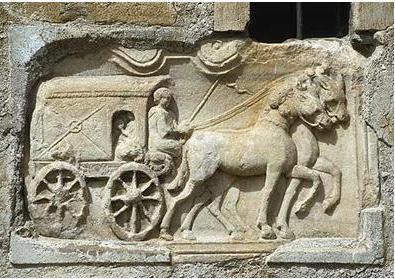

  • Quinquennial, decimal, duodecimal, vigesimal, sexagesimal

    Samuel Noah Kramer (1897-1990) published his work “The story begins in Sumer”, worldwide famous, in 1956. Certainly, many things started before, but the first written records are found in Sumer and so that’s where we first talk about “History”.

    The man began to count very soon; Paleolithic marks on bone, stone or other materials testify to this. No doubt on this task he used the help of his hands, fingers of his hands, his feet …

    Soon he needed some figurative representation; he had need of the figures, because visually with a stroke of the eye he sees only up to four units; to recognize more he needs to count. And for counting large numbers he must have different orders or hierarchical levels, so that  he can represent large quantities with few figures.

    In Sumer there are traces of a numeral system with five as the base (quinary) (five lower units amount to a higher level), certainly in relation to the five fingers.

    The decimal system is certainly in connection with the fingers of both hands.

    Also the Sumerian used a duodecimal system, a dozen. Probably they counted the phalanges of the four fingers (three phalanges in each finger) pointing with the thumb. Probably a system of this type is in relation to the twelve months of the year or 12 lunar months that occur in the solar year and the twelve signs of the zodiac; number 12, by the way, could serve to divide the day into twelve spaces, the twelve hours.

    And also they used a sexagesimal system, in which sixty lower units amount to a higher order.

    We do not really know why this sexagesimal system was invented, a tiresome system. Many hypotheses have been formulated. One of the most plausible is that, coexisting decimal and duodecimal system, the least common multiple to facilitate equivalence was sought. In fact 60 it is divisible by numerous divisors: 1, 2, 3, 4, 5, 6, 10, 12, 20, 30, 60.

    The Sumerians were provided with a numeric notation circa 3200 BC on the base 60; and they attributed a special sign to the following units: 1, 10, 60, 600, 3600, 36,000, 216,000

    Sumerians  raised on this basis  the division of time into hours, minutes and seconds and the division of the circle into three hundred sixty degrees; they divided these into sixty minutes and these in sixty seconds. We used still this system.

    The Egyptians and everyone on the Middle East, including the Mediterranean peoples and the Greeks at the time, learned certainly from Sumerians.

    Today, the decimal system is the most widespread, but the duodecimal system has been remarkably successful, because there are still remains in modern societies and languages. We continue demanding on Spanish "a dozen eggs ...".

    Dozen derives from the Latin Duodecim (duo=two and decim=ten), (two + ten)

    The term remains buoyant in many languages, which testify the historical importance of the duodecimal system. So on French "douzaine" ("à la douzaine); on English “by the dozen” and twelve; on German Dutzend; on Italian dozzina (1 dozzina di uova); on Portuguese dúzia (uma dúzia de ovos); on Catalan dotzena (una dotzena d'ous).

    Naturally the term and the concept existed in the ancient world. On ancient Greek it is δυωδεκάς, duódekas, from δώδεκα, Dodeka (two and ten).

    On Latin it is used generally the expression  Numerus duodenarius and later, since Tertullian (II-III century BC), the term duodecas also appears.

    Duodenarius is built from numeral duodecim, twelve (two and ten) as I stated above and duodecas is constructed from the Greek (dŭōdĕcas, ădis.  f., = δυωδεκάς).

    The term duodecas apears on the “Adversus omnes haereses, IV, 1, Against All Heresies,
    work attributed to Tertullian, considered spurious; it sometimes is seen following his De Praescriptione haereticorum and  therefore also its unknown author is called the "Pseudo-Tertullian"

    for of these last also proceeded twelve Aeons; from Speech, moreover, and Life proceeded other ten Aeons: such is the Triacontad of Aeons, which is made up in the Pleroma of an ogdoad, a decad, and a duodecad. (Translated by the Rev. S. Thelwall.])

    Sed enim ex his quoque processisse duodecim Aenoas; de sermone autem et vita Aeonas alios decem: hanc esse Aeonum triacontada, quae fit in pleromate ex Ogdodae et Decade ac duodecade.

    Then from Renaissance and Humanism the term "duodecadas" (a dozen) was used frequently in the title of several books and treatises, for example: Philippi: Duodecas thematum, 1612, “A dozen themes”; Hermann Witsius, Exercitationum academicarum Duodecas -, Duodecas dissertationum exegeticarum et apologeticarum … etc.

    The oldest and most important in the early days of Rome statute, legal text, the Twelve Tables, developed in the V century BC, warns us  the importance of the number 12th. Naturally the wooden support is not retained but the reference to the text are very abundant in Latin authors and historians.

    There is a text of Marcus Terentius Varro in his "De lingua Latina" (On the Latin language) that warns us of the old system in Rome.

    Varro Says in De Lingua Latina, Book V, (6), 34:

    There are many things which the ancients delimited with a multiple of twelve, like the actus of twelve ten-foot measures. (Translation by Roland G. Kent. Ph.D.Loeb Classical Library.1938)

    Multa antiqui duodenario numero finierunt ut duodecim decuriis actum

    Noteactus is the way in which livestock can be driven, as it is told earlier in the same paragraph:

    As an ager “field” is that to which driving can be done, so that whereby driving can be done is an actus “driveway”. (Translation by Roland G. Kent. Ph.D.Loeb Classical Library.1938)

    “Ut ager quo agi poterat, sic qua agi actus”:

    Duodecaiugum is twelve  horses team…; duodecennium is the period of twelve years; duodecemviri is the college of twelve magistrates.

    The duodecimal system is also applied  to establish their system of weights. This system is more practical than the decimal because it supports more divisions (1, 2,3,4,6) and therefore more fractions can be expressed.

    The duodecimal system was well suited to the application of interest on loans. At first it seems that the rule was charged twelve ounces of annual interest on a loan of one hundred ounces; ie, it is charged  12% pa (per annum), equivalent to an as (Roman coin), because one as was worth 12 ounces. If the account is made for months, six months interest was called semis, which means half an as, four months interest was called triens, which is the third part of an as, to three months interest was called quadrans, which is the fourth part, and a month interest is called unciaria, which is the twelfth  part of as or one part; because that the interest of 1% per mensem, per month, is called hundredth (centesimal) interest.

    Anyway, all this numerically and terminological precision is possible precisely because the duodecimal system is used.

    In Anglo-Saxon countries this system has endured even more in the system of weights and measures; and a foot is twelve inches, a pound is 12 ounces, …

    The sexagesimal system had also and continues to have an amazing success, because it is still used to measure the space in "degrees",minutes and seconds and to measure time in hours, minutes and seconds.
    The word "gradus", "degree" means step.

    To know the origin of the words hour, minute and second , I refer to the article published in this blog  https://www.antiquitatem.com/en/hours-minutes-seconds-almagest-sumer

    We can also refer to other systems such as the vigesimal; we have  a remainder, for example, on French, when eighty, 80,  is called quatre vingt (four twenties); the existence of twenty fingers in the four limbs or human extremities would lead to it.

    It is worth  make a reference to binary numbering system, or base two,  which is the basis of all current computer and digital development.(Latin bini-ae-a means two by two.  But experts use the hexadecimal, that is, base 16
     

  • A tunnel in Babylon under the River Euphrates

    Babylon, even phonetics of the name, has a great capacity for suggestions, even now, the area stricken by war and ongoing violence. So it must also occur in antiquity.

    Some works of the Ancients impress us by its dimensions and other for their beauty. The best examples are the "seven wonders of the ancient world," including "the Hanging Gardens of Babylon." There is another work in Babylon, in addition to the gardens, less known, but no less impressive: the construction of a tunnel under the River Euphrates which linked secretly the  existing royal palaces on either side of the river.

    Before developing the theme, we should remember that Babylon was on the Euphrates in land what is now Iraq. Its ruins were partially rebuilt by Saddam Hussein in the twentieth century and they are located about 110 kms. from Baghdad in Babil province, opposite the town of Hillah.

    This area is rich in bitumen and petroleum, as it is well known, also in antiquity. But maybe not all readers know  that the bitumen or asphalt, which then surfaced in the same area where today the oil is extracted, was used in the construction of buildings among other things, as the Roman architect Vitruvius tells us .

    Vitruvius: De Architectura libri decem (De Architectura): I, 5,8 (39)

     With regard to the material of which the actual wall should be constructed or finished, there can be no definite prescription, because we cannot obtain in all places the supplies that we desire. Dimension stone, flint, rubble, burnt or unburnt brick,—use them as you find them. For it is not every neighbourhood or particular locality that can have a wall built of burnt brick like that at Babylon, where there was plenty of asphalt to take the place of lime and sand, and yet possibly each may be provided with materials of equal usefulness so that out of them a faultless wall may be built to last forever. (English translation by Morris Hicky Morgan, 1914))

    De ipso autem muro, e qua materia struatur aut perficiatur, ideo non est praefiniendum, quod in omnibus locis, quas optamus copias, eas non possumus habere. sed ubi sunt saxa quadrata sive silex seu caementum aut coctus later sive crudus, his erit utendum. non enim, uti Babylone abundantes liquido bitumine pro calce et harena ex cocto latere factum habent murum, sic item possunt omnes regiones seu locorum proprietates habere tantas eiusdem generis utilitates, uti ex his comparationibus ad aeternitatem perfectus habeatur sine vitio murus.

    And again Vitruvius: Book VIII cap. 3, 8:

    In Babylon, a lake of very great extent, called Lake Asphaltitis, has liquid asphalt swimming on its surface, with which asphalt and with burnt brick Semiramis built the wall surrounding Babylon. At Jaffa in Syria and among the Nomads in Arabia, are lakes of enormous size that yield very large masses of asphalt, which are carried off by the inhabitants thereabouts. (English (Morris Hicky Morgan, 1914))

    Babylone lacus amplissima magnitudine, qui λίμνη ἀσφάλτιτις appellatur, habet supra natans liquidum bitumen; quo bitumine et latere testaceo structum murum Samiramis circumdedit Babyloni. item Iope in Syria Arabiaque Nomadum lacus sunt inmani magnitudine, qui emittunt bituminis maximas moles, quas diripiunt qui habitant circa.

    Small digression: it is very known in the ancient world that the walls of Babylon were made with fired brick is something very present in the ancient world; by way of example I cite that  the satirical Roman poet Juvenal, who lived in the second half of the first century and the first of II AD,  refers to it in connection with the entry of Alexander the Great in Babylon sick unto death. He says in Satire 10, 169 et seq.

    One globe is all too little for the youth of Pella; he chafes uneasily within the narrow limits of the world, as though he were cooped up within the rocks of Gyara or the diminutive Seriphos; but yet when once he shall have entered the city fortified by the potter's art, a sarcophagus will suffice him! Death alone proclaims how small are our poor human bodies! ([Translated by G. G. Ramsay])

    Unus Pellaeo iuveni non sufficit orbis;
    aestuat infelix angusto limite mundi
    170ut Gyarae clausus scopulis parvaque Seripho;
    cum tamen a figulis munitam intraverit urbem,
    sarcophago contentus erit. mors sola fatetur
    quantula sint hominum corpuscula.

    Pliny refers extensively to the asphalt or bitumen; at another time I will comment it. On the subject that interests us, he tells us in Natural History, 35, 51.5

    It has been used, too, as a substitute for lime; the walls of Babylon, for instance, which are cemented with it. (Translation by John Bostock, M.D., F.R.S. H.T. Riley, Esq., B.A. London. 1855)

    calcis quoque usum praebuit ita feruminatis Babylonis muris.

    Well, Philostratus of Athens (160 / 70-249) wrote an interesting biography of Apollonius of Tyana, which is more like a novel, or rather he wrote a novel that seems a biography. In this work information and certain details are mixed with elements of the unbridled fantasy in harmony. Apollonius decided to travel to India and went through Babylon, describing it in some detail.

    Philostratus of Athens, Life of Apollonius of Tyana, book I,25:

    I FOUND the following to be an account of the sage's stay in Babylon, and of all we need to know about Babylon. The fortifications of Babylon extend 480 stadia and form a complete circle, and its wall is three half plethrons high, but less than a plethron  in breadth. And it is cut asunder by the river Euphrates, into halves of similar shape; and there passes underneath the river an extraordinary bridge which joins together by an unseen passage the palaces on either bank. For it is said that a woman, Medea, was formerly queen of those parts, who spanned the river underneath in a manner in which no river was ever bridged before; for she got stones, it is said, and copper and pitch and all that men have discovered for use in masonry under water, and she piled these up along the banks of the river. Then she diverted the stream into lakes; and as soon as the river was dry, she dug down two fathoms, and made a hollow tunnel, which she caused to debouch into the palaces on either bank like a subterranean grotto; and she roofed it on a level with the bed of the stream. The foundations were thus made stable, and also the walls of the tunnel; but as the pitch required water in order to set as hard as stone, the Euphrates was let in again on the roof while still soft, and so the junction stood solid. (Translation by F.C Conybeare, 1912)

    Note: A plethrons is equivalent to 29.6 m. These measures of perimeter and thickness are very close to these of Herodotus, I, 178: 480 stadia for the perimeter and 50 royal cubits (about 25 m) thick, but the height that Herodotus gives, 200 royal cubits (about 100 m ) is more than twice this one of Philostratus.

    Herodotus tells us on I, 178- 179:

    When Cyrus had made all the mainland submit to him, he attacked the Assyrians. In Assyria there are many other great cities, but the most famous and the strongest was Babylon, where the royal dwelling had been established after the destruction of Ninus (Ninnive). Babylon was a city such as I will now describe. It lies in a great plain, and is in shape a square, each side fifteen miles in length; thus sixty miles make the complete circuit of the city. Such is the size of the city of Babylon; and it was planned like no other city of which we know.  Around it runs first a moat deep and wide and full of water, and then a wall eighty three feet thick and three hundred thirty three feet high. The royal measure is greater by three fingers' breadth than the common measure.
    Further, I must relate where the earth was used as it was dug from the moat and how the wall was constructed. As they dug the moat, they made bricks of the earth which was carried out of the place they dug, and when they had moulded bricks enough, they baked them in ovens; then using hot bitumen for cement and interposing layers of wattled reeds at every thirtieth course of bricks, they built first the border of the moat and then the wall itself in the same fashion. On the top, along the edges of the wall, they built houses of a single room, facing each other, with space enough between to drive a four-horse chariot. There are a hundred gates in the circuit of the wall, all of bronze, with posts and lintels of the same. There is another city, called Is,1 eight days' journey from Babylon, where there is a little river, also named Is, a tributary of the Euphrates river; from the source of this river Is, many lumps of bitumen rise with the water; and from there the bitumen was brought for the wall of Babylon. 
    (English translation by A. D. Godley. Cambridge. Harvard University Press. 1920.)

    Herodotus goes on to describe the city and the impressive refurbishment which I will comment on at another time. But I want to reproduce  what he tells us in chapter 186 which is a significant variation in what Philostratus told us, but they are not necessary  two contradictory version but opposed; after all, if the tunnels were secret, they did not must to be known by all of the world:

    CLXXXVI
    So she made the deep river her protection; and this work led to another which she added to it. Her city was divided into two parts by the river that flowed through the middle. In the days of the former rulers, when one wanted to go from one part to the other, one had to cross in a boat; and this, I suppose, was a nuisance. But the queen also provided for this; she made another monument of her reign out of this same work when the digging of the basin of the lake was done.

    She had very long blocks of stone cut; and when these were ready and the place was dug, she turned the course of the river into it, and while it was filling, the former channel now being dry, she bricked the borders of the river in the city and the descent from the gate leading down to the river with baked bricks, like those of the wall; and near the middle of the city she built a bridge with the stones that had been dug up, binding them together with iron and lead.

    Each morning, she laid square-hewn logs across it, on which the Babylonians crossed; but these logs were removed at night, lest folk always be crossing over and stealing from one another.

    Then, when the basin she had made for a lake was filled by the river and the bridge was finished, Nitocris brought the Euphrates back to its former channel out of the lake; thus she had served her purpose, as she thought, by making a swamp of the basin, and her citizens had a bridge made for them.  (English translation by A. D. Godley. Cambridge. Harvard University Press. 1920).

    Strabo, who lived between 64 and 63. C. and 19 or 24 d. C., has also given us an interesting description of Babylon in Book 16, 2

    ….His wife, who succeeded her husband, and founded Babylon, was Semiramis. These sovereigns were masters of Asia. Many other works of Semiramis, besides those at Babylon, are extant in almost every part of this continent, as, for example, artificial mounds, which are called mounds of Semiramis, and walls7 and fortresses, with subterraneous passages; cisterns for water; roads8 to facilitate the ascent of mountains; canals communicating with rivers and lakes; roads and bridges. (The Geography of Strabo. Literally translated, with notes, in three volumes. London. George Bell & Sons. 1903.)

    And soon after, he makes us a complete description of Babylon, that I reproduce partly, in the Book 16, chap. 5:

    Babylon itself also is situated in a plain. The wall is 38518 stadia in circumference, and 32 feet in thickness. The height of the space between the towers is 50, and of the towers 60 cubits. The roadway upon the walls will allow chariots with four horses when they meet to pass each other with ease. Whence, among the seven wonders of the world, are reckoned this wall and the hanging garden: the shape of the garden is a square, and each side of it measures four plethra. It consists of vaulted terraces, raised one above another, and resting upon cube-shaped pillars. These are hollow and filled with earth to allow trees of the largest size to be planted. The pillars, the vaults, and the terraces are constructed of baked brick and asphalt.

    The ascent to the highest story is by stairs, and at their side are water engines, by means of which persons, appointed expressly for the purpose, are continually employed in raising water from the Euphrates into the garden. For the river, which is a stadium in breadth, flows through the middle of the city, and the garden is on the side of the river. The tomb also of Belus is there. At present it is in ruins, having been demolished, as it is said, by Xerxes. It was a quadrangular pyramid of baked brick, a stadium in height, and each of the sides a stadium in length. Alexander intended to repair it. It was a great undertaking, and required a long time for its completion (for ten thousand men were occupied two months in clearing away the mound of earth), so that he was not able to execute what he had attempted, before disease hurried him rapidly to his end. None of the persons who succeeded him attended to this undertaking; other works also were neglected, and the city was dilapidated, partly by the Persians, partly by time, and, through the indifference of the Macedonians to things of this kind, particularly after Seleucus Nicator had fortified Seleucia on the Tigris near Babylon, at the distance of about 300 stadia. Both this prince and all his successors directed their care to that city, and transferred to it the seat of empire. At present it is larger than Babylon; the other is in great part deserted, so that no one would hesitate to apply to it what one of the comic writers said of Megalopolitæ in Arcadia, “‘The great city is a great desert.’” (The Geography of Strabo. Literally translated, with notes, in three volumes. London. George Bell & Sons. 1903.)

    All of this certainly impresses us, but especially the ingenuity to build a waterproof tunnel under the river. Indeed, this technique of tunneling opencast is still used today where it is easier than underground drilling. Similarly it is used for waterproofing terraces and roofs of buildings the called "roofing felt", which is nothing but a modern version of the ancient Mesopotamian bitumen or asphalt.