Author: admin

  • The festivals of fire are very old: the “Fallas”

    The Spanish word “fallas” derives, according to the dictionary of the “Real Academia de la Lengua”, from the Latin “facula”, which means “torch”. The “Fallas” are undoubtedly the most important festivals in the Spanish Levante, which revolve essentially around the destructive and purifying fire and they held between 15 and 19 March, the feast of Saint Joseph.

    As a social phenomenon of so much importance, it has been clearly studied from different points of view: anthropological, sociological, cultural, historical …  Undoubtedly these feasts  serve, like all others, to unite a whole society, which is now very complex, and as democratic and general  feasts against several other with more aristocratic character. In this sense they often  are competing to the most aristocratic celebrations of Corpus Christi.

    These festivals have an unquestionable ethical and educational value by focusing the reflection of citizens in events of the immediate social life that are morally prosecuted, put into question, criticized and condemned with an ironic artistic language.
    It is possible that in their current or similar characteristics these festivals  do not date back beyond the eighteenth century, without they are sufficient explanations which usually are given (creation by  the union of carpenters, etc.), but it is no doubt that their roots sink into a millennial old tradition.
    They clearly relate numerous cults and rites of fire which are made to finish a stage or old year and inaugurate a new year. They therefore fall within the solar rituals and rites of fertility and regeneration of life, particularly of plants, which just are celebrated to mark the arrival of the equinoxes and solstices that mark the beginning of the season. Generally they consist of bonfires and torches around which people dance on jump  and whose light and fire  can be transferred to homes, fields or stables. In many cases straw puppets or puppets, probably substitutes of ancient rites in which was burned a true male or female incarnation of evil in its many forms,  are burned.
    James Frazer, in his famous work "The Golden Bough" devotes many pages to these rites of fire, present since prehistory, especially in Europe. Scholars do basically two interpretations. An interpretative line tells us that they are rites to revitalize the light and the energy of the sun which every year languishes and recovers itself because the life of plant and animal nature is dependent from it.  The other line says that fire has a great cleansing, cathartic force, which is used as a tool to end the various evils that threaten man and society.

    These two interpretations can coexist and be considered useful for interpreting the meaning of the "Fallas", which are held  when winter is just declining and, in the vicinity of spring in that  the nature blooms.
    In the second half of March the nature is just awakening in the Levant. This certainly strengthens the original relationship of these feasts  with the ancient rites of fire. This sense is certainly not apparent to most people who celebrate today with absolute frenzy. It is evident, however, the interpretation of that they are rites of purification which  condemn and make us forget everything bad has happened in the year which ends since the previous celebration.
    This has certainly been studied and analyzed by experts, as I said, and I'm not authorized enough to insist on it.

    I just now provide a text of Lucian of Samosata, into one of his dialogues, specifically entitled "On the Syrian Goddess".

    Lucian is precisely a Syrian, of Samosata, a town on the right bank of the Euphrates, who lived from 125 to181,  in Roman times, but he writes in Greek. Reading of this writer and officer between cynical and Epicurean, which leaves no puppet head, is highly recommended, because among other things, he offers us a vision of reality and complexity of the ancient world that rarely is brought by the academic study of antiquity. In this regard I do not find a sufficient explanation for the lack of knowledge that today is usually about him and his work. In this blog I have referred several times to this author.
    Well, in that "dialogue", (actually in this case is a monologue or rather a descriptive article), On the Syrian Goddess, he describes the existence on their land and specifically in Hierapolis of various cults and temples of various gods and goddesses. The most important in your opinion is the temple of Hera or Atargatis, where there are also numerous statues, including a pair of the goddess and the Syrian Zeus or Melkart.
    Hierapolis means "Holy City"; it is located north of Aleppo, about 90 kilometers; on Syriac it was called Madog and it is the current Manbi; It was also known as Hierapolis Bambice, or Hierapolis Euphratensis
    Among the various ceremonies and rites which he describes, there is one that helps us understand the nature of the feast of fertility and renewal of life, spring festival, with which the Fallas can become related. It reads:
    On the Syrian Goddess, 49
    The greatest of the festivals that they celebrate is that held in the opening of spring; some call this the Pyre, others the Lamp. On this occasion the sacrifice is performed in this way. They cut down tall trees and set them up in the court; then they bring goats and sheep and cattle and hang them living to the trees; they add to these birds and garments and gold and silver work. After all is finished, they carry the gods around the trees and set fire under; in a moment all is in a blaze. To this solemn rite a great multitude flocks from Syria and all the regions around. Each brings his own god and the statues which each has of his own gods. (Translated by Herbert A. Strong and John Garstang 1913 )


    Not too far from where Lucian was born, is Tarsus, the city of Saint Paul, in ancient Cilicia, in the called Asia Minor at the intersection of important routes where  all goods and all ideas penetrate.
    Here an ancient rite, which helps us understand the meaning of these rites of fire,  was kept. In this city there were two major gods, one young Sandan or Sandon, who was identified by the Greeks with Heracles or Hercules and another one very old called Ball-Tarz (Lord of Tarsus), who was identified with Zeus.

    The two were related to the fertility of the earth and its fruits and its seasonal rhythms, but Sandan  was a closer and popular god.
    Every year it was held in their honor in the square a big festival  with singing and dancing. A great pyre was built, where it was stood the statue of the god, which  was burned solemnly.  The ceremony, at the beginning of funeral character, was followed immediately by  the wild and exuberant celebration of the resurrection of the god; and the exultant joy  continued the grief of the faithful.
    It was represented the vegetative nature dying under the scorching rays of the sun for  rise  to new life.  This is the idea behind all Eastern mystery cults, which  certainly knew the Jewish-Greek Paul of Tarsus, who was  certainly influenced in integrating early Christianity in the religious currents of the time, with remarkable success, indeed, since Christianity was imposed on  the pagan religion from the fourth century.

    It is true that we have very little information about this god; some authors question whether we know with absolute certainty that this god, who dies on the funeral pyre, reborn after, but its similarity to other geographic environment support this interpretation.

    In some ancient coins of Tarsus Tyche, the goddess of the fate, is engraved on the obverse,  and back  the pyre with god Sandan burning.


    Worships of gods who die and rise  immediately are those of Attis in Phrygia, Adonis in Syria, Osiris in Egypt, Tammuz in Babylon and similar elsewhere, all with the same meaning. This supports a similar interpretation for the god Sandan. Also  Christ is a dead and resurrected god.
    Dión Crisóstomo (40-120 aproximadamente) (“boca de oro” significa la palabra “Crisóstomo”) hace una irónica referencia a esta fiesta  y a la pira en la que el dios es quemado en su “Pimer discurso társico” o  “Tarsica prior XXXIII, 47:
    Dio Chrysostom (approximately 40-120) (the word "Chrysostom" means "golden mouth"  ) makes an ironic reference to this party and to the pyre where the god is burned at his  The Thirty-third, or First Tarsic, Discourse,  or "Tarsica prior XXXIII , 47:
    Dio Chrysostom: Tarsica prior. XXXIII, 47  The Thirty-third, or First Tarsic, Discourse

    What would you think, if, just as you might reasonably expect (and as men report) that founding heroes or deities would often visit the cities they have founded, invisible to everybody else (both at sacrificial rites and at certain other public festivals) — if, I ask you, your own founder, Heracles, should visit you (attracted, let us say, by a funeral pyre such as you construct with special magnificence in his honour), do you think he would be extremely pleased to hear such a sound? Would he not depart for Thrace instead, or for Libya, and honour with his presence the descendants of Busiris or of Diomedes when they sacrifice? What! Do you not think that Perseus himself would really pass over your city in his flight? (Translation by J. W. Cohoon, Loeb Classical Library)
    In these fertility rites life is renewed and a new life arises from old ash, or better, from the ashes of the old, like the Phoenix, the widespread myth known that symbolizes exactly the same, but now its  meaning is widespread and trivialized to any action or reality  rising from death situation or prostration. The Phoenix, who self immolated by fire every five hundred years for  be reborn again, is ultimately a symbol of immortality.
    Naturally, these ancient agrarian rituals of fire have undergone major changes and it was  missed the deep symbolism of renewal and succession of the cycles of nature in favor of a cathartic purification in which the fire finishes  the evils of the year. Moreover, in our time they acquire particular relevance critiques of the political life of society; now it dominates the popular, social, political, moral criticism, with detriment of deeper philosophical questions.
    But if it is possible, you should deepen into the origin of things. The origin of the “Fallas”, such as fire festival, is indeed very old.
     

  • Ring finger and medical finger

    Each of the fingers has a name formed from its position, its size or function. So This the strongest is called thumb, index the second, middle the third, fourth ring and pinky the fifth and smaller.

    The fourth finger, the ring finger, it was also called in Antiquity "digitus medicinalis, medicus digitus". This deserves an explanation or at least an approximation to an explanation, because it is not an obvious name for itself. What relationship is there between the fourth finger and medicine?

    St. Isidore in his Etymologies XI, 1, 70-71 explains these names:

    Human beings and their parts
    ….
    The fourth is the ring finger, because it is the one on which the ring is worn. It is also called medical, because physicians use it to apply ointments.

    De homine et partibus eius
    Quartus anularis, eo quod in ipso anulus geritur. Idem et medicinalis, quod eo trita collyria a medicis colliguntur.

    See https://www.antiquitatem.com/en/finfers-the-names-of-fingers-digitus

    The fourth is called  “anularis”, from “anulus” ("ring") and also honestus and medicus in Latin,  because on it the ring is worn, as St. Isidore says.

    "anulus" comes from Latin anus, meaning ring,  in circular shape. It is clear, then, why it is named so, ano, on Spanish to the "hole in the digestive tract ends and by which the excrement is expelled". (Royal Spanish Academy)

    Aulus Gellius offers us a curious, of course unscientific, explanation of why the ancients wore the ring on this finger:

    Aulus Gellius, X,11:

    The reason why the ancient Greeks and Romans wore a ring on the next to the last finger of the left hand.

    I have heard that the ancient Greeks wore a ring on the finger of the left hand which is next to the little finger. They say, too, that the Roman men commonly wore their rings in that way. Apion in his Egyptian History says 2 that the reason for this practice is, that upon cutting into and opening human bodies, a custom in Egypt which the Greeks call ἀνατομαί, or “dissection,” it was found that a very fine nerve proceeded from that finger alone of which we have spoken, and made its way to the human heart; that it therefore seemed quite reasonable that this finger in particular should be honoured with such an ornament, since it seems to be joined, and as it were united, with that supreme organ, the heart. (An English Translation. John C. Rolfe. Cambridge. Cambridge, Mass., Harvard University Press; London, William Heinemann, Ltd. 1927.)

    Quae eius rei causa sit, quod et Graeci veteres et Romani anulum hoc digito gestaverint qui est in manu sinistra minimo proximus.

    Veteres graecos anulum habuisse in digito accepimus sinistrae manus qui minimo est proximus. Romanos quoque homines aiunt sic plerumque anulis usitatos. Causam esse huius rei Apion in libris Aegyptiacis hanc dicit, quod insectis apertisque humanis corporibus, ut mos in Aegypto fuit, quas Graeci ἀνατομάς appellant, repertum est nervum quendam tenuissimum ab eo uno digito de quo diximus, ad cor hominis pergere ac pervenire; propterea non inscitum visum esse eum potissimum digitum tali honore decorandum, qui continens et quasi conexus esse cum principatu cordis videretur.

    Note: Apion who is also referred by Gelius, is who tells us the famous story of Androcles and the Lion in Gellius, 5.14; see https://www.antiquitatem.com/en/androcles-and-the-lion-aulus-gellius

    Plutarch also discussed this issue in its Quaestiones convivales  4.8, but we only retain the title of this chapter.

    St. Isidore in his Etymologies  XIX, 32.2 also refers to this belief so widespread in antiquity but unscientific and false:

    The people initially wears  rings on the fourth finger from the thumb, because a certain vein runs in it and  goes to the heart, and the ancients thought it was necessary to note and adorned them by some special sign.

    Anulos homines primum gestare coeperunt quarto a pollice digito, quod eo vena quaedam ad cor usque pertingat, quam notandam ornandamque aliquo insigni veteres putaverunt.

    Macrobius repeats and expands the explanation of Aulus Gellius, being the matter  of conversation or dialogue of the guests who celebrate the banquet  of the feast  Saturnalia. At the end of this article you can read the extensive text of Macrobius.

    The explanation must look to dialoguer so strange than he leaves ultimately the solution on the hands of everyone.

    Macrobius also says that the Egyptians express with this finger the number 6, which is a perfect number.
    Why Macrobius called the number 6 a perfect number? A perfect number is a natural number which is equal to the sum of its own positive dividers without considering himself. Thus, 6 is a perfect number because its divisors are 1, 2 and 3; and 6 = 1 + 2 + 3. The following perfect numbers are 28, 496 and 8128.

    The Ancients  liked greatly to play with these relationships and many more.

    Macrobius himself explains it in his commentary on the "Dream of Scipio", Book I, 6, 12

    Six, when it joins one makes seven; it is varied and multiple in reverence and power. First, because it is the only one of all numbers below ten numbers which is the result of the sum of its parts. It has a half and a third and sixth, and its half is three, its  third is two, its sixth is one and all together make six '

    senarius uero qui cum uno coniunctus septenarium facit, uariae ac multiplicis religionis et potentiae est. primum quod solus ex omnibus numeris qui intra decem sunt de suis partibus constat. habet enim medietatem et tertiam partem et sextam partem et est medietas tria, tertia pars duo, sexta pars unum, quae omnia simul sex faciunt.

    But the issue of real interest is to find out why they called this finger also "medicinalis" or "doctor's finger" as Macrobius tells us in the quoted  passage and also Saint Isidore includes.

    Well, "medical finger" is but the translation of the Greek name ring finger ἰατρικός δάκτυλος "iatrikós daktylos". So the fourth finger is called "medical finger" in both Latin and Greek. It is quite possible that the Latin name is a translation from the Greek.

    The oldest to the origins of the name reference is in Galen, in his Eisagoge, which reads as follows:

    "… This is followed by the next finger to the medium, which is dedicated to physicians (toiv iatroiv anakeimenov) …»

    It should be clarified that in antiquity it was widespread the belief in the relationship of the ring finger with the heart or with certain diseases; the physicians of Alexandria extended this theory . They think than nerves or veins come from the heart because of its importance as a center of vitality and creative power; they think the vital force originated in the heart can concentrate on the finger. In some places even the people think in the association of the ring finger of the left hand, the generative power and the principle of motherhood

    This may shock us and seem a little odd, but how many are who currently establish  a relationship between the dimensions of the fingers and penis size or male member? And is not it striking that some of those who hold this belief  seek  substantiate it into action  that androgens occur on the appendices of various kinds? And what about  those who are able to read on a hand the past, present and future of a person?

    It is so called because it is the finger that is used to prepare medical potions and applying it to the sick.
    Pliny says, for example,  in his Naturalis Historia, XXX, (34) 108:

    REMEDIES FOR BOILS .
    For boils the following remedies are prescribed; a spider, applied before mentioning the insect by name, care being taken to remove it at the end of two days; a shrew-mouse, suspended by the neck till it is dead, care being taken not to let it touch the earth when dead, and to pass it three times around the boil, both operator and patient spitting on the floor each time; poultry-dung, that of a red colour in particular, applied fresh with vinegar; the crop of a stork, boiled in wine; flies, an uneven number of them, rubbed upon the patient with the ring finger; the filth from sheep's ears; stale mutton suet, with ashes of women's hair; ram suet also, with ashes of' burnt pumice and an equal quantity of salt. 
    (The Natural History. Pliny the Elder. John Bostock, M.D., F.R.S. H.T. Riley, Esq., B.A. London. Taylor and Francis, Red Lion Court, Fleet Street. 1855)

    Furunculis mederi dicitur araneus, priusquam nominetur, inpositus et tertio die solutus, mus araneus pendens enecatus sic, ut terram ne postea attingat, ter circumlatus furunculo, totiens expuentibus medente et cui is medebitur, ex gallinaceo fimo, quod est rufum, maxime recens inlitum ex aceto, ventriculus ciconiae ex vino decoctus, muscae inpari numero infricatae digito medico, sordes ex pecudum auriculis, sebum ovium vetus cum cinere capilli mulierum, sebum arietis cum cinere pumicis et salis pari pondere.

    But the author LászloA. Magyar, in his article Digitus medicinalis. The Etymology of the Name, in Actes du Congrès International d'histoire XXXII of Medicine, Ambres 1990 pat.175-179 offers a certainly interesting explanation. He thinks that the fourth finger, the finger medicinalis, is a finger with magical powers.

    The word "medicus, medicinalis" derives from "medeor" Latin verb meaning heal, cure and formerly "heal through magic," as evidenced for example Ernout A. Meillet in his famous Dictionair etymologique de la langue latine, when he defines  "medeor"' and reads:

    Medical and its derivatives medicus, medicamen (-mentum) often have the sense of "healing through magic" and as the Greek φάρμακον (pharmakon) have taken the meaning of "poisoning", cf. cat. Metzina, poison.

    Medico et ses dérivées medicatus, medicamen, (-mentum) ont souvent le sens de “guérir par la magie”, etcomme le gr.  φάρμακον  (farcamon)  ont  pris le sens de “empoisonner”, cf.cat. metzina, “poison”
    Pharmakon in Greek also means poison and charm, magic.

    So the "ring finger" at the time would have been a magic finger, used precisely to heal.

    From "medical" come "remedium" and many other derivatives. Moreover this Indo-European root exists in many languages also to mean "think,  judge, measure, weigh …"; meditation is the meaning of the Latin verb "Meditor" which is precisely the iterative  of "medeor" with this meaning of "thinking" …
    So the "medical doctor" who  heals  with magic, is actually a "medium", mediator who remedies or intermediary between the sick person and the spirits or the powerful forces of divinity or of nature.

    Silius Italicus, for example, calls the magicians Medicum vulgus” in Punica III. 300

    Then came the Marmaridae with a sound of clashing arms, a people of magical powers, at whose spell the snake forgot its poison, and at whose touch horned serpents lay still and harmless. (Translated by J.D.Duff).

    Note: Cerastae are the Furies, mythological monster with snake hair

    Marmaridae, medicum uulgus, strepuere cateruis,
    ad quorum cantus serpens oblita ueneni,
    ad quorum tactum mites iacuere cerastae.

    The German word “Artz”  means "medical doctor" but also originally magician; the Greek word “iatros” derives form  “iaino”, which has similar connotations .

    Moreover, the ring is the most important magical symbol of power, symbol of the relationship between life and death. So the question is whether the fourth finger is magical because it carries the ring or it wears  the ring because it is magical; in view of the comments, it seems that wears  the ring precisely because it is magical. The full and meaningful name, then, should be "magic finger ring" or "magic ring finger."

    Furthermore the theme of medicine and its relationship with magic, religion and temples deserves one or more items. Think on the full votive sanctuaries  and places of pilgrimage even today to look body health.

    Macrobius,  Saturnalia, 7, 13, 6-16

    After this, he said, Avienus retrieved from the table the ring that just had fallen from the little finger of the right hand. And when the present asked him why he had preferably placed it on the other hand and finger, not intended for ring wearing, he showed them his left hand, quite swollen because of an wound.   From here Horus arose occasion for a question, and says:

    Tell me, Disarius, (because everything in the body regards to the knowledge of the physician, and you have reached an understanding even beyond what is demanded by  medicine), tell me, I say, why the common assent has convinced everyone that the ring needs to be worn on the finger next to the little finger, which is also called "medical finger" and especially on the left hand?

    And Disarius: On this question some conversation had reached me from Egypt, though I doubt whether I should call it a fable or a true story, but when later I consulted anatomists’ books, I discovered the truth: a certain  nerve that starts from the heart, runs straight to the finger next to the little finger on the left hand, where it mixes with all the other nerves of that finger. And for that reason it seemed to the ancients that the finger should be surrounded by a ring like a crown.

    And Horus said: Indeed it is true that the Egyptians hold that opinion  as you say; when I saw in one  temple that  their priests, called prophets,  smeared around each of the images this finger with prepared perfumes and I asked the reason for this, I learned what I said about this nerve because the principal of these priests  accounted me and also I learned the number signified  by this finger.

    Well when this finger is folded indicates the number six, which is in every way full, perfect and divine. He explained in many ways the reasons why this number is full: I now pass over these  as less suited to the current conversation. These are the things that I know in Egypt, the country most knowledgeable of all on divine matters, about why the ring is preferably placed on this finger.

    In the midst of this discussion Caecina Albinus said: If you're agreeable, I can refer directly what I remember  that I have read about this issue  in Ateius Capiton, one of the most experts of pontifical law. This determining that it was contrary to divine law to record images of the gods in the rings, reached the point of no silent why the ring is worn on this finger and on this hand.

    He said: "The ancients wore with them a ring not as an adornment but to seal. For that reason, it was not allowed to have more than one ring, and only  the free person could have it, because only they had the credit that sealing involved. So the slaves did not have the right to wear a ring. On the material of the ring, whether it was iron or gold, a figure was engraved, and each person worn it as each wanted , on either hand and on any finger.

    Then he said, in times of luxury, it began the custom of engrave seals on precious gemstones; all this imitation of one another reached  to the point that they boasted of increased price they paid for the stones to engrave them. Since then it was avoided  the use of the rings on the right hand, which is very busy, and pass it to the left, which is  idler, for  gemstones would not break with the frequent movement and occupation of the right hand.

    He said, on the left hand itself it was chosen  the finger next to the pinky as better suited than others to give so precious ring. The thumb, which is so named because that it is strong, is not idle on the left hand nor it is never in less activity than whole hand; that is why, he said, among the Greeks it is called ἀντίχειρ (antikheir, beforehand) like other second hand.

    Now,  the finger next to the thumb seemed naked and unprotected by its opposite, since the thumb is so smaller that  it barely exceeds the base of the other. They avoided the middle finger and the pinky, he said,  as inadequate, the one by its magnitude and the other by its smallness; and so it was elected the finger which is enclosed by those two and has less activity and therefore is the best to protected a the ring.

    This is what has the pontifical law: let each one  pursue, according he wants, the  Etruscan opinion or the Egyptian.

    His dictis anulum Avienus de mensa rettulit qui illi de brevissimo dexterae manus digito repente deciderat: cumque a praesentibus quaereretur, cur eum alienae manui et digito, et non huic gestamini deputatis potius insereret, ostendit manum laevam ex vulnere tumidiorem. Hinc Horo nata quaestionis occasio, et: Dic, inquit, Disari (omnis enim situs corporis pertinet ad medici notionem, tu vero doctrinam et ultra quam medicina postulat consecutus es), dic, inquam, cur sibi communis adsensus anulum in digito qui minimo vicinus est, quem etiam medicinalem vocant, et manu praecipue sinistra gestandum esse persuasit?  Et Disarius: De hac ipsa quaestione sermo quidam ad nos ab Aegypto venerat, de quo dubitabam fabulamne an veram rationem vocarem: sed libris anatomicorum postea consultis verum repperi, nervum quendam de corde natum priorsum pergere usque ad digitum manus sinistrae minimo proximum, et illic desinere inplicatum ceteris eiusdem digiti nervis, et ideo visum veteribus ut ille digitus anula tamquam corona circumdaretur.  Et Horus: Adeo, inquit, Disari, verum est ita ut dicis Aegyptios opinari, ut ego sacerdotes eorum, quos prophetas vocant, cum in templo vidissem circa deorum hunc in singulis digitum confectis odoribus inlinere et eius rei causas requisissem, et de nervo quod iam dictum est principe eorum narrante didicerim, et insuper de numero qui per ipsum significatur. 10 Conplicatus enim senarium numerum digitus iste demonstrat, qui omnifariam plenus perfectus atque divinus est. Causasque, cur plenus sit hic numerus, ille multis adseruit: ego nunc ut praesentibus fabulis minus aptas relinquo. Haec sunt quae in Aegypto divinarum omnium disciplinarum compote, cur anulus huic digito magis inferatur, agnovi.  Inter haec Caecina Albinus: Si volentibus vobis erit, inquit, in medium profero quae de hac eadem causa apud Ateium Capitonem pontificii iuris inter primos peritum legisse memini: qui cum nefas esse sanciret deorum formas insculpi anulis, eo usque processit ut et cur in hoc digito vel in hac manu gestaretur anulus non taceret.  Veteres, inquit, non ornatus sed signandi causa anulum secum circumferebant. Unde nec plus habere quam unum licebat, nec cuiquam nisi libero, quos solos fides deceret quae signaculo continetur: ideo ius anulorum famuli non habebant. Inprimebatur autem sculptura materiae anuli, sive ex ferro sive ex auro foret, et gestabatur, ut quisque vellet, quacumque manu, quolibet digito.  Postea, inquit, usus luxuriantis aetatis signaturas pretiosis gemmis coepit insculpere: et certatim haec omnis imitatio lacessivit ut de augmento pretii quo sculpendos lapides parassent gloriarentur. Hinc factum est ut usu anulorum exemptus dexterae, quae multum negotiorum gerit, in laevam relegaretur, quae otiosior est, ne crebru motu et officio manus dexterae pretiosi lapides frangerentur.  Electus autem, inquit, in ipsa laeva manu digitus minimo proximus quasi aptior ceteris cui commendaretur anuli pretiositas. Nam pollex, qui nomen ab eo quod pollet accepit, nec in sinistra cessat, nec minus quam tota manus semper in officio est: unde et apud Graecos ἀντίχειρ, inquit, vocatur quasi manus altera.  Pollici vero vicinus nudus et sine tuitione alterius adpositi videbatur: nam pollex ita inferior est ut vix radicem eius excedat. Medium et minimum vitaverunt, inquit, ut ineptos, alterum magnitudine, brevitate alterum, et electus est qui ab utroque clauditur et minus officii gerit et ideo servando anulo magis accommodatus est.  Haec sunt quae lectio pontificalis habet: unusquisque, ut volet, vel Etruscam vel Aegyptiam opinionem sequatur.

  • Cyclopean, colossal, Herculean, gigantic, titanic, pharaonic, monstrous, huge, great work, work of Roman

    The man before “sapiens” was “faber”, “man doing (at first crude stone tools), who builds, who produces, who manufactures …”. So we took on earth many thousands of years doing construction generally of adequate proportions to forces and limited capacity of man.

    But occasionally the man executes  works that are out of the ordinary, out of normal, out of usual. To qualify them we have some little expressive adjectives, usually expressing a negative concept, denying one positive (extraordinary,  enormous, …) and other few with more qualifying and semantic force (cyclopean, colossal, Herculean, titanic ...).

    Interestingly the latter are derived from the name of some ancient mythological beings from them they take precisely its expressive richness. So once we can conclude that it is much, in all respects, what we owe to the Greeks and to their cultural creations. If we say "extraordinary", we say that it is out of the ordinary; but if we say "cyclopean", we are saying  much more.

    Thus we say  "Cyclopean work" to refer, for example, to walls of some ancient cities or towns such as Mycenae and Tiryns or Tarragona in Spain, built by huge stone blocks that seem impossible to be handled by normal men. The name derives from "Cyclops", from the Greek Κύκλωπες Kýklopes, from  κύκλος kyklos, 'wheel', 'circle' and ὤψ ops, 'eye'. The Cyclopes are huge and gross mythological creatures with one eye on the forehead. The first generation were the children of Uranus (Heaven) and Gaia (Earth).

    The best known is one of the second generation called Polyphemus, Πολύφημος Polyphemos, of many words, son of Poseidon and of the nymph Toosa. It is well known episode narrated in the Odyssey in which the Greeks, who had entered his cave, must to make  a ruse to escape from the man eating  voracity of the monster ; Cyclops Polyphemus was able to lift and throw huge stones at the Greeks fleeing on his boat, but with little knack because he lost  the sight in his one eye. Homer tells us on Odyssey IX. Over many lines; in the number 536 et seq. he says:

    Homer, Odyssey IX, 536 et seq.

    Thus did he speak and pray, and the dark-haired god gave ear. Again lifting  a stone much larger than before, he swung and sent it, and he put forth stupendous power. Down fell the stone behind the dark-bowed ship a little space, but failed to reach the rudder’s tip. The sea surged underneath the stone as it came down, but the wave swept us forward and helped us to our shore. (Translated by George Herbert Palmer, 1895).

    The  old  used also the word cyclopean with this meaning. For example Virgil Aeneid I, v.201

    Ye sailed a course hard by
    infuriate Scylla's howling cliffs and caves.
    Ye knew the Cyclops' crags. Lift up your hearts!
    No more complaint and fear! It well may be
    some happier hour will find this memory fair
    . (Vergil. Aeneid. Theodore C. Williams. trans. Boston. Houghton Mifflin Co. 1910.)

    Vos et Scyllaeam rabiem penitusque sonantis
    accestis scopulos, vos et Cyclopea saxa
    experti: revocate animos, maestumque timorem
    mittite: forsan et haec olim meminisse iuvabit.

    Not surprisingly the geographer Strabo and Pausanias, author of the first travel guide which we have information, include the widespread opinion that walls of large stones were the work of the Cyclopes.

    Estrabon, VIII, 6,11:

    Now it seems that Tiryns was used as a base of operations by Proetus, and was walled by him through the aid of the Cyclopes,  (H. L. Jones, The Geography of Strabo. Cambridge, Mass.: Harvard University Press)

    Also Pliny says us in Naturalis Historia, VII, 56 (195:

    Cinyra, the son of Agriopas, invented tiles and discovered copper-mines, both of them in the island of Cyprus; he also invented the tongs, the hammer, the lever, and the anvil. Wells were invented by Danaus, who came from Egypt into that part of Greece which had been previously known as Argos Dipsion.

    The first stone-quarries were opened by Cadmus at Thebes, or else, according to Theophrastus, in Phœnicia. Walls were first built by Thrason; according to Aristotle, towers were first erected by the Cyclopes, but according to Theophrastus, by the Tirynthii.  (The Natural History. Pliny the Elder. John Bostock, M.D., F.R.S. H.T. Riley, Esq., B.A. London. Taylor and Francis, Red Lion Court, Fleet Street. 1855.)

    Pausanias, in several places, including Description of Greece  II 25.8

    (Tyrinht) The wall, which is the only part of the ruins still remaining, is a work of the Cyclopes made of unwrought stones, each stone being so big that a pair of mules could not move the smallest from its place to the slightest degree. Long ago small stones were so inserted that each of them binds the large blocks firmly together.  (English Translation by W.H.S. Jones, Litt.D., and H.A. Ormerod, M.A. Cambridge, MA, Harvard University Press, 1918).

    Colossal is another synonym to describe these extraordinary works from the Greek noun κολοσσός (Kolossos), with which the Greeks designated the large statues. The Colossus par excellence is the Colossus of Rhodes, dedicated to Helios, the Sun, built in 292 BC and destroyed in 226 B.C. by an earthquake. It was so famous in Antiquity than it was considered one of the Seven Wonders and appears in numerous ancient texts. Pliny gives us information about it in Natural History, lib. 34, 18, (41)

    But that which is by far the most worthy of our admiration, is the colossal statue of the Sun, which stood formerly at Rhodes, and was the work of Chares the Lindian, a pupil of the above-named Lysippus; no less than seventy cubits in height. This statue fifty-six years after it was erected, was thrown down by an earthquake; but even as it lies, it excites our wonder and admiration. Few men can clasp the thumb in their arms, and its fingers are larger than most statues. Where the limbs are broken asunder, vast caverns are seen yawning in the interior. Within it, too, are to be seen large masses of rock, by the weight of which the artist steadied it while erecting it. It is said that it was twelve years before this statue was completed, and that three hundred talents were expended upon it; a sum raised from the engines of warfare which had been abandoned by King Demetrius, when tired of the long-protracted siege of Rhodes. (The Natural History. Pliny the Elder. John Bostock, M.D., F.R.S. H.T. Riley, Esq., B.A. London. Taylor and Francis, Red Lion Court, Fleet Street. 1855.)

    Nota: It remained on the spot where it was thrown down for nearly nine hundred years, until the year 653 A.D., when Moavia, khalif of the Saracens, after the capture of Rhodes, sold the materials; it is said that it required nine hundred camels to remove the remains.

    Pliny, Natural History, lib. 34, 18, (41)

    Ante omnes autem in admiratione fuit Solis colossus Rhodi, quem fecerat Chares Lindius, Lysippi supra dicti discipulus. LXX cubitorum altitudinis fuit hoc simulacrum, post LXVI annum terrae motu prostratum, sed iacens quoque miraculo est. pauci pollicem eius amplectuntur, maiores sunt digiti quam pleraeque statuae. Vasti specus hiant defractis membris; spectantur intus magnae molis saxa, quorum pondere stabiliverat eum constituens. Duodecim annis tradunt effectum CCC talentis, quae contigerant ex apparatu regis Demetrii relicto morae taedio obsessa Rhodo.

    There were numerous gigantic statues and therefore many "Colossus". One of these colossal statues was which represented Nero, located in the Domus Aurea, gold house, near the amphitheater Flavius, which  was called for that  Amphiteatrum Colosseum or Colossei, the Amphitheater of Colosseum. Hence Colosseum came to refer to the amphitheater itself and as you know the building was dedicated to celebrate gladiator fights with other gladiators and wild animals. Even today the standing skeleton of this colossal building amazes the tourists who visit Rome. He could well be called “colosseum” by its enormous dimensions for 40.000 spectators, who also can be evicted in few minutes with the numeous, strategic and well designed “vomitoria”  or hits to the stands.

    The statue of Nero became statue of the Sun after the destruction of the Domus Aurea and it was finally withdrawn under Emperor Hadrian to build the Temple of Venus and Roma; for this work they will require 24 elephants, as it is told by Spartianus in Historia Augusta: .

    Historia Augusta: The Life of Hadrian XIX, 12 et seq.

    With the aid of the architect Decrianus he raised the Colossus and, keeping it in an upright position, moved it away from the place in which the Temple of Rome is now, though its weight was so vast that he had to furnish for the work as many as twenty-four elephants.  This statue he then consecrated to the Sun, after removing the features of Nero, to whom it had previously been dedicated, and he also planned, with the assistance of the architect Apollodorus, to make a similar one for the Moon. (English translation  by David Magie,1921).

    Transtulit et colossum stantem atque suspensum per Decrianum architectum de eo loco, in quo nunc templum Urbis est, ingenti molimine, ita ut operi etiam elephantos viginti quattuor exhiberet. 13 Et cum hoc simulacrum post Neronis vultum, cui antea dicatum fuerat, Soli consecrasset, aliud tale Apollodoro architecto auctore facere Lunae molitus est.

    Interestingly from coliseum derives the Spanish word “coso”, which in Spain and countries influenced by its culture refers to the circular bullfighting arenas in them the bullfight are held, certainly modern heritage of ancient fights of men with wild animals held in the Colosseum amphitheater.

    Herculean is another word appropriated to the size and grandeur of these works. Hercules, in Greek Ἡρακλῆς, Herakles,  son of Zeus and of the mortal Alcmene, is the most famous of the Greek heroes, of extraordinary strength. He must  to perform twelve difficult tasks. On childhood he proved his strength: shortly after birth Hera sent two serpents to kill him in his sleep, but he strangled them by his own hands. Later, when adult, he would be very strong, able to separate Europe from Africa and put the famous columns. The tenth labor was to steal the oxen or cows of shepherd Gerión, three bodies monster living in the West, in the current Cádiz, and to transport them alive to Mycenae. At the end of the Mediterranean Sea he found closed the road of the sea, and he opened the Strait of Gibraltar to connect the two seas and placed the columns, one in Gibraltar and the other on Mount Hacho in Ceuta (other versions propose another location in Africa).

    Beyond these columns Phoenician, Greeks and Romans navigators did not dare to go through the "mare ignotum" or "mare tenebrosum". For this reason the columns are accompanied by the words "non plus ultra", "no later than" as serious warning, surpassed words when  Columbus and the Spanish discovered America on end of fifteenth century. Charles V eliminated the "non" of legend and made the slogan  "plus ultra", "beyond".

    The geographer Pomponius Mela, who was born curiously in Tingentera, town identified as  Iulia Traducta, the modern Algeciras or Tarifa, and therefore from the Strait, wrote about it in his Chorographia, I, 23:

    Beyond there is a very high mountain, and facing it, on Hispania there is another that reaches its height:  the one they call Abila, the other one Calpe,  and the two together they call Pillars of Hercules. Tradition tells us the story of the name: Hercules himself separated the two mountains which once had been joined in a continuous range, and thus the Ocean, closed earlier by the mass of the mountains had entry into those lands that it now inundates. Here now the sea spreads in over more broadly and falls with its great force across the width on the lands which have regressed. Otherwise the region, poor and unlucky to have something important, is populated by small towns; it produces small rivers, and it is of better value by its soil than by its men; and it is obscure by the low value of its people.

    Deinde est mons praealtus, ei quem ex adverso Hispania adtollit obiectus: hunc Abilam, illum Calpen vocant, Columnas Herculis utrumque. Addit fama nominis fabulam, Herculem ipsum iunctos olim perpetuo iugo diremisse colles, atque ita exclusum antea mole montium oceanum ad quae nunc inundat admissum. Hic iam mare latius funditur, submotasque vastius terras magno impetu inflectit. ceterum regio ignobilis et vix quicquam inlustre sortita parvis oppidis habitatur, parva flumina emittit, solo quam viris melior et segnitia gentis obscura.

    Among many other texts, such Estrabo, 3,5,2, Pliny in his Naturalis Historia 3.1 (4), and Seneca, in his tragedy Hercules the Furious reviews  his labors including the episode of cows of Geryon; I  reproduce Hercules furens 232-238:

    Among his herds in the distant land of Spain the three-shaped shepherd of the Tartesian shore was killed and his cattle driven as spoil from the farthest west; Cithaeron has fed the herd once to Ocean known.

    When bidden to enter the regions of the summer sun, those scorched realms which midday burns, he clove the mountains on either hand and, rending the barrier, made a wide path20 for Ocean’s rushing stream. (Translated by Miller, Frank Justus. Loeb Classical Library Volumes. Cambridge, MA, Harvard University Press; London, William Heinemann Ltd. 1917) .

    inter remotos gentis Hesperiae greges
    pastor triformis litoris Tartesii
    peremptus, acta est praeda ab occasu ultimo;
    notum Cithaeron pavit Oceano pecus.
    penetrare iussus solis aestivi plagas
    et adusta medius regna quae torret dies
    utrimque montes solvit ac rupto obice
    latam ruenti fecit Oceano viam.

    Titanic also adequately describes these exceptional works, so uncommon.

    The Titans are primitive gods of Greek mythology, children of Uranus and Gaea, prior to the Olympian gods. In Titanomachy or war of the Titans were defeated by Zeus and the Olympians and locked in Tartarus. Hesiodus tells us the terrible battle in his Theogony, from which I reproduce a small fragment.
    Hesiod, Theogony, 674 et ss.

    These, then, stood against the Titans in grim strife, holding huge rocks in their strong hands. And on the other part the Titans eagerly strengthened their ranks, and both sides at one time showed the work of their hands and their might. The boundless sea rang terribly around, and the earth crashed loudly: wide Heaven was shaken and groaned, and high Olympus reeled from its foundation under the charge of the undying gods, and a heavy quaking reached dim Tartarus and the deep sound of their feet in the fearful onset and of their hard missiles.  So, then, they launched their grievous shafts upon one another,  and the cry of both armies as they shouted reached to starry heaven; and they met together with a great battle-cry. (English Translation by Hugh G. Evelyn-White. Theogony. Cambridge, MA.,Harvard University Press; London, William Heinemann Ltd. 1914.)

    Gigantic perfectly reflects a great work. The Γίγαντες (gigantes, giants) are large creatures such as the Cyclops, born from Gaia, the Earth and the blood of Uranus, the Sky, as Hesiod tells in his Theogony, 183 et seq .

    (When Kronos mutilated his father Uranus) And not vainly did they fall from his hand; for all the bloody drops that gushed forth Earth received, and as the seasons moved round she bore the strong Erinyes and the great Giants with gleaming armour, holding long spears in their hands and the Nymphs whom they call Meliae all over the boundless earth. (English Translation by Hugh G. Evelyn-White.)

    The Giants also fought with the gods. Apollodorus, among many others, tells us in his Library (Bibliotheca)1,6,1:

    Such is the legend of Demeter. But Earth, vexed on account of the Titans, brought forth the giants, whom she had by Sky. These were matchless in the bulk of their bodies and invincible in their might; terrible of aspect did they appear, with long locks drooping from their head and chin, and with the scales of dragons for feet. They were born, as some say, in Phlegrae, but according to others in Pallene. And they darted rocks and burning oaks at the sky. Surpassing all the rest were Porphyrion and Alcyoneus, who was even immortal so long as he fought in the land of his birth. He also drove away the cows of the Sun from Erythia.
    Now the gods had an oracle that none of the giants could perish at the hand of gods, but that with the help of a mortal they would be made an end of. Learning of this, Earth sought for a simple to prevent the giants from being destroyed even by a mortal. But Zeus forbade the Dawn and the Moon and the Sun to shine, and then, before anybody else could get it, he culled the simple himself, and by means of Athena summoned Hercules to his help.
    (Translated by Sir James George Frazer. Loeb Classical Library Volumes 121 & 122. Cambridge, MA, Harvard University Press; London, William Heinemann Ltd. 1921.)

    We could include Pharaonic in this series of adjectives, also meaning huge or massive work, derived naturally from the great pyramids and other huge sculptures and temples built by the pharaohs of ancient Egypt.

    Mammoth, which adds to the corresponding noun the very magnitude  of the great ancient elephants, of which occasionally appear striking remains.

    And of course and rightly the expression "work of Romans" because some bridges, roads and walls especially of Roman times amaze us by its size or difficulty.

    Faced with these adjectives, which accumulate in meaning the details of its myth or history, we have a very large number of less significant terms; perhaps as numerous series for general and abstract meaning and limited semantic value they contain. Many of them express a mere negative concept.

    extraordinary: Out of order or natural or common rule.

    enormous: outside the norm

    Excessive: outside measurement

    Descomunal. uncommon

    Immense: not measured

    Some other adjectives have more content; for example:

    Magna opera: magnus, -a means large; opera work; therefore "large, great work"


    Ingente: Latin word which means "big", related perhaps with the same Greek root "gigas" giant. In Latin "ingens" fell into disuse and interestingly we have recovered it as cultism.

    Monumental: what is characteristic of a monument and therefore worthy of being remembered.

    Monstrous: related to monstro, and monumentum, meaning that alerts, warns of something because its uniqueness.

    Phenomenal of similar meaning as previous; it comes from the Greek φαινομένον, phainomenon phenomenon of φαινεῖν, fainein = shine, shine, appear; show, to show, which literally means' what is  shown ' 'and phenomenal what by their characteristics has high visibility.

    Marvelous expresses something similar. Maravilla, derives  from Latin mirabilia, admirable or worthy of admiration or surprising, from verb mirari, to admire things. From the same root is "miracle" miraculum on Latin.

    Formidable: from Latin formido, fear; which has some relation to the above: it produces fear, although now  it  has quite lost its negative connotations

    impressive and imposing: related to the previous: that puts  awe or fear

    Excellent and sublime: they  mean "outstanding"; made from es- and celsus, high, higher; from  an Indo-European root, cel, meaning summit, height.

    Anyway, we have not exhausted the list but these terms may be sufficient. Somehow, as never perfect synonyms, everyone agrees the superhuman nature of the actions that qualify. Certainly the mythological characters from which they derive are not men, are gods or heroes at least (half man -half gods).
    Finally, the Greek myths and everything about them is absolutely integrated into our cultural heritage and therefore linguistic, although we are not aware when use them.
     

  • War destroys everything, including culture and art

    The war is the domain of the adversary first by destroying the people, whom it kills without mercy, and then everything that gets (although not opposed) passing. The most valuable losses are people, of course. Then an irreparable loss is the art and culture sometimes accumulated over centuries and millennia, that some “warriors” qualify euphemistically of “collateral damage”.

    We are witnessing these days the plundering which subjects  territories archaeologically rich like Syria or Iraq exploiting the violence of war. Egypt  is being systematically for hundreds of years. It has always been the same since the "homo Necans", "the man who kills",  discovered his capacity for violence with his peers. All lavish museums of the civilized Europe are filled with the fruit  of war and colonial plunder. This is well known and well painful.

    In the Antiquity wars were so frequent and destructive as today and  examples of destruction and looting of art are well numerous. I will quote two or three texts which show the insensitivity of Roman  "Legionnaire"  against Greek art, which is systematically plundered.

    Perhaps the most famous case of destruction of an immense cultural either the award of the burning of the Library of Alexandria by the army of Julius Caesar in 48 or 47 BC in Caesar's war with Ptolemy XIII, Cleopatra's brother. Actually the confusion of texts and subsequent survival of the Library does not reveal it to be burned and destroyed the Library as such; it seems rather that the fire was confined to papyrus scrolls packages prepared in the docks for export, which was part of the economic strength of Alexandria. See https://www.antiquitatem.com/en/destruction-of-library-of-alexandria

    But it is very curious  what happened in the conquest of Greece by the Romans. Corinth is one of the most famous ancient cities by their artistic creativity. Its bronze figures and  objects are desired and demanded across the ancient world. Corinth was conquered and sacked by the Romans in 146 BC. Well, the texts I reproduce are very significant of the valuation of the  masterpiece of art by professionals of militia and army.

    Strabo, Geography, 8.6.23

    The Corinthians, when subject to Philip, espoused his party very zealously, and individually conducted themselves so contemptuously towards the Romans, that persons ventured to throw down filth upon their ambassadors, when passing by their houses. They were immediately punished for these and other offences and insults. A large army was sent out under the commaud of Lucius Mummius, who razed the city.1 The rest of the country, as far as Macedonia, was subjected to the Romans under different generals. The Sicyonii, however, had the largest part of the Corinthian territory. 

    Polybius relates with regret what occurred at the capture of the city, and speaks of the indifference the soldiers showed for works of art, and the sacred offerings of the temples. He says, that he was present, and saw pictures thrown upon the ground, and soldiers playing at dice upon them. Among others, he specifies by name the picture of Bacchus2 by Aristeides, (to which it is said the proverb was applied, ‘Nothing to the Bacchus,’) and Hercules tortured in the robe, the gift of Deïaneira.

    3  This I have not myself seen, but I have seen the picture of the Bacchus suspended in the Demetreium at Rome, a very beautiful piece of art, which, together with the temple, was lately consumed by fire. The greatest number and the finest of the other offerings in Rome were brought from Corinth. Some of them were in the possession of the cities in the neighbourhood of Rome. For Mummius being more brave and generous than an admirer of the arts, presented them without hesitation to those who asked for them.4 Lucullus, having built the temple of Good Fortune, and a portico, requested of Mummius the use of some statues, under the pretext of ornamenting the temple with them at the time of its dedication, and promised to restore them. He did not, however, restore, but presented them as sacred offerings, and told Mummius to take them away if he pleased. Mummius did not resent this conduct, not caring about the statues, but obtained more honour than Lucullus, who presented them as sacred offerings.

    Corinth remained a long time deserted, till at length it was restored on account of its natural advantages by divus Cæsar, who sent colonists thither, who consisted, for the most part, of the descendants of free-men.  On moving the ruins, and digging open the sepulchres, an abundance of works in pottery with figures on them, and many in brass, were found. The workmanship was admired, and all the sepulchres were examined with the greatest care. Thus was obtained a large quantity of things, which were disposed of at a great price, and Rome filled with Necro- Corinthia, by which name were distinguished the articles taken out of the sepulchres, and particularly the pottery. At first these latter were held in as much esteem as the works of the Corinthian artists in brass, but this desire to have them did not continue, not only because the supply failed, but because the greatest part of them were not well executed.

    5 The city of Corinth was large and opulent at all periods, and produced a great number of statesmen and artists. For here in particular, and at Sicyon, flourished painting, and modelling, and every art of this kind.

    The soil was not very fertile; its surface was uneven and rugged, whence all writers describe Corinth as full of brows of hills, and apply the proverb, “ Corinth rises with brows of hills, and sinks into hollows. (Translation by H.C. Hamilton, Esq., W. Falconer, M.A., Ed)

    Notes:
    Aristides of Thebes, the painter of  the famous "Bacchus", was a contemporary of Alexander the Great. At a public sale  of the spoils of Corinth, King Attalus offered   so large an amount of money for this "Bacchus" that Mummius, who knew nothing of art and unknowing its value, thought that the picture had some magical power that he  did not know, and sent it to Rome in spite of the protestations of Attalus. In another text of this article I put in evidence the ignorance of this rough Mummius.

    – The story of Hercules and Deianira forms  the subject of Sophocles' tragedy “The Tarquiniae”.

    Velleius Paterculus says us it in his Roman I, 13 History:

    13  Cato, the constant advocate of her destruction, died three years before the fall of Carthage, in the consulship of Lucius Censorinus and Manius Manilius. In the same year in which Carthage fell Lucius Mummius destroyed Corinth to her very foundations, nine hundred and fifty-two years after her founding by Aletes, son of Hippos.  The two conquerors were honoured by the names of the conquered races. The one was surnamed Africanus, the other Achaicus. Before Mummius no new man earned for himself a cognomen won by military glory.

    The two commanders differed in their characters as in their tastes. Scipio was a cultivated patron and admirer of liberal studies and of every form of learning, and kept constantly with him, at home and in the field, two men of eminent genius, Polybius and Panaetius. No one ever relieved the duties of an active life by a more refined use of his intervals of leisure than Scipio, or was more constant in his devotion to the arts either of war or peace. Ever engaged in the pursuit of arms or his studies, he was either training his body by exposing it to dangers or his mind by learning. Mummius was so uncultivated that when, after the capture of Corinth, he was contracting for the transportation to Italy of pictures and statues by the hands of the greatest artists, he gave instructions that the contractors should be warned that if they lost them, they would have to replace them by new ones. Yet I do not think, Vinicius, that you would hesitate to concede that it would have been more useful to the state for the appreciation of Corinthian works of art to have remained uncultivated to the present day, than that they will be appreciated to the extent to which they now are, and that the ignorance of those days was more conducive to the public weal than our present artistic knowledge.  (Translation  of Frederick W. Shipley, Loeb Classical Library, Velleius Paterculus and Res Gestae Divi Augusti, first published in 1924).

    Velleius Paterculus,  Historia Romana I, 13

    13 Ante triennium quam Carthago deleretur, M. Cato, perpetuus diruendae eius auctor, L. Censorino M'. Manilio consulibus mortem obiit. Eodem anno, quo Carthago concidit, L. Mummius Corinthum post annos nongentos quinquaginta duos, quam ab Alete Hippotis filio erat condita, funditus eruit. Uterque imperator devictae a se gentis nomine honoratus, alter Africanus, alter appellatus est Achaicus; nec quisquam ex novis hominibus prior Mummio cognomen virtute partum vindicavit.
    Diversi imperatoribus mores, diversa fuere studia: quippe Scipio tam elegans liberalium studiorum omnisque doctrinae et auctor et admirator fuit, ut Polybium Panaetiumque, praecellentes ingenio viros, domi militiaeque secum habuerit. Neque enim quisquam hoc Scipione elegantius intervalla negotiorum otio dispunxit semperque aut belli aut pacis serviit artibus: semper inter arma ac studia versatus aut corpus periculis aut animum disciplinis exercuit.  Mummius tam rudis fuit, ut capta Corintho cum maximorum artificum perfectas manibus tabulas ac statuas in Italiam portandas locaret, iuberet praedici conducentibus, si eas perdidissent, novas eos reddituros.  Non tamen puto dubites, Vinici, quin magis pro re publica fuerit manere adhuc rudem Corinthiorum intellectum quam in tantum ea intellegi, et quin hac prudentia illa imprudentia decori publico fuerit convenientior.

    The final consideration of the text of Velleius Paterculus is due to the moralizing character of his work, which rejects the luxury and oriental influence that has prevailed in Rome and perhaps claiming to be a compliment to the austerity policy of Tiberius.

    Pliny  also gives us information about this so rude Mummius, who was used as a prototype in rhetorical exercises,  in his Natural History, XXXV, (8), 24.

    The high estimation in which the paintings of foreigners were held at Rome commenced with Lucius Mummius, who, from his victories, acquired the surname of "Achaicus." For upon the sale of the spoil on that occasion, King Attalus having purchased, at the price of six thousand denarii, a painting of Father Liber by Aristides, Mummius, feeling surprised at the price, and suspecting that there might be some merit in it of which he himself was unaware, in spite of the complaints of Attalus, broke off the bargain, and had the picture placed in the Temple of Ceres; the first instance, I conceive, of a foreign painting being publicly exhibited at Rome. After this, I find, it became a common practice to exhibit foreign pictures in the Forum. (English  translation by John Bostock, M.D., F.R.S., H.T. Riley, Esq., B.A., 1855)

    Tabulis autem externis auctoritatem Romae publice fecit primus omnium L. Mummius, cui cognomen Achaici victoria dedit. namque cum in praeda vendenda rex Attalus VI emisset tabulam Aristidis, Liberum patrem, pretium miratus suspicatusque aliquid in ea virtutis, quod ipse nesciret, revocavit tabulam, Attalo multum querente, et in Cereris delubro posuit. quam primam arbitror picturam externam Romae publicatam, deinde video et in foro positas volgo.

    Corinth is a famous arts center. From its artistic production they are especially sought its  bronzes, its making jewelery, the famous " Corinthian bronzes" (cups, trays, jugs, flowers and other objects), which had a characteristic color and odor that made them highly prized by the Romans, who collected them as a sign of wealth.

    The freedman and nouveau riche Trimalchius, star of much of the Satyricon of Petronius, has no qualms about giving a crazy version of the origin of these famous glasses, even if it means to make the biggest anachronism:  the fall of Troy and the Carthaginian  Anibal are contemporaries. Petronius tells us it in his Satyricon, 50:

    The whole household burst into unanimous applause at this; "Hurrah for Gaius," they shouted. As for the cook, he was given a drink and a silver crown and a cup on a salver of Corinthian bronze. Seeing that Agamemnon was eyeing the platter closely, Trimalchio remarked, "I'm the only one that can show the real Corinthian!" I thought that, in his usual purse-proud manner, he was going to boast that his bronzes were all imported from Corinth, but he did even better by saying, "Wouldn't you like to know how it is that I'm the only one that can show the real Corinthian? Well, it's because the bronze worker I patronize is named Corinthus, and what's Corinthian unless it's what a Corinthus makes? And, so you won't think I'm a blockhead, I'm going to show you that I'm well acquainted with how Corinthian first came into the world. When Troy was taken, Hannibal, who was a very foxy fellow and a great rascal into the bargain, piled all the gold and silver and bronze statues in one pile and set 'em afire, melting these different metals into one: then the metal workers took their pick and made bowls and dessert dishes and statuettes as well. That's how Corinthian was born; neither one nor the other, but an amalgam of all. But I prefer glass, if you don't mind my saying so; it don't stink, and if it didn't break, I'd rather have it than gold, but it's cheap and common now." (Translation by W. C. Firebaugh)

    Plausum post hoc automatum familia dedit et "Gaio feliciter!" conclamavit. Nec non cocus potione honoratus est, etiam argentea corona poculumque in lance accepit Corinthia. Quam cum Agamemnon propius consideraret, ait Trimalchio: "Solus sum qui vera Corinthea habeam." Exspectabam ut pro reliqua insolentia diceret sibi vasa Corintho afferri. Sed ille melius: "Et forsitan, inquit, quaeris quare solus Corinthea vera possideam: quia scilicet aerarius, a quo emo, Corinthus vocatur. Quid est autem Corintheum, nisi quis Corinthum habeat? Et ne me putetis nesapium esse, valde bene scio, unde primum Corinthea nata sint. Cum Ilium captum est, Hannibal, homo vafer et magnus stelio, omnes statuas aeneas et aureas et argenteas in unum rogum congessit et eas incendit; factae sunt in unum aera miscellanea. Ita ex hac massa fabri sustulerunt et fecerunt catilla et paropsides statuncula. Sic Corinthea nata sunt, ex omnibus in unum, nec hoc nec illud. Ignoscetis mihi quod dixero: ego malo mihi vitrea, certe non olunt. Quod si non frangerentur, mallem mihi quam aurum; nunc autem vilia sunt.

    It is a shocking anachronism to make contemporaries the fall of Troy and Anibal, but no less shocking is that Isidore collect from Petronius this anecdote, it is true that removing the anachronism, in his Origins or Etymologies 16, 20.4:

    The "Corinthian bronze" is an alloy of all metals that was first mixed by chance during the burning of Corinth, when the city was conquered. Indeed, when Hannibal captured the city, he raised a pyre with all the bronze and  gold and silver statues, and set them on fire: the workmen took  material from  this resulting mixture and manufactured plates. Thus Corinthian bronze, created from  all the metals and not just this neither one particular,  was discovered. Therefore, to the present  today it is known as "Corinthian bronze" or "Corinthian vessels"  it which is derived from the same alloy or from an imitation of it.

    Corintheum  est commistio ómnium metallroum, quod casus primum miscuit, Corintho, cum caperetur, incensa. Nam dum hanc civitatem Hannibal cepisset, omnes statuas aeneas et aureas et argenteas in unum rogum congessit et eas incendit: ita ex hac commistione fabri sustulerunt et fecerunt parapsides. Sic Corinthea nata sunt ex omnibus in unum, nec hoc nec illud. Unde et usque in hodiernum diem sive ex ipso sive ex imitation eius aes Corintheum vel Corinthea vasa dicuntur.

  • He proposed (Alexander) to model Mount Athos with his effigy

    Alexander the Great, at the age of 32 years ( he only reigned for 12 years) had conquered a huge empire; he had taken over all Greece and the Persian Empire and he had arrived to India; he had conquered Asia Minor and Egypt; he had founded dozens of cities, which he named Alexandria, the most famous was that one in Egypt. He had become a mythical being, about whom dozens of biographies and stories, some true and some fantastic, were written.

    Well, Lucian of Samosata has a very interesting little book entitled, (probably he did not call it by this name; it should be called "laudatory history of the recent war against the Parthians") " The Way to Write History”.  Among the several tips,it interests me now highlight two fundamental: first and foremost that history must to respect the true facts objectively; the second one is to avoid all flattery, which only serves to make  ridiculous the flatterer .

    I reproduce the text of the work of Lucian in which he puts  an example of how Alexander rejected angry the overly laudatory fantastic tale of a bad historian. Then I will discuss another curious example where he rejected the adulatory proposal of an architect. It is very interesting to see that Alxander, so young but  an unparalleled hero,   almost a god, before whom the East, following its uses, kneel  and whom his soldiers followed blindly, this "demigod " is enough  human and sane  to despise the flatterers. See https://www.antiquitatem.com/en/proskynesis-bow-monarchy-persians

    Lucian of  Samósata: The Way to Write History ,  11-12

    Eulogy, I need hardly say, may possibly please one person, the eulogized, but will disgust every one else; this is particularly so with the monstrous exaggerations which are in fashion; the authors are so intent on the patron-hunt that they cannot relinquish it without a full exhibition of servility; they have no idea of finesse, never mask their flattery, but blurt out their unconvincing bald tale anyhow.
    The consequence is, they miss even their immediate end; the objects of their praise are more inclined (and quite right too) to dislike and discard them for toadies — if they are men of spirit, at any rate. Aristobulus inserted in his history an account of a single combat between Alexander and Porus, and selected this passage to read aloud to the former; he reckoned that his best chance of pleasing was to invent heroic deeds for the king, and heighten his achievements. Well, they were on board ship in the Hydaspes; Alexander took hold of the book, and tossed it overboard; ‘the author should have been treated the same way, by rights,’ he added, ‘for presuming to fight duels for me like that, and shoot down elephants single-handed.
    ’  (Translated by Fowler, H W and F G. Oxford: The Clarendon Press. 1905)

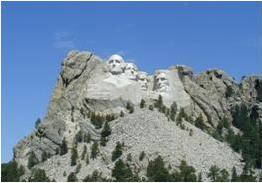
    The story of Lucian follows immediately with another example of the wisdom of the young Alexander at the proposal of an architect who certainly seemed preposterous and simply flattering. We seem impossible task to convert an entire mountain, the Athos, in the effigy of Alexander. However we can imagine how the muntain, now occupied by a famous monastery,  could have been, watching what 2300 years later (1927-1941) Gutzon Borglum made on Mount Rushmore in Keystone, South Dakota, in which 400 workers carved the faces of the first four of  presidents of United States, George Washington, Thomas Jefferson, Theodore Roosevelt and Abraham Lincoln. It is the group called Mount Rushmore National Monument .


    A very natural indignation in Alexander, of a piece with his treatment of the intrusive architect; this person offered to convert the whole of Mount Athos into a colossal statue of the king — who however decided that he was a toady, and actually gave him less employment in ordinary than before.

    The Roman architect Vitruvius also reminds us this story and tells us that the architect was called Dinócrates, in his De architectura, II,1-4:

    1. Dinocrates the architect, relying on the powers of his skill and ingenuity, whilst Alexander was in the midst of his conquests, set out from Macedonia to the army, desirous of gaining the commendation of his sovereign. That his introduction to the royal presence might be facilitated, he obtained letters from his countrymen and relations to men of the first rank and nobility about the king's person; by whom being kindly received, he besought them to take the earliest opportunity of accomplishing his wish. They promised fairly, but were slow in performing; waiting, as they alleged, for a proper occasion. Thinking, however, they deferred this without just grounds, he took his own course for the object he had in view. He was, I should state, a man of tall stature, pleasing countenance, and altogether of dignified appearance. Trusting to the gifts with which nature had thus endowed him, he put off his ordinary clothing, and having anointed himself with oil, crowned his head with a wreath of poplar, slung a lion's skin across his left shoulder, and carrying a large club in his right hand, he sallied forth to the royal tribunal, at a period when the king was dispensing justice.
    2. The novelty of his appearance excited the attention of the people; and Alexander soon discovering, with astonishment, the object of their curiosity, ordered the crowd to make way for him, and demanded to know who he was. "A Macedonian architect," replied Dinocrates, "who suggests schemes and designs worthy your royal renown. I propose to form Mount Athos into the statue of a man holding a spacious city in his left hand, and in his right a huge cup, into which shall be collected all the streams of the mountain, which shall then be poured into the sea."
    3. Alexander, delighted at the proposition, made immediate inquiry if the soil of the neighbourhood were of a quality capable of yielding sufficient produce for such a state. When, however, he found that all its supplies must be furnished by sea, he thus addressed Dinocrates: "I admire the grand outline of your scheme, and am well pleased with it: but I am of opinion he would be much to blame who planted a colony on such a spot. For as an infant is nourished by the milk of its mother, depending thereon for its progress to maturity, so a city depends on the fertility of the country surrounding it for its riches, its strength in population, and not less for its defence against an enemy. Though your plan might be carried into execution, yet I think it impolitic. I nevertheless request your attendance on me, that I may otherwise avail myself of your ingenuity."
    4. From that time Dinocrates was in constant attendance on the king, and followed him into Egypt; where Alexander having perceived a spot, at the same time naturally strong, the centre of the commerce of the country, a land abounding with corn,º and having those facilities of transport which the Nile afforded, ordered Dinocrates to build a city whose name should be Alexandria. Dinocrates obtained this honour through his comely person and dignified deportment.

    Vitruvius ends, not without irony, the passage with these words:

    But to me, Emperor, nature hath denied an ample stature; my face is wrinkled with age, and sickness has impaired my constitution. Deprived of these natural accomplishments, I hope, however, to gain some commendation through the aid of my scientific acquirements, and the precepts I shall deliver. (Translated by Joseph Gwilt, London: Priestley and Weale, 1826)

    1. Dinocrates architectus cogitationibus et sollertia fretus, cum Alexander rerum potiretur, profectus est e Macedonia ad exercitum regiae cupidus commendationis. is e patria a propinquis et amicis tulit ad primos ordines et purpuratos litteras ut aditus haberet faciliores, ab eisque exceptus humane petiit uti quamprimum ad Alexandrum perduceretur. cum polliciti essent, tardiores fuerunt idoneum tempus expectantes. itaque Dinocrates ab his se existimans ludi ab se petiit praesidium. fuerat enim amplissima statura, facie grata, forma dignitateque summa. his igitur naturae muneribus confisus vestimenta posuit in hospitio et oleo corpus perunxit caputque coronavit populea fronde, laevum umerum pelle leonina texit, dextraque clavam tenens incessit contra tribunal regis ius dicentis.
    2. novitas populum cum avertisset, conspexit eum Alexander. admirans ei iussit locum dari ut accederet, interrogavitque quis esset. at ille, Dinocrates, inquit, architectus Macedo, qui ad te cogitationes et formas adfero dignas tuae claritatis. namque Athon montem formavi in statuae virilis figuram, cuius manu laeva designavi civitatis amplissimae moenia, dextra pateram quae exciperet omnium fluminum quae sunt in eo monte aquam, ut inde in mare profunderetur.
    3. delectatus Alexander narratione formae statim quaesiit, si essent agri circa qui possent frumentaria ratione eam civitatem tueri. cum invenisset non posse nisi transmarinis subvectionibus, Dinocrates, inquit, attendo egregiam formae compositionem et ea delector, sed animadverto si qui deduxerit eo loci coloniam fore ut iudicium eius vituperetur. ut enim natus infans sine nutricis lacte non potest ali neque ad vitae crescentis gradus perduci, sic civitas sine agris et eorum fructibus in moenibus affluentibus non potest crescere nec sine abundantia cibi frequentiam habere populumque sine copia tueri. itaque quemadmodum formationem puto probandam, sic iudico locum inprobandum, teque volo esse mecum, quod tua opera sum usurus.
    4. ex eo Dinocrates ab rege non discessit et in Aegyptum est eum persecutus. ibi Alexander cum animadvertisset portum naturaliter tutum, emporium egregium, campos circa totam Aegyptum frumentarios, inmanis fluminis Nili magnas utilitates, iussit eum suo nomine civitatem Alexandriam constituere. ita Dinocrates a facie dignitateque corporis commendatus ad eam nobilitatem pervenit. mihi autem, imperator, staturam non tribuit natura, faciem deformavit aetas, valetudo detraxit vires. itaque quoniam ab his praesidiis sum desertus, per auxilia scientiae scriptaque ut spero perveniam ad commendationem.

    Plutarch also gives us news of the story, but now the architect is called Estasícrates. Alejander want to make a grand tomb for his friend Hephaestion, who has just died, and he calls the architect cited; he tells us in his Alejander, 72.3-4

    Upon a tomb and obsequies for his friend, and upon their embellishments, he purposed to expend ten thousand talents, and wished that the ingenuity and novelty of the construction should surpass the expense.He therefore longed for Stasicrates above all other artists, because in his innovations there was always promise of great magnificence, boldness, and ostentation.
    [4] This man, indeed, had said to him at a former interview that of all mountains the Thracian Athos could most readily be given the form and shape of a man; if; therefore, Alexander should so order, he would make out of Mount Athos a most enduring and most conspicuous statue of the king, which in its left hand should hold a city of ten thousand inhabitants, and with its right should pour forth a river running with generous current into the sea. This project, it is true, Alexander had declined; but now he was busy devising and contriving with his artists projects far more strange and expensive than this.
    ( Plutarch's Lives. English Translation by. Bernadotte Perrin. Cambridge, MA. Harvard University Press. London. William Heinemann Ltd. 1919. 7. ).

    Anyway, today also and too often they are a good match the megalomania of policymakers with that of the artists.

    Note: megalomania is a word composed by  the Greek μεγαλο- from μέγας, large, and μανία, insanity, which therefore means "delusions of grandeur".


  • The

    The uchronía is an utopia in time and it is applied to something when, knowing that it did not exist, we suppose to exist.

    In 1516 Thomas More (Thomas Morus in Latin), humanist, political, chancellor of Henry VIII of England, wrote in Latin his famous work on the ideal society De optimo reipublicae statu, deque nova insula Utopia (Of a republic's best state and of the new island Utopia), commonly known as Utopia.

    The etymology of the word is confusing knowing it More, that it  may come from the Greek οὐτοπία (οὐ, no; τόπος, place = "no place, a place that does not exist or is not anywhere ') or εὐτοπία (εὐ, good; τόπος, location) = 'good place'. Both are consistent with the thinking of More, but the first that has been imposed in the general opinion.

    Indeed, compared to the "utopia" as a good ideal place, there is the concept of "dystopia", from the Greek δυσ-(dys) "bad" and τόπος (topos) "place" to express the opposite of "utopia" with the meaning of "bad ideal location." It is coined in the late nineteenth century by Stuart Mill. In times of crisis and despair, like the present, this concept of "dystopia" is a very common scenario in literature, film etc. .. ". The works Fahrenheit 451" by Ray Bradbury, "1984" by George Orwell and"Brave New World " by Aldous Huxley, are considered the founders of the genre or sub-genre of dystopia.

    Well, space and time are two coordinates, two mental and linguistic categories which are also parallel and  similar. Sooner or later it should emerge the parallel term referred to the time, uchronía (from Greek οὐ, ou, no,  and Κρόνος,  Kronos, time), no time, what is not in time.

    The Spanish Royal Academy defines it as a logical reconstruction, applied to history, assuming events that did not occurred, but that would have happened.

    The French philosopher Charles Bernard Renouvier used it the first in his work Uchronie (L'Utopie dans l'histoire), esquisse historique apocryphe du développement de la civilisation européenne tel qu'il n'a pas été, tel qu'il aurait pu être (1857) (Uchronia: Utopia in History. Apocryphal historical sketch of the development of European civilization as it has not been, as it could have been).

    The uchronía is thus a kind of science fiction.

    In Antiquity there were some examples that could be considered "uchronía" or assumptions of what might have been if things had happened differently.

    So Herodotus (between 484 and 425 BC.) provides an example. VII 139, 2-3:

    If the Athenians had been seized with fear of the danger which threatened them and had left their land,or again, without leaving their land, had stayed and given themselves up to Xerxes, none would have made any attempt by sea to oppose the king. If then none had opposed Xerxes by sea, it would have happened on the land somewhat thus:–even if many tunics of walls had been thrown across the Isthmus by the Peloponnesians, the Lacedemonians would have been deserted by their allies, not voluntarily but of necessity, since these would have been conquered city after city by the naval force of the Barbarian, and so they would have been left alone: and having been left alone and having displayed great deeds of valour, they would have met their death nobly. (Translated by  G. C. Macaulay)

    Or Thucydides (460-396 BC?), who also offers another example in his History of the Peloponnesian War: Th. I , 74:

    But if we had joined with the Persian, fearing (as others did) to have our territories wasted; or afterwards, as men lost, durst not have put ourselves into our galleys, you must not have fought with him by sea, because your fleet had been too small; but his affairs had1 succeeded as he would himself. (Translation by Thomas Hobbes)

    But curiously and against the above examples, it is considered that the first example of Uchronia in the literature appears in Livy, though naturally it is not called so. This idea is led by  Isaac D'Israeli (1766-1848), who wrote in Curiosities of Literature an article titled Of a history of events  that did not occur), in which he makes note that Livy, in Book IX, in a long digression, imagines  the impact that would have occurred if Alexander had invaded Italy and would have faced the Roman army.

    Note: Due to the extension, I will offer all relevant texts in this article to the end.

    Certainly the passage of Livy is the most extensive and detailed digression on what we consider a uchronía and therefore certainly it deserves consideration if not as the first example of uchronía in antiquity, as  the most relevant.

    Livy in his work Ab urbe condita (From the founding of the city Rome), IX, 17-19 is  allowed to imagine what would have happened if Alexander the Great had led his army westward instead of east and would have faced the great Rome, whose history he sings in his work. Naturally, in his patriotic and nationalist imagination, Alexander had been defeated completly by the Romans. With this digression in his story, Livy placed after narrating the failure of Roman army forced to go through the "gallows Caudine" unarmed and naked, aims it, to raise the self-esteem of the Romans. Facing the success of the Macedonian, Livy opposed the collective superiority of the Roman people, the strength of its traditions against innovation of Alexander and the superiority of the republic against the monarchy. Consequently, "the Roman power had not been defeated by  the king (Alexander)".

    Note: the great interesting text is provided at the end

    We might even consider a germ of uchronía the reference that Tacitus makes to Germanicus, also comparing him with Alexander in his Annales, II 73, 3:

    Had he had the sole control of affairs, had he possessed the power and title of a king, he would have attained military glory as much more easily as he had excelled Alexander in clemency, in self-restraint, and in all other virtues. (Translated by Alfred John Church, William Jackson Brodribb)

    quod si solus arbiter rerum, si iure et nomine regio fuisset, tanto promptius adsecuturum gloriam militiae quantum clementia, temperantia, ceteris bonis artibus praestitisset

    The uchronía is a widely used resource, excessively used by writers, especially by authors of historical or pseudo-historical novel. Some people call this type of “alternate history”, "counterfactual history" (something like "story against the facts"), what continues to be a "contradictio in terminis", contradiction in terms: How it can be written history of that did not exist? Moreover, how much damage will make these easy imaginations to the real story, when they also do so novel, allegedly historical basis and with little knowledge of the sources and excessive and boundless imagination, that  some call creativity?

    Finally there is to think that this counterfactual history is an interesting counterpoint to help understand the causes and consequences of the real story.

    Moreover it could refine and deepen the concepts of uchronia and counterfactual history, but it does not significantly affect the objective of the article, which is nothing but confirm the presence of these concepts in the ancient world.

    Famous examples of uchronia is to assume  the victory of Hannibal against the Romans in the famous Punic Wars; or the victory of the Spanish Armada against England.

    Gibbon asked himself in the eighteenth century: what would have happened if the Sarracens  had defeated  Charles Martel at Poitiers in the year 773? And he answered half joking and half really that the Koran would be proclaimed  at the departments of Oxford before an audience of circumcised people.

    What would have been the immediate past of Spain in the Civil War if they had won the defenders of the Republic? And in Europe if the Nazis had won and no allies?

    Even Winston Churchill envisioned a different ending to the American Civil War (1861-1865) in his essay entitled "If Lee had not won the Battle of Gettysburg".

    The examples are endless, there are thousands.

    These exercises seem sterile, because, as E.H.Carr said, History is the record of what people did, not what I did not do.

    But perhaps we should not be so demanding. Jorge Luis Borges was not a historian, but a poet and writer, but his poem Things that Might Have Been, History of Night, authorizes us to think about  a different world and  story that was.

    Things that might have been

    I think of things that weren't, but might have been.
    The treatise on Saxon myths Bede never wrote.
    The inconceivable work Dante might have had a glimpse of,
    As soon as he’d corrected the Comedy’s last verse.
    History without the afternoons of the Cross and the hemlock.
    History without the face of Helen.
    Man without the eyes that gave us the moon.
    On Gettysburg’s three days, victory for the South.
    The love we never shared.
    The wide empire the Vikings chose not to found.
    The world without the wheel or the rose.
    The view John Donne held of Shakespeare.
    The other horn of the Unicorn.
    The fabled Irish bird that lights on two trees at once.
    The child I never had.

    …………………
    Texts:

    Isaac D’israelí (1766-1848), Curiosities of Literature;  Of a history of events which have not happened.:

    “Historians, for a particular purpose, have sometimes amused themselves with a detail of an event which did not happen. A history of this kind we find in the ninth book of Livy; and it forms a digression, where, with his delightful copiousness, he reasons on the probable consequences which would have ensued had Alexander the Great invaded Italy. Some Greek writers, to raise the Parthians to an equality with the Romans, had insinuated that the great name of this military monarch, who is said never to have lost a battle, would have intimidated the Romans, and would have checked their passion for universal dominion. The patriotic Livy, disdaining that the glory of his nation, which had never ceased from war for nearly eight hundred years, should be put in competition with the career of a young conqueror, which had scarcely lasted ten, enters into a parallel of “man with man, general with general, and victory with victory.” In the full charm of his imagination he brings Alexander down into Italy, he invests him with all his virtues, and “dusks their lustre” with all his defects. He arranges the Macedonian army, while he exultingly shows five Roman armies at that moment pursuing their conquests; and he cautiously counts the numerous allies who would have combined their forces; he even descends to compare the weapons and the modes of warfare of the Macedonians with those of the Romans. Livy, as if he had caught a momentary panic at the first success which had probably attended Alexander in his descent into Italy, brings forward the great commanders he would have had to encounter; he compares Alexander with each, and at length terminates his fears, and claims his triumph, by discovering that the Macedonians had but one Alexander, while the Romans had several. This beautiful digression in Livy is a model for the narrative of an event which never happened.”

    Livy, IX, 17-19:

    XVII. Nothing has ever been farther from my intention, since the commencement of this history, than to digress, more than necessity required, from the course of narration; and, by embellishing my work with variety, to seek pleasing resting-places, as it were, for my readers, and relaxation for my own mind: nevertheless, the mention of so great a king and commander, as it has often set my thoughts at work, in silent disquisitions, now calls forth a few reflections to public view; and disposes me to enquire, what would have been the consequence, respecting the affairs of the Romans, if they had happened to have been engaged in a war with Alexander. The circumstances of greatest moment seem to be, the number and bravery of the soldiers, the abilities of the commanders, and fortune, which exerts a powerful sway over all human concerns, and especially over those of war. Now these particulars, considered both separately and collectively, must clearly convince an observer, that not only other kings and nations, but that even Alexander himself, would have found the Roman empire invincible. And first, to begin with comparing the commanders. I do not, indeed, deny, that Alexander was a captain of consummate merit; but still his fame owes part of its lustre to his having been single in command, and to his dying young, while his affairs were advancing in improvement, and while he had not yet experienced a reverse of fortune.
    …..
    I shall enumerate the Roman chiefs: not every one of every age, but those [250] only with whom, either as consuls or dictators, Alexander might have been engaged. Marcus Valerius Corvus, Caius Marcius Rutilus, Caius Sulpicius, Titus Manlius Torquatus, Quintus Publilius Philo, Lucius Papirius Cursor, Quintus Fabius Maximus, the two Decii, Lucius Volumnius, Manius Curius.
    Then follow a number of very extraordinary men, had it so happened, that he had first engaged in war with Carthage, and had come into Italy at a more advanced period of life. Every one of these possessed powers of mind and a capacity equal with Alexander; add to this, that a regular system of military discipline had been transmitted from one to another, from the first rise of the city of Rome; a system now reduced into the form of an art, completely digested in a train of fixed and settled principles, deduced from the practice of the Kings;
    …………
    Manlius Torquatus might, perhaps, have yielded to Alexander, had he met him in the field: and so might Valerius Corvus; men who were distinguished soldiers, before they became commanders. The same, too, might have been the case with the Decii, who, after devoting their persons, rushed upon the enemy, or of Papirius Cursor, though possessed of such powers, both of body and mind.
    The councils of one youth, it is possible, might have baffled the wisdom of a whole senate, composed of such members, that he alone, who said it was an assembly of kings, conceived a just idea of it. But then there was little probability that he should, with more judgment than any one of those whom I have named, choose ground for an encampment, provide supplies, guard against stratagems, distinguish the season for fighting, form his line of battle, or strengthen [251] it properly with reserves.
    He would have owned, that he was not dealing with Darius, who drew after him a train of women and eunuchs; saw nothing about him but gold and purple; was encumbered with the burthensome trappings of his state, and should be called his prey, rather than his antagonist; whom therefore he vanquished without loss of blood, and had no other merit, on the occasion, than that of showing a proper spirit in despising empty show. Italy would have appeared, to him, a country of a quite different nature from Asia, which he traversed in the guise of a reveller, at the head of a crew of drunkards, if he had seen the forests of Apulia, and the mountains of Lucania, with the vestiges of the disasters of his house, and where his uncle Alexander, king of Epirus, had been lately cut off.
    XVIII. I am here speaking of Alexander, not yet intoxicated by prosperity, the seductions of which no man was less capable of withstanding. But, if a judgment is to be formed of him, from the tenour of his conduct, in the new state of his fortune, and from the new disposition, as I may say, which he put on after his successes, he would have entered Italy more like Darius, than Alexander; and would have brought thither an army who had forgotten Macedonia, and were degenerating into the manners of the Persians. It is painful, in speaking of so great a king, to recite his ostentatious pride in the frequent changes of his dress; his requiring that people should address him with adulation, prostrating themselves on the ground; a practice insupportable to the Macedonians, had they even been conquered, much more so when they were victorious; the shocking cruelty of his punishments; his murdering his friends in the midst of feasting and wine; with the folly of his fiction respecting his birth. What must have been the consequence, if his love of wine had daily increased? if his fierce and uncontroulable anger?
    and, as I mention not any one circumstance [252] of which there is a doubt among writers, do we consider these as no disparagements to the qualifications of a commander? but then, as is frequently repeated by the silliest of the Greeks, who are fond of exalting the reputation, even of the Parthians, at the expence of the Roman name, it was to be apprehended that the Roman people would not have had resolution to face the splendour of Alexander’s name, who, however, in my opinion, was not known to them even by common fame; and while, in Athens, a state reduced to weakness by the Macedonian arms, which at the very time saw the ruins of Thebes smoking in its neighbourhood, men had spirit enough to declaim with freedom against him, as is manifest from the copies of their speeches, which have been preserved; is it to be supposed that out of such a number of Roman chiefs, no one would have freely uttered his sentiments.
    ………………….
    How large soever the scale may be, on which our idea of this man’s greatness is formed, still it is the greatness of an individual, constituted by the successes of a little more than ten years; and those who give it pre-eminence on account, that the Roman people have been defeated, though not in any entire war, yet in several battles, whereas Alexander was never once unsuccessful in fight, do not consider, that they are comparing the actions of one man, and that a young man, with the course of action of a nation, which has been waging wars, now eight hundred years.

    Can we wonder then, if fortune has varied more in such a long space, than in the short term of thirteen years? but why not compare the success of one man, with that of another? how many Roman commanders might I name, who never were beaten? in the annals of the magistrates, and the records, we may run over whole pages of consuls, and dictators, with whose bravery, and successes also, the Roman people never once had reason to be dissatisfied. And, what renders them more deserving of admiration than Alexander, or any king, [253] is, that some of these acted in the office of dictator, which lasted only ten, or it might be twenty days;
    ……..
    So that Alexander, unconquered, would have encountered unconquered commanders; and would have had stakes of equal consequence pledged on the issue. Nay, the hazard had been greater on his side; because the Macedonians would have had but one Alexander, who was not only liable, but fond of exposing himself, to casualties; the Romans would have had many equal to Alexander, both in renown, and in the greatness of their exploits; the life, or death, of any of whom would have affected only his own concerns, without any material consequence to the public.
    XIX. It remains to compare the forces together, with respect to their numbers, the different kinds of troops, and their resources for procuring auxiliaries.
    …………………..
    He would have crossed the sea with his veteran Macedonians, amounting to no more than thirty thousand infantry, and four thousand horse, these mostly Thessalians. This was the whole of his strength. Had he brought with him Persians and Indians, and those other nations, it would be dragging after him an incumbrance, rather than a support. Add to this, that the Romans being at home, would have had recruits at hand: Alexander waging war in a foreign country, would have found his army worn out with long service, as happened afterwards to Hannibal. As to arms, theirs were a buckler and long spears: those of the Romans, a shield, which covered the body more effectually, and a javelin, a much more forcible weapon than the spear, either in throwing or striking. The soldiers, on both sides, were used to steady combat, and to preserve their ranks. But the Macedonian phalanx was unapt for motion, and composed of similar parts throughout: the Roman line less compact, consisting of several various parts, was easily divided, as occasion required, and as easily conjoined. Then, what soldier is comparable to the Roman, in the throwing up of works? who better calculated to endure fatigue? Alexander, if overcome in one battle, could make no other effort. The Roman, whom Caudium, whom Cannæ, did not crush, what fight could crush? In truth, even should events have been favourable to him at first, he would have often wished for the Persians, the Indians, and the effeminate tribes of Asia, as opponents; and would have acknowledged, that his wars had been waged with women, as we are told was [255] said by Alexander, king of Epirus, after receiving his mortal wound, in relation to the battles fought in Asia by this very youth, and when compared with those in which himself had been engaged. Indeed, when I reflect, that, in the first Punic war, a contest was maintained by the Romans with the Carthaginians, at sea, for twenty-four years, I can scarcely suppose that the life of Alexander would have been long enough for the finishing of one war with either of those nations. And perhaps, as the Punic state was united to the Roman, by ancient treaties, and as similar apprehensions might arm against a common foe those two nations, the most potent of the time, he might have been overwhelmed in a Punic, and a Roman war, at once. The Romans have had experience of the boasted prowess of the Macedonians in arms, not indeed when they were led by Alexander, or when their power was at the height, but in the wars against Antiochus, Philip, and Perseus; and so far were they from sustaining any losses, that they incurred not even danger. Let not the truth give offence to any, nor our civil wars be brought into mention; never were we worsted by an enemy’s cavalry, never by their infantry, never in open fight, never on equal ground, much less when the ground was favourable. Our soldiers, heavy laden with arms, may reasonably fear a body of cavalry, or arrows; defiles of difficult passage, and places impassable to convoys. But they have defeated, and will defeat a thousand armies, more formidable than those of Alexander, and the Macedonians, provided that the same love of peace, and zeal to promote domestic harmony, which at present subsist among us, shall continue to prevail.
    (Translator: George Baker  (1781 – 1851))

    [17] Nihil minus quaesitum a principio huius operis uideri potest quam ut plus iusto ab rerum ordine declinarem uarietatibusque distinguendo opere et legentibus uelut deuerticula amoena et requiem animo meo quaererem; tamen tanti regis ac ducis mentio, quibus saepe tacitus cogitationibus uolutaui animum, eas euocat in medium, ut quaerere libeat quinam euentus Romanis rebus, si cum Alexandro foret bellatum, futurus fuerit. Plurimum in bello pollere uidentur militum copia et uirtus, ingenia imperatorum, fortuna per omnia humana maxime in res bellicas potens; ea et singula intuenti et uniuersa sicut ab aliis regibus gentibusque, ita ab hoc quoque facile praestant inuictum Romanum imperium. Iam primum, ut ordiar ab ducibus comparandis, haud equidem abnuo egregium ducem fuisse Alexandrum; sed clariorem tamen eum facit quod unus fuit, quod adulescens in incremento rerum, nondum alteram fortunam expertus, decessit.
    …. ….
    recenseam duces Romanos, nec omnes omnium aetatium sed ipsos eos cum quibus consulibus aut dictatoribus Alexandro fuit bellandum, M. Valerium Coruum, C. Marcium Rutulum, C. Sulpicium, T. Manlium Torquatum, Q. Publilium Philonem, L. Papirium Cursorem, Q. Fabium Maximum, duos Decios, L. Volumnium, M". Curium? deinceps ingentes sequuntur uiri, si Punicum Romano praeuertisset bellum seniorque in Italiam traiecisset. Horum in quolibet cum indoles eadem quae in Alexandro erat animi ingeniique, tum disciplina militaris, iam inde ab initiis urbis tradita per manus, in artis perpetuis praeceptis ordinatae modum uenerat.
    ….    ….
    Militaris opera pugnando obeunti Alexandro—nam ea quoque haud minus clarum eum faciunt—cessisset uidelicet in acie oblatus par Manlius Torquatus aut Valerius Coruus, insignes ante milites quam duces, cessissent Decii, deuotis corporibus in hostem ruentes, cessisset Papirius Cursor illo corporis robore, illo animi. Victus esset consiliis iuuenis unius, ne singulos nominem, senatus ille, quem qui ex regibus constare dixit unus ueram speciem Romani senatus cepit. Id uero erat periculum, ne sollertius quam quilibet unus ex his quos nominaui castris locum caperet, commeatus expediret, ab insidiis praecaueret, tempus pugnae deligeret, aciem instrueret, subsidiis firmaret. Non cum Dareo rem esse dixisset, quem mulierum ac spadonum agmen trahentem inter purpuram atque aurum oneratum fortunae apparatibus suae, praedam uerius quam hostem, nihil aliud quam bene ausus uana contemnere, incruentus deuicit. Longe alius Italiae quam Indiae, per quam temulento agmine comisabundus incessit, uisus illi habitus esset, saltus Apuliae ac montes Lucanos cernenti et uestigia recentia domesticae cladis, ubi auunculus eius nuper, Epiri rex Alexander, absumptus erat.
    [18] Et loquimur de Alexandro nondum merso secundis rebus, quarum nemo intolerantior fuit. Qui si ex habitu nouae fortunae nouique, ut ita dicam, ingenii quod sibi uictor induerat spectetur, Dareo magis similis quam Alexandro in Italiam uenisset et exercitum Macedoniae oblitum degenerantemque iam in Persarum mores adduxisset. Referre in tanto rege piget superbam mutationem uestis et desideratas humi iacentium adulationes, etiam uictis Macedonibus graues nedum uictoribus, et foeda supplicia et inter uinum et epulas caedes amicorum et uanitatem ementiendae stirpis.
    Quid si uini amor in dies fieret acrior? quid si trux ac praeferuida ira?—nec quicquam dubium inter scriptores refero—nullane haec damna imperatoriis uirtutibus ducimus? id uero periculum erat, quod leuissimi ex Graecis qui Parthorum quoque contra nomen Romanum gloriae fauent dictitare solent, ne maiestatem nominis Alexandri, quem ne fama quidem illis notum arbitror fuisse, sustinere non potuerit populus Romanus; et aduersus quem Athenis, in ciuitate fracta Macedonum armis, cernente tum maxime prope fumantes Thebarum ruinas, contionari libere ausi sunt homines, id quod ex monumentis orationum patet, aduersus eum nemo ex tot proceribus Romanis uocem liberam missurus fuerit.
    ………    …………
    Quantalibet magnitudo hominis concipiatur animo; unius tamen ea magnitudo hominis erit collecta paulo plus decem annorum felicitate; quam qui eo extollunt quod populus Romanus etsi nullo bello multis tamen proeliis uictus sit, Alexandro nullius pugnae non secunda fortuna fuerit, non intellegunt se hominis res gestas, et eius iuuenis, cum populi iam octingentesimum bellantis annum rebus conferre. Miremur si, cum ex hac parte saecula plura numerentur quam ex illa anni, plus in tam longo spatio quam in aetate tredecim annorum fortuna uariauerit?
    quin tu homines cum homine, [et] duces cum duce, fortunam cum fortuna confers? quot Romanos duces nominem quibus nunquam aduersa fortuna pugnae fuit? paginas in annalibus magistratuumque fastis percurrere licet consulum dictatorumque quorum nec uirtutis nec fortunae ullo die populum Romanum paenituit. Et quo sint mirabiliores quam Alexander aut quisquam rex,
    Inuictus ergo Alexander cum inuictis ducibus bella gessisset et eadem fortunae pignora in discrimen detulisset; immo etiam eo plus periculi subisset quod Macedones unum Alexandrum habuissent, multis casibus non solum obnoxium sed etiam offerentem se, Romani multi fuissent Alexandro uel gloria uel rerum magnitudine pares, quorum suo quisque fato sine publico discrimine uiueret morereturque.
       …………
    [19] Restat ut copiae copiis comparentur uel numero uel militum genere uel multitudine auxiliorum.
    …       …
    Ipse traiecisset mare cum ueteranis Macedonibus non plus triginta milibus hominum et quattuor milibus equitum, maxime Thessalorum; hoc enim roboris erat. Persas Indos aliasque si adiunxisset gentes, impedimentum maius quam auxilium traheret. Adde quod Romanis ad manum domi supplementum esset, Alexandro, quod postea Hannibali accidit, alieno in agro bellanti exercitus consenuisset. Arma clupeus sarisaeque illis; Romano scutum, maius corpori tegumentum, et pilum, haud paulo quam hasta uehementius ictu missuque telum. Statarius uterque miles, ordines seruans; sed illa phalanx immobilis et unius generis, Romana acies distinctior, ex pluribus partibus constans, facilis partienti, quacumque opus esset, facilis iungenti. Iam in opere quis par Romano miles? quis ad tolerandum laborem melior?
    uno proelio uictus Alexander bello uictus esset: Romanum, quem Caudium, quem Cannae non fregerunt, quae fregisset acies? ne ille saepe, etiamsi prima prospere euenissent, Persas et Indos et imbellem Asiam quaesisset et cum feminis sibi bellum fuisse dixisset, quod Epiri regem Alexandrum mortifero uolnere ictum dixisse ferunt, sortem bellorum in Asia gestorum ab hoc ipso iuuene cum sua conferentem. Equidem cum per annos quattuor et uiginti primo Punico bello classibus certatum cum Poenis recordor, uix aetatem Alexandri suffecturam fuisse reor ad unum bellum.
    Et forsitan, cum et foederibus uetustis iuncta res Punica Romanae esset et timor par aduersus communem hostem duas potentissimas armis uirisque urbes armaret, [et] simul Punico Romanoque obrutus bello esset. Non quidem Alexandro duce nec integris Macedonum rebus sed experti tamen sunt Romani Macedonem hostem aduersus Antiochum Philippum Persen non modo cum clade ulla sed ne cum periculo quidem suo. Absit inuidia uerbo et ciuilia bella sileant: nunquam ab equite hoste, nunquam a pedite, nunquam aperta acie, nunquam aequis, utique nunquam nostris locis laborauimus: equitem, sagittas, saltus impeditos, auia commeatibus loca grauis armis miles timere potest. Mille acies grauiores quam Macedonum atque Alexandri auertit auertetque, modo sit perpetuus huius qua uiuimus pacis amor et ciuilis cura concordiae.—

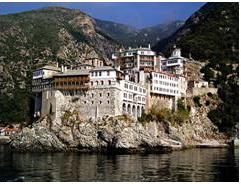
     

  • A very ancient modern fantastic creatures

    The action of the film Avatar, written and directed by James Cameron and released in 2009, is developed on Pandora, moon of the planet Polyphemus. Pandora and Polyphemus are two well known characters from Greek mythology

    In the myth of Pandora (the word means “who has received all the goods, from Greek pan, all,  and dora, gifts), a box encloses all goods or gifts that may cause harm to men when it is opened by the curiosity of a woman, his mistress Pandora.

    In Cameron's film, Pandora is an extraordinary environmental unit which also contains extraordinary goods that will cause the ruin of its inhabitants.

    When I saw the so successful film , with special really cool effects, a fable that basically tells an old story, I was amazed among other things by its Banshee  which  immediately remembered me the  "Horse-vultures "  which  Lucian of Samosata created in his science fiction "The true History". Since then I can not imagine otherwise the flying hybrid of Lucian.

    These similarities or coincidences made me ask the question: Does Avatar  have something to do with the story of  Lucian? Will Cameron be inspired by the work of Greek Roman satirist?

    Moreover, a few years ago the television network Nickelodeon produced a cartoon series created by Michael Dante DiMartino and Bryan Konietzko, titled Avatar: The Last Airbender, also known as Avatar: The Legend Aang.

    The series gained remarkable success in much of the world. Here they are dozens of animals created,  resulting hybrid of several different. And this reminded me of the many fantastic creatures that Lucian created with the same procedure, mix several real and increase its size.

    The inevitable question was, then: do  Bryan Konietzko and Michael Dante have inspired in the work of Lucian?

    Let's do a quick and brief analysis of the issue.

    Lucian of Samosata is considered by many experts the first literary author of science fiction novels. His “The True History”, or “Verae Historiae”,  which narrates a journey through space and a fantastic stellar battle, among other things, certainly fulfills many of the conditions of this type of literature.

    Lucian is a Greek author of Roman times, he lived in the second century, critical and sarcastic spirit, who moves between cynicism and stoicism, who whips with his irony myths and gods and especially conceited and pedants philosophers who only think about money and live from the story.

    His "The true History" actually does  to maximize the quantity and quality of the absurdities of history books or mythological narratives caricaturing and making them impossible to believe. Stories like this are for example Homer's Odyssey or the histories of Herodotus himself or Ctesias, who include  in their  Histories legends and myths without any critical spirit and unverified testimony, or The Journey of the Argonauts of Apollonius. With all Lucian intended  amuse his educated readers.

    This means that the title of his work is to be interpreted in an ironic sense, in the sense that it also takes into Spanish the term “historias”,"stories", in the plural as fantastic stories as opposed to the real story. The same meaning is in German plural "Gesichten" or French "des histoires". These "stories" are therefore correspond to the English story and not to the "history". Certainly the Greek name of the play “Aléthón diégémáton biblia dyó”  (Two books of true stories true) for anything is referred to several "stories" while "alethón",  true, must be understood as a clear irony in the direction indicated.

    Lucian himself warns us about the veracity of his stories when he says:

    (4)…I fall back on falsehood — but falsehood of a more consistent variety; for I now make the only true statement you are to expect — that I am a liar. This confession is, I consider, a full defence against all imputations. My subject is, then, what I have neither seen, experienced, nor been told, what neither exists nor could conceivably do so. I humbly solicit my readers’ incredulity. (Translated by Fowler, H W and F G. Oxford: The Clarendon Press. 1905.)

    Returning to the theme, we could specify that Lucian really does not intend to make a science fiction story, not his imagination takes him to serve  or imagine a development of modern science to acceptable limits but difficult to seer currently. His narrative does not try to create the future but to raise as much as existing in their environment.

    The influence of this work has been huge in Western literature: Johannes Kepler (1571-1630), whom some consider the true initiator of science fiction with his work Somnium; Thomas More who translated some of the dialogue, Cyrano de Bergerac with his Histoire Comique d'un voyage à la Lune (1657); Rabelais probably with the gigantism of his characters, J. Swift in Gulliver's Travels (1726 Voltaire with his story Micromegas, and famous Jules Verne with nhis “Around the Moon” (1870) and From the Earth to the Moon (1872).

    In Spain in the sixteenth and seventeenth centuries it was well known and imitated by Cristobal de Villalon, Mateo Alemán, Miguel de Cervantes and Francisco de Quevedo.

    It is not therefore unreasonable to track a possible influence on contemporary forms of cultural creativity as cinema.

    I think it should be a brief summary of the story of "Stories" or "true hystory" of Lucian; it does not avoided, of course, a thorough reading of the text. Serve these comments to encourage reading it and the rest of his interesting work.

    "The true History" appears traditionally divided into two books, two rolls in the old format, which come to occupy in the current form of "book" about fifty pages, affordable amount even for the current more comfortable reader accustomed to the stunted prevailing tweets.

    Lucian of Samosata is the first known author who imagined a trip into space. For this alone he would be worthy of being remembered. However it is generally assumed by scholars that Lucian knew and had reference to the work of Antonius Diogenes The Incredible Wonders Beyond Thule, that  already imagines  the trip to the Moon, as Photius says. Lucian would ridicule  precisely this passage. But not everyone accepts this hypothesis.

    He tells the story of the fabulous journey of a maritime ship who have passed the Pillars of Hercules and entered the " mare ignotum or mare tenebrosum", the unknown Atlantic, suffering a long storm, and comes to an island where they see a trail with a worn inscription that marks the limit reached by Heracles and Dionisos. They reached a wine river fed by vines which on top were perfect women from the waist. It pushed by winds, rises from the sea to the sidereal space, visit the Sun and the Moon. After his arrival to the Moon, the "astronauts" are involved into a "galactic" war between Selenites (inhabitants of Selene, the Moon) and Heliotes (inhabitants of de Sun), together  with the most curious interstellar fighters.

    (5) Starting on a certain date from the Pillars of Heracles, I sailed with a fair wind into the Atlantic. The motives of my voyage were a certain intellectual restlessness, a passion for novelty, a curiosity about the limits of the ocean and the peoples who might dwell beyond it. …

    (6) —We surrendered ourselves to the elements, let her run, and were storm-driven for more than eleven weeks. On the eightieth day the sun came out quite suddenly, and we found ourselves close to a lofty wooded island, …

    (7) We had advanced half a mile inland through woods, when we came upon a brazen pillar, inscribed in Greek characters — which however were worn and dim —‘Heracles and Dionysus reached this point.’

    (9)… But about midday, when we were out of sight of the island, a waterspout suddenly came upon us, which swept the ship round and up to a height of some three hundred and fifty miles above the earth. She did not fall back into the sea, but was suspended aloft, and at the same time carried along by a wind which struck and filled the sails. –

    (10) For a whole week we pursued our airy course, and on the eighth day descried land; it was an island with air for sea, glistening, spherical, and bathed in light. We reached it, cast anchor, and landed; inspection soon showed that it was inhabited and cultivated. In the daytime nothing could be discerned outside of it; but night revealed many neighbouring islands, some larger and some smaller than ours; there was also another land below us containing cities, rivers, seas, forests, and mountains; and this we concluded to be our Earth.

    (11) We were intending to continue our voyage, when we were discovered and detained by the Horse-vultures, as they are called. These are men mounted on huge vultures, which they ride like horses; the great birds have ordinarily three heads. It will give you some idea of their size if I state that each of their quill-feathers is longer and thicker than the mast of a large merchantman. …

    It seemed he too was a mortal, named Endymion, who had been conveyed up from our Earth in his sleep, and after his arrival had become king of the country; this was, he told us, what we knew on our Earth as the moon.

    (12) …We asked about the enemy, and the quarrel. ‘Phaethon,’ he replied, ‘king of the Sun (which is inhabited, like the Moon), has long been at war with us. The occasion was this: I wished at one time to collect the poorest of my subjects and send them as a colony to Lucifer, which is uninhabited. Phaethon took umbrage at this, met the emigrants half way with a troop of Horse-ants, and forbade them to proceed. On that occasion, being in inferior force, we were worsted and had to retreat; but I now intend to take the offensive and send my colony. …

    (13) …Our army numbered 100,000 (exclusive of camp-followers, engineers, infantry, and allies), the Horse-vultures amounting to 80,000, and the remaining 20,000 being mounted on Salad-wings. These latter are also enormous birds, fledged with various herbs, and with quill-feathers resembling lettuce leaves. Next these were the Millet-throwers and the Garlic-men. Endymion had also a contingent from the North of 30,000 Flea-archers and 50,000 Wind-coursers. The former have their name from the great fleas, each of the bulk of a dozen elephants, which they ride. The Wind-coursers are infantry, moving through the air without wings; they effect this by so girding their shirts, which reach to the ankle, that they hold the wind like a sail and propel their wearers ship-fashion. These troops are usually employed as skirmishers. 70,000 Ostrich-slingers and 50,000 Horse-cranes were said to be on their way from the stars over Cappadocia. But as they failed to arrive I did not actually see them; and a description from hearsay I am not prepared to give, as the marvels related of them put some strain on belief.

    Follows the story of the battle with the same level of imagination that I miss not being essential to the objective, but it should not be uninteresting to the reader. Still there appear fantastic beings as the Horse-ants, the Sky-gnats, the Sky-pirouetters, firing giant radishes,  the Stalk-fungi, who used mushrooms as shields and  asparagus stalk as spears,  as the Dog-acorns -faced dogs on on winged acorns,  the slingers of the Milky Way and the Cloud-centaurs

    (18) Relinquishing the pursuit, we set up two trophies, one for the infantry engagement on the spiders’ webs, and one on the clouds for the air-battle. It was while we were thus engaged that our scouts announced the approach of the Cloud-centaurs, whom Phaethon had expected in time for the battle. They were indeed close upon us, and a strange sight, being compounded of winged horses and men; the human part, from the middle upwards, was as tall as the Colossus of Rhodes, and the equine the size of a large merchantman. … (Translated by Fowler, H W and F G. Oxford: The Clarendon Press. 1905.)

    And further:

    Note: the next text number (22)  is a English Translation by A.M. Harmon, 1913

    (22) In the interval, while I was living on the moon, I observed some strange and wonderful things that I wish to speak of. In the first place there is the fact that they are not born of women but of men: they marry men and do not even know the word woman at all! Up to the age of twenty-five each is a wife, and thereafter a husband. They carry their children in the calf of the leg instead of the belly. When conception takes place the calf begins to swell. In course of time they cut it open and deliver the child dead, and then they bring it to life by putting it in the wind with its mouth open. It seems to me that the term "belly of the leg " came to us Greeks from there, since the leg performs the function of a belly with them. But I will tell you something else, still more wonderful. They have a kind of men whom they call the Arboreals, who are brought into the world as follows: Exsecting a man's right genital gland, they plant it in the ground. From it grows a very large tree of flesh, resembling the emblem of Priapus: it has branches and leaves, and its fruit is acorns a cubit thick. When these ripen, they harvest them and shell out the men. Another thing, they have artificial parts that are sometimes of ivory and sometimes, with the poor, of wood, and make use of them in their intercourse.

    So far the quote Lucian’s  texts. I omit the rest of the story in that they are episodes such  the visit to the Champs Elysees, the land of the dead, the entry into the belly of a huge whale, on which is a huge island, where they visite countries as surreal as the City of lamps  (Lichnópolis) or the Island of Dreams,  where there is a history of the modern Robinson who then is called Spintaros and countless exotic animals, etc. etc ..

    In “The true History” they appear among others the following fantastic creatures:

    Horse-vultures  (Greek hippógypoi); Horse-ants (hippomyrmekes); Salad-wings (lachanópteroi); Millet-throwers (kenchrobóloi); Garlic-men  (skorodomáchoi); Flea-archers (psyllotoxótai); Wind-coursers  (anemodrómoi); Horse-cranes  (hippogéranoi); Sky-gnats (aerokonopes); Sky-pirouetters (aerokórdakes); Stalk-fungi (kaulomýketes); Dog-acorns ( kynobálanoi); Cloud-centaurs  (nephelokéntauroi); etc.etc.

    There are many more interesting details. For example I will discuss the means that the  transport used by Lucian to ascend to the sky and to move around the space is no sophisticated vehicle, but a boat that sails the sea and at some point is driven by the wind itself into the ether. Lucian knew many stories in which the gods and heroes walk the space, but they do so with their wings like Icarus and Phaeton, carried by eagles or in their cars as Helios, the Sun. Lucian has had more luck, your ship has provided the name and model to modern space "ships", but now they are driven by modern rockets or motors driven by atomic or similar energies.

    It is also interesting detail that at the beginning of their journey they discover the footsteps of Hercules and Dionysus. I remember also in the "2001 A Space Odyssey" there is also an unearthed monolith and in the famous "Planet of the Apes" is also the Statue of Liberty half buried which informs us that we are in New York. These are facts that do not seem to have much to do, but it is curious this hobby to use these witnesses half-buried in movies with more vivid imagination.

    Well, the action of Avatar is set in 2154 on Pandora, a moon or satellite of planet Polyphemus, inhabited by a humanoid race, the Na'vi, one of whose clans lives around a giant tree growing on a site of unobtainium, source of coveted energy coveted by terrestrial. The stellar conflict is inevitable.

    Avatar is a classic tale of fantastic adventures in the general framework of imperialist domination of some beings by others and the defense of biodiversity threatened by modern development. From this point of view Avatar has been interpreted and valued in many ways, but it is not my intention to delve into it, but to have a relationship, at least formally, if it is present with the work of Lucian, for whom the goals are very different .

    So the story of the movie Avatar is set in a place called Pandora, its inhabitants, the Na'vi, are hybrids of human and other beings with tails, ie are humanoid, as always it happens in every work of science fiction, the transport to heaven is done by huge volatile carriers, called Banshee, whose images impress us by  its dimensions, its agility and beauty; the direhorses are a kind of six-legged horses, hybrid beings also; the tree that houses the life of the Na'vi is as dimensional fantastic as the island of Lucian in the belly of the whale and other  beings. It seems to me that the belly of the whale actually resembles the belly or inside the tree that welcomes the Na’vi.

    Some of the fantastic animals in the film are:

    The Banshee of Mountain, Ikran in the Na'vi’s language; it is perfectly adapted to flight by its aerodynamics. It is the most spectacular animal, connected lifetime only with one Na'vi. It is used for hunting and travel over long distances. It seems me similar to Horse-vultures  of Lucian.

    The leonopteryx  rex , ,flying king lion" (from the Greek word λέων, leon, meaning lion, πτέρυξ, pteryx, meaning wing, and the Latin word rex, meaning king);  it is extraordinarily beautiful and powerful jaws capable of halving a banshee in flight.

    The sturmbeest, mixture of rhino and buffalo, blue, living in herds

    The tetraperton, similar to a  type of four wings flamingo.

    The direhorse, tuype of horse, three times larger than terrestrial horses, with neural antennae and six legs perfectly adapted to the terrain.

    The Hammerhead Titanothere, huge creature eleven meter long with hammerhead able to break the trees.

    Fan Lizard, dancing lizard which unfolds like a Chinese fan.

    Hellfire Wasp, similar to a Earth wasp, but with the size of a sparrow

    The hexapede, beautiful and fragile creatures that appears on flags and coats of some clans, whose skin has diverse uses.

    The prolemuris, which  has four arms to move nimbly through the trees.

    The stingbat, aerial predator with a system of highly developed visual navigation.

    The thanator, the huge and powerful Pandora's terrible predator, reminiscent of the Terran panther.

    The viperwolf, with six legs and a powerful torso, predator walking long distances.

    To some readers it will might seem little substantiated this relationship between Lucian of Samosata and James Cameron. I see many similarities. As I said above, I can not imagine in any other way the Horse-vultures  rather than the "Banshee"

    Well, the other work, the series "Avatar: The Last Airbender", are heavily influenced by Chinese art, Hinduism, Taoism, Buddhism and Yoga, but it has  a great resemblance with Lucian’s story.

    The  influence is  evident in the process of creating fantastic creatures: in both series, in Lucian in the other one,  many animals are the result of the mixture of several real animals, but with its dimensions increased. The similarity with Lucian therefore seems more than coincidental. Lucian extremes his imagination giving the funniest names to these beings, resulting from the mixture of several. It is true that the Greek language lends itself perfectly to this type of verbal creations that current philologists attempt to decipher. It also seems that the English language lends itself perfectly to these creations.
     

    In the series, found among others in the Earth Kingdom: ostrich-horses, used as transportation;  Hog monkeyBuzazard wasp, singers marmots which attract tourists from all over with their music, purple Pentapus shaped small octopus five eye-five tentacles, platypus bear saber-tooth moose lion, very dangerous animals living in the woods, wolfbat, as large carnivores like wolves and bat with wings, badgermoles, Goat Gorillawooly-pig, pigster, pigs-chickens, and bull-pig, Unagi, a giant eel, Koi fish with the size of an elephant, dragonfly, serpentine lizard that resembles a dragon, sparrowkeet, Canyon crawler, giant insect with four legs, the shirshu, which is a cross between a huge anteater and star-nosed mole, turkey duck, fox antelope, boar-qupine, flying boar, lion vulture, like griffin, mythical creature half lion half eagle, giant rhinoceros beetle, etc. etc. etc.

    As I said about Cameron's film, it maybe some opine that the similarity seems very forced; I still think that without the many mythological monsters of Greek, modern imagination would be much reduced and limited.

  • “There is no beauty without a regular proportion”. (Plato, Timaeus 87c)

    To be exact the phrase of Plato says: “Everything that is good is beauty, and beauty is not without relations or regular proportions.” Also in Philebus 64c he says: “The measure (metron) and proportion (Symmetria) performed everywhere beauty and perfection “

    The objective of classical ancient art is imitation of nature. But nature is a κόσμος, kosmos, orderly, harmonious and beautiful whole, and beauty is only possible if there is proportion.

    So the issue of the ratio is a key concern in the reflection of philosophers and artists. They call  συμμετρἰα, symmetria, to proportion, with a meaning therefore different from that currently has the word.
    Pythagoras and Theano of Croton, one philosopher and mathematician who some believe was the wife of Pythagoras, theorized about ratio or "reason for the ends and means." It was certainly very important oriental influence of Mesopotamia and Egypt in this and many other issues that the Greeks developed.

    Euclides defined so the cited reason or proportion

    A right line is said to be cut at a point in extreme and mean ratio when the whole line is to the greater segment as the greater segment is to the less. ( Books of the Elements of Euclid, VI, Definition 3; translated by John Casey)

    This is what in the Renaissance was called "golden ratio". It is also called golden number, extreme and mean ratio,  golden section, divine proportion). It is represented by the Greek letter  φ(fi) (lowercase) or  Φ (fi) (uppercase), in honor of  the Greek sculptor Phidias. It is an irrational number whose value is set in the Renaissance in 1.61803398874989 …

    This ratio is in geometric figures and various beings of nature. This proportion was applied for example in the construction of temples.

    These proportions are set or measured with a stick or cane κανών called "canon". From this function, the word came to mean "rule, law, model, canon .... ).

    So it is soon established that the canon of the human body must have certain proportions to be beautiful.

    This whole matter of proportions, beauty and the canon of beauty is very influenced or it is related to the philosophical problem of knowledge of things. Men do not looking both realistic imitation of concrete things, that is, the shadows of the things that Plato says, but the gist of the thing itself . So the "canon" is not found in a particular thing or being, but that, observed several, the ideal model is established. In the case of man, the “canon” shall be set by the observation of multiple individuals and in a process of abstraction at which the essential is sought.

    According to the physician Galen, the famous sculptor Polykleitos theorized about it in a treaty called Canon and precisely he reflected it in a statue of a naked man who is identified  with the Doryphoros; in the canon of Polykleitos man's height equivalent to 7 heads.

    The Greco-Roman physician Galen (130-200) tells us in the Latin version of his "The nine books on the doctrines of Hippocrates and Plato, De placitis Hippocratis et Platonis libri novem, V 449 (vol I, recensuit et explanavit I, Müller, Lipsiae, BG Teubneri, 1874), p. 426:

    "He thought that beauty does not reside in the right proportion of the elements but of the parties; ie finger to finger and all fingers to  the palm of the hand and the first part of the palm and these to the elbow, the elbow to the arm and finally all these to  everything else, as it is stated in writing in the Canon of Polykleitos. In this book Polykleitos, after teaching all body proportions, confirmed his presentation with a work making a statue as shown in his book, which he called with the same name as the book, ie "canon". Thus, the beauty of the body, according to the opinion of all physicians and philosophers, is the appropriate proportion of the members, health in the proportion of each of the elements, whatever "

    Claudii Galeni, “ pulchritudinem autem non in elementorum sed in partium apta congruentia, digiti scilicet ad digitum digitorumque omnium ad palmam palmaeque primam partem et harum ad cubitum, cubiti ad brachium, omnium denique ad omne positam esse censuit, quemadmodum in Polycliti canone litteris mandatum est.  In eo libro Polyclitus cum omnes corporis proportiones docuisset, opere demum orationem confirmavit ex libri praeceptis statuam fabricatus, quam eodem  nomine,quo librum, canona appellavit. Pulchritudo igitur corporis ex omnium medicorum philosopoorumque sententia in membrorum apta convenientia consistit, sanitas in elementorum, quaecumque sunt, inter se congruentia.

    Note: in ancient times, the works of Galen were not translated into Latin; so at the end of the Empire they fell into oblivion, because few people could read Greek, except in the East; then some works were translated into Arabic and from there to Latin; in the Renaissance they are translated into Latin and even in some cases it is tried  to translate some only in Arabic existing work into Greek original, which was lost.

    For the Greeks symmetry and harmonic proportions of the body are synonymous with health. 

    Then Euphranor of Itsmia, painter and sculptor, wrote another treaty about Symmetria,
    altering the canon of Polykleitos; in the canon of Lysippos the body has seven heads and a half,  instead seven only.

    Precisely measurement units are taken from parts of the human body and its proportions: they are elbows, arms, hands and feet, which may be different at each artistic school.

    In Roman times Vitruvius collects these theories and measures and their relationships in his De Architectura, III, 1:

    The design of Temples depends on symmetry, the rules of which Architects should be most careful to observe. Symmetry arises from proportion, which the Greeks call ἀναλογία. Proportion is a due adjustment of the size of the different parts to each other and to the whole; on this proper adjustment symmetry depends. Hence no building can be said to be well designed which wants symmetry and proportion. In truth they are as necessary to the beauty of a building as to that of a well formed human figure,  which nature has so fashioned, that in the face, from the chin to the top of the forehead, or to the roots of the hair, is a tenth part of the height of the whole body. From the chin to the crown of the head is an eighth part of the whole height, and from the nape of the neck to the crown of the head the same. From the upper part of the breast to the roots of the hair a sixth; to the crown of the head a fourth. A third part of the height of the face is equal to that from the chin to under side of the nostrils, and thence to the middle of the eyebrows the same; from the last to the roots of the hair, where the forehead ends, the remaining third part. The length of the foot is a sixth part of the height of the body. The fore-arm a fourth part. The width of the breast a fourth part.

    Similarly have other members their due proportions, by attention to which the ancient Painters and Sculptors obtained so much reputation.   Just so the parts of Temples should correspond with each other, and with the whole. The navel is naturally placed in the centre of the human body, and, if in a man lying with his face upward, and his hands and feet extended, from his navel as the centre, a circle be described, it will touch his fingers and toes. It is not alone by a circle, that the human body is thus circumscribed, as may be seen by placing it within a square. For measuring from the feet to the crown of the head, and then across the arms fully extended, we find the latter measure equal to the former; so that lines at right angles to each other, enclosing the figure, will form a square.º

    If Nature, therefore, has made the human body so that the different members of it are measures of the whole, so the ancients have, with great propriety, determined that in all perfect works, each part should be some aliquot part of the whole; and since they direct, that this be observed in all works, it must be most strictly attended to in temples of the gods, wherein the faults as well as the beauties remain to the end of time.   It is worthy of remark, that the measures necessarily used in all buildings and other works, are derived from the members of the human body, as the digit, the palm, the foot, the cubit, and that these form a perfect number, called by the Greeks τέλειος.a The ancients considered ten a perfect number, because the fingers are ten in number, and the palm is derived from them, and from the palm is derived the foot. Plato, therefore, called ten a perfect number, Nature having formed the hands with ten fingers, and also because it is composed of units called μονάδες in Greek, which also advancing beyond ten, as to eleven, twelve, &c. cannot be perfect until another ten are included, units being the parts whereof such numbers are composed.  The mathematicians, on the other hand, contend for the perfection of the number six, because, according to their reasoning, its divisors equal its number: for a sixth part is one, a third two, a half three, two-thirds four, which they call δίμοιρος; the fifth in order, which they call πεντάμοιρος, five, and then the perfect number six. When it advances beyond that, a sixth being added, which is called ἔφεκτος, we have the number seven. Eight are formed by adding a third, called triens, and by the Greeks, ἐπίτριτος. Nine are formed by the addition of a half, and thence called sesquilateral; by the Greeks ἡμιόλιος; if we add the two aliquot parts of it, which form ten, it is called bes alterus, or in Greek ἐπιδίμοιρος. The number eleven, being compounded of the original number, and the fifth in order is called ἐπιπεντάμοιρος. The number twelve, being the sum of the two simple numbers, is called διπλασίων.  Moreover, as the foot is the sixth part of a man's height, they contend, that this number, namely six, the number of feet in height, is perfect: the cubit, also, being six palms, consequently consists of twenty-four digits.
    (Translated by Joseph Gwilt, London: Priestley and Weale, 1826. From http://penelope.uchicago.edu/Thayer/E/Roman/Texts/Vitruvius/home.html)

    Aedium compositio constat ex symmetria, cuius rationem diligentissime architecti tenere debent. ea autem paritur a proportione, quae graece ἀναλογία dicitur. proportio est ratae partis membrorum in omni opere totiusque commodulatio, ex qua ratio efficitur symmetriarum. namque non potest aedis ulla sine symmetria atque proportione rationem habere compositionis, nisi uti ad hominis bene figurati <speciem> membrorum habuerit exactam rationem.

    Corpus enim hominis ita natura composuit uti os capitis a mento ad frontem summam et radices imas capilli esset decimae partis, item manus palma ab articulo ad extremum medium digitum tantundem, caput a ad súmmum verticen octavae; cum cervicibus imis  ad imas radices capillorum sextae, <a medio pectore>ad summum verticem quartae. ipsius autem oris altitudinis tertia est pars ab imo mento ad imas nares, nasus ab imis naribus ad finem medio superciliorum tantundem, ab ea fine ad imas radices capilli frons efficitur item tertiae partis. pes vero altitudinis corporis sextae, cubitus quartae, pectus item quartae. reliqua quoque membra suas habent commensus proportiones, quibus etiam antiqui pictores et statuarii nobiles usi magnas et infinitas laudes sunt adsecuti.

    Similiter vero sacrarum aedium membra ad universam totius magnitudinis summam ex partibus singulis convenientissimum debent habere commensus responsum. item corporis centrum medium naturaliter est umbilicus. inamque si homo conlocatus fuerit supinus manibus et pedibus pansis circinique conlocatum centrum in umbilico eius, circumagendo rotundationem utrarumque manuum et pedum digiti linea tangentur. non minus quemadmodum schema rotundationis in corpore efficitur, item quadrata designatio in eo invenietur. nam si a pedibus imis ad summum caput mensum erit eaque mensura relata fuerit ad manus pansas, invenietur eadem latitudo uti altitudo, quemadmodum areae quae ad normam sunt quadratae.

    Ergo si ita natura composuit corpus hominis uti proportionibus membra ad summam figurationem eius respondeant, cum causa constituisse videntur antiqui ut etiam in operum perfectionibus singulorum membrorum ad universae figurae speciem habeant commensus exactionem. igitur cum in omnibus operibus ordines traderent, <tum> maxime in aedibus deorum, <quorum> operum et laudes et culpae aeternae solent permanere.

    Nec minus mensurarum rationes, quae in omnibus operibus videntur necessariae esse, ex corporis membris collegerunt, uti digitum palmum pedem cubitum, et eas distrubuerunt in perfectum numerum, quam Graeci τελειον dicunt, perfectum autem antiqui instituerunt numerum qui decem dicitur. namque ex manibus digitorum numero ab palmo pes est inventus. si autem in utrisque palmis ex articulis ab natura decem sunt perfecti, etiam Platoni placuit esse eum numerum ea re perfectum qui ex singularibus rebus, quae μοναδες apud Graecos dicuntur, perficitur decussis. simul autem undecim aut duodecim sunt facti, quod superaverint, non possunt esse perfecti, donec ad alterum decussim perveniant. singulares enim res particulae sunt eius numeri.

    Mathematici vero contra disputantes ea re perfectum dixerunt esse numerum qui sex dicitur, quod is numerus habet partitiones eorum rationibus numero convenientes sic, sextantem unum, trientem duo, semissem tria [bessem quam διμοιρον dicunt quattuor, quintarium quam πενταμοιρον dicunt quinque, perectum sex. cum ad superlationem crescat, supra sex adiecto asse ἐφεκτον, cum facta sunt octo quod est tertia adiecta tertiarum alterum qui ἐπιτριτος dicitur, dimidia adiecta cum facta sunt novem sesquialterum qui ἡμιολιος appellatur, duabus partibus additis et decussi facto bessem alterum quam ἐπιδιμοιρον vocitant, in undecim numero quod adiecti sunt quinque quintarium quam ἐπιπεμπτον dicunt, duodecim autem quod ex duobus numeris simplicibus est effectus διπλαχιον].

    Non minus etiam quod pes hominis altitudinis sextam habet partem, id est ex eo quod perficitur pedum numero corporis sexis altitudinis terminatio, eum perfectum constituerunt, cubitumque animadverterunt ex sex palmis constare digitisque XXIIII.

    This text has been essential in Western culture: Leonardo da Vinci picked it up in his Treatise on Painting and according to it he made his famous drawing "Vitruvian Man" made around 1490 that is conserved in the Galleria dell'Accademia in Venice.

    Vitruvius had an enormous importance for the development of the entire Renaissance architecture. Who has not felt impressed by this work of Leonardo so often reproduced in a thousand different contexts?

    Well, Leonardo  reproduces it  and he comments it  at the top and at the bottom of the drawing. Besides a tribute to Classical Antiquity, Leonardo tries to emphasize the scientific and mathematical nature of artistic representation.

    What he wrote by abbreviations at the top says:

    "Vetruvio, architect, puts in his work on architecture that the measurements of man are in nature distributed in this manner, that is: a palm is four fingers, a foot is four palms, a cubit is six palms, four cubits make a man, a pace is four cubits, a man is 24 palms; and these measurements are in his buildings.
    If you open your legs enough that your head is lowered by one-fourteenth of your height and raise your hands enough that your extended fingers touch the line of the top of your head, know that the centre of the extended limbs will be the navel, and the space between the legs will be an equilateral triangle".

    At the bottom it is written:

    The length of the outspread arms is equal to the height of a man. From the hairline to the bottom of the chin is one-tenth of the height of a man; from below the chin to the top of the head is one-eighth of the height of a man; from above the chest to the top of the head is one-sixth of the height of a man; from above the chest to the hairline is one-seventh of the height of a man; from below the knee to the root of the penis is a quarter of the height of a man; the distances from below the chin to the nose and the eyebrows and the hairline are equal to the ears and to one-third of the face.
    The maximum width of the shoulders is a quarter of the height of a man; from the breasts to the top of the head is a quarter of the height of a man; the distance from the elbow to the tip of the hand is a quarter of the height of a man; the distance from the elbow to the armpit is one-eighth of the height of a man; the length of the hand is one-tenth of the height of a man; the root of the penis is at half the height of a man; the foot is one-seventh of the height of a man; from below the foot to below the knee is a quarter of the height of a man.

    The texts are not absolutely coincident because Leonardo gives  few different measurements and adds some new, but they speak for themselves.

    Well, Vitruvius tells us that man's height is equal to the width with his hands extended , therefore  height and width form a square. He also tells us that by extending his arms and legs forms a circle. Many artists tried to integrate the human figure, forming the square and the circle, in one drawing. Leonardo found the solution: the center of the square is in the genitals; the center of the circle is in the navel. And oh great ! The ratio between the side of the square and the circle side is golden.

  • Animals that are gods: an example of religious fanaticism

    The Greeks and Romans are familiar in their mythology with the coexistence of animals with the gods. Moreover, they conceived their gods as men, which allowed to conceive some men as gods

    Or more likely the process was reversed: when some men became very powerful by wealth accumulation in Neolithic (with agriculture and animal husbandry), they conceived their gods and men. In any case it seems like a very primitive stage, no doubt corresponding to the time of hunters men, whereby there is an intimate and organic link with the animals, the animals were divine. The importance of the totem pole in every civilization shows that.

    In Greece and Rome some remains, albeit in a later stage, in which animals appear compounds: half man half animal creatures, usually with divine characteristics, centaurs, griffins, sphinxes, etc .; worship and rites dedicated to one of them as Licaón, the werewolf; animals associated with the gods as the eagle to Jupiter or the pigeon to Venus; importance of some animals like the wolf feeding Romulus and Remus.

    It seems as if these animals were little were  little by little anthropomorphizing, they acquire body of man and divinity is made from the animal: first whole animals, then half man half animal, then a part as a wolf's head of the Egyptian god Anubis, of hawk of Orus, then even less significant part animal, like the wings of the feet of Hermes and finally the animal as a representation of divinity, as the eagle of Jupiter.

    Animals are an essential element in all religions, even today, and basically what they  are stating is the radical equality of all living beings on earth; if the Romulus and Remus were suckled by a wolf,  Buddha was engendered by an elephant; in Hinduism, the cow is sacred; we should remember the important role of the dove in Christianity as "Holy Spirit".

    Well, despite all the Greeks, and of course the Romans could not understand worship, reverence and respect that the Egyptians had for their animals from the beetle to the hawk, the dog, crocodile or cat; this animal appears embalmed after death as the bodies of men. Surely they drew attention how the Egyptian bowed reverently before the passage of a cat, feline otherwise unknown long in Rome and in no way domestic.

    Diodorus  Siculus (from Sicily) tells an episode in which this lack of Egyptian customs cost dearly to a Roman, a Roman citizen, even when a Roman citizen implied enjoy a unique status of rights in that world.

    Diodorus tells us on his Historical Library (History shelf would be the literal translation) I, 83.1 to 9 a case in which he was witness.

    As regards the consecration of animals in Egypt, the practice naturally appears to many to be extraordinary and worthy of investigation. For the Egyptian venerate certain animals exceedingly, not only during their lifetime but even after their death, such as cats, ichneumons and dogs, and, again, hawks and the birds which they call "ibis," as well as wolves and crocodiles and a number of other animals of that kind, and the reasons for such worship we shall undertake to set forth, after we have first spoken briefly about the animals themselves.

    In the first place, for each kind of animal that is accorded this worship there has been consecrated a portion of land which returns a revenue sufficient for their care and sustenance; moreover, the Egyptians make vows to certain gods on behalf of their children who have been delivered from an illness, in which case they shave off their hair and weigh it against silver or gold, and then give the money to the attendants of the animals mentioned.  These cut up flesh for the hawks and calling them with a loud cry toss it up to them, as they swoop by, until they catch it, while for the cats and ichneumons they break up bread into milk and calling them with a clucking sound set it before them, or else they cut up fish caught in the Nile and feed the flesh to them raw; and in like manner each of the other kinds of animals is provided with the appropriate food.  And as for the various services which these animals require, the Egyptians not only do not try to avoid them or feel ashamed to be seen by the crowds as they perform them, but on the contrary, in the belief that they are engaged in the most serious rites of divine worship, they assume airs of importance, and wearing special insignia make the rounds of the cities and the countryside. And since it can be seen from afar in the service of what animals they engaged, all who meet them fall down before them and render them honour.

    When one of these animals dies they wrap it in fine linen and then, wailing and beating their breasts, carry it off to be embalmed; and after it has been treated with cedar oil and such spices as have the quality of imparting a pleasant odour and of preserving the body for a long time, they lay it away in a consecrated tomb. And whoever intentionally kills one of these animals is put to death, unless it be a cat or an ibis that he kills; but if he kills one of these, whether intentionally or unintentionally, he is certainly put to death, for the common people gather in crowds and deal with the perpetrator most cruelly, sometimes doing this without waiting for a trial.  And because of their fear of such a punishment any who have caught sight of one of these animals lying dead withdraw to a great distance and shout with lamentations and protestations that they found the animal already dead.  So deeply implanted also in the hearts of the common people is their superstitious regard for these animals and so unalterable are the emotions cherished by every man regarding the honour due to them that once, at the time when Ptolemy their king had not as yet been given by the Romans the appellation of "friend" and the people were exercising all zeal in courting the favour of the embassy from Italy which was then visiting Egypt and, in their fear, were intent upon giving no cause for complaint or war, when one of the Romans killed a cat and the multitude rushed in a crowd to his house, neither the officials sent by the king to beg the man off nor the fear of Rome which all the people felt were enough to save the man from punishment, even though his act had been an accident.  And this incident we relate, not from hearsay, but we saw it with our own eyes on the occasion of the visit we made to Egypt.
    Translation by C. H. Oldfather

  • “The Gods in Council” of Lucian of Samosata, an early example of irony, humor and freedom of expression

    Does the right to freedom of expression have limits? The great majority of people advocate general right to freedom of expression, but not everyone understands it in the same way. There is a particularly confusing area in which the agreement seems impossible; it is the field of religious beliefs.

    In my free opinion, tolerance and respect for all non-violent persons must to be defended absolutely, whatever their beliefs. But do  should be respected the abstract beliefs and ideas that conflict with  ideas and beliefs of one self?

    If tolerance means respect, of course absolutely must be tolerant; if respect means the inability or prohibition to express one's ideas because its manifestation may offend those who have different ideas, they should not be respected, because rights and duties, although different, are to be reciprocal.

    If a person has a right to express their belief that their god is the only true (Yahweh, Jesus, Allah), who does not believe it also has the same right to express it.

    This may seem obvious in the abstract, but it is very difficult in practice, because all religions bring to the category of essential dogmas and therefore unquestionable what in the background are simply myths, as well teaches history.

    Even for the most tolerant it is difficult to establish in these matters the limit or the red lines, for example, which the humor and irony about these issues  must comply and they should not be crossed.

    Some one might think that these problems are unique in the world today; Nothing could be further from the truth.

    I reproduce one of the dialogues of Lucian of Samosata in which he ridicules with his usual irony beliefs of his time, which we then knew as "paganism" in the terminology of triumphant Christianity.

    This text today is absolutely innocuous; it's been 1800 years old and it refers to a religion that disappeared and that is shocking to rationalism and positivism that permeates today largely most of today's culture. But when Lucian writes, in the second century AD, the gods whom he ridicules have temples dedicated to them, there are priests who lead worship and receive sacrifices of thousands of victims of faithful whose feelings have as many rights as the current believers and they might not feel very happy with Luciano's comments.

    This issue of religion in all its varieties and philosophers and multiple schools are two of the favorite satire of Lucian of Samosata issues whose full reading is highly recommended.

    Lucian has a famous dialogue, called "Dialogues of the Gods", in which he presents twenty conversations between gods in ridiculing the most shocking aspects of their mythology. It is not what I reproduce but the titled "The gods in council".  He conceives dialogue as a meeting of gods chaired by Zeus, in the manner of a court adopts decisions or decrees.

    In this dialogue, the most critical definitely on this topic, they are criticized the foreign gods which  have settled in the Roman space and the deification of abstract ideas such as Virtue, Nature, Fate, the Azar. The partners are Zeus, the father of the gods, Hermes, who calls the assembly and Momus, who is the god of satire and represents the voice of censorship.

    Recall the environment of proliferation of cults and extension in Rome and throughout the Roman Empire of Oriental and Egyptian mystery religions and cults, all matching the message of eternal salvation in the afterlife even for the poorest and most destitute of this world . It is a time in which the religious and cultural environment favors any syncretism. See https://www.antiquitatem.com/en/mithraisme-christianity-winter-solstice

    But this dialogue reflects an atmosphere and environment of respect for "freedom of expression"  that maybe today will help us to put things and focus issues as likely to weaken the minds of believers today with a bit of more calm and tranquility that usually prevails.

    I reproduce it in full, because it is not very  extensive.

    The Gods in Council
    (Zeus. Hermes. Momus)

    ZEUS. Now, gentlemen, enough of that muttering and whispering in corners. You complain that our banquets are thrown open to a number of undesirable persons. Very well: the Assembly has been convened for the purpose of dealing with this very point, and every one is at liberty to declare his sentiments openly, and bring what allegations he will.–Hermes, make formal proclamation to that effect

    HERMES. All duly qualified divinities are hereby invited to address the Assembly on the subject of foreigners and immigrants. Mo. Have I your permission to speak, sir?

    ZEUS. It is not needed; you have heard the proclamation.

    MOMUS. I desire, then, to protest against the insufferable vanity of some among us who, not content with their own promotion to godhead, would introduce their dependants and underlings here as our equals. Sir, I shall express myself on this subject with that blunt sincerity which is inseparable from my character. I am known to the world as one whose unfettered tongue cannot refrain from speech in the presence of wrong-doing; as one who probes matters to the bottom, and says what he thinks, without concealment, without fear, and without scruple. My frankness is burdensome to the generality of Gods, who mistake it for censoriousness; I have been termed by such the Accuser General. But I shall none the less avail myself of the freedom accorded to me by the proclamation–and by your permission, sir–to speak my mind without reserve.–There are, I repeat it, many persons who, despite their mixed origin, have been admitted to our feasts and councils upon terms of equality; and who, not satisfied with this, have brought hither their servants and satellites, and enrolled them among the Gods; and these menials now share in our rations and sacrifices without ever so much as paying the customary tax.

    ZEUS. These are riddles. Say what you mean in so many words, and let us have the names. Generalities of this kind can only give ground for random conjecture; they might apply to any one. You are a friend to sincerity: speak on, then, without hesitation.

    MOMUS. This is really most gratifying. Such encouragement is precisely what I should have expected of a king of your exalted spirit; I will mention the name. I refer, in fact, to Dionysus. Although the mother of this truly estimable demi-god was not only a mortal, but a barbarian, and his maternal grandfather a tradesman in Phoenicia, one Cadmus, it was thought necessary to confer immortality upon him. With his own conduct since that time, I am not concerned; I shall have nothing to say on the subject of his snood, his inebriety, or his manner of walking. You may all see him for yourselves: an effeminate, half-witted creature, reeking of strong liquor from the early hours of the day. But we are indebted to him for the presence of a whole tribe of his followers, whom he has introduced into our midst under the title of Gods. Such are Pan, Silenus, and the Satyrs; coarse persons, of frisky tendencies and eccentric appearance, drawn chiefly from the goat-herd class. The first-mentioned of these, besides being horned, has the hind-quarters of a goat, and his enormous beard is not unlike that of the same animal. Silenus is an old man with a bald head and a snub nose, who is generally to be seen riding on a donkey; he is of Lydian extraction. The Satyrs are Phrygians; they too are bald, and have pointed ears, and sprouting horns, like those of young kids. When I add that every one of these persons is provided with a tail, you will realize the extent of our obligation to Dionysus.

    And with these theological curiosities before their eyes, we wonder why it is that men think lightly of the Gods! I might have added that Dionysus has also brought us a couple of ladies: Ariadne is one, his mistress, whose crown is now set among the host of stars; the other is farmer Icarius's daughter. And the cream of the jest is still to come: the dog, Erigone's dog, must be translated too; the poor child would never be happy in Heaven without the sweet little pet! What can we call this but a drunken freak? So much for Dionysus. I now proceed–

    ZEUS. Now, Momus, I see what you are coming to: but you will kindly leave Asclepius and Heracles alone. Asclepius is a physician, and restores the sick; he is More worth than many men. And Heracles is my own son, and purchased his immortality with many toils. So not one word against either of them.

    MOMUS. Very well, sir; as you wish, though I had something to say on that subject, too. You will excuse my remarking, at any rate, that they have something of a scorched appearance still. With reference to yourself, sir, a good deal might be said, if I could feel at liberty

    ZEUS. Oh, as regards myself, you are,–perfectly at liberty. What, then, I am an interloper too, am I?

    MOMUS. Worse than that, according to what they say in Crete: your tomb is there on view. Not that I believe them, any more than I believe that Aegium story, about your being a changeling. But there is one thing that I think ought to be made clear.

    You yourself, sir, have set us the example in loose conduct of this kind; it is you we have to thank–you and your terrestrial gallantries and your transformations–for the present mixed state of society. We are quite uneasy about it. You will be caught, some day, and sacrificed as a bull; or some goldsmith will try his hand upon our gold-transmuted sire, and we shall have nothing to show for it but a bracelet, a necklace or a pair of earrings. The long and short of it is, that Heaven is simply swarming with these demi-gods of yours; there is no other word for it. It tickles a man considerably when he suddenly finds Heracles promoted to deity, and Eurystheus, his taskmaster, dead and buried, his tomb within easy distance of his slave's temple; or again when he observes in Thebes that Dionysus is a God, but that God's cousins, Pentheus, Actaeon, and Learchus, only mortals, and poor devils at that.

    You see, sir, ever since you gave the entrée to people of this sort, and turned your attention to the daughters of Earth, all the rest have followed suit; and the scandalous part of it is, that the Goddesses are just as bad as the Gods. Of the cases of Anchises, Tithonus, Endymion, Iasion, and others, I need say nothing; they are familiar to every one, and it would be tedious to expatiate further.

    ZEUS. Now I will have no reflections on Ganymede's antecedents; I shall be very angry with you, if you hurt the boy's feelings.

    MOMUS. Ah; and out of consideration for him I suppose I must also abstain from any reference to the eagle, which is now a God like the rest of us, perches upon the royal sceptre, and may be expected at any moment to build his nest upon the head of Majesty?

    Well, you must allow me Attis, Corybas, and Sabazius: by what contrivance, now, did they get here? and that Mede there, Mithras, with the candys and tiara? why, the fellow cannot speak Greek; if you pledge him, he does not know what you mean. The consequence is, that Scythians and Goths, observing their success, snap their fingers at us, and distribute divinity and immortality right and left; that was how the slave Zamolxis's name slipped into our register. However, let that pass.

    But I should just like to ask that Egyptian there–the dog-faced gentleman in the linen suit 1–who he is, and whether he proposes to establish his divinity by barking? And will the piebald bull yonder 2, from Memphis, explain what use he has for a temple, an oracle, or a priest? As for the ibises and monkeys and goats and worse absurdities that are bundled in upon us, goodness knows how, from Egypt, I am ashamed to speak of them; nor do I understand how you, gentlemen, can endure to see such creatures enjoying a prestige equal to or greater than your own.–And you yourself, sir, must surely find ram's horns a great inconvenience?

    ZEUS. Certainly, it is disgraceful the way these Egyptians go on. At the same time, Momus, there is an occult significance in most of these things; and it ill becomes you, who are not of the initiated, to ridicule them.

    MOMUS. Oh, come now: a God is one thing, and a person with a dog's head is another; I need no initiation to tell me that.

    ZEUS. Well, that will do for the Egyptians; time must be taken for the consideration of their case. Proceed to others.

    MOMUS. Trophonius and Amphilochus come next. The thought of the latter, in particular, causes my blood to boil: the father 3 is a matricide and an outcast, and the son, if you please, sets up for a prophet in Cilicia, and retails information–usually incorrect–to a believing public at the rate of twopence an oracle. That is how Apollo here has fallen into disrepute: it needs but a quack (and quacks are plentiful), a sprinkling of oil, and a garland or two, and an oracle may be had in these days wherever there is an altar or a stone pillar. Fever patients may now be cured either at Olympia by the statue of Polydamas the athlete, or in Thasos by that of Theagenes. Hector receives sacrifice at Troy: Protesilaus just across the water on Chersonese. Ever since the number of Gods has thus multiplied, perjury and temple-robbery have been on the increase. In short, men do not care two straws about us; nor can I blame them.

    That is all I have to say on the subject of bastards and new importations. But I have also observed with considerable amusement the introduction of various strange names, denoting persons who neither have nor could conceivably have any existence among us. Show me this Virtue of whom we hear so much; show me Nature, and Destiny, and Fortune, if they are anything more than unsubstantial names, the vain imaginings of some philosopher's empty head. Yet these flimsy personifications have so far gained upon the weak intelligences of mankind, that not a man will now sacrifice to us, knowing that though he should present us with a myriad of hecatombs, Fortune will none the less work out that destiny which has been appointed for each man from the beginning. I should take it kindly of you, sir, if you would tell me whether you have ever seen Virtue or Fortune or Destiny anywhere? I know that you must have heard of them often enough, from the philosophers, unless your ears are deaf enough to be proof against their bawlings.

    Much more might be said: but I forbear. I perceive that the public indignation has already risen to hissing point; especially in those quarters in which my plain truths have told home. In conclusion, sir, I have drawn up a bill dealing with this subject; which, with your permission, I shall now read.

    ZEUS. Very well; some of your points are reasonable enough. We must put a check on these abuses, or they will get worse.

    MOMUS. “On the seventh day of the month in the prytany of Zeus and the presidency of Posidon Apollo in the chair the following Bill introduced by Sleep was read by Momus son of Night before a true and lawful meeting of the Assembly whom Fortune direct.

    Whereas numerous persons both Greeks and barbarians being in no way entitled to the franchise have by means unknown procured their names to be enrolled on our register filling the Heavens with false Gods troubling our banquets with a tumultuous rout of miscellaneous polyglot humanity and causing a deficiency in the supplies of ambrosia and nectar whereby the price of the latter commodity owing to increased consumption has risen to four pounds the half-pint:

    And whereas the said persons have presumptuously forced themselves into the places of genuine and old-established deities and in contravention of law and custom have further claimed precedence of the same deities upon the Earth:

    It has seemed good to the Senate and People that an Assembly be convened upon Olympus at or about the time of the winter solstice for the purpose of electing a Commission of Inquiry the Commissioners to be duly-qualified Gods seven in number of whom three to be appointed from the most ancient Senate of Cronus and the remaining four from the twelve Gods of whom Zeus to be one and the said Commissioners shall before taking their seats swear by Styx according to the established form and Hermes shall summon by proclamation all such as claim admission to the Assembly to appear and bring with them sworn witnesses together with documentary proofs of their origin and all such persons shall successively appear before the Commissioners and the Commissioners after examination of their claims shall either declare them to be Gods or dismiss them to their own tombs and family vaults and if the Commissioners subsequently discover in Heaven any person so disqualified from entering such person shall be thrown into Tartarus  and further each God shall follow his own profession and no other and it shall not be lawful either for Athene to heal the sick or for Asclepius to deliver oracles or for Apollo to practise three professions at once but only one either prophecy or music or medicine according as he shall select and instructions shall be issued to philosophers forbidding them either to invent meaningless names or to talk nonsense about matters of which they know nothing and if a temple and sacrificial honours have already been accorded to any disqualified person his statue shall be thrown down and that of Zeus or Hera or Athene or other God substituted in its place and his city shall provide him with a tomb and set up a pillar in lieu of his altar and against any person refusing to appear before the Commissioners in accordance with the proclamation judgement shall be given by default.
    That, gentlemen, is the Bill.

    ZEUS. And a very equitable one it is, Momus. All in favour of this Bill hold up their hands! Or no: our opponents are sure to be in a majority. You may all go away now, and when Hermes makes the proclamation, every one must come, bringing with him complete particulars and proofs, with his father's and mother's names, his tribe and clan, and the reason and circumstances of his deification. And any of you who fail to produce your proofs will find it is no use having great temples on the Earth, or passing there for Gods; that will not help you with the Commissioners.
    (The Works of Lucian of Samosata. Translated by Fowler, H W and F G. Oxford: The Clarendon Press. 1905.)

    Note: some consider this dialog of Lucian as a great metaphor that really is critical to the political situation at the time, coinciding with the reign of Emperor Marcus Aurelius and the situation of those years in Athens. It is possible that the current political situation would encourage Lucian writing dialogue, but that in no way invalidates criticism of the gods. Of course the second field, or the first in line, in which criticism and freedom of expression is more limited is the political and social criticism to the established power. The dictators of all time are often unsympathetic and permissive to  intelligent comedians who  reflect their tyranny.